Artwork
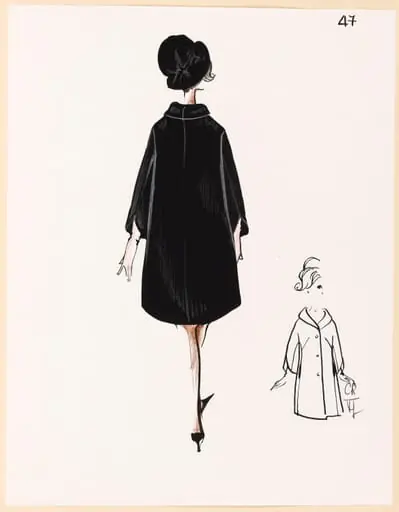
Manteau noir
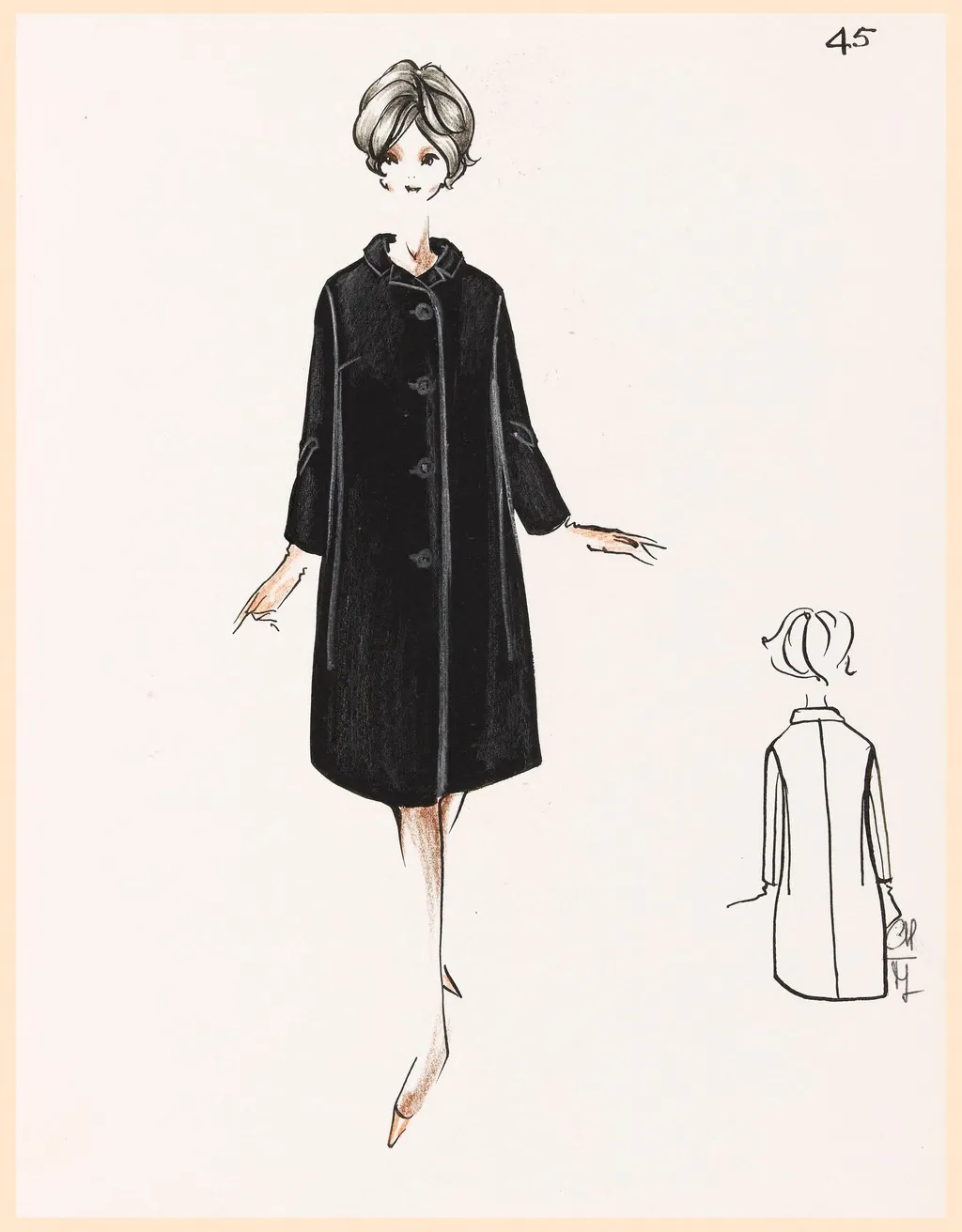
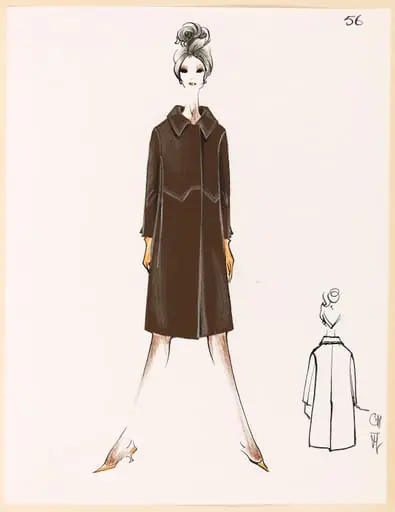
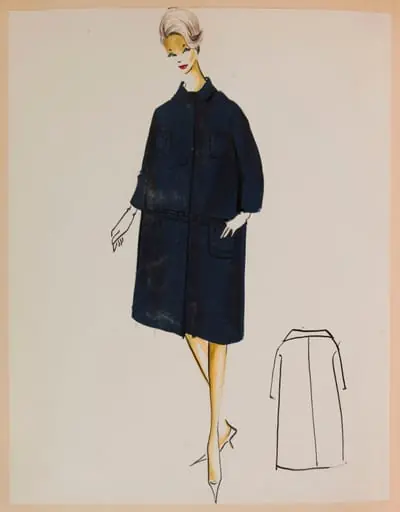
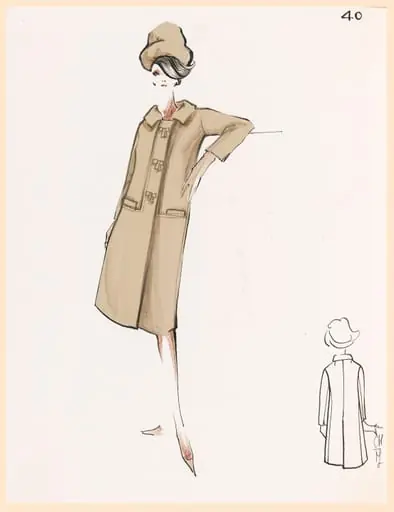
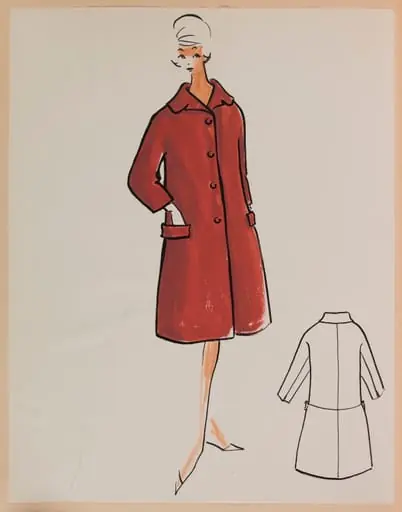
Manteau noir is a drawing by Carven. It dates from 1967 and is held in the collection of the Palais Galliera - Musée de la Mode de la Ville de Paris.
About this work
Overview
Manteau noir is a pencil drawing from around 1967, attributed to the French fashion house Carven.
Manteau noir is a pencil drawing from around 1967, attributed to the French fashion house Carven. It depicts a woman wearing a long black coat, rendered with clean, deliberate lines. The drawing is part of the collection at the Museum of Ethnography, where it serves as a record of mid-century garment design rather than a finished fashion illustration. Its focus on structure and fit suggests an archival or technical purpose.
Subject & Meaning
The figure is shown in a poised, neutral stance—one hand resting on the hip—emphasizing the garment’s silhouette over personal expression. The woman’s restrained posture and neatly pulled-back hair direct attention to the coat’s form. A small sketch in the corner, showing the back view, indicates the drawing’s function as a design study, documenting how the garment behaves from multiple angles.
Technique & Style
The drawing employs precise, minimal linework to define the coat’s contours and texture. Subtle shading suggests a soft, slightly reflective fabric, achieved through controlled hatching and varying line density. The absence of facial features or background reinforces the focus on the garment’s cut and drape. The inclusion of the rear sketch demonstrates a methodical approach to capturing three-dimensional form on a two-dimensional plane.
History & Provenance
Created circa 1967, the drawing likely originated in Carven’s design studio as part of a garment development process. It entered the Museum of Ethnography’s collection as an artifact of 20th-century fashion practice, valued for its documentation of design thinking rather than its aesthetic appeal. Its preservation reflects institutional interest in the material culture of clothing production.
Context
In the late 1960s, fashion houses increasingly documented designs with technical drawings to ensure consistency in production. Manteau noir reflects this shift toward systematic design recording, where garments were studied for fit, proportion, and construction before being sent to ateliers. Unlike editorial illustrations, such drawings prioritized accuracy over drama, serving as internal references for tailors and patternmakers.
Legacy
The drawing endures as a quiet example of fashion’s behind-the-scenes labor. It illustrates how design decisions were communicated before digital tools, relying on hand-drawn precision. Today, it offers insight into the material culture of mid-century fashion, preserving the methodology of a time when garments were conceived through careful observation and annotated sketches.
Artist & collection
Artist
These delicate ink-on-paper drawings capture the quiet poetry of everyday things: pinecones, reeds, apples.
Museum
Palais Galliera - Musée de la Mode de la Ville de Paris
Continue through works from the same source collection.