Artwork
'Maria-taoh'
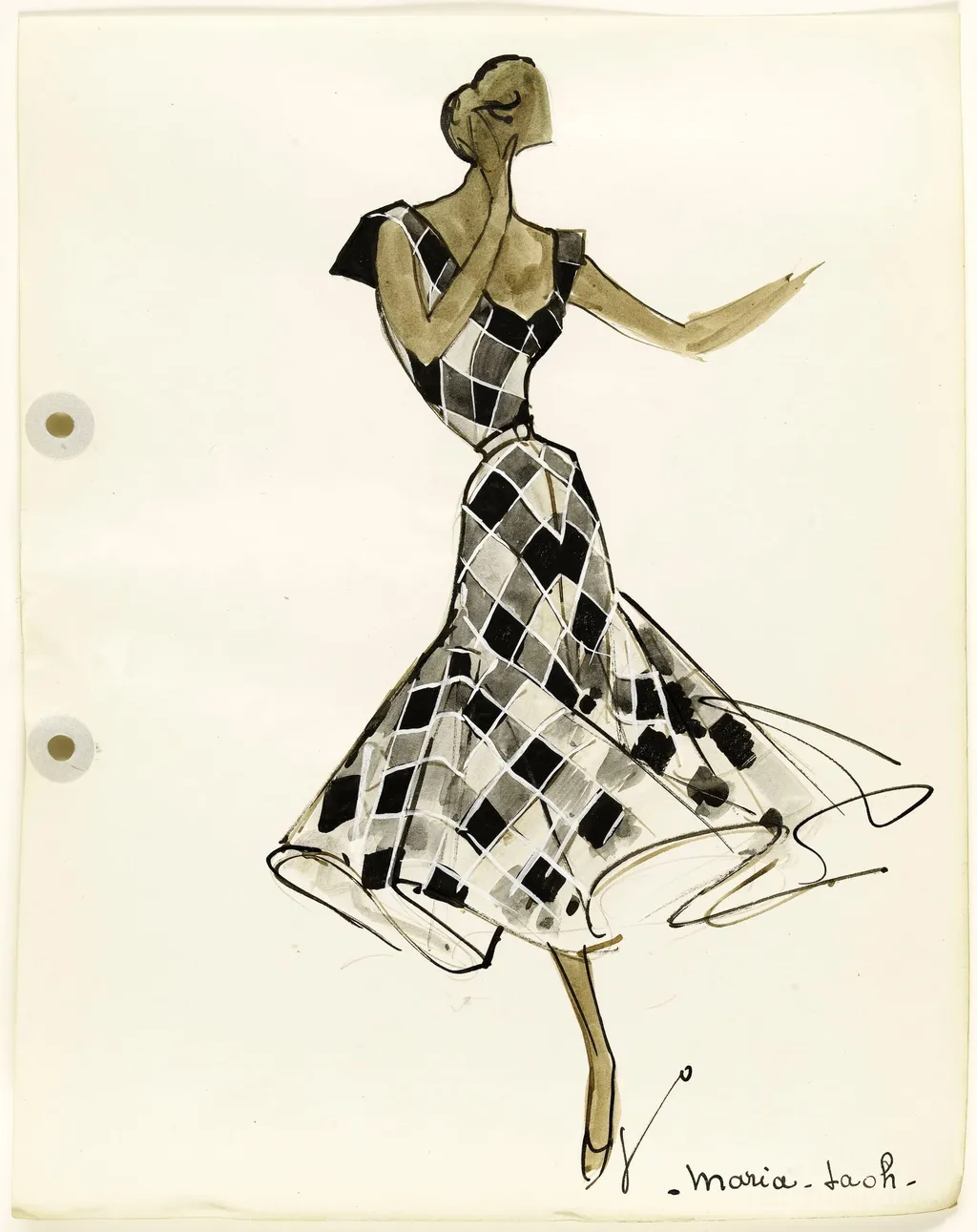
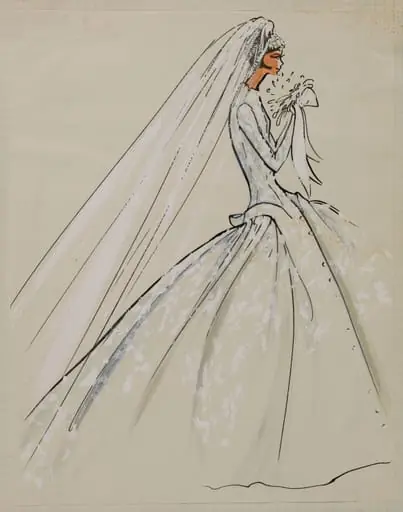
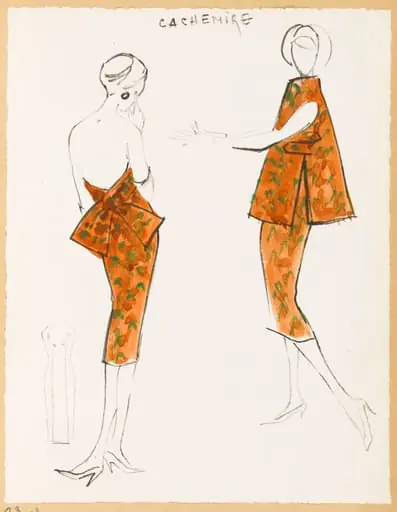
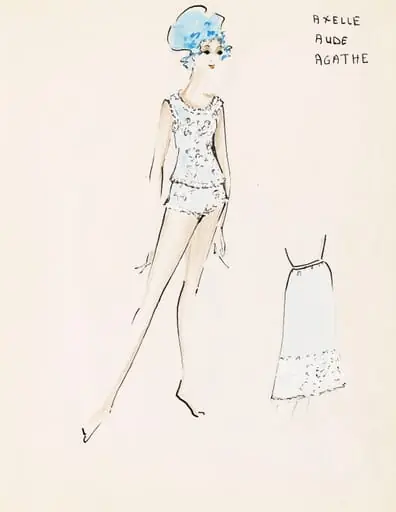
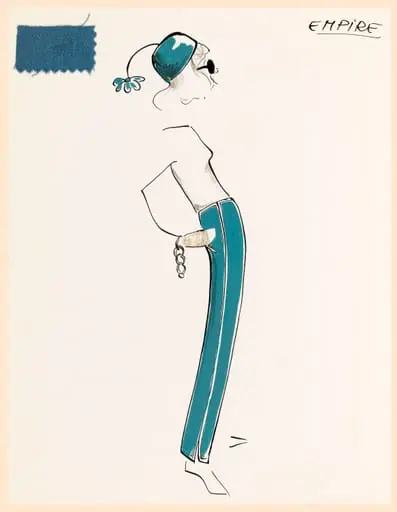
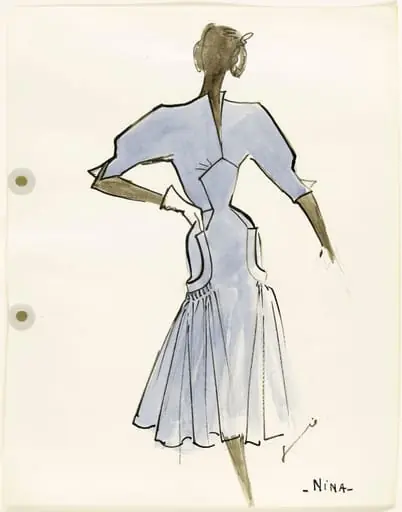
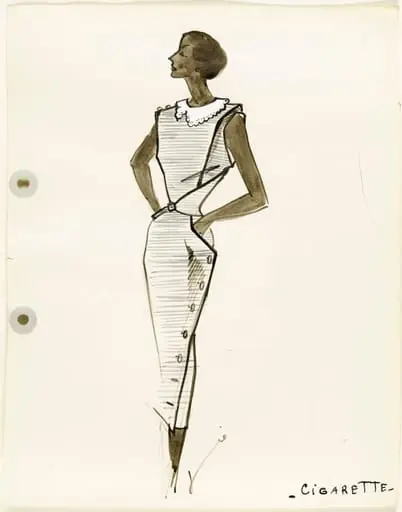
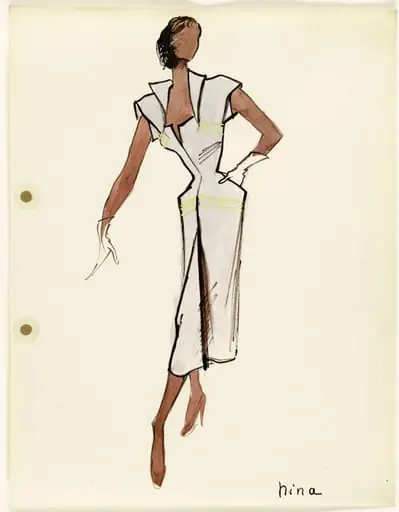
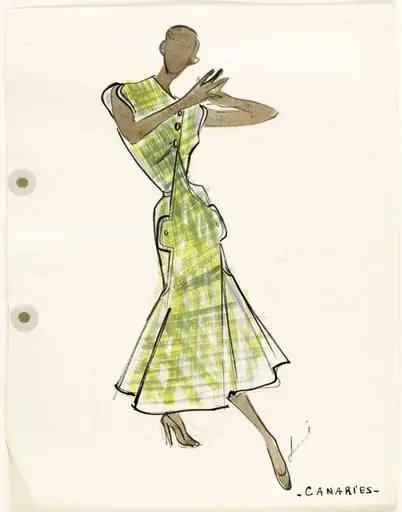
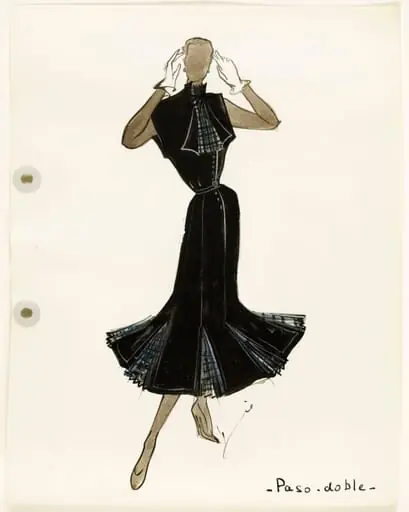
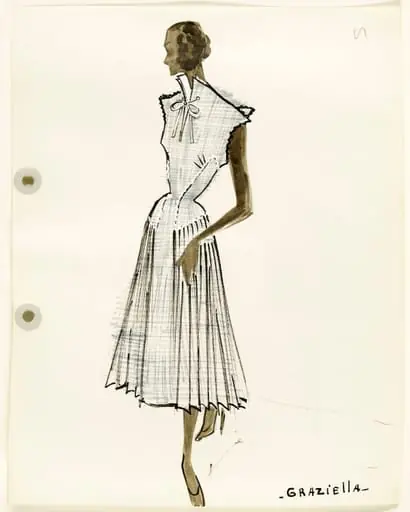
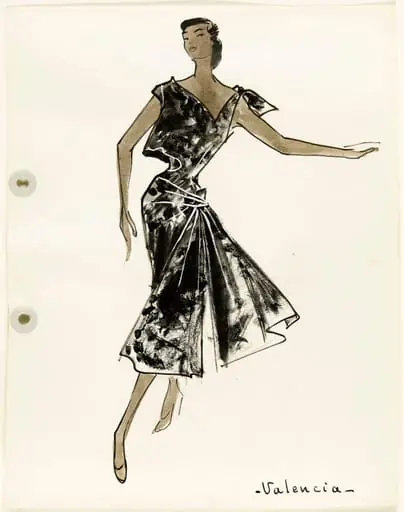
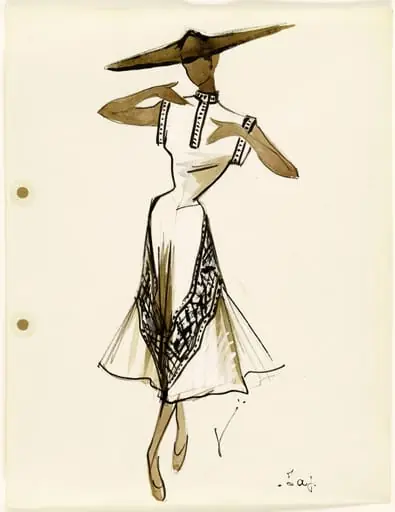
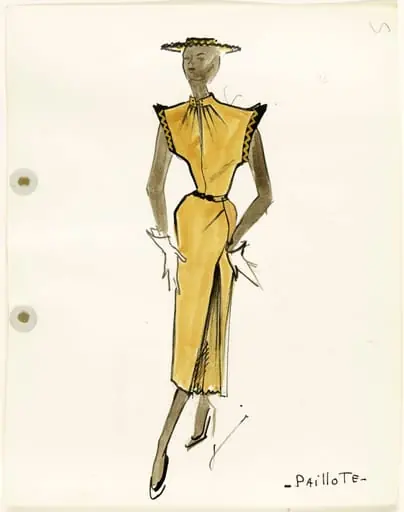
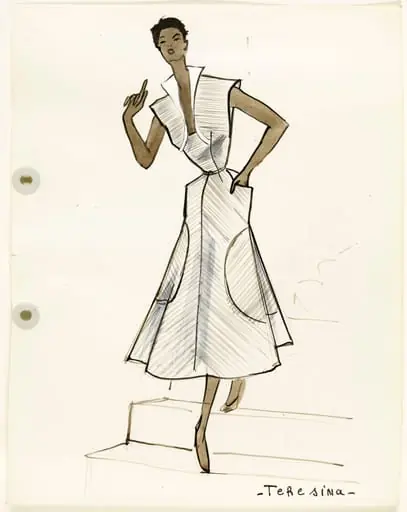
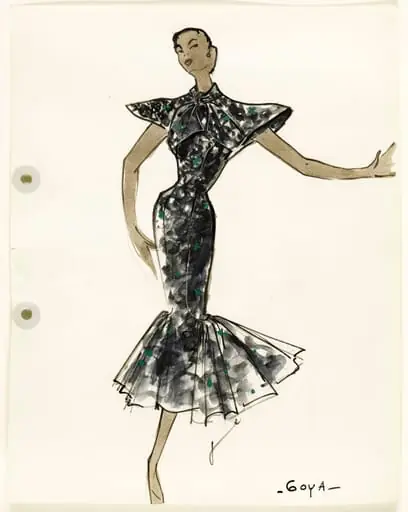
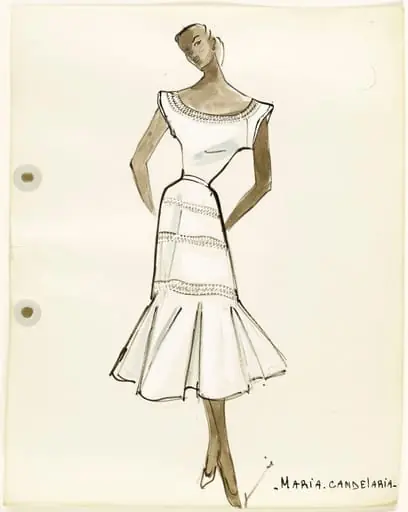
'Maria-taoh' is a drawing by Carven. It dates from 1951 and is held in the collection of the Palais Galliera - Musée de la Mode de la Ville de Paris.
About this work
Overview
“Maria‑taoh,” executed in 1951 by the artist known as Carven, is part of the collection of the Museum of Ethnography. The work is an image that presents a solitary female figure whose posture and attire dominate the composition, set against a light‑toned background that accentuates the contrast of the garment.
Subject & Meaning
The central figure is a woman dressed in a stark black‑and‑white costume marked by a grid of squares and linear motifs. Her left arm is outstretched while her right hand rests on her face, partially obscuring her features and inviting speculation about identity, introspection, or a moment of poised gesture.
Technique & Style
Carven employs a flat, graphic approach, reducing the figure to simplified shapes and a limited palette. The geometric pattern of the dress and the smooth, unmodulated background create a sense of two‑dimensionality, aligning the piece with mid‑century modernist tendencies toward abstraction and decorative patterning.
History & Provenance
Created in the early 1950s, “Maria‑taoh” entered the Museum of Ethnography’s holdings at an unspecified date, where it remains on view. The work reflects Carven’s activity during a period when European artists were exploring the intersection of fashion illustration and fine art.
Context
The painting emerges from a post‑war era when visual culture increasingly embraced stylized representations of the human form. Its emphasis on pattern and silhouette echoes contemporary developments in textile design and the broader modernist fascination with order and clarity.
Artist & collection
Artist
These delicate ink-on-paper drawings capture the quiet poetry of everyday things: pinecones, reeds, apples.
Museum
Palais Galliera - Musée de la Mode de la Ville de Paris
Continue through works from the same source collection.