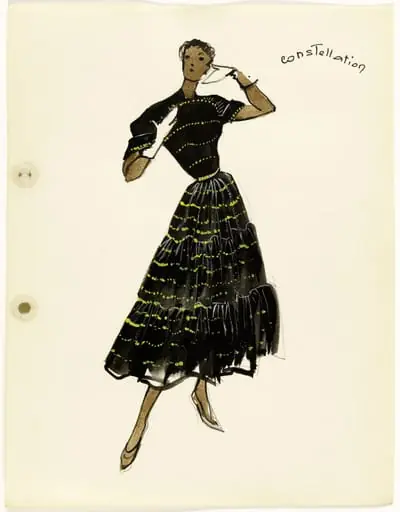
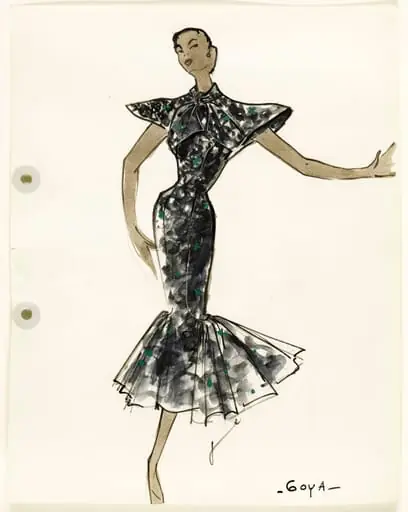
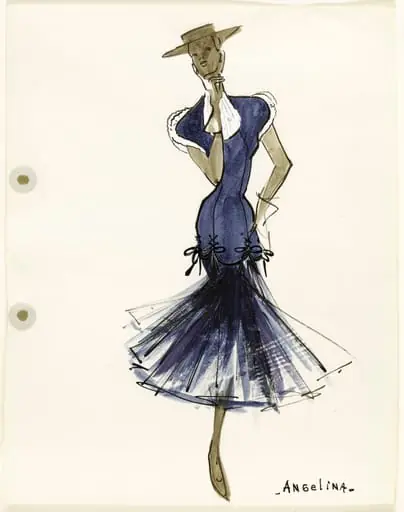
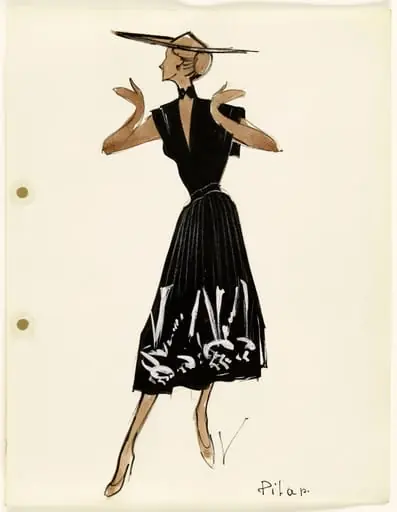
Artwork
'Paso-doble'
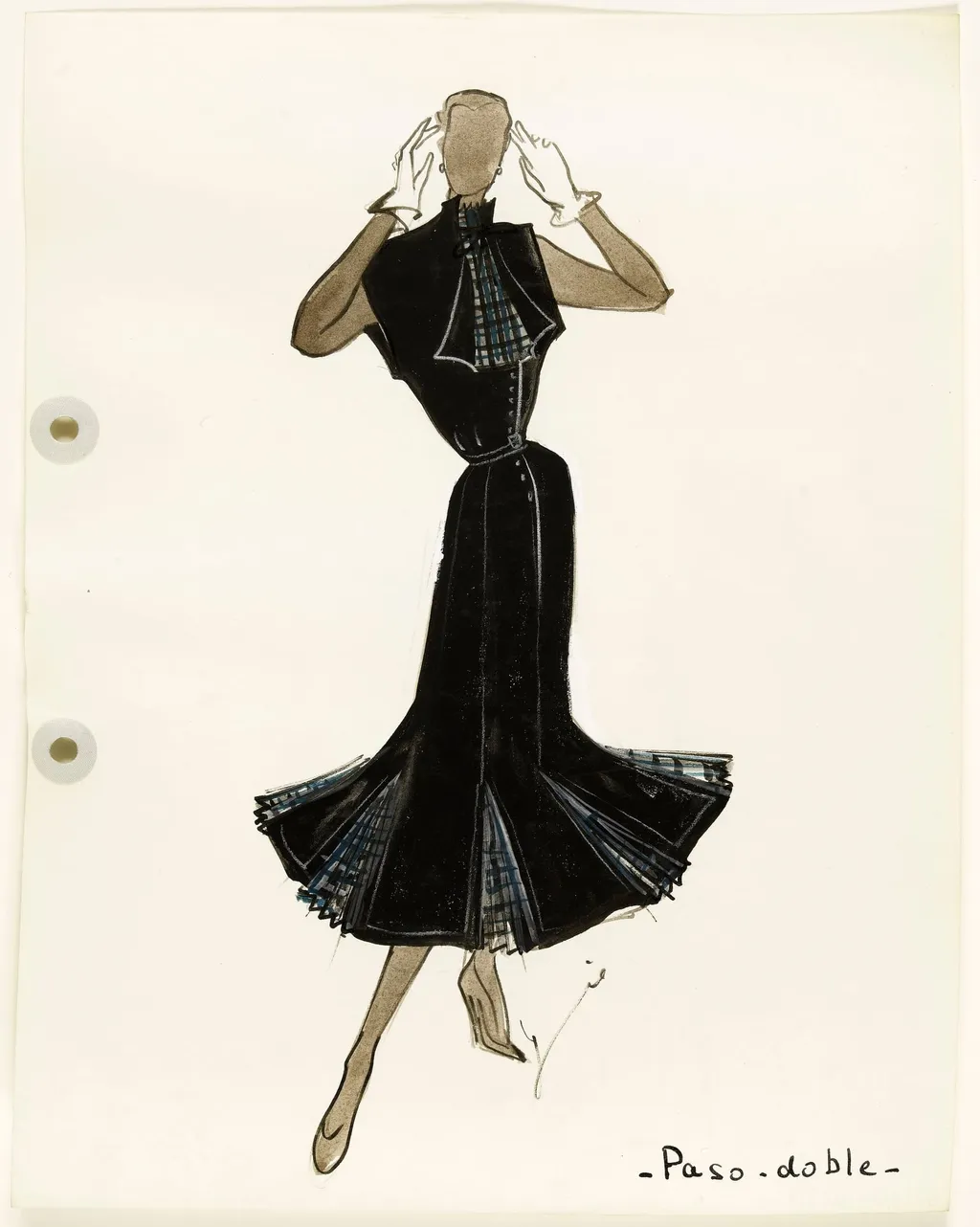
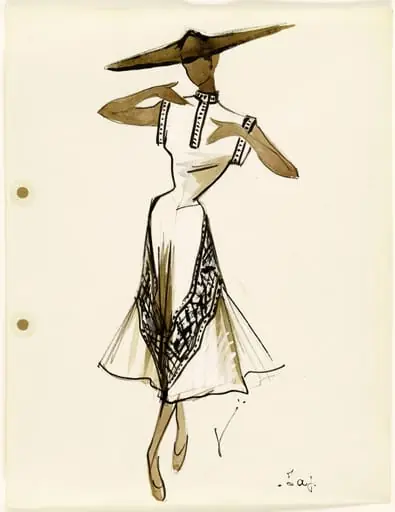
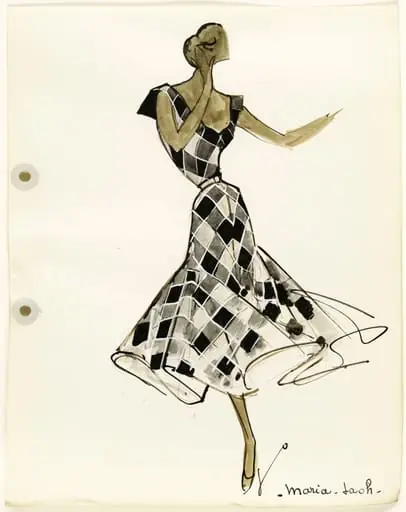
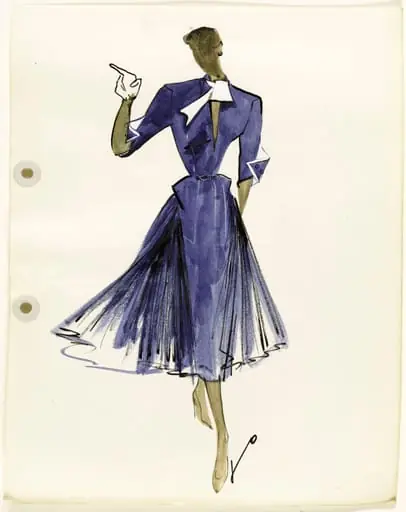
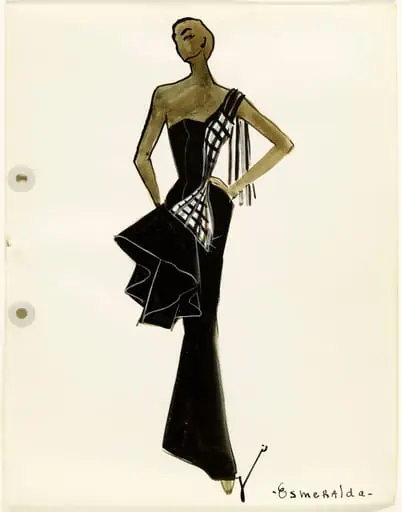
'Paso-doble' is a drawing by Marie-Louise Carven. It dates from 1951 and is held in the collection of the Palais Galliera - Musée de la Mode de la Ville de Paris.
About this work
The use of cross-hatching and stippling techniques adds texture and depth to the drawing, making it more visually interesting.
The painting 'Paso-doble' by Marie-Louise Carven is a drawing from 1951, held at the Museum of Ethnography. The artwork depicts a woman in a black dress with a plaid pattern on the inside of the skirt and collar. She is wearing white gloves and has her hands up to her head.
The woman is standing with one leg slightly bent, and her dress is flowing around her. The background of the painting is a plain color, which helps to focus attention on the woman and her dress.
The use of cross-hatching and stippling techniques adds texture and depth to the drawing, making it more visually interesting. If you're interested in learning more about the artist behind this piece, you might want to look up Marie-Louise Carven next.
Overview
Paso-doble is a 1951 ink drawing by Marie-Louise Carven, a French fashion designer known for her work in ready-to-wear clothing. Created during her active years in fashion, the piece is held in the collection of the Museum of Ethnography. Unlike her textile designs, this work is a standalone graphic study, reflecting her interest in movement and silhouette beyond garment construction.
Subject & Meaning
The drawing portrays a woman in a black dress with a plaid interior lining visible at the collar and hem, suggesting a garment in motion. Her posture—hands raised near her head, one leg bent—evokes a dancer’s gesture, possibly referencing the paso doble, a Spanish dance. The figure is isolated against a neutral background, emphasizing form and rhythm rather than narrative, aligning with Carven’s focus on the body in space.
Technique & Style
Carven employed cross-hatching and stippling to model volume and texture in the dress and hair, creating subtle gradations without color. The linework is precise yet fluid, capturing the flow of fabric and the tension of movement. The contrast between the solid black silhouette and the textured interior plaid highlights her sensitivity to material detail, a trait drawn from her fashion practice.
History & Provenance
Paso-doble entered the Museum of Ethnography’s collection shortly after its creation in 1951. Its acquisition suggests institutional interest in fashion as a cultural artifact, not merely a commercial product. The drawing remained relatively obscure until recent scholarly attention to designers’ graphic works, positioning it as a rare non-textile output from Carven’s oeuvre.
Context
In early 1950s France, fashion design was increasingly recognized as an art form. Carven, one of the first to launch a prêt-à-porter line, was part of a generation redefining women’s dress for modern life. Paso-doble reflects this shift: a sketch that bridges fashion illustration and fine art, capturing movement and style outside the constraints of production.
Legacy
Paso-doble stands as a testament to Carven’s multidisciplinary approach, revealing how her understanding of fabric and motion extended beyond the sewing table. Though she is primarily remembered for clothing, this drawing contributes to broader discussions on the artistic value of fashion sketches and the role of women designers in mid-century visual culture.
Artist & collection
Artist
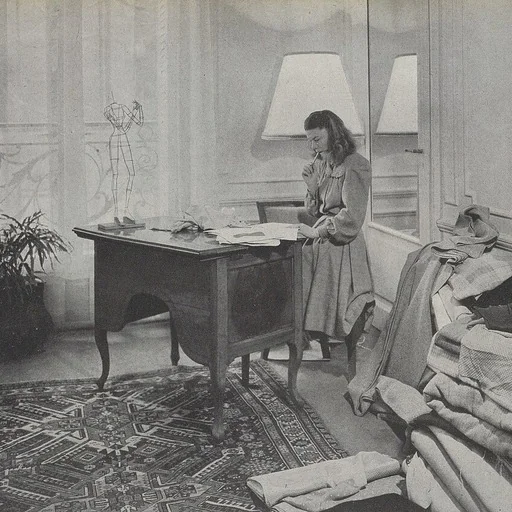
Marie-Louise Carven (31 August 1909 – 8 June 2015), born Carmen de Tommaso, was a French fashion designer who founded the house of Carven in 1945.
Museum
Palais Galliera - Musée de la Mode de la Ville de Paris
Continue through works from the same source collection.
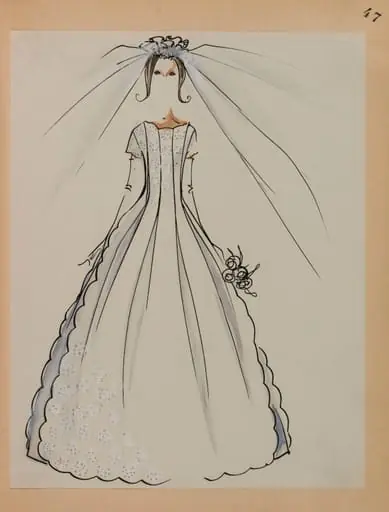 Robe de mariée festonnée et son voile
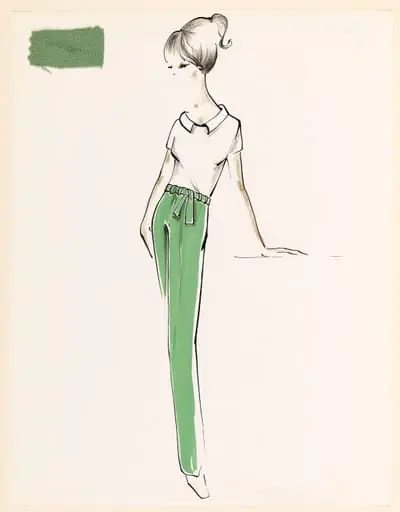 Haut blanc à manches courtes et pantalon vert à ceinture nouée
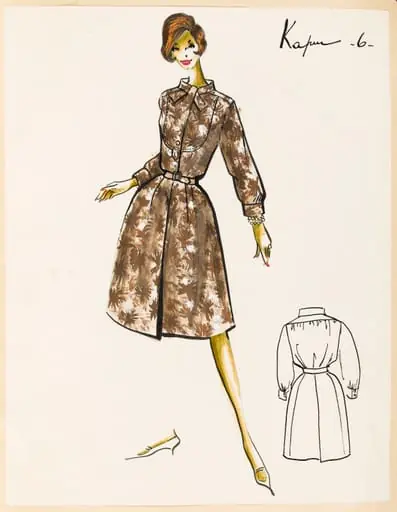 Kapur
Kapur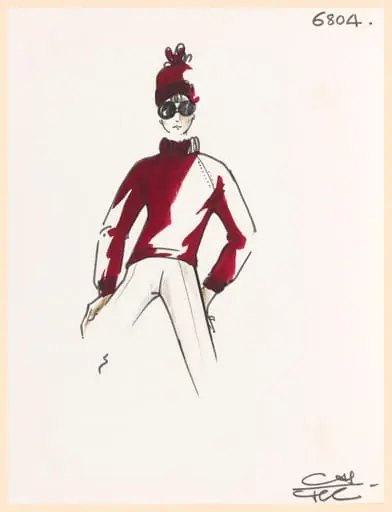 Pull-over à manches longues pourpre, bonnet assorti, pantalon et lunettes de soleil
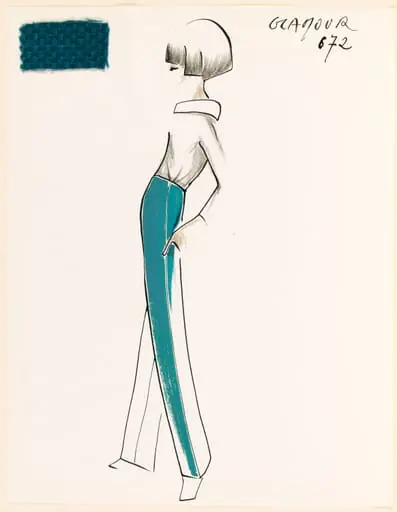 GLAMOUR
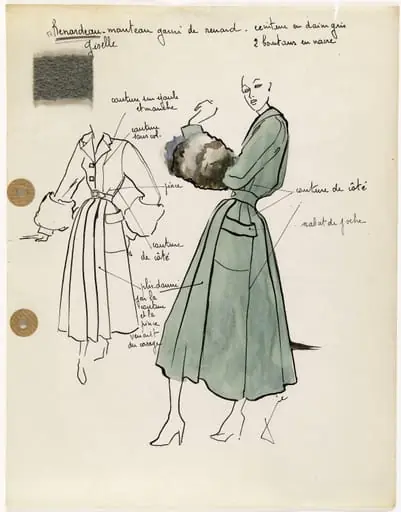 'Renardeau'
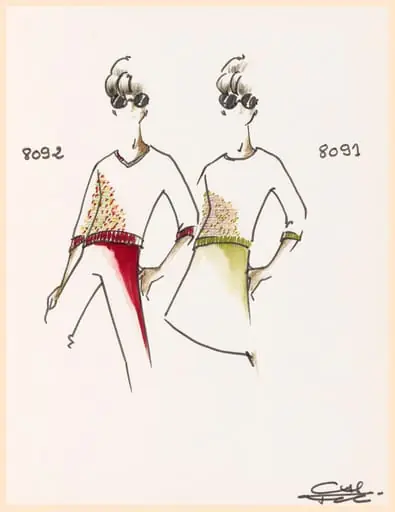 Pull-over à manches trois quarts et à encolure V à motifs multicolores, pantalon cerise et lunettes de soleil
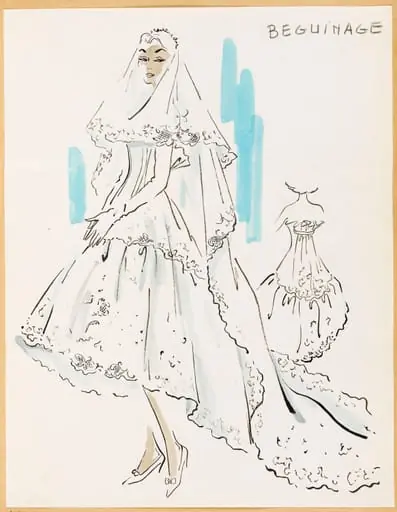 Béguinage