Artwork
'Muscadin'
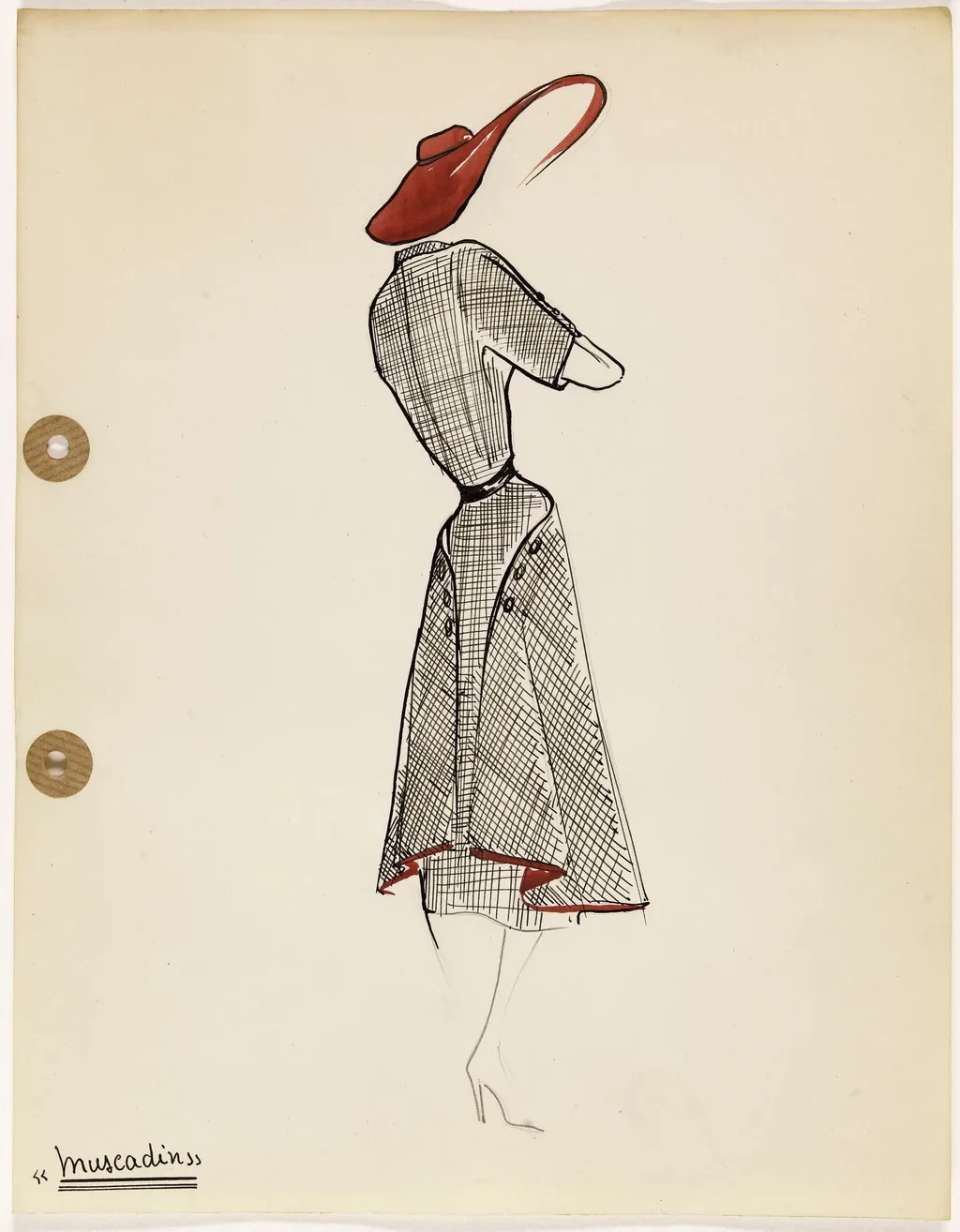
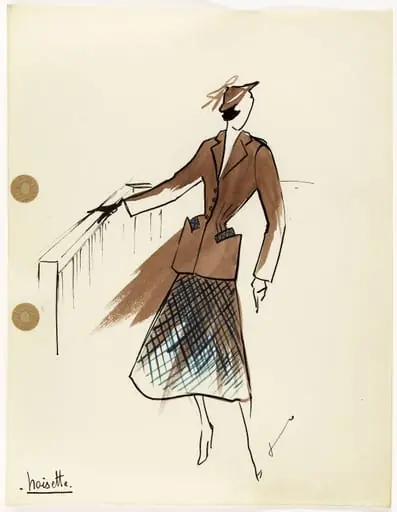
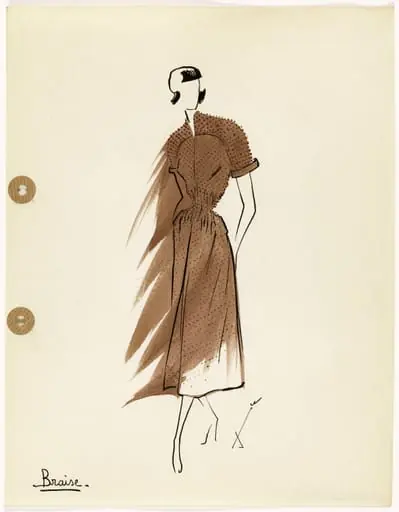
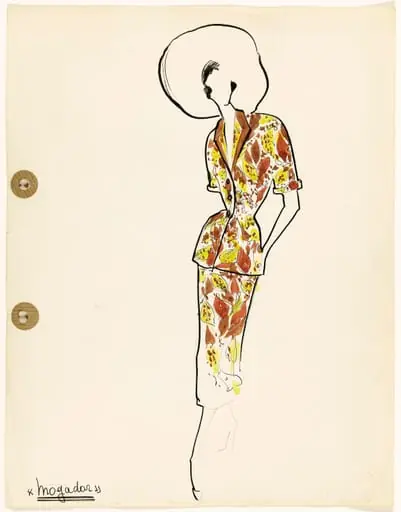
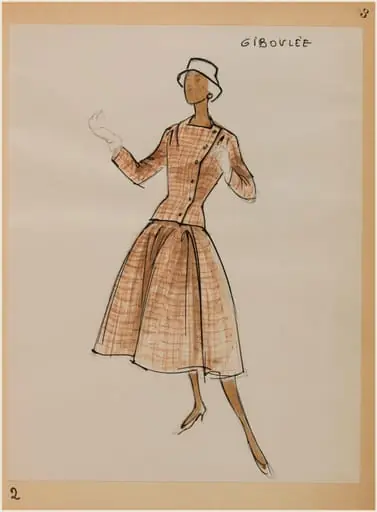
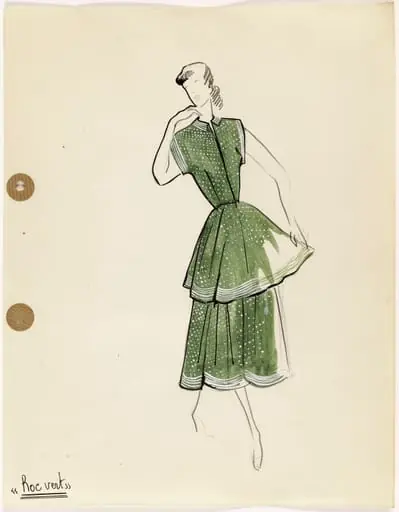
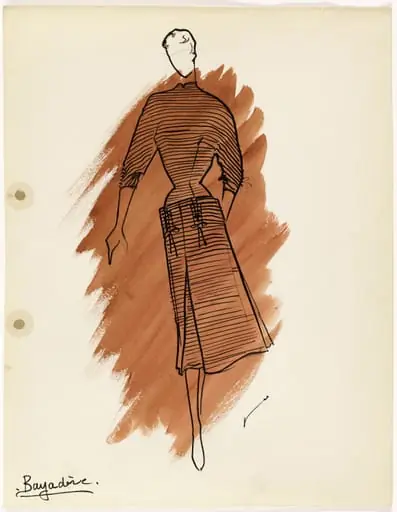
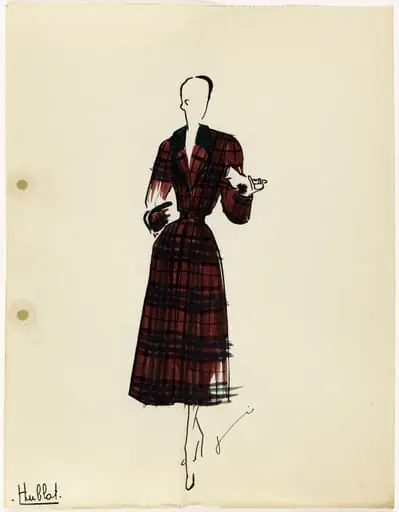
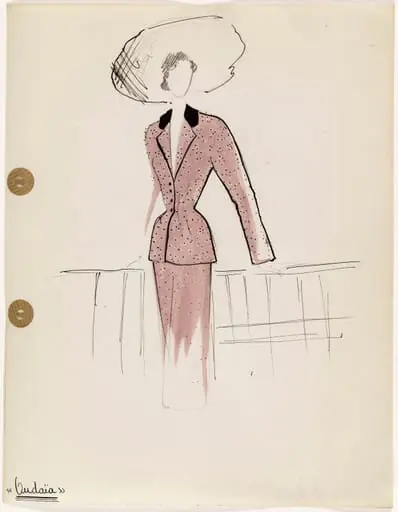
'Muscadin' is a drawing by Carven. It dates from 1949 and is held in the collection of the Palais Galliera - Musée de la Mode de la Ville de Paris.
About this work
Overview
Its composition eliminates background detail to emphasize form and texture, focusing attention entirely on the subject’s posture and attire.
Created in 1949 by Carven, 'Muscadin' is a monochrome drawing held in the collection of the Museum of Ethnography. The work presents a solitary female figure rendered in fine, intricate line work. Its composition eliminates background detail to emphasize form and texture, focusing attention entirely on the subject’s posture and attire. The absence of color and the precision of the lines reflect a deliberate graphic approach to representation.
Subject & Meaning
The figure is depicted in profile, dressed in a long gown with a crisscrossed pattern and a red waistband. The wide-brimmed hat and draped fabric suggest a specific cultural or regional costume, though no explicit narrative is provided. The title 'Muscadin' may reference a historical French term associated with dandyism, hinting at identity or social presentation, but the drawing itself remains formally restrained, inviting interpretation without overt commentary.
Technique & Style
Carven employs cross-hatching extensively to model the dress’s surface, using dense, intersecting lines to suggest volume and texture without shading or color. The technique creates a rhythmic, almost woven quality across the fabric, contrasting with the smooth contours of the hat and figure. The plain background enhances the graphic clarity, making the line work the sole vehicle for visual information and spatial suggestion.
History & Provenance
The drawing entered the Museum of Ethnography’s collection after its creation in 1949. No public record details its initial exhibition or ownership prior to acquisition. Its inclusion in an ethnographic institution suggests an interest in cultural dress or regional costume studies, though the artist’s intent remains undocumented. The work has been preserved in its original state, with no known restorations or alterations.
Context
Produced in postwar France, 'Muscadin' aligns with a broader interest in traditional dress and folk representation among mid-century artists and ethnographers. While not part of a known series, its focus on costume details reflects a trend toward documenting regional attire as cultural artifacts. The drawing’s minimalist style distinguishes it from more illustrative or romanticized depictions of the period.
Legacy
Though not widely reproduced or studied, 'Muscadin' remains a quiet example of Carven’s graphic precision and interest in textile representation. Its presence in an ethnographic museum underscores its role as a record of visual culture rather than a celebrated artwork. The drawing continues to serve as a reference for the study of line-based rendering and the depiction of costume in 20th-century drawing practices.
Artist & collection
Artist
These delicate ink-on-paper drawings capture the quiet poetry of everyday things: pinecones, reeds, apples.
Museum
Palais Galliera - Musée de la Mode de la Ville de Paris
Continue through works from the same source collection.