Artwork
Ossian
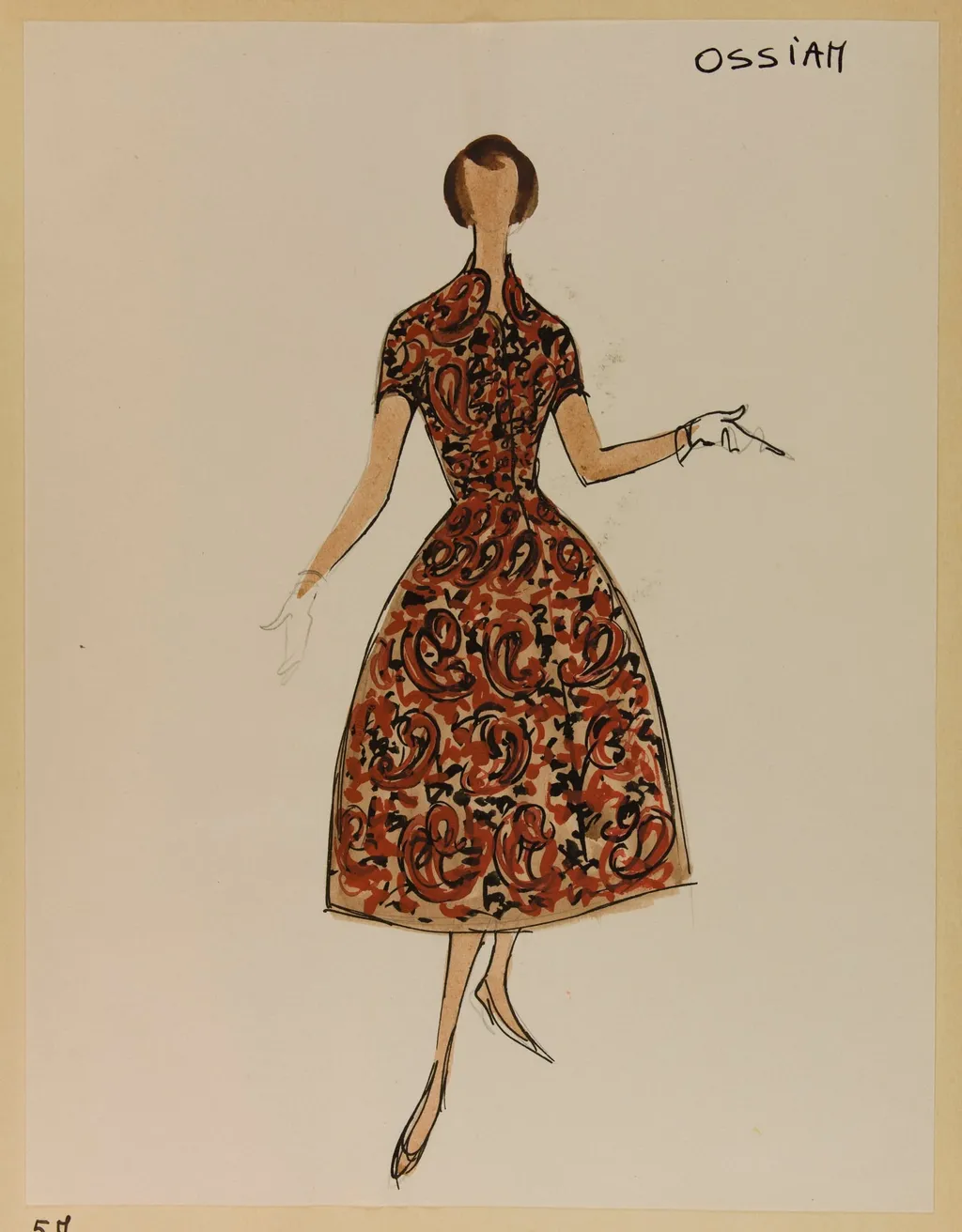
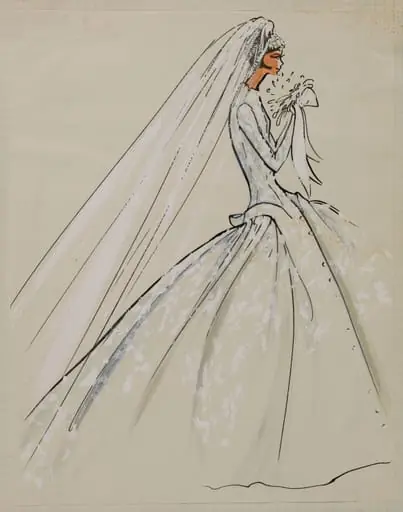
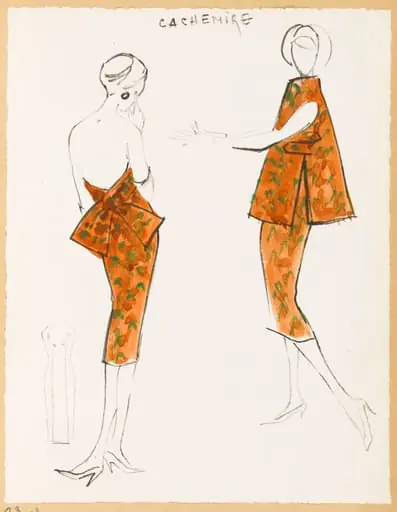
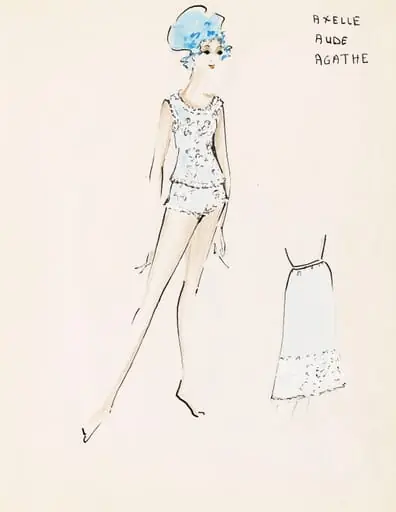
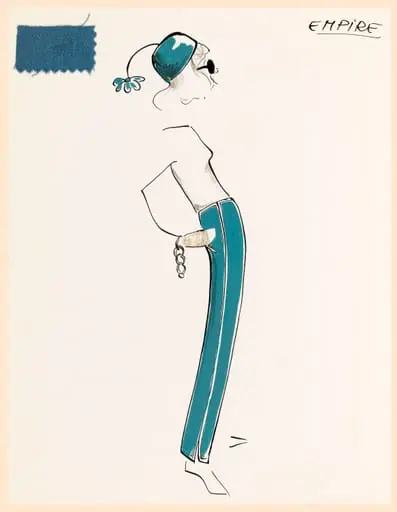
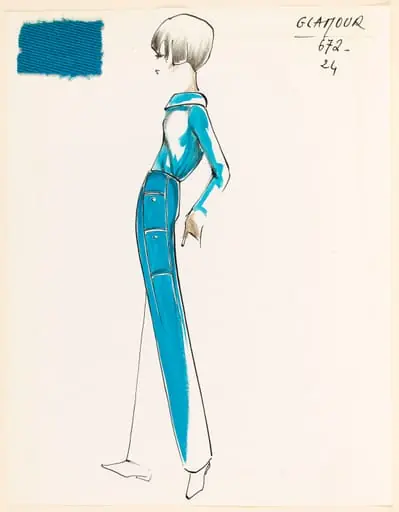
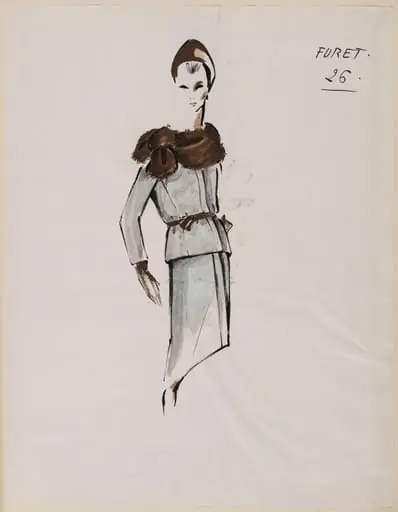
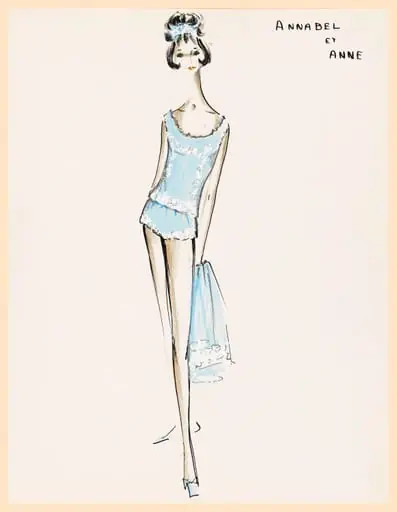
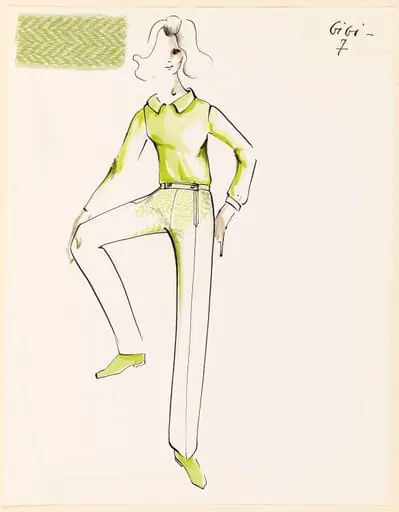
Ossian is a drawing by Carven. It dates from 1955 and is held in the collection of the Palais Galliera - Musée de la Mode de la Ville de Paris.
About this work
Overview
Created around 1955, Ossian is a line drawing attributed to the French fashion designer Carven. Executed in ink on paper, it depicts a standing female figure in a simplified, sketch-like manner. The work is part of the collection at the Museum of Ethnography, where it is preserved as a record of mid-century fashion design practice rather than as a fine art object.
Subject & Meaning
The name 'Ossian' appears in the corner, though its significance—whether a model, collection title, or poetic reference—remains unconfirmed.
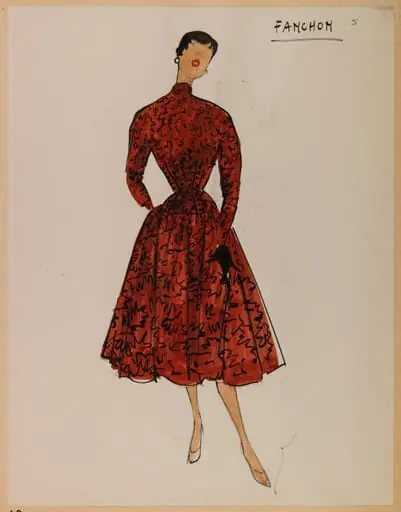
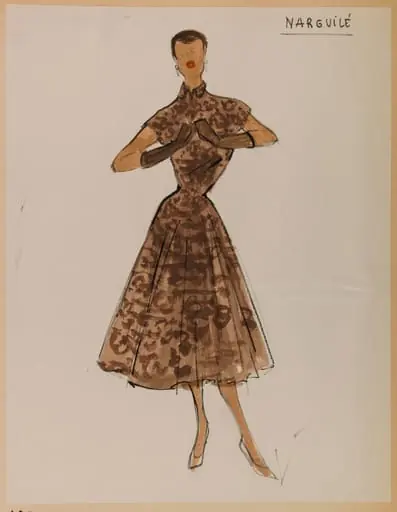
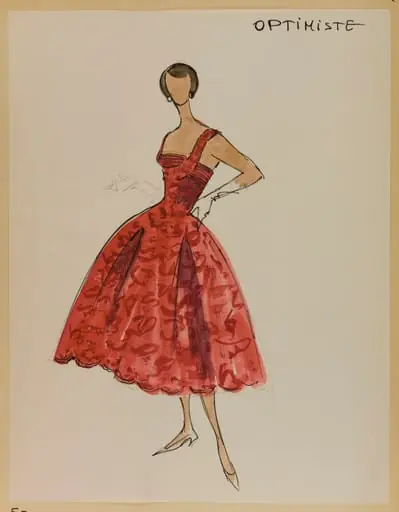
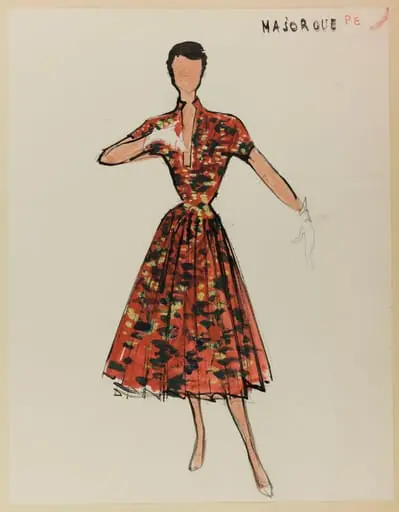
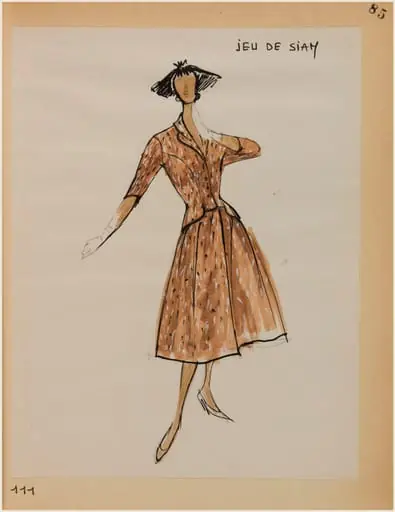
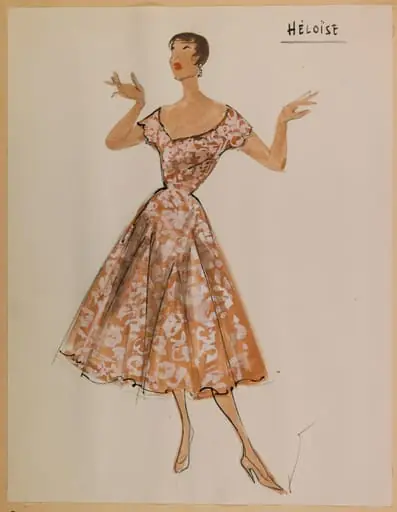
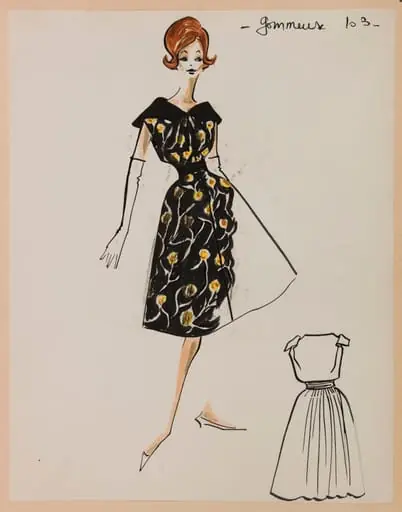
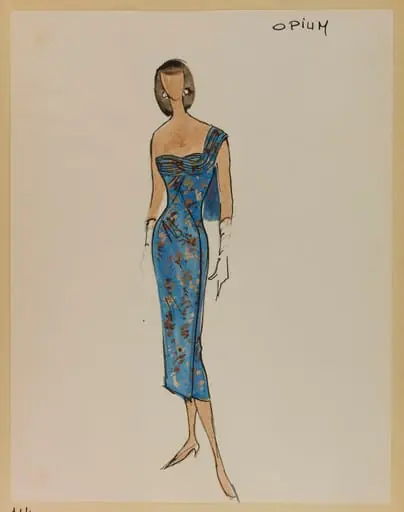
The figure is a stylized woman wearing a knee-length dress with a dark bodice and short sleeves. Her flared skirt is adorned with dynamic red and black swirls, suggesting movement or textile ornamentation. One hand rests on her hip, a pose common in fashion illustrations to convey posture and confidence. The name 'Ossian' appears in the corner, though its significance—whether a model, collection title, or poetic reference—remains unconfirmed.
Technique & Style
The drawing employs fluid, unembellished ink lines with minimal shading, characteristic of fashion sketches intended for quick visualization. The bold, rhythmic patterns on the skirt are rendered with confident, sweeping strokes, indicating an emphasis on textile design over anatomical detail. The overall approach is functional, prioritizing clarity and aesthetic suggestion over finish, typical of design drafts from the period.
History & Provenance
The work was produced during Carven’s active years in Parisian fashion, likely as a preparatory study for a garment or collection. It entered the Museum of Ethnography’s holdings through acquisition or donation, possibly as part of a broader collection documenting mid-century European fashion design. Its preservation reflects institutional interest in the material culture of fashion beyond finished garments.
Context
In the 1950s, fashion houses routinely produced sketchbooks to communicate design ideas to ateliers and clients. Ossian fits within this tradition, where illustrative precision served practical production needs. The swirling patterns on the dress may reflect contemporary interest in abstract motifs inspired by non-Western textiles or modernist art, aligning with broader postwar design trends in Europe.
Legacy
Ossian survives as a quiet artifact of fashion’s behind-the-scenes process. It offers insight into how designers translated textile ideas into wearable forms through rapid visual language. While not widely exhibited, its presence in an ethnographic museum underscores the growing recognition of fashion as a cultural practice worthy of archival preservation.
Artist & collection
Artist
These delicate ink-on-paper drawings capture the quiet poetry of everyday things: pinecones, reeds, apples.
Museum
Palais Galliera - Musée de la Mode de la Ville de Paris
Continue through works from the same source collection.