Artwork
'Paillotte'
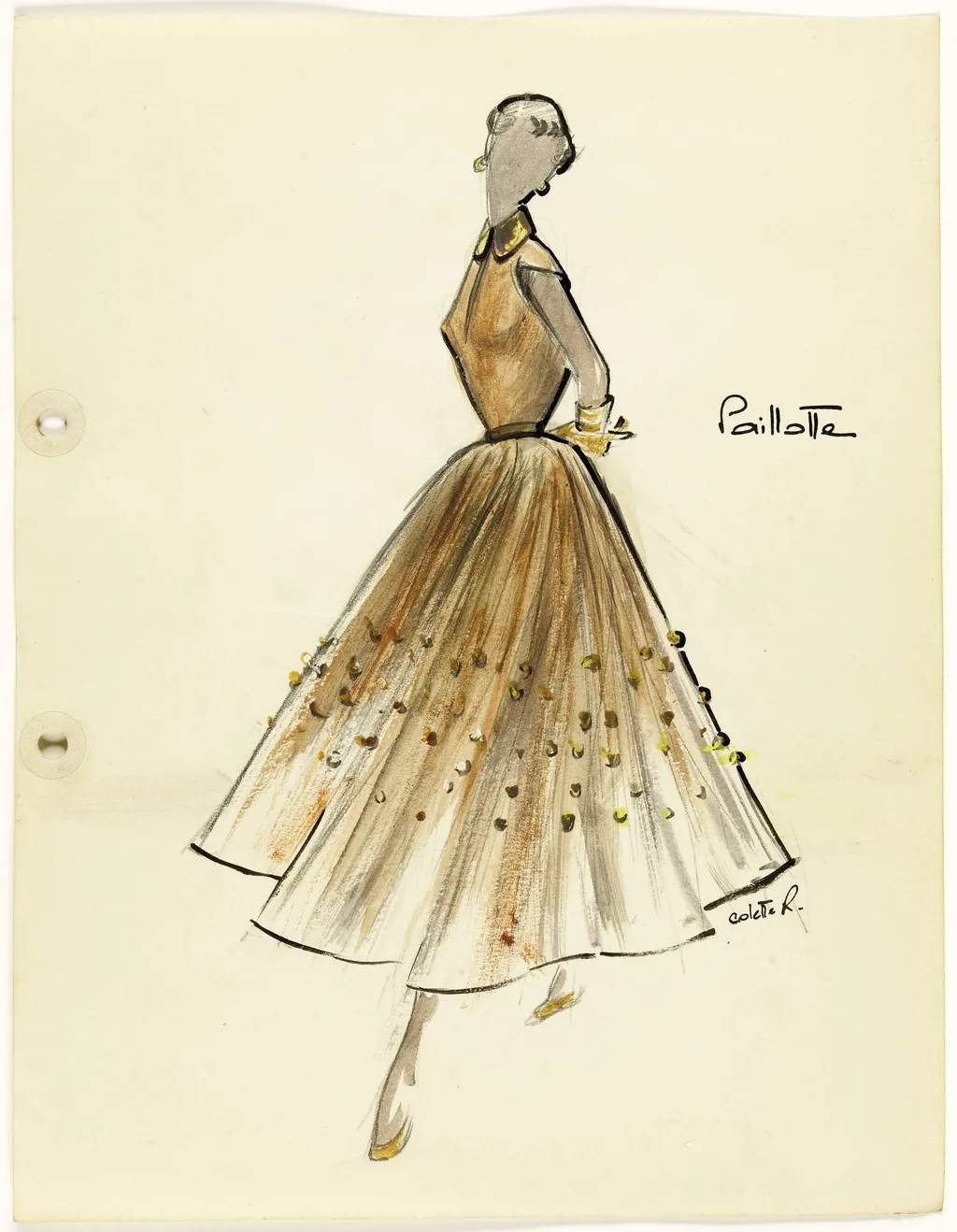
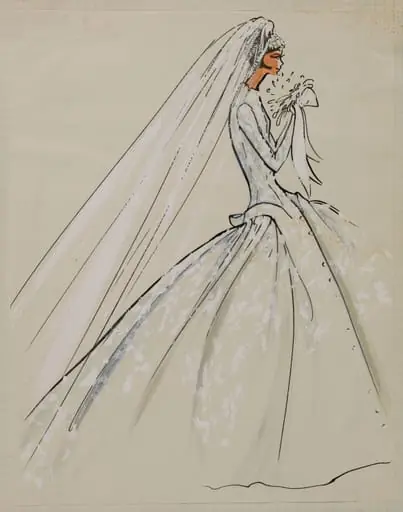
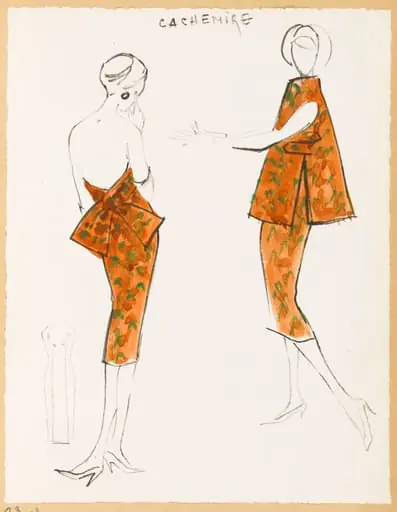
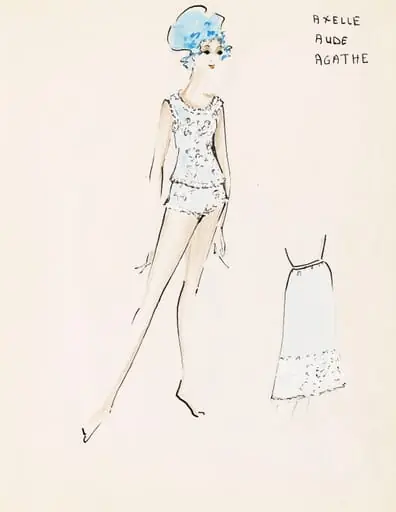
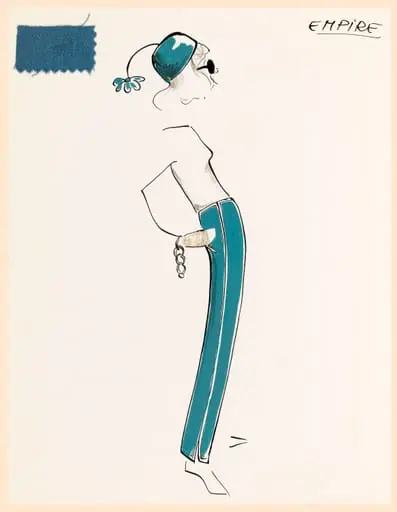
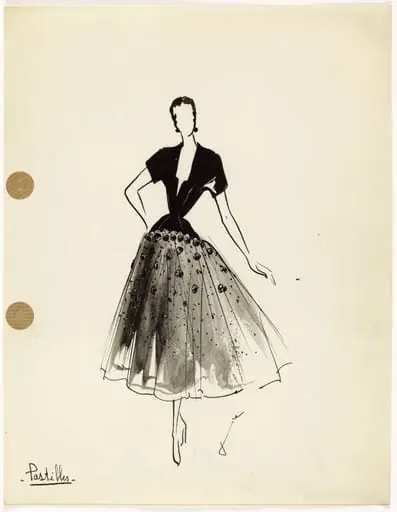
'Paillotte' is a drawing by Carven. It dates from 1951 and is held in the collection of the Palais Galliera - Musée de la Mode de la Ville de Paris.
About this work
Overview
Its intimate scale and spontaneous lines suggest it was made as a working observation, possibly during a design session or while observing dress in daily life.
Created around 1951 by the French designer Carven, 'Paillotte' is a pencil sketch capturing a woman in motion. The drawing resides in the collection of the Museum of Ethnography, where it functions as a study of textile and form rather than a finished fashion illustration. Its intimate scale and spontaneous lines suggest it was made as a working observation, possibly during a design session or while observing dress in daily life.
Subject & Meaning
The figure depicts a woman wearing a tailored bodice and a full, dotted skirt, suggesting a casual yet refined daytime ensemble. Her restrained posture and minimal jewelry imply modesty and practicality. The sketch does not idealize the subject but instead records a moment of ordinary elegance, reflecting mid-century French attitudes toward wearable, unpretentious femininity. The absence of a face or context invites focus on the garment itself as the central subject.
Technique & Style
Carven employed swift, fluid pencil strokes to convey the movement and weightlessness of the fabric. The skirt’s scattered dots are rendered with delicate, irregular marks, suggesting texture without overdetailing. The loose handling of the dress contrasts with the tighter lines defining the shoulders and hair, creating a visual rhythm that mimics the garment’s flow. This approach prioritizes impression over precision, aligning with fashion drawing traditions that value gesture and silhouette.
History & Provenance
The drawing entered the Museum of Ethnography’s collection in the mid-20th century, likely as part of a broader acquisition of fashion-related materials documenting postwar European dress. Its origin as a personal sketch by Carven, rather than a commercial illustration, gives it archival value as a record of the designer’s observational process. No public record of prior ownership exists, suggesting it remained within Carven’s circle until institutional acquisition.
Context
In early 1950s Paris, fashion design was deeply tied to craftsmanship and personal expression. Carven, known for accessible yet elegant clothing, often drew inspiration from everyday women. 'Paillotte' reflects this ethos—its simplicity and attention to textile detail mirror the era’s shift toward practical glamour. Unlike haute couture presentations, this sketch reveals the quiet, iterative work behind garments meant for ordinary wear.
Legacy
Though not widely exhibited, 'Paillotte' contributes to scholarly understanding of how fashion designers documented their ideas outside formal presentations. Its presence in an ethnographic museum underscores the cultural significance of everyday dress. The drawing remains a quiet example of how personal sketches can preserve the tactile and aesthetic values of a designer’s vision beyond mass-produced garments.
Artist & collection
Artist
These delicate ink-on-paper drawings capture the quiet poetry of everyday things: pinecones, reeds, apples.
Museum
Palais Galliera - Musée de la Mode de la Ville de Paris
Continue through works from the same source collection.