Artwork
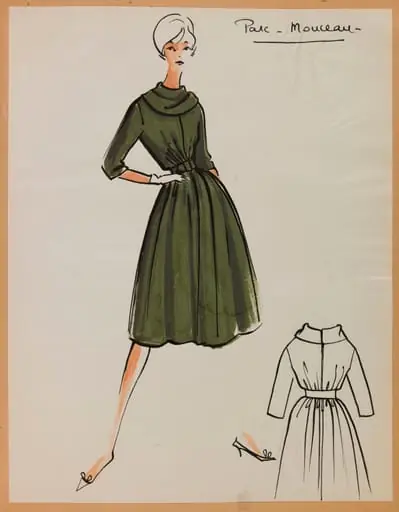
Parc Monceau
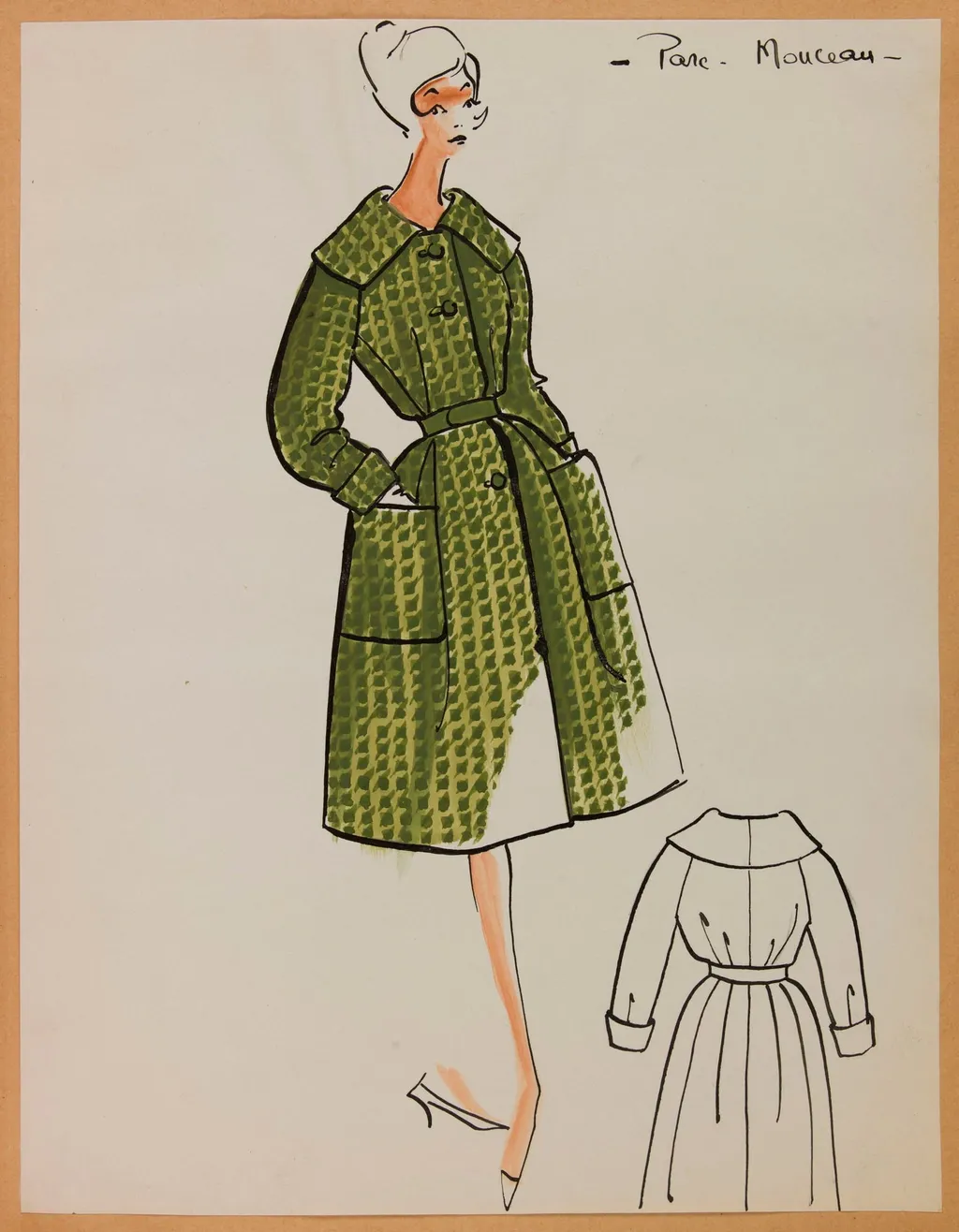
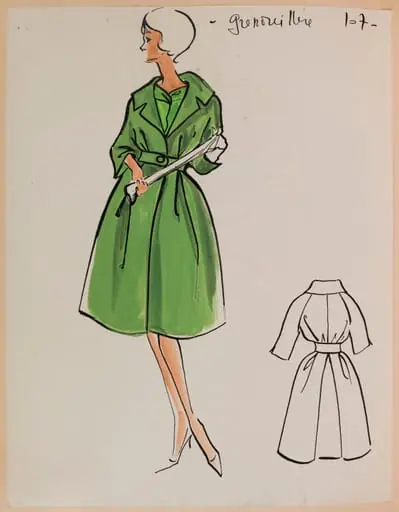
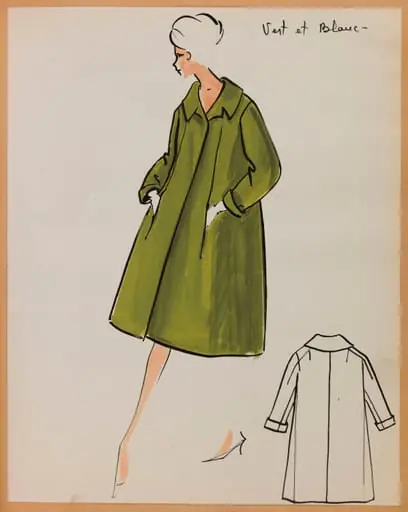
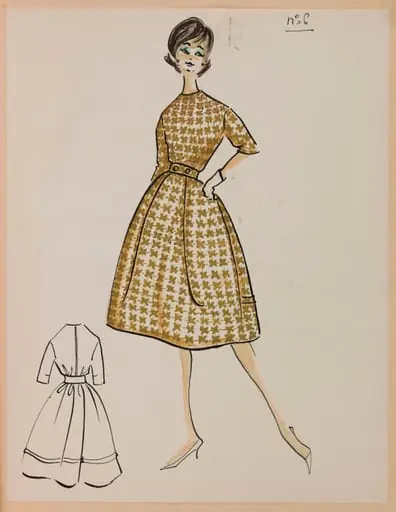
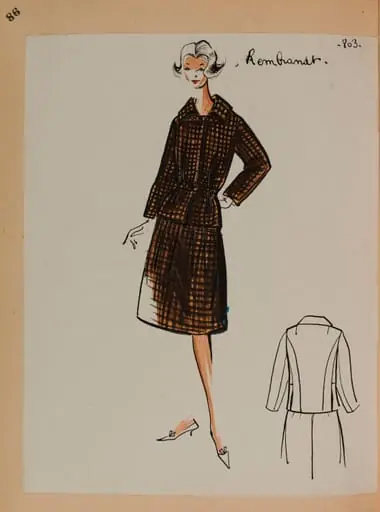
Parc Monceau is a drawing by Carven. It dates from 1958 and is held in the collection of the Palais Galliera - Musée de la Mode de la Ville de Paris.
About this work
Overview
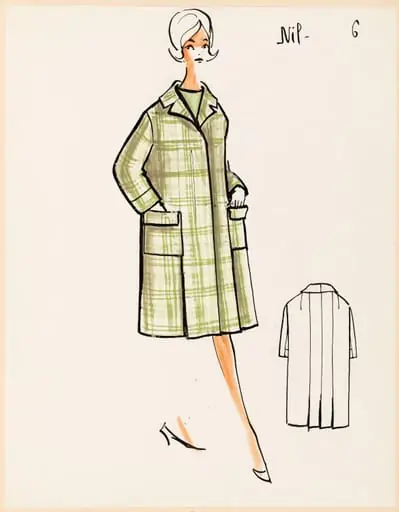
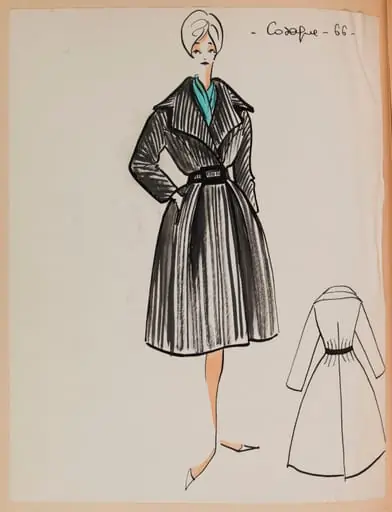
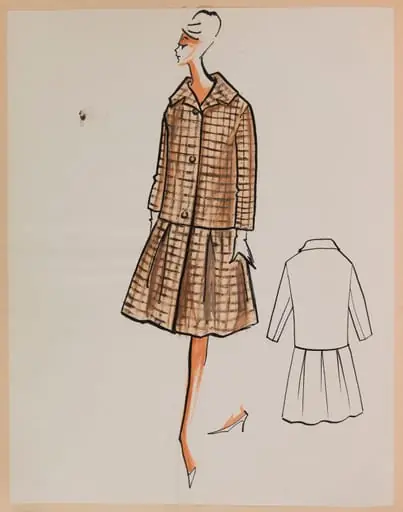
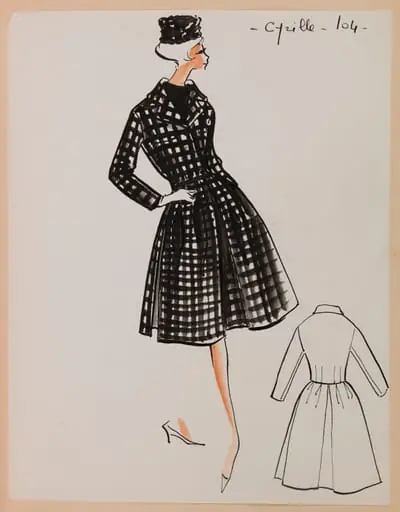
This image, dated around 1958, depicts a woman dressed in a tailored green coat adorned with interlocking 'C' motifs, paired with a white skirt and heels.
This image, dated around 1958, depicts a woman dressed in a tailored green coat adorned with interlocking 'C' motifs, paired with a white skirt and heels. The composition is minimalist, set against a pale beige background with a subtle suggestion of a white dress to the right. The figure’s poised stance and refined attire suggest a focus on fashion as a form of quiet expression, rather than narrative or theatricality.
Subject & Meaning
The subject is a woman embodying mid-century Parisian elegance, her posture restrained yet confident. The interlocking 'C' pattern on her coat references the Carven fashion house, signaling brand identity through design rather than logo. Her hands positioned—one in a pocket, the other behind her—convey composure and self-possession, aligning the image with ideals of understated sophistication prevalent in postwar French style.
Technique & Style
The image employs clean lines and muted tones to emphasize form and texture. The coat’s geometric pattern is rendered with precision, contrasting with the softness of the skirt and the smoothness of the heels. The background’s neutrality directs attention to the figure, while the faint outline of a second dress introduces a layered, almost ghostly dimension, suggesting movement or memory without disrupting the scene’s calm.
History & Provenance
The work is attributed to Carven, the French fashion house founded by Madame Carven in 1945. Though typically known for garments, this image appears to be a photographic record of a design, likely used for promotional or archival purposes. It is held in the collection of the Museum of Ethnography, where it functions as a cultural artifact reflecting mid-century fashion practices and gendered aesthetics.
Context
Created in the late 1950s, the image reflects a period when Parisian fashion emphasized tailored silhouettes and subtle branding. The use of monochrome palettes and minimalist composition aligns with broader trends in postwar design, where elegance was conveyed through restraint. The presence of the Carven monogram signals the growing importance of designer labels in shaping personal identity through clothing.
Legacy
As a documented example of Carven’s design language, this image contributes to the historical record of mid-century French fashion. Its preservation in an ethnographic museum underscores its value not merely as clothing, but as a cultural expression of identity, taste, and social norms. It remains a quiet testament to how fashion can encode meaning through form and detail.
Artist & collection
Artist
These delicate ink-on-paper drawings capture the quiet poetry of everyday things: pinecones, reeds, apples.
Museum
Palais Galliera - Musée de la Mode de la Ville de Paris
Continue through works from the same source collection.