Artwork
Cosaque
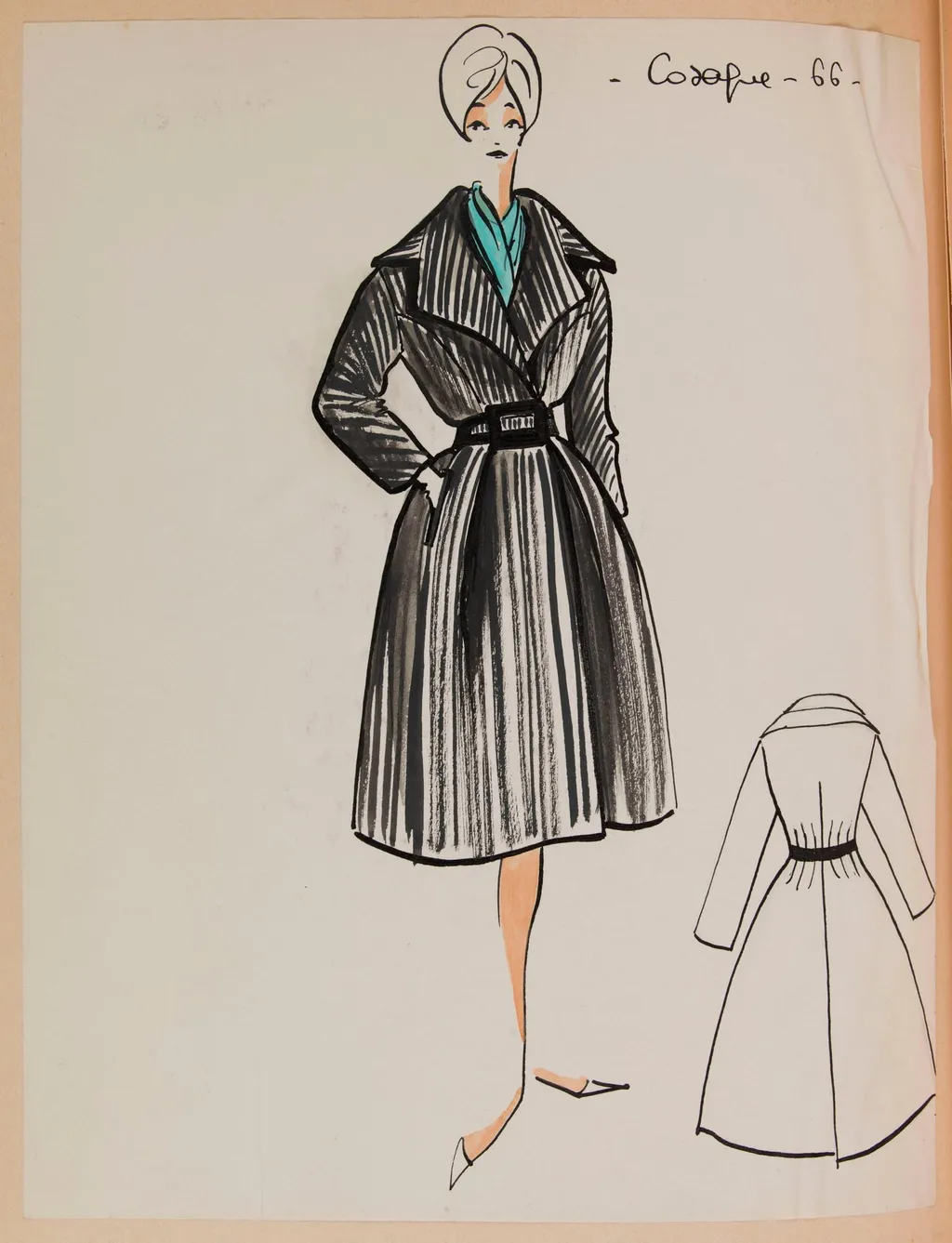
Cosaque is a drawing by Carven. It dates from 1958 and is held in the collection of the Palais Galliera - Musée de la Mode de la Ville de Paris.
About this work
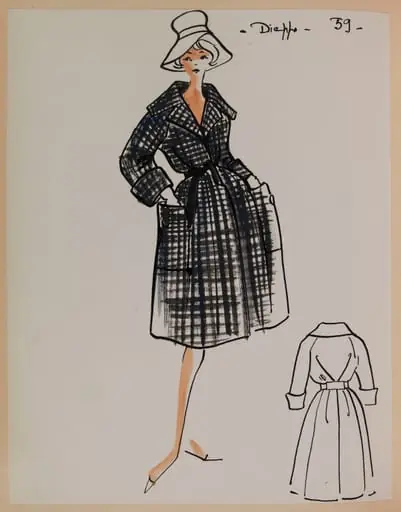
The image depicts a woman dressed in a black and white striped coat with a wide collar, paired with a teal shirt and a black belt around her waist.
The image depicts a woman dressed in a black and white striped coat with a wide collar, paired with a teal shirt and a black belt around her waist. She is standing with her hands on her hips, wearing white heels. To the right of the woman, there is a sketch of the back of the coat.
The woman's attire appears to be a formal outfit, possibly from the mid-20th century. The sketch of the coat's back suggests that the artist was focused on capturing the details of the garment.
If you're interested in learning more about fashion illustrations like this one, you might want to explore the subject of womenswear.
Overview
Cosaque is a mid-20th-century image by the artist Carven, dated approximately 1958. It resides in the collection of the Museum of Ethnography. The work presents a stylized portrait of a woman in formal attire, accompanied by a detailed auxiliary sketch of the garment’s back. The image functions as both a figure study and a technical record of clothing design, reflecting the intersection of fashion and visual documentation during this period.
Subject & Meaning
The subject is a woman posed with hands on hips, dressed in a black-and-white striped coat with a broad collar, a teal shirt, and a black waist belt, completed with white heels. Her stance conveys poise rather than narrative action. The inclusion of a separate sketch of the coat’s rear suggests the artist’s intent to document construction and silhouette, positioning the figure as a vehicle for showcasing garment design rather than personal identity.
Technique & Style
The image combines precise line work with restrained color, emphasizing form over texture. The woman is rendered in clean contours, while the coat’s back sketch is rendered with greater structural detail, indicating a deliberate focus on tailoring. The palette is limited to high-contrast tones and a single accent hue, reinforcing the graphic clarity typical of fashion illustrations from the era. The composition balances figure and artifact without narrative distraction.
History & Provenance
Created around 1958, the work entered the Museum of Ethnography’s collection as part of its documentation of mid-century fashion practices. Its origin lies within Carven’s broader body of work, which often engaged with the formal qualities of women’s clothing. The piece was likely produced for design reference or editorial use, later preserved for its ethnographic value in capturing the aesthetics and construction of postwar European attire.
Context
In the late 1950s, fashion illustration served as a bridge between design studios and publications, emphasizing silhouette and detail over emotional expression. Carven’s work reflects this functional tradition, where garments were studied as objects of craftsmanship. The inclusion of a technical sketch alongside the figure aligns with practices used by designers and patternmakers to analyze construction, distinguishing this work from purely decorative portraiture.
Legacy
Cosaque remains a representative example of mid-century fashion documentation, valued for its clarity and attention to garment structure. It contributes to the Museum of Ethnography’s archive of clothing as cultural artifact, offering insight into how design was visually recorded before the dominance of photography. The work continues to inform studies on the relationship between fashion illustration and textile design in the 20th century.
Artist & collection
Artist
These delicate ink-on-paper drawings capture the quiet poetry of everyday things: pinecones, reeds, apples.
Museum
Palais Galliera - Musée de la Mode de la Ville de Paris
Continue through works from the same source collection.