Artwork
Mokatan
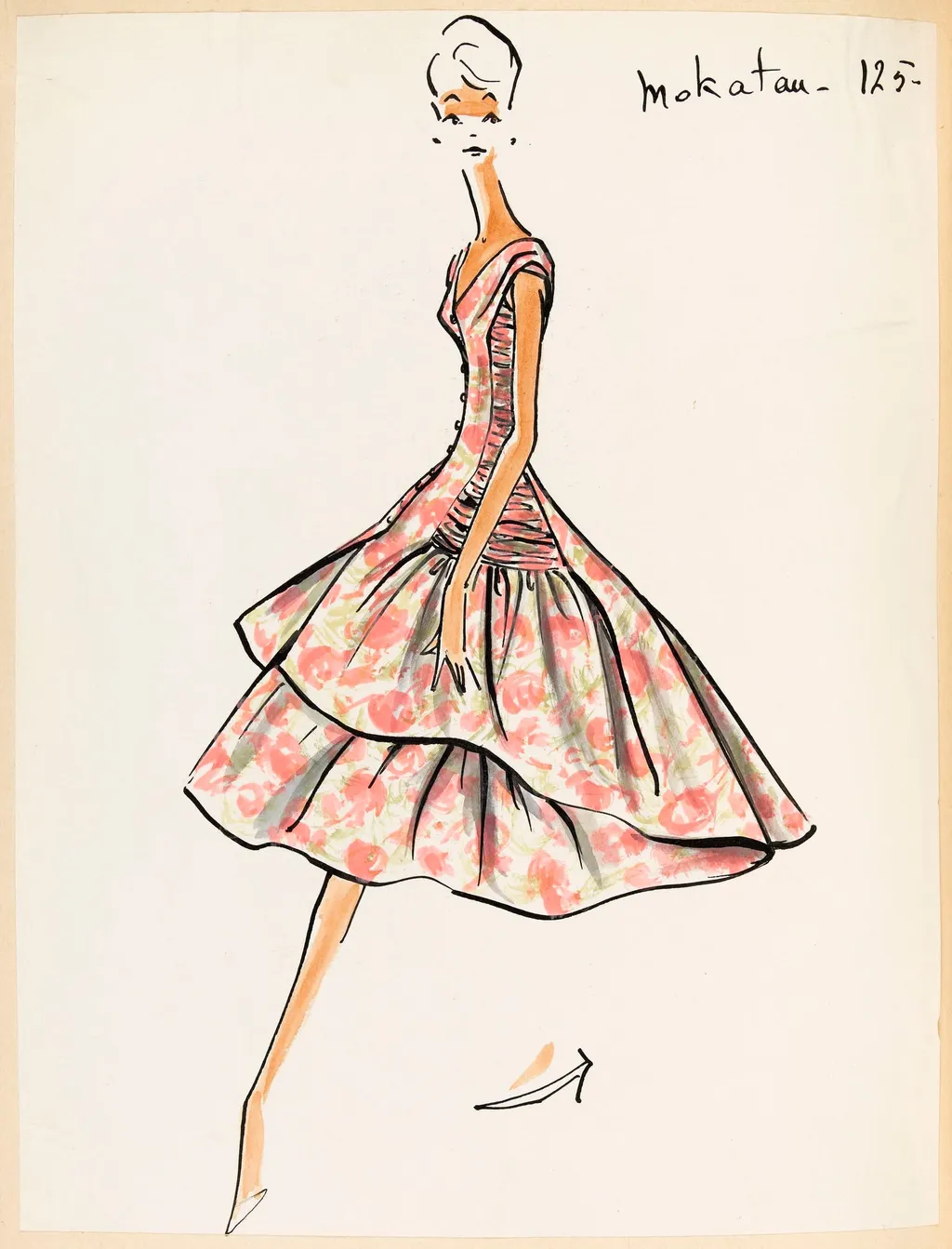
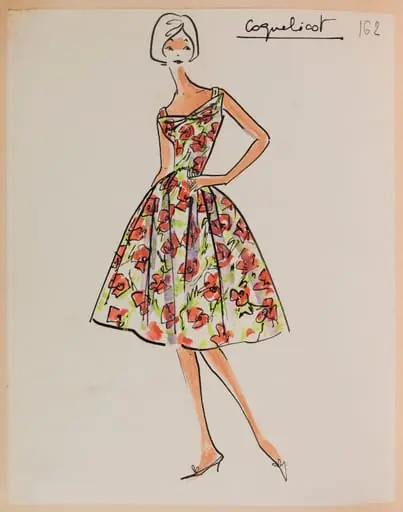
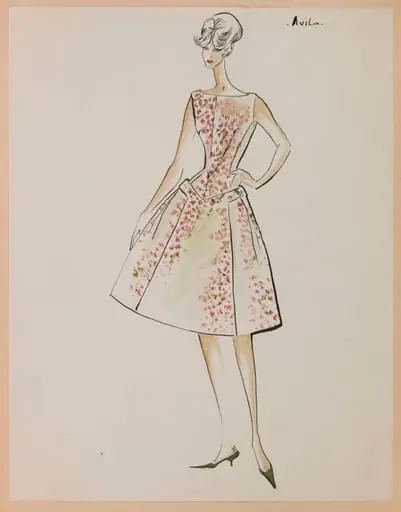
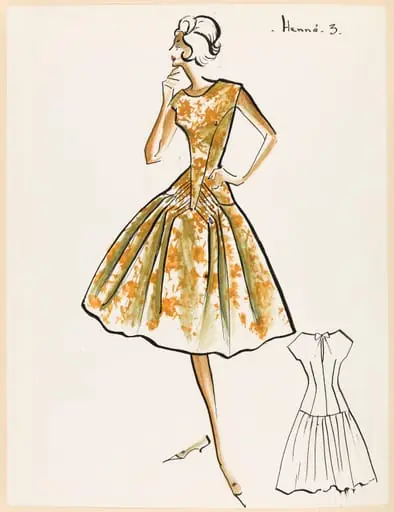
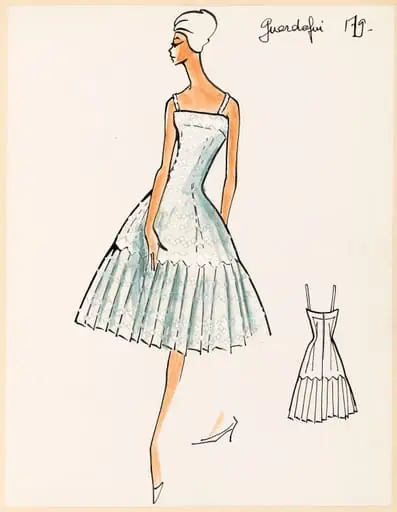
Mokatan is a drawing by Marie-Louise Carven. It dates from 1959 and is held in the collection of the Palais Galliera - Musée de la Mode de la Ville de Paris.
About this work
Overview
Executed in ink with fluid lines, it serves as both design record and artistic expression, now preserved in the Museum of Ethnography’s holdings.
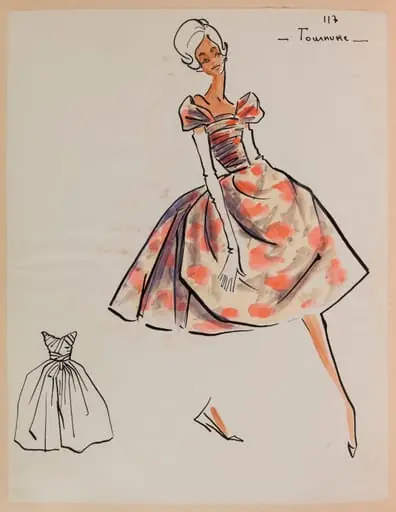
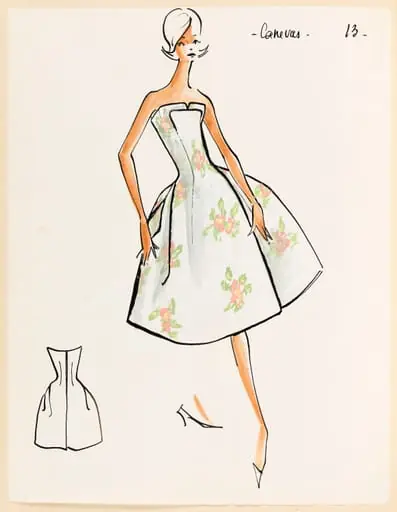
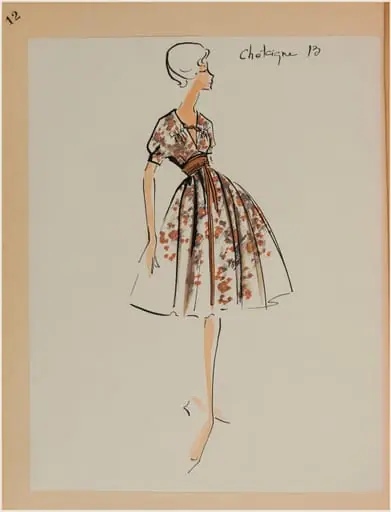
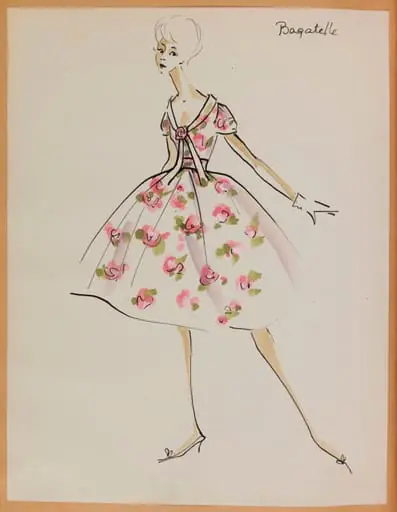
Created around 1959, Mokatan is a fashion sketch by French designer Marie-Louise Carven, founder of the House of Carven established in 1945. The drawing captures a dress from her prêt-à-porter collection, reflecting her focus on accessible, well-tailored garments for smaller frames. Executed in ink with fluid lines, it serves as both design record and artistic expression, now preserved in the Museum of Ethnography’s holdings.
Subject & Meaning
The sketch depicts a woman in a long, flared dress with a fitted bodice and a V-neckline, emphasizing grace and ease of movement. The bold floral pattern in pink, green, and white suggests a seasonal motif, likely intended for spring or summer wear. The name 'Mokatan'—handwritten in the corner—may reference a place, mood, or textile inspiration, though its exact origin remains unconfirmed. The design conveys quiet sophistication without ornamentation.
Technique & Style
Carven rendered the dress with loose, confident ink strokes that prioritize silhouette over detail. The fabric’s flow is suggested through rhythmic lines, while the floral pattern is indicated with minimal, rhythmic marks rather than precise rendering. The figure is simplified, allowing the garment’s structure to dominate. This approach reflects her design philosophy: clarity, functionality, and elegance achieved through restraint.
History & Provenance
Mokatan originates from Carven’s early prêt-à-porter line, one of the first such collections launched by a Parisian couturier. The sketch likely served as a production guide or presentation piece for clients or manufacturers. It entered the Museum of Ethnography’s collection as part of a broader effort to document 20th-century fashion as cultural artifact, rather than merely high art.
Context
In the late 1950s, Parisian fashion was shifting toward democratization, with designers like Carven responding to demand for affordable, well-made clothing. Her work stood apart by maintaining couture-level tailoring in ready-to-wear forms. Mokatan reflects this transition, embodying the era’s move away from rigid formality toward livable, feminine silhouettes suited to modern urban life.
Legacy
Mokatan exemplifies Carven’s role in redefining postwar fashion accessibility. Her integration of couture principles into ready-to-wear influenced later designers who prioritized fit and proportion over extravagance. Though not widely publicized, such sketches remain vital records of how everyday elegance was conceived and produced during fashion’s modernization in mid-century Europe.
Artist & collection
Artist
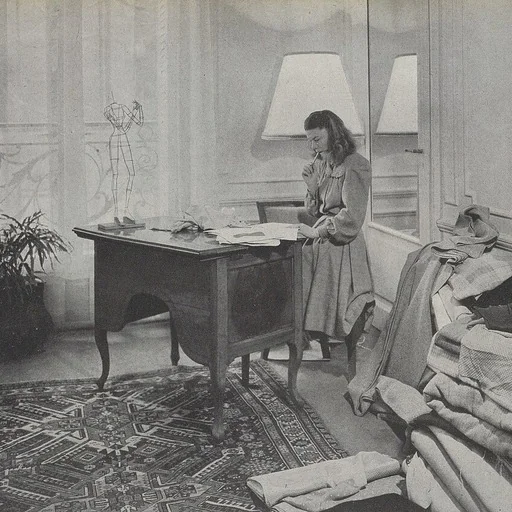
Marie-Louise Carven (31 August 1909 – 8 June 2015), born Carmen de Tommaso, was a French fashion designer who founded the house of Carven in 1945.
Museum
Palais Galliera - Musée de la Mode de la Ville de Paris
Continue through works from the same source collection.
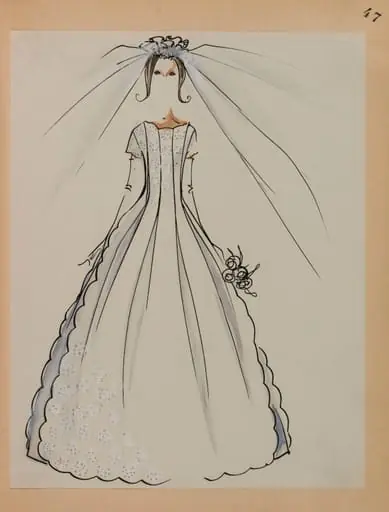 Robe de mariée festonnée et son voile
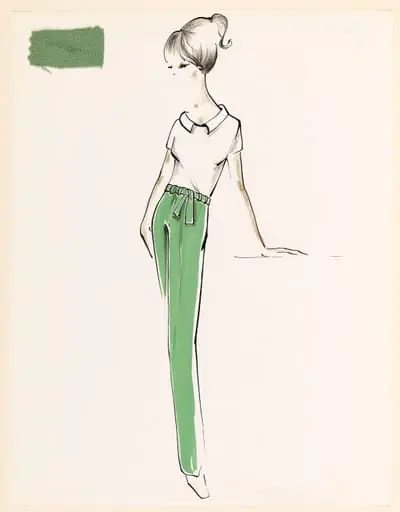 Haut blanc à manches courtes et pantalon vert à ceinture nouée
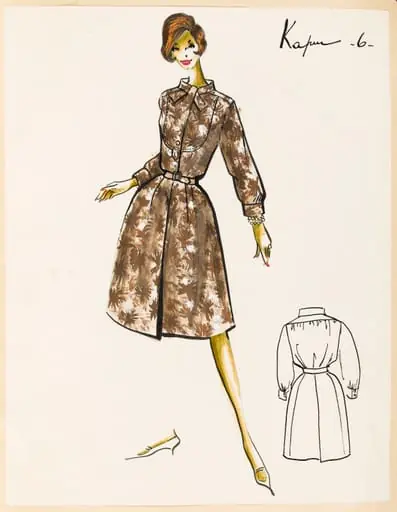 Kapur
Kapur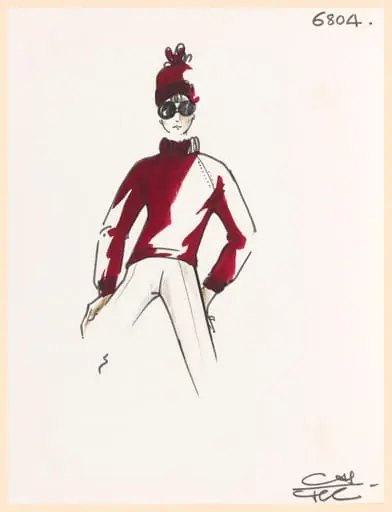 Pull-over à manches longues pourpre, bonnet assorti, pantalon et lunettes de soleil
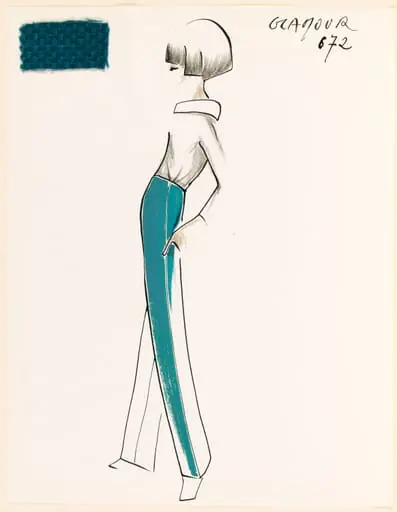 GLAMOUR
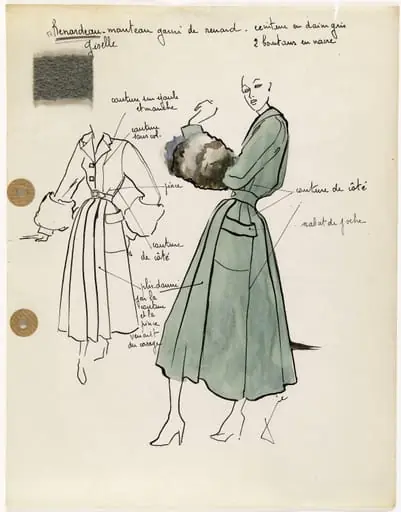 'Renardeau'
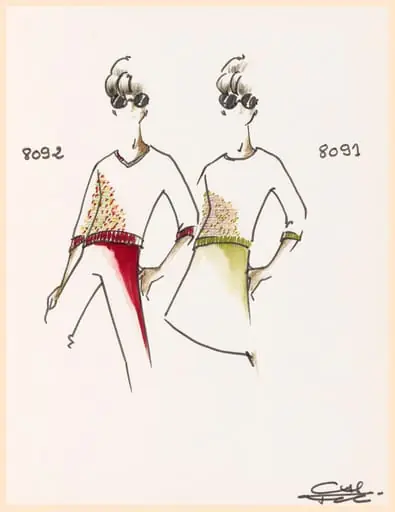 Pull-over à manches trois quarts et à encolure V à motifs multicolores, pantalon cerise et lunettes de soleil
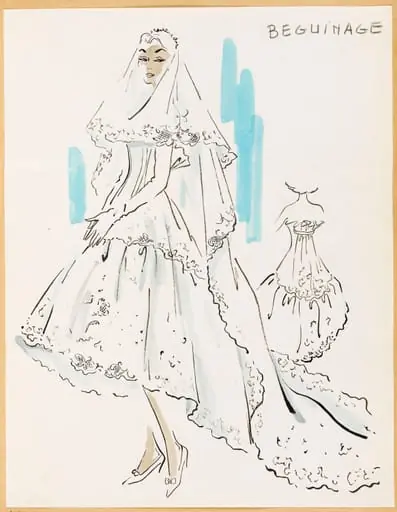 Béguinage