Artwork
Pieuvre
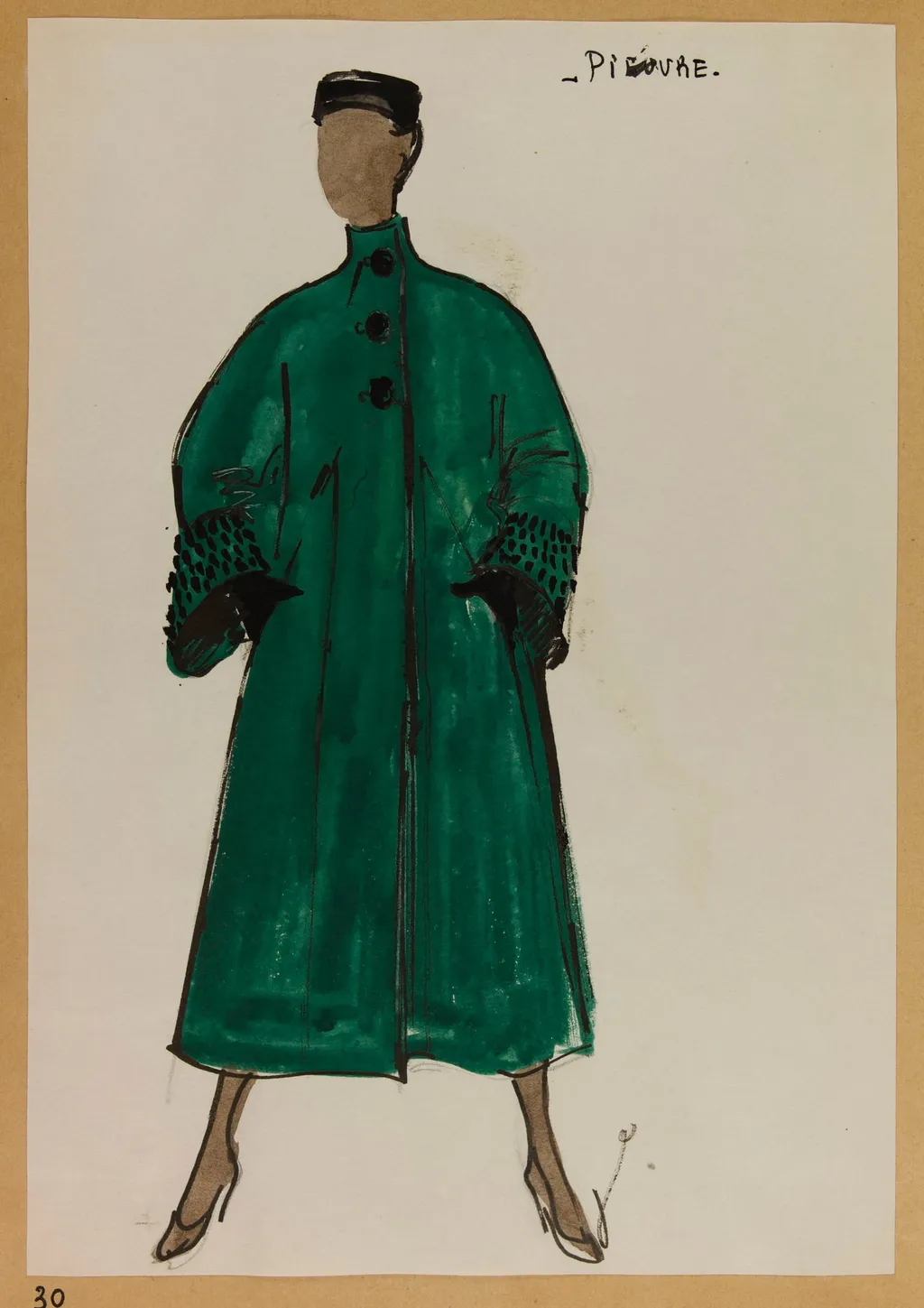
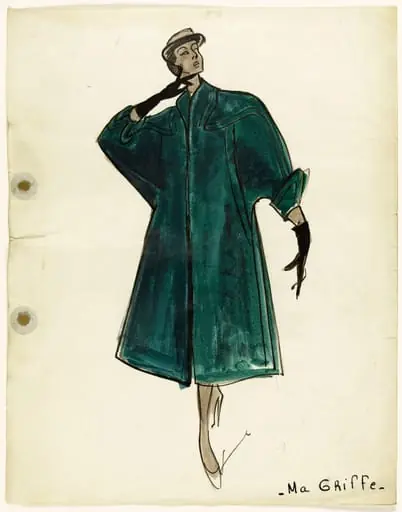
Pieuvre is a drawing by Carven. It dates from 1952 and is held in the collection of the Palais Galliera - Musée de la Mode de la Ville de Paris.
About this work
Overview
Executed with swift, unrefined lines and flat areas of color, the drawing captures a moment of quiet movement rather than formal portraiture.
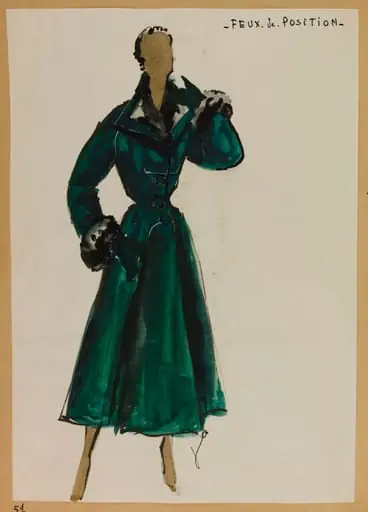
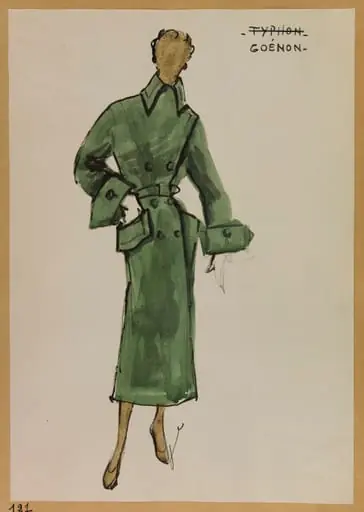
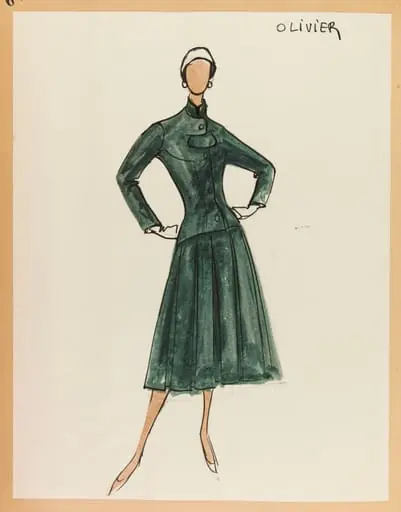
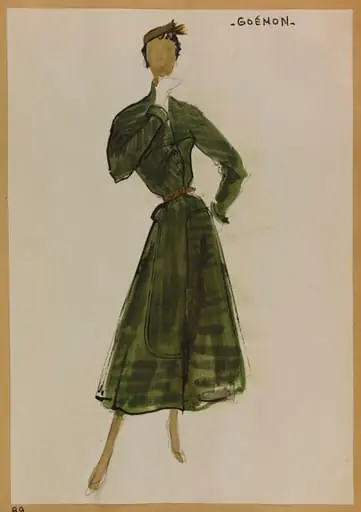
Pieuvre, created in 1952 by the designer Carven, is a pencil and ink sketch depicting a woman in a practical, dark green coat. Executed with swift, unrefined lines and flat areas of color, the drawing captures a moment of quiet movement rather than formal portraiture. It resides in the collection of the Museum of Ethnography, where it is valued for its candid portrayal of everyday dress and gesture.
Subject & Meaning
The figure is rendered as an anonymous woman, her identity obscured by a flat cap and lack of facial detail. Her posture—hands tucked into coat pockets—suggests contemplation or readiness to walk. The coat’s utilitarian design, with its high collar and functional buttons, implies a focus on comfort and mobility over ornamentation, reflecting mid-century attitudes toward practical women’s wear.
Technique & Style
Carven employed rapid, confident strokes and unmodulated color to convey form without shading or texture. The coat’s cuffs feature small, repetitive motifs, hinting at textile patterns, while the overall composition avoids refinement. This sketch-like approach prioritizes immediacy and movement, aligning with a design process that valued spontaneity over polished finish.
History & Provenance
The drawing entered the Museum of Ethnography’s collection as part of a broader acquisition of design materials related to mid-20th-century fashion. Its origin as a working sketch suggests it was not intended for public display but preserved for its insight into Carven’s design thinking and the evolution of everyday attire during the postwar period.
Context
In early 1950s Europe, fashion was shifting toward simpler, more accessible silhouettes. Carven’s sketch reflects this trend, emphasizing function over luxury. The figure’s attire aligns with the rise of casual, wearable clothing for urban women, contrasting with the elaborate styles of previous decades and signaling a cultural move toward practicality.
Legacy
Pieuvre remains a quiet testament to Carven’s interest in the ordinary. As a study rather than a finished garment, it offers insight into how design ideas were distilled from observation. Its preservation in an ethnographic context underscores its value as a document of daily life, not merely fashion history.
Artist & collection
Artist
These delicate ink-on-paper drawings capture the quiet poetry of everyday things: pinecones, reeds, apples.
Museum
Palais Galliera - Musée de la Mode de la Ville de Paris
Continue through works from the same source collection.