Artwork
Quai des Brumes
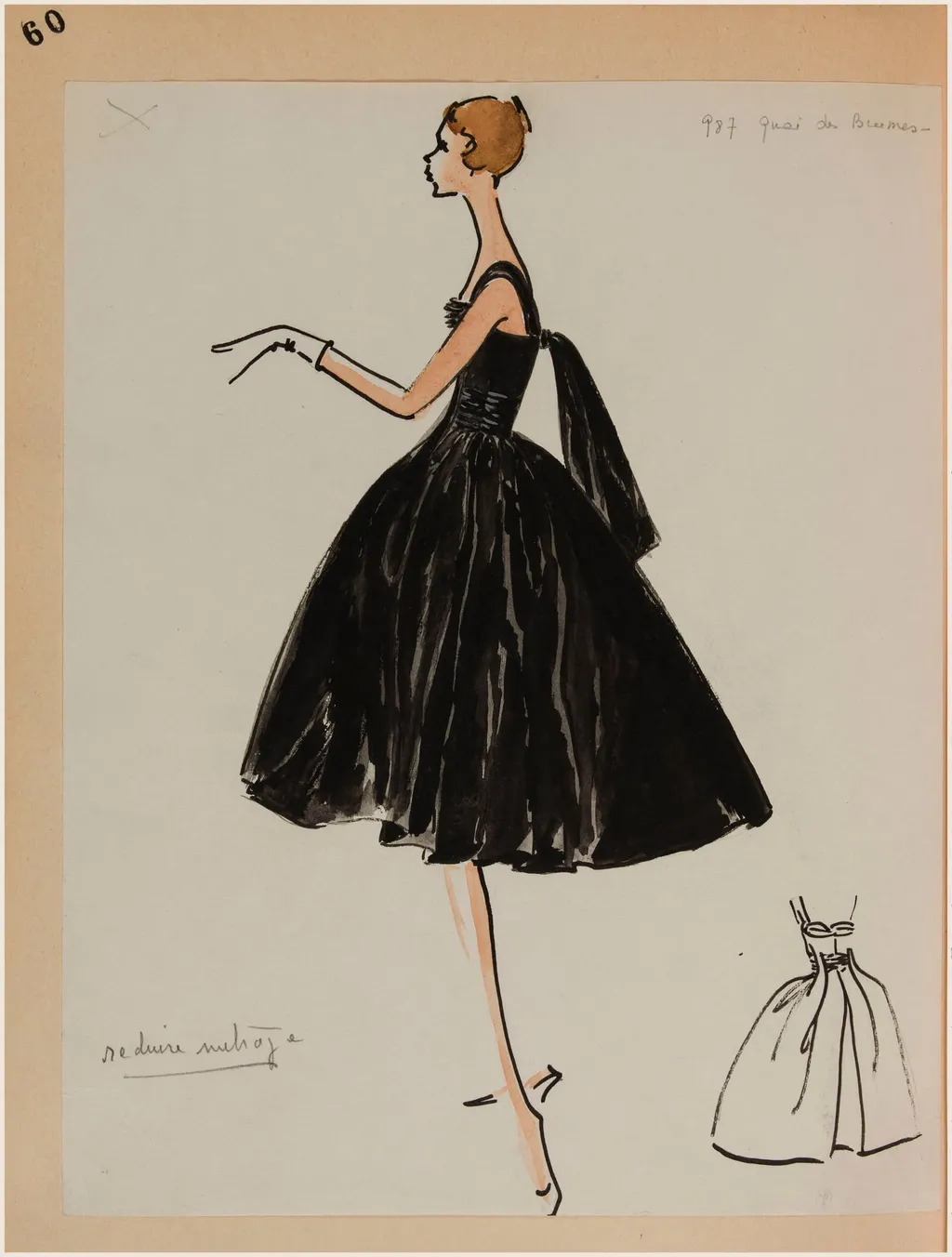
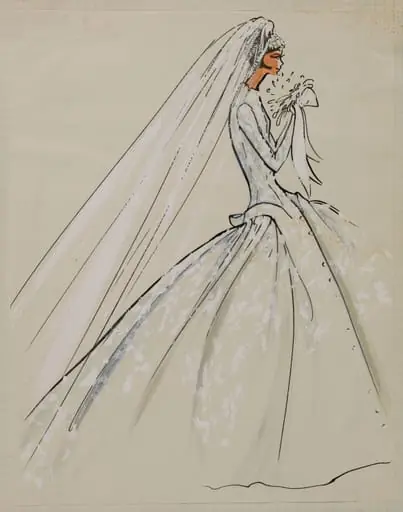
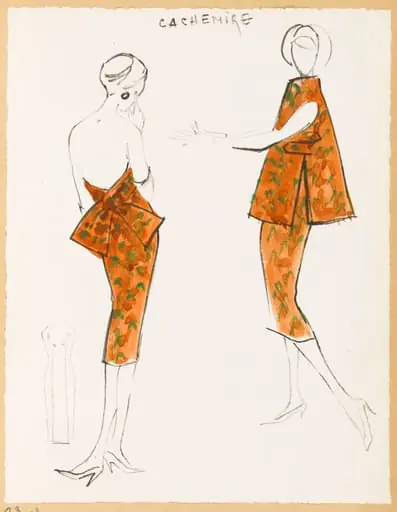
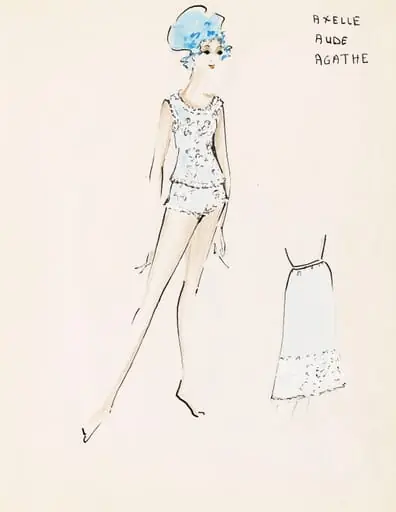
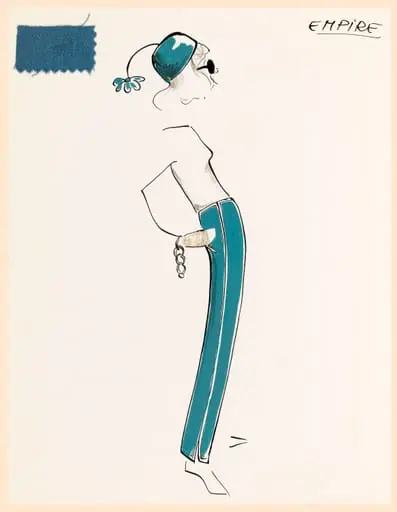
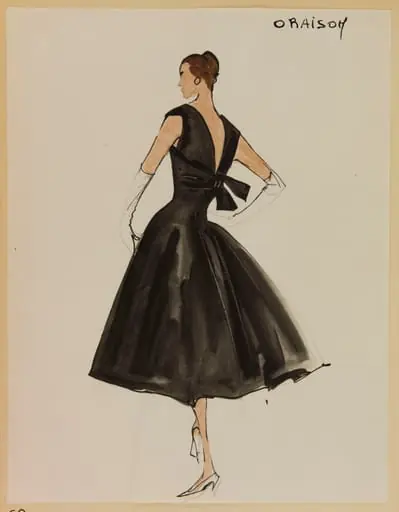
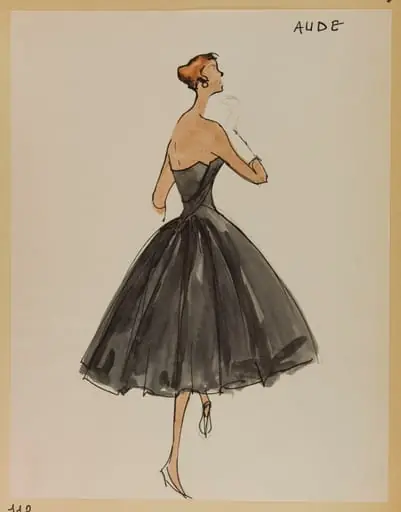
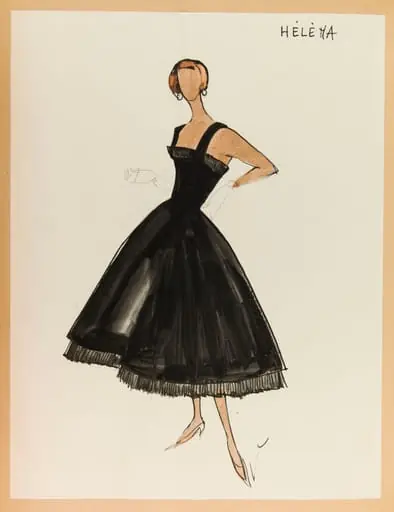
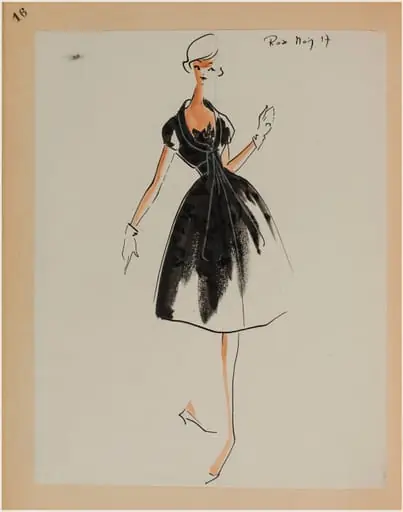
Quai des Brumes is a drawing by Carven. It dates from 1958 and is held in the collection of the Palais Galliera - Musée de la Mode de la Ville de Paris.
About this work
Overview
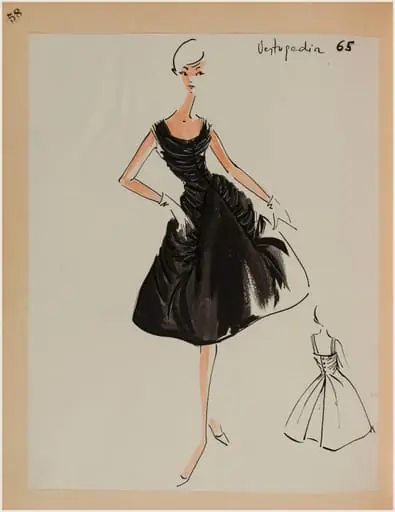
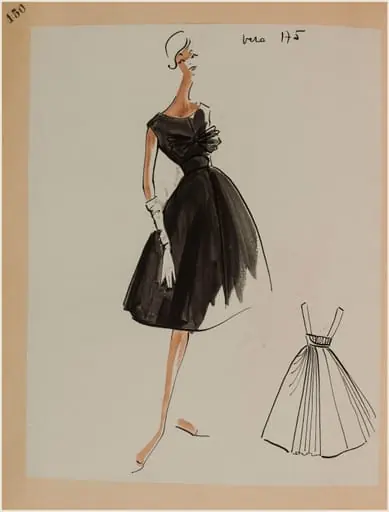
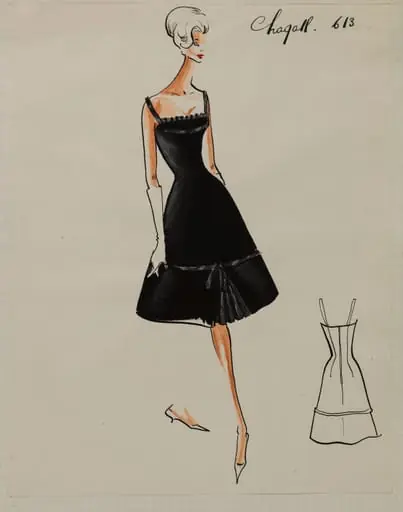
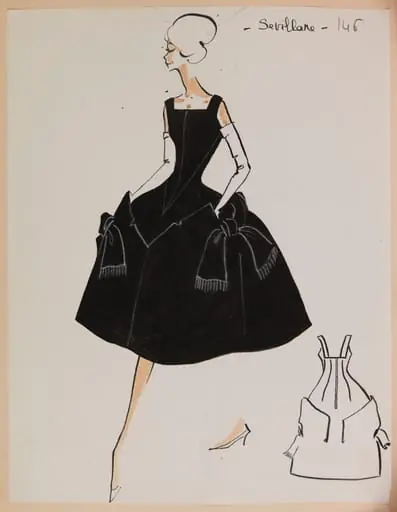
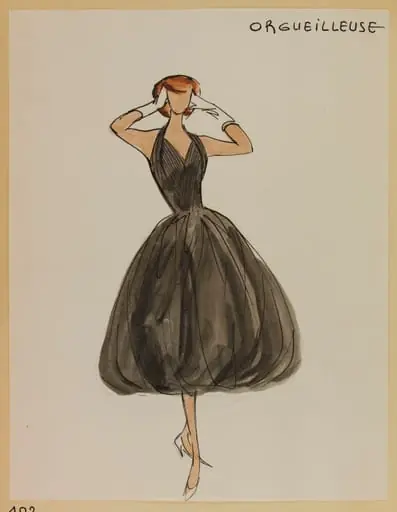
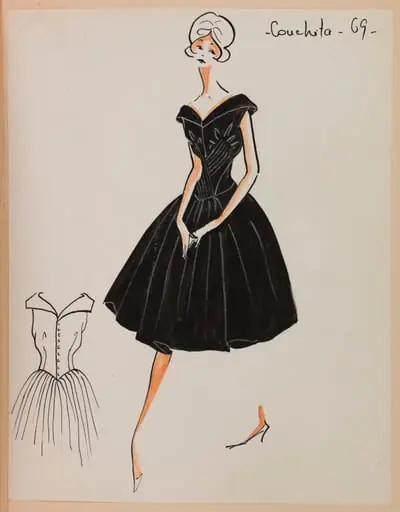
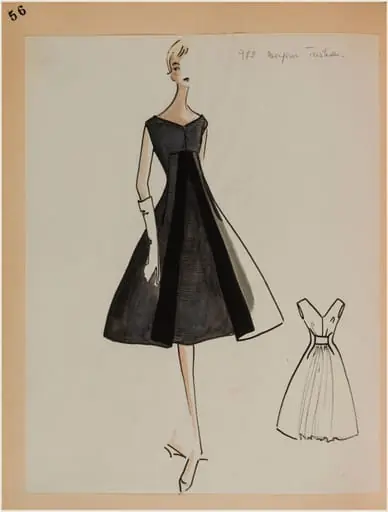
Quai des Brumes, attributed to the French fashion house Carven and dated to around 1958, is part of the collection of the Museum of Ethnography. The photograph captures a solitary woman in a sleek black dress, poised as if in mid‑step, her movement suggested by the billowing fabric that trails just below the knee.
Subject & Meaning
The central figure is a young woman with short brown hair, dressed in a sleeveless black ensemble complemented by white gloves. Her right arm is outstretched while the left is bent, a gesture that conveys both confidence and a subtle invitation, evoking a sense of refined urban poise.
Technique & Style
The image employs a clear, high‑contrast photographic style typical of mid‑century fashion advertising, emphasizing the silhouette of the dress and the crispness of the white accessories. The composition isolates the model against a neutral background, allowing the flowing skirt and the delicate white dress fragment in the lower right to draw the eye.
History & Provenance
Created circa 1958, the work reflects Carven’s post‑war aesthetic of understated elegance. It entered the Museum of Ethnography’s holdings as part of a broader acquisition of mid‑twentieth‑century fashion imagery, illustrating the intersection of clothing design and visual culture during that era.
Context
The photograph aligns with the late 1950s trend of portraying modern women as autonomous and stylish, a visual language that Carven helped shape through its ready‑to‑wear collections. The inclusion of white gloves and a modest skirt length mirrors contemporary standards of sophistication while hinting at the emerging leisure culture of post‑war Europe.
Artist & collection
Artist
These delicate ink-on-paper drawings capture the quiet poetry of everyday things: pinecones, reeds, apples.
Museum
Palais Galliera - Musée de la Mode de la Ville de Paris
Continue through works from the same source collection.