Artwork
'Rama'
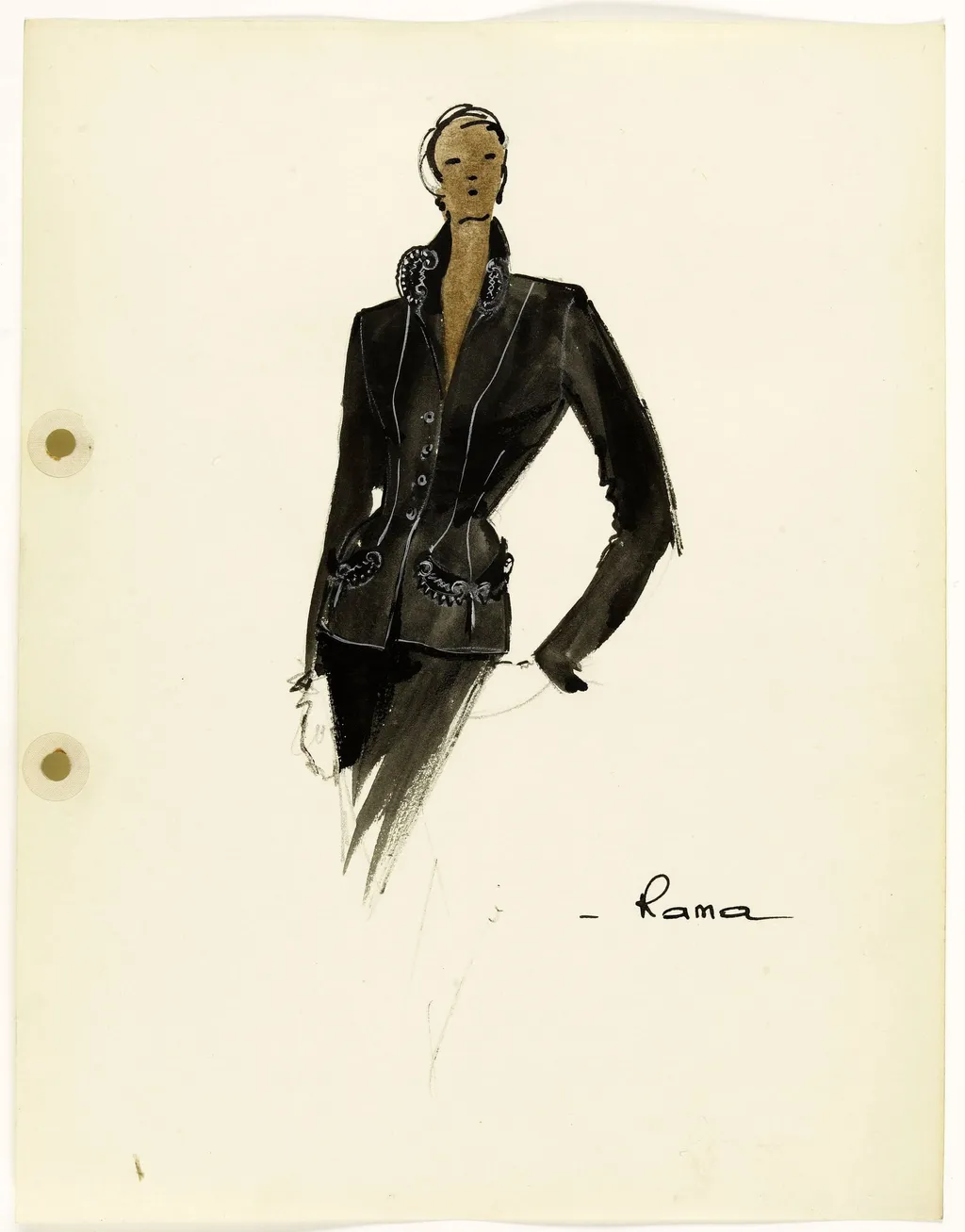
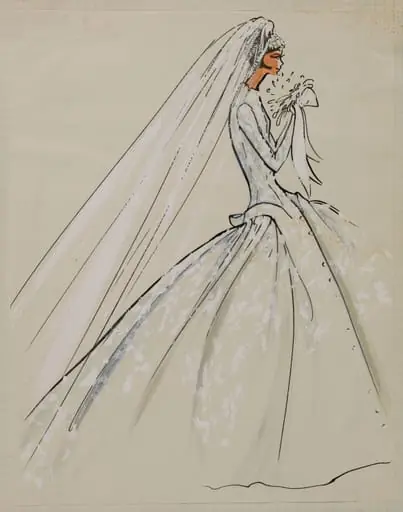
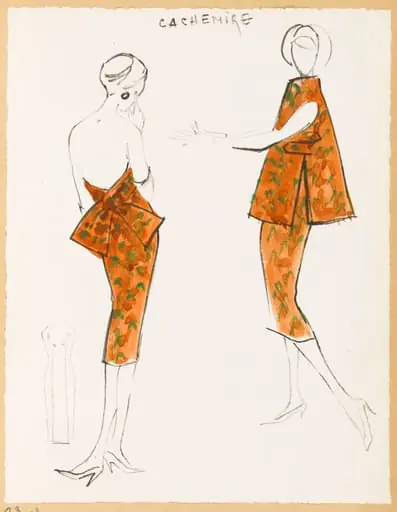
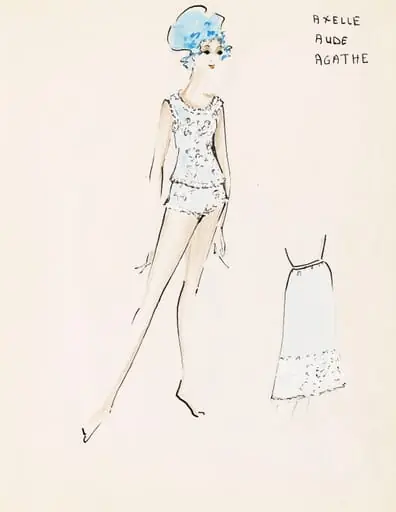
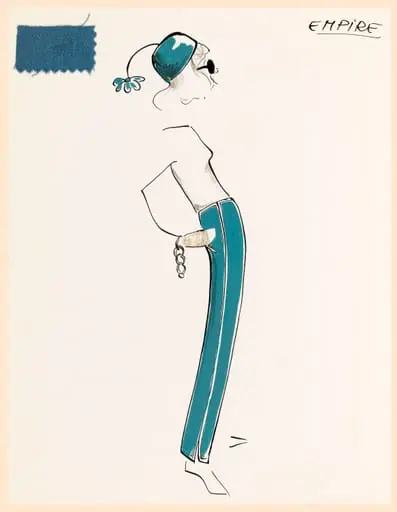
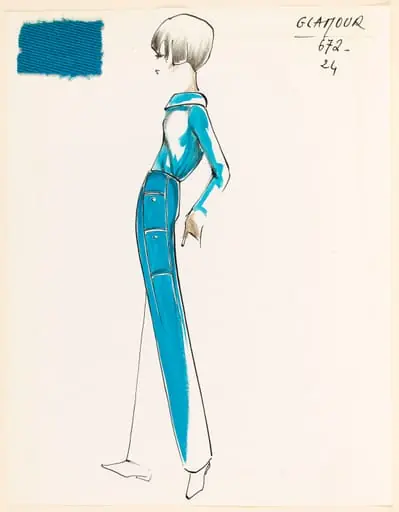
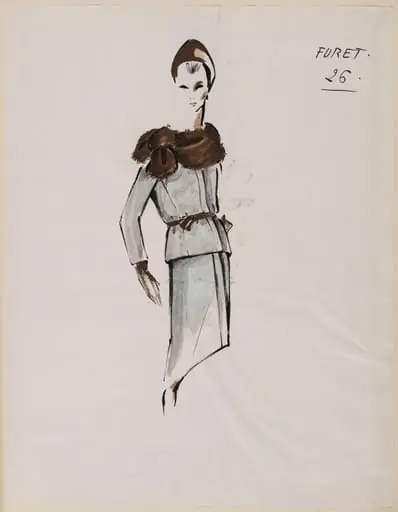
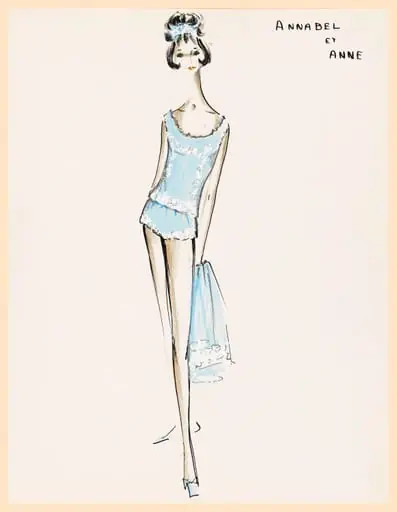
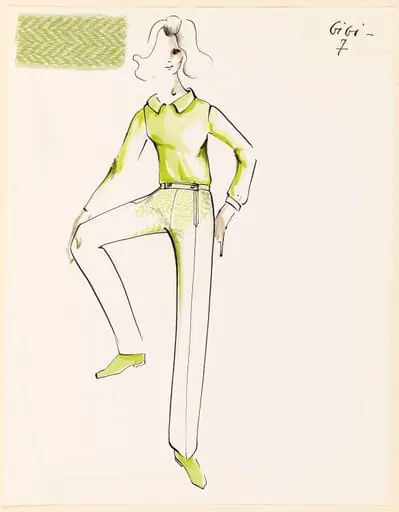
'Rama' is a drawing by Carven. It dates from 1951 and is held in the collection of the Palais Galliera - Musée de la Mode de la Ville de Paris.
About this work
Overview
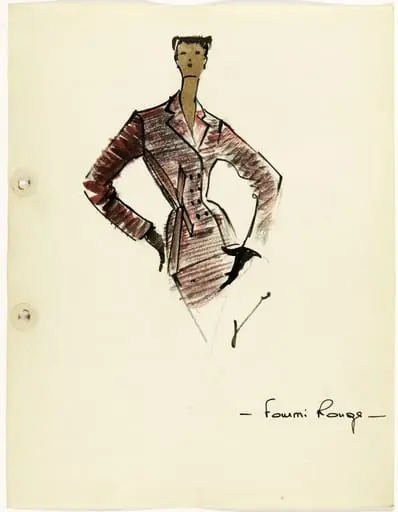
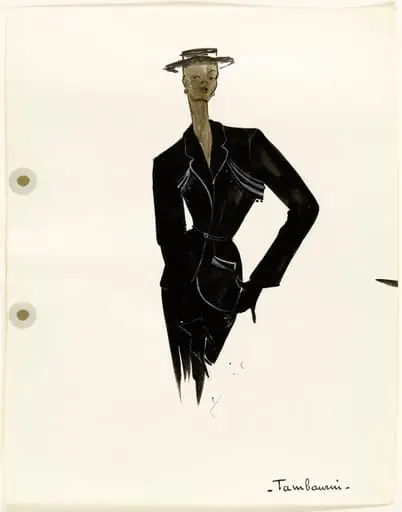
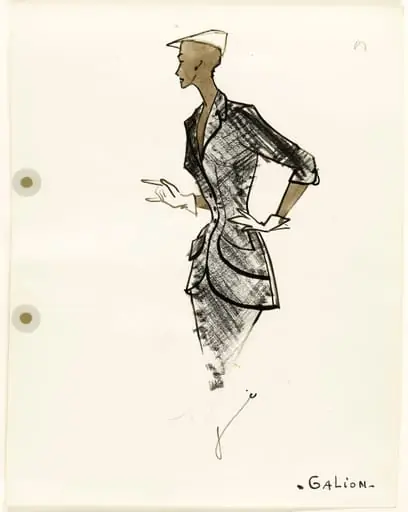
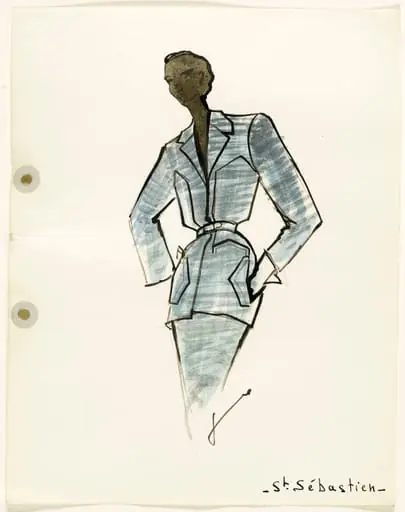
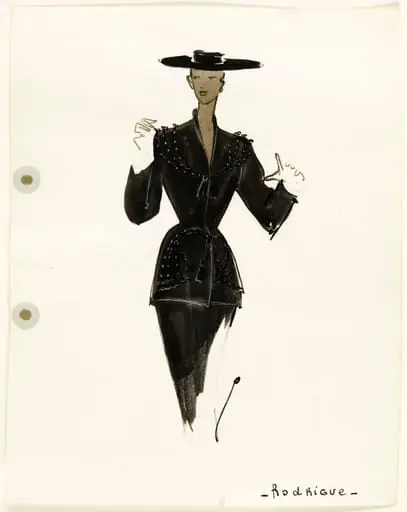
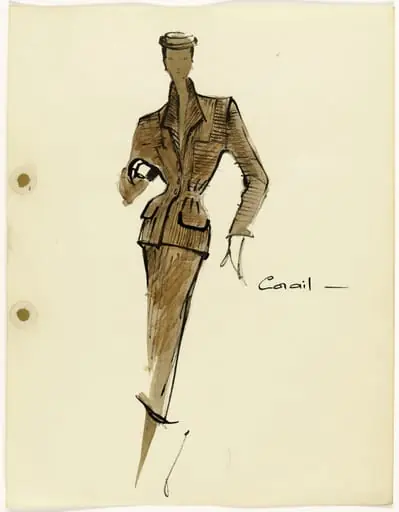
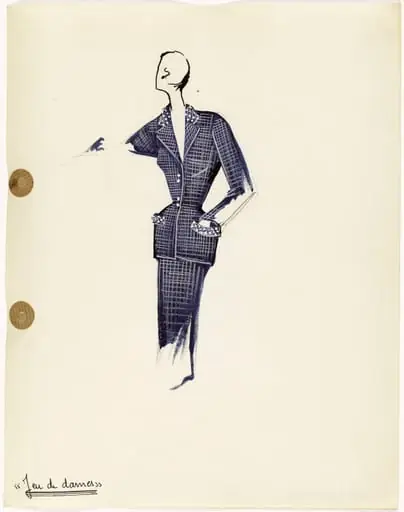
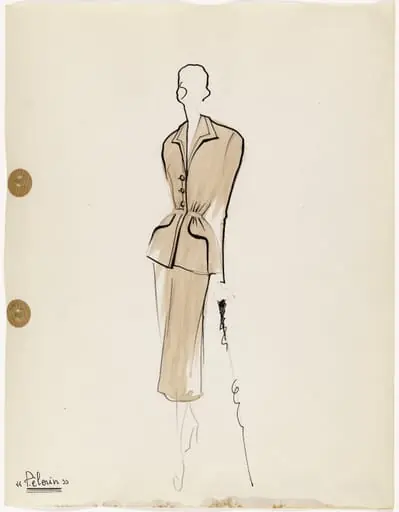
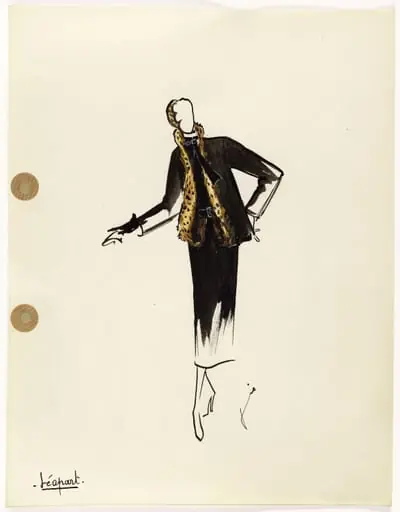
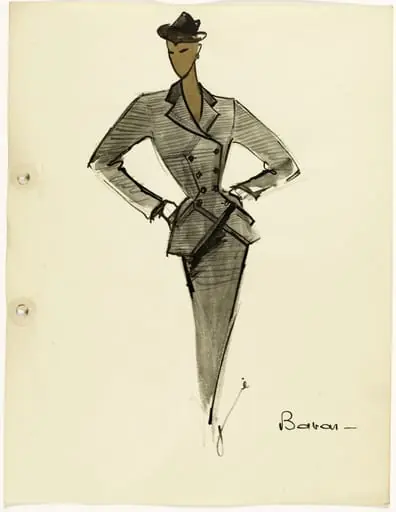
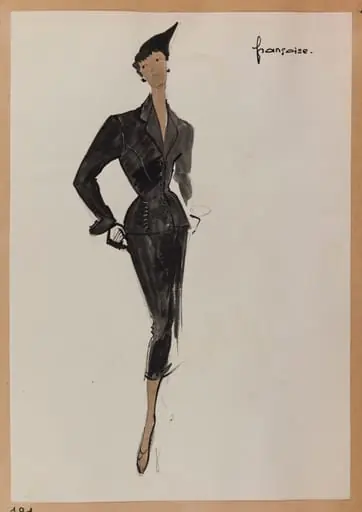
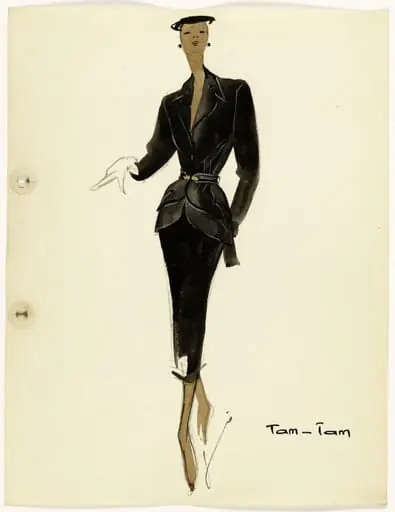
Created around 1951 by Carven, this drawing depicts a woman in a tailored black ensemble with white detailing. The work resides in the Museum of Ethnography and exemplifies mid-century fashion illustration. Rendered with fluid, confident lines and little tonal variation, it captures posture and garment structure rather than photorealistic detail, emphasizing form over texture.
Subject & Meaning
The figure stands in a composed, upright stance—one hand on the hip, the other relaxed at the side—conveying quiet confidence. The high-collared jacket and matching skirt suggest a formal, possibly urban, attire of the period. The absence of facial features directs focus to the silhouette and cut of the clothing, positioning the garment as the central subject rather than the individual.
Technique & Style
The drawing employs bold, unbroken contours and sparse shading to define volume and movement. Lines are loose yet deliberate, suggesting rapid execution and an artist’s familiarity with garment anatomy. The minimal use of tone enhances the graphic quality, aligning the work with fashion sketch traditions that prioritize clarity and elegance over realism.
History & Provenance
The drawing entered the collection of the Museum of Ethnography shortly after its creation, likely as part of a broader acquisition of mid-century fashion materials. Its preservation reflects institutional interest in documenting design practices beyond haute couture, capturing everyday elegance in wearable art from the era.
Context
In the early 1950s, fashion illustration served as a vital bridge between designer and client, often produced quickly for editorial or atelier use. Carven’s work aligns with Parisian design circles where simplicity and structure were prized. This piece reflects a shift toward streamlined aesthetics in postwar womenswear, emphasizing clean lines over ornamentation.
Legacy
Though not widely published, the drawing contributes to the archival record of mid-century fashion design. Its preservation in an ethnographic context underscores the cultural significance of everyday dress. It remains a quiet example of how illustration distilled the spirit of its time through gesture and cut, rather than detail.
Artist & collection
Artist
These delicate ink-on-paper drawings capture the quiet poetry of everyday things: pinecones, reeds, apples.
Museum
Palais Galliera - Musée de la Mode de la Ville de Paris
Continue through works from the same source collection.