Artwork
'Corail'
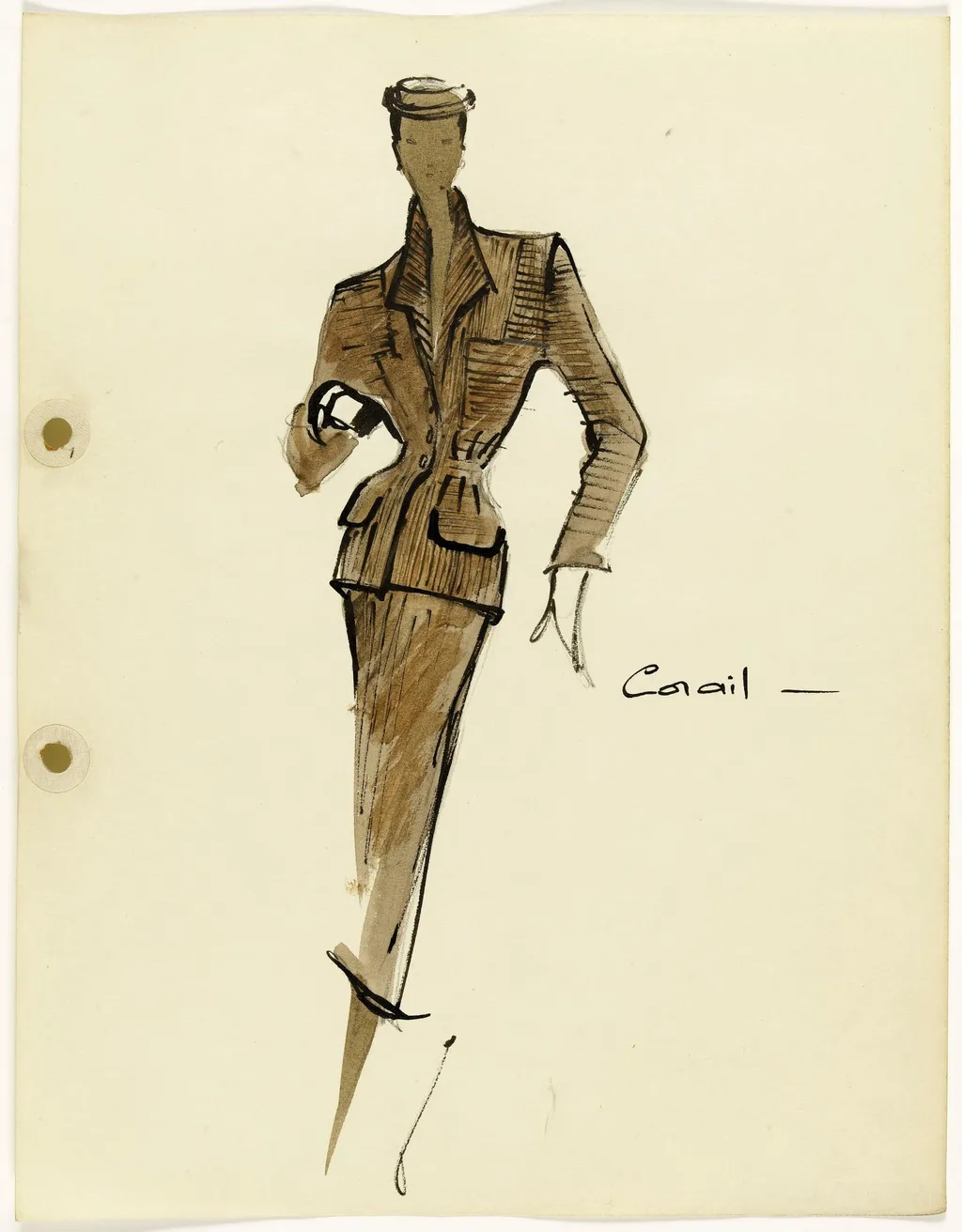
'Corail' is a drawing by Marie-Louise Carven. It dates from 1951 and is held in the collection of the Palais Galliera - Musée de la Mode de la Ville de Paris.
About this work
Overview
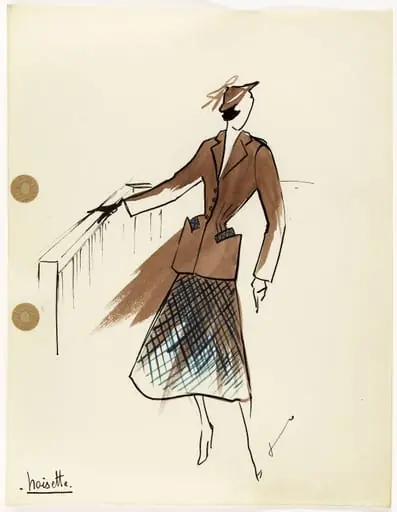
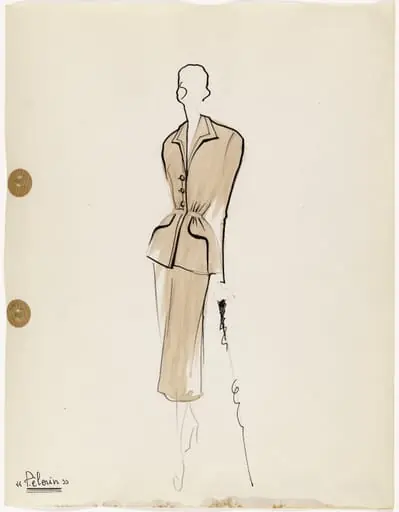
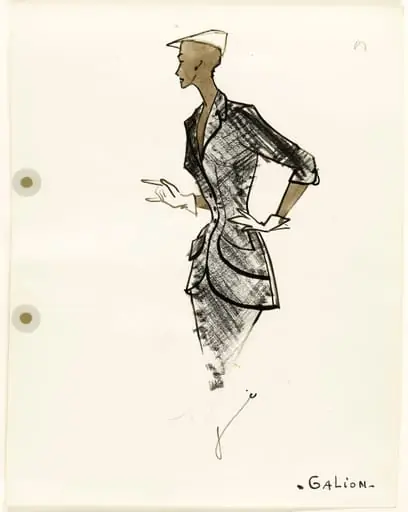
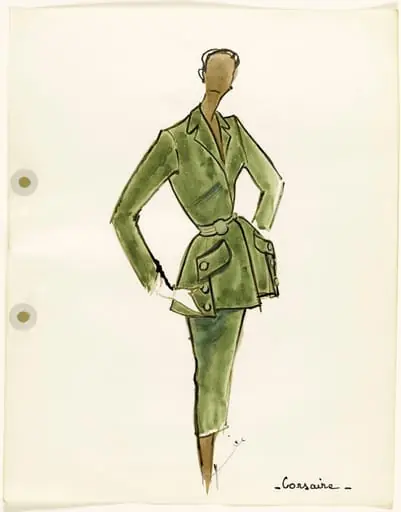
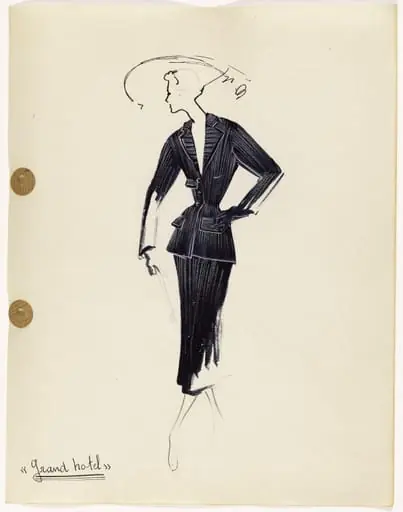
Created around 1951, *Corail* is a pencil sketch by French designer Marie-Louise Carven, capturing a figure in a striped, belted coat with a wide-brimmed hat.
Created around 1951, *Corail* is a pencil sketch by French designer Marie-Louise Carven, capturing a figure in a striped, belted coat with a wide-brimmed hat. Executed in loose, fluid lines with subtle shading, the drawing appears to be a preparatory study for a garment design. Its informal quality suggests it was made during the design process rather than as a finished presentation piece. The signature 'Carven' confirms authorship and aligns with her established brand.
Subject & Meaning
The figure depicted is a woman standing sideways, dressed in a long coat that suggests both structure and movement. The placement of one hand in the pocket conveys a sense of casual poise, reflecting Carven’s interest in wearable elegance for petite frames. The striped pattern and belt hint at a balance between rhythm and tailoring, key elements in her approach to design. The sketch does not aim for narrative but rather captures a silhouette intended for production.
Technique & Style
Carven used quick, gestural pencil strokes to define form, with minimal shading to suggest fabric folds and volume. The lines are unrefined, avoiding the precision typical of presentation drawings, indicating spontaneity and functional intent. The loose handling reflects a working method common among designers translating ideas from mind to paper. The absence of color or elaborate detail underscores its role as a preliminary study rather than a display object.
History & Provenance
The sketch entered the collection of the Museum of Ethnography, an unusual home for a fashion study, suggesting its value as a cultural artifact beyond mere design. Carven founded her fashion house in 1945 and was among the first Parisian designers to embrace prêt-à-porter, making such sketches historically significant as records of early mass-market fashion development. Its preservation reflects growing institutional interest in design as part of everyday material culture.
Context
In the early 1950s, Parisian couture was transitioning toward accessible fashion, and Carven was at the forefront, designing for women who sought refined yet practical clothing. Her innovations included early push-up bra patents and a focus on proportion suited to smaller frames. *Corail* reflects this ethos: a functional sketch rooted in real wearability, not fantasy. It aligns with broader postwar shifts toward democratizing fashion through thoughtful, efficient design.
Legacy
Though modest in scale, *Corail* exemplifies Carven’s influence on modern fashion’s move toward accessibility and bodily awareness. Her sketches, like this one, document a design philosophy that prioritized comfort and proportion over ornamentation. As one of the few female designers of her era to build a lasting brand, her working drawings now serve as quiet testaments to the intellectual labor behind everyday clothing.
Artist & collection
Artist
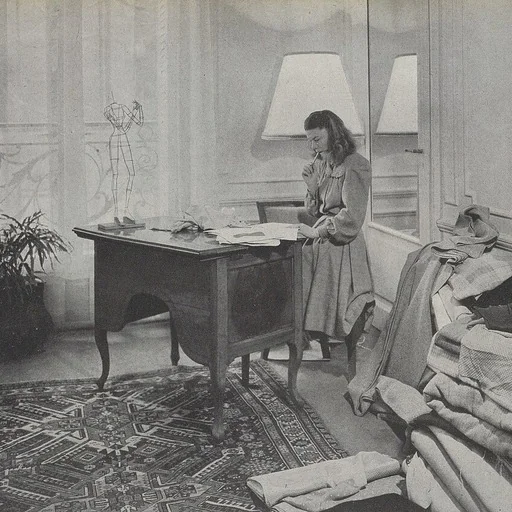
Marie-Louise Carven (31 August 1909 – 8 June 2015), born Carmen de Tommaso, was a French fashion designer who founded the house of Carven in 1945.
Museum
Palais Galliera - Musée de la Mode de la Ville de Paris
Continue through works from the same source collection.
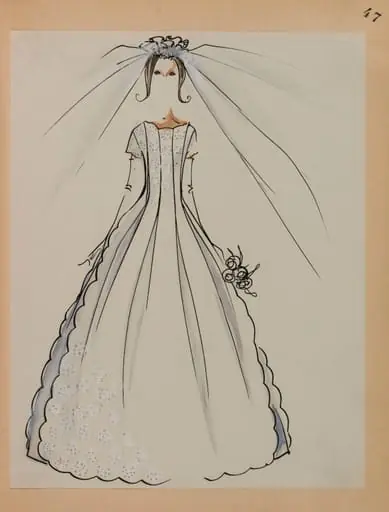 Robe de mariée festonnée et son voile
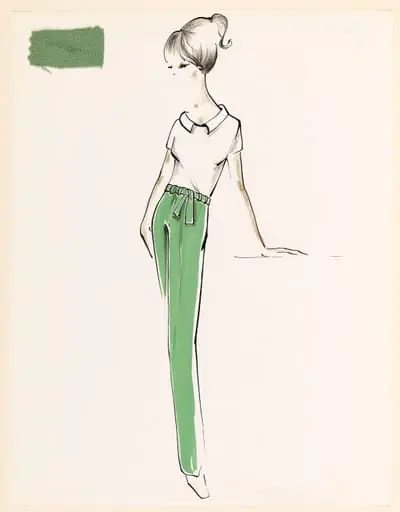 Haut blanc à manches courtes et pantalon vert à ceinture nouée
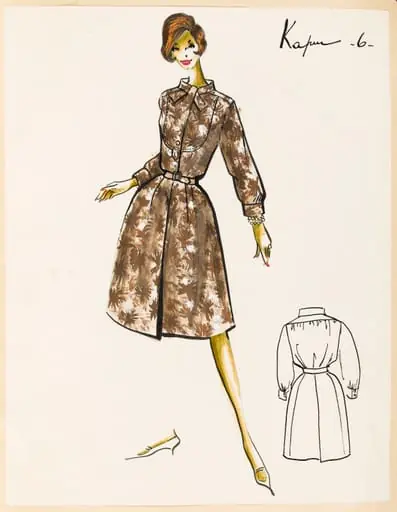 Kapur
Kapur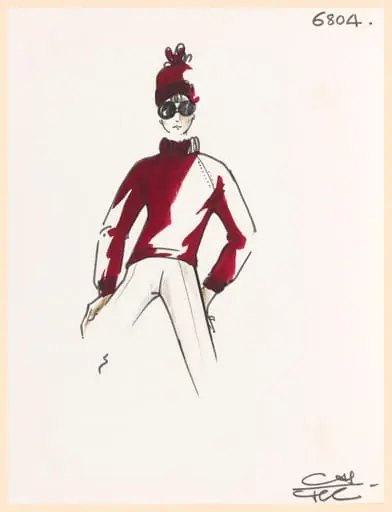 Pull-over à manches longues pourpre, bonnet assorti, pantalon et lunettes de soleil
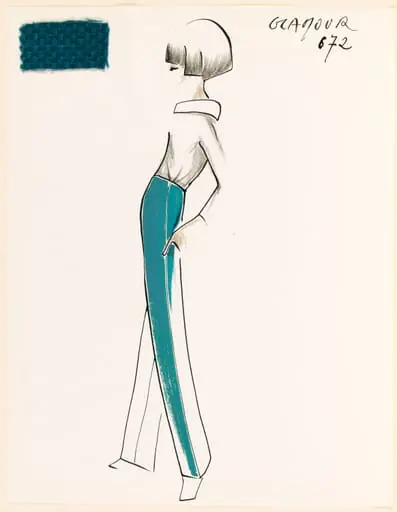 GLAMOUR
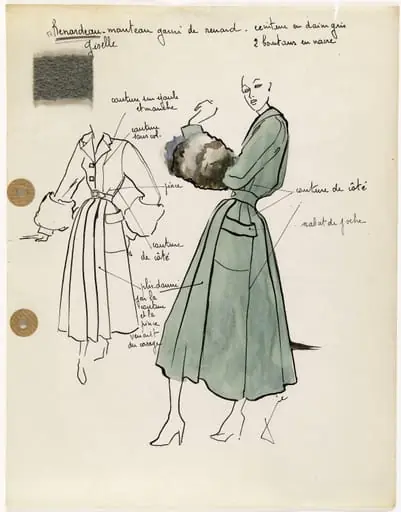 'Renardeau'
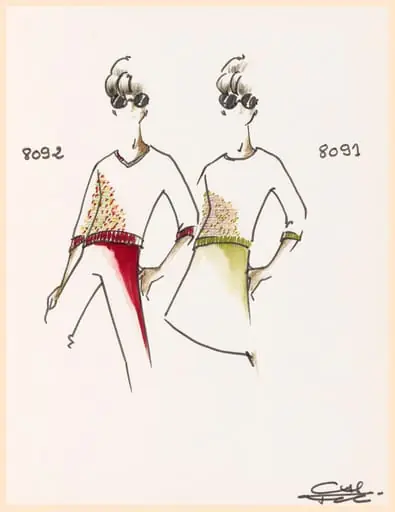 Pull-over à manches trois quarts et à encolure V à motifs multicolores, pantalon cerise et lunettes de soleil
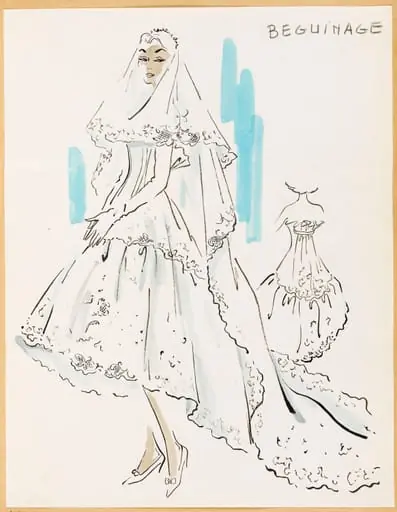 Béguinage