Artwork
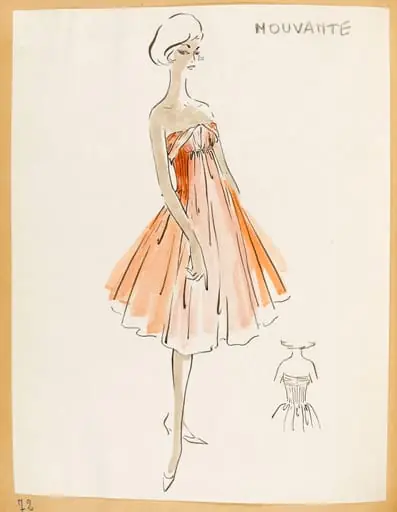
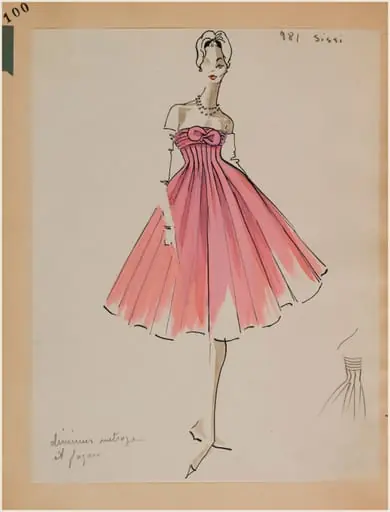
Robe corail plissée sur le haut
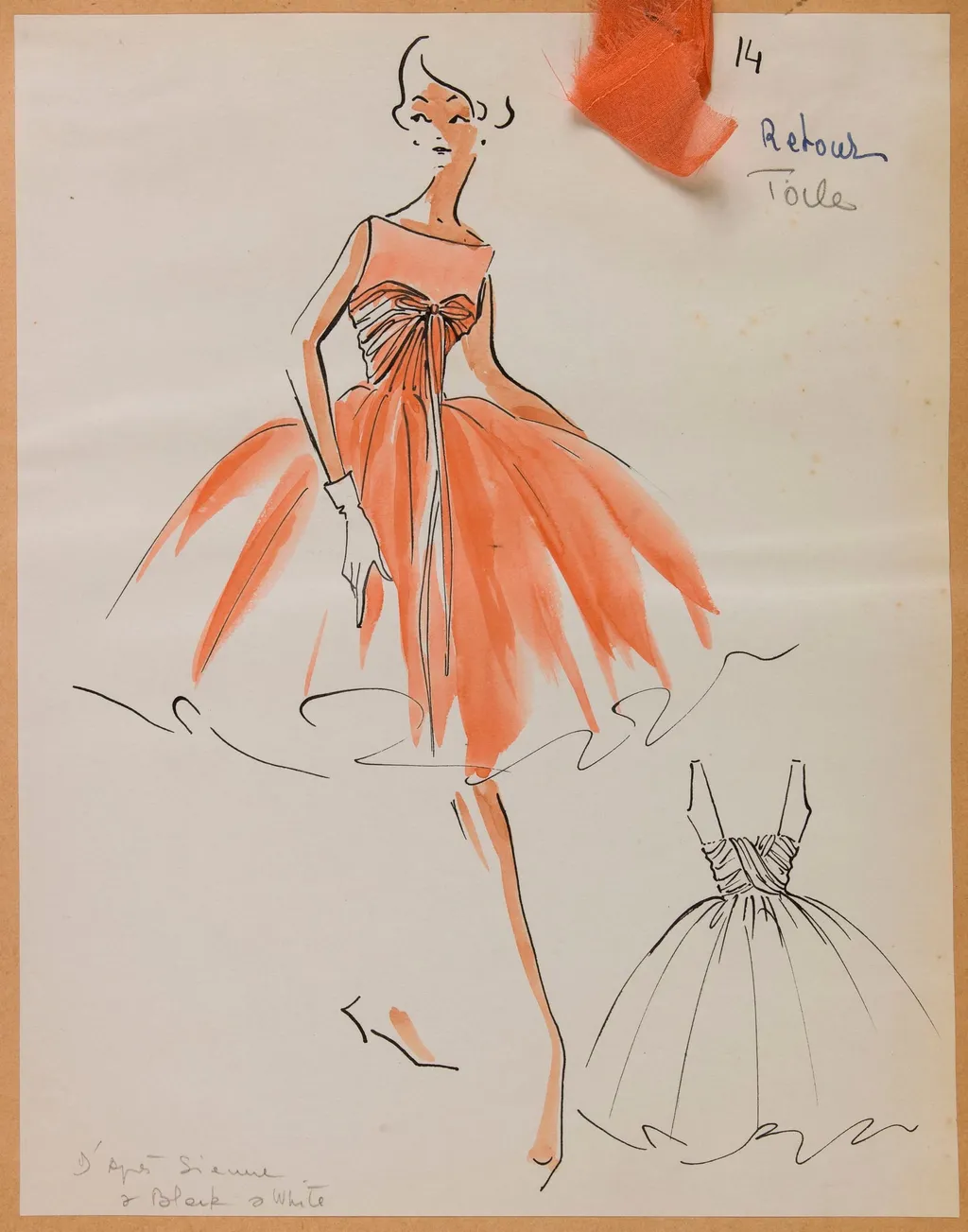
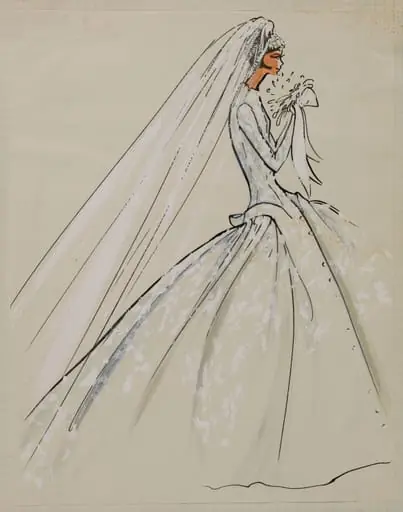
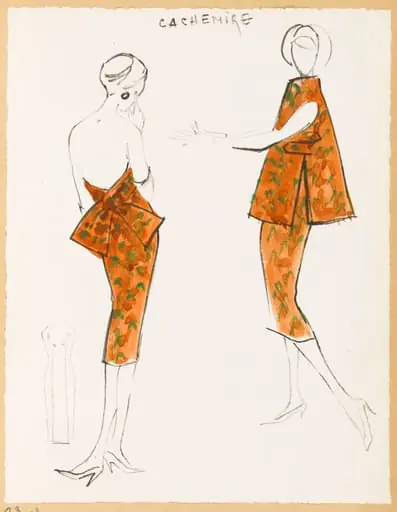
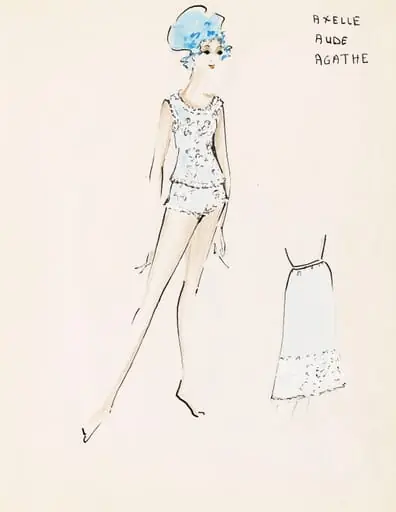
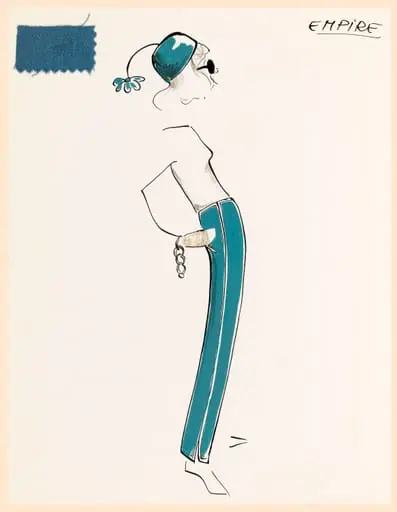
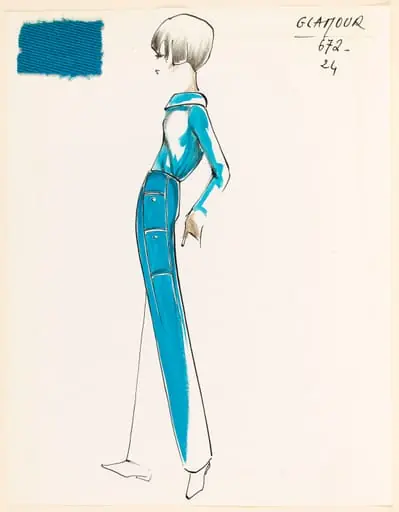
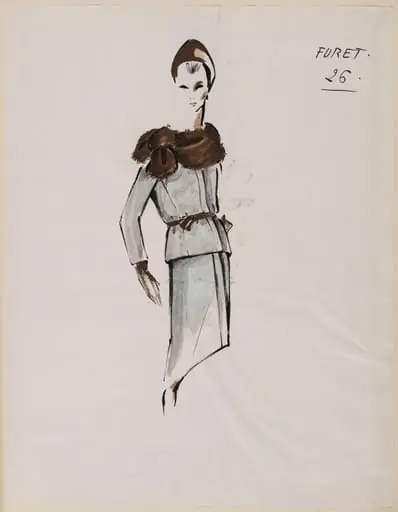
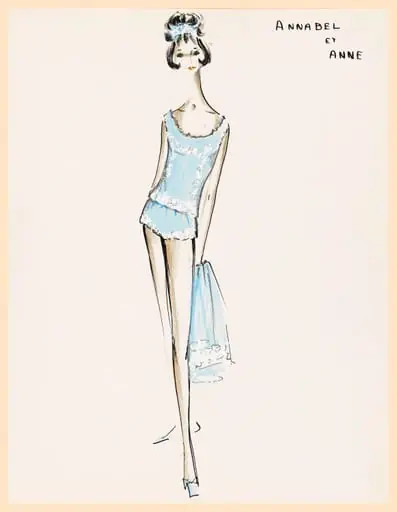
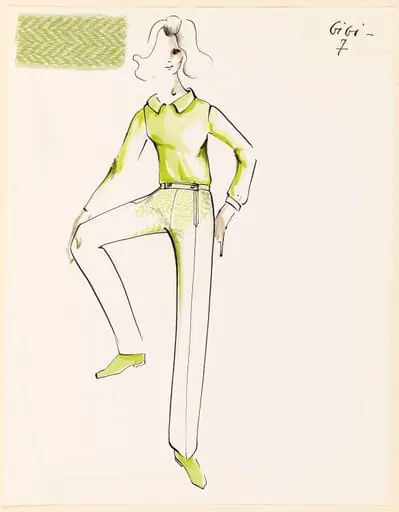
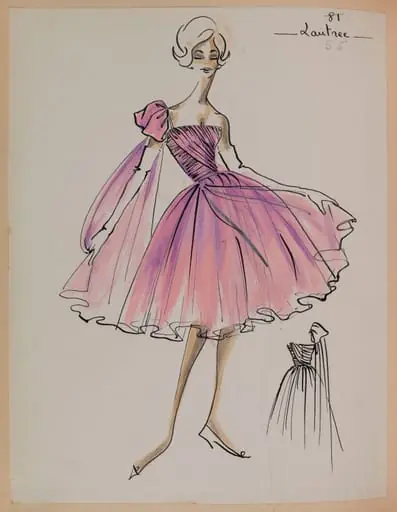
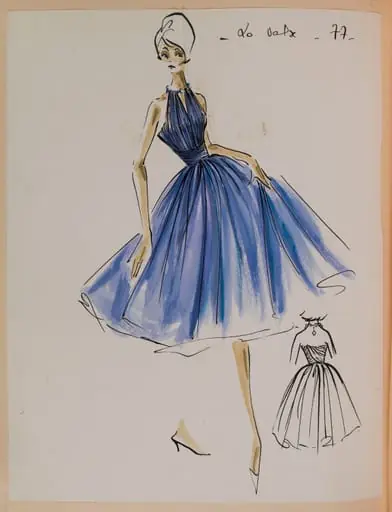
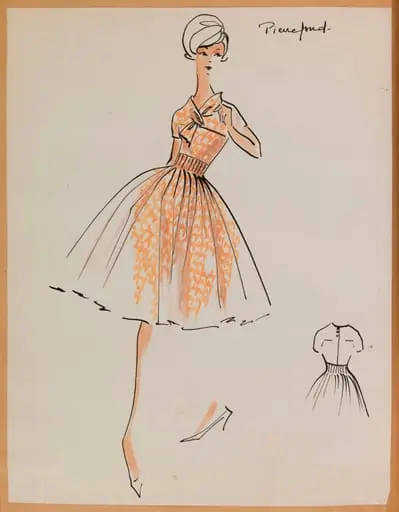
Robe corail plissée sur le haut is a drawing by Carven. It dates from 1957 and is held in the collection of the Palais Galliera - Musée de la Mode de la Ville de Paris. Created around 1957, this fashion drawing depicts a sleeveless coral-colored dress with a pleated bodice and full skirt.
About this work
Overview
Rendered in clean, bold lines with minimal shading, the illustration captures a woman standing in a relaxed pose, one leg slightly bent.
Created around 1957, this fashion drawing depicts a sleeveless coral-colored dress with a pleated bodice and full skirt. Rendered in clean, bold lines with minimal shading, the illustration captures a woman standing in a relaxed pose, one leg slightly bent. The work is attributed to the French fashion house Carven and is part of the collection at the Museum of Ethnography, where it serves as a record of mid-century garment design.
Subject & Meaning
The figure represents an idealized woman wearing a dress designed for everyday elegance. The pose suggests ease and grace, reflecting postwar ideals of feminine poise. The coral hue, prominent and unmodulated, emphasizes color as a key design element rather than decorative detail. The absence of facial features or background directs focus entirely to the garment’s structure and silhouette.
Technique & Style
The drawing employs a restrained graphic style, using unbroken outlines and flat areas of color to define form. Shading is nearly absent, and contours are deliberate and confident, prioritizing clarity over realism. This approach aligns with fashion illustration practices of the era, where garments were presented as clean, sellable concepts rather than lifelike portraits.
History & Provenance
Produced during Carven’s active period in Parisian haute couture, the drawing likely served as a design reference or presentation piece for clients or manufacturers. It entered the Museum of Ethnography’s collection as part of a broader effort to document everyday fashion as cultural artifact, distinguishing it from museum holdings focused solely on high fashion.
Context
In the late 1950s, fashion illustration was a vital medium for communicating design before photography dominated the industry. Carven, known for wearable elegance, catered to a clientele seeking refined simplicity. This drawing reflects a moment when French design balanced artistic expression with commercial practicality, emphasizing cut and color over ornamentation.
Legacy
The drawing endures as a quiet example of mid-century fashion documentation, valued for its clarity and restraint. It contributes to scholarly understanding of how garments were conceptualized and presented outside the runway, offering insight into the design process of a house that prioritized livable sophistication over theatricality.
Artist & collection
Artist
These delicate ink-on-paper drawings capture the quiet poetry of everyday things: pinecones, reeds, apples.
Museum
Palais Galliera - Musée de la Mode de la Ville de Paris
Continue through works from the same source collection.