Artwork
Rosée
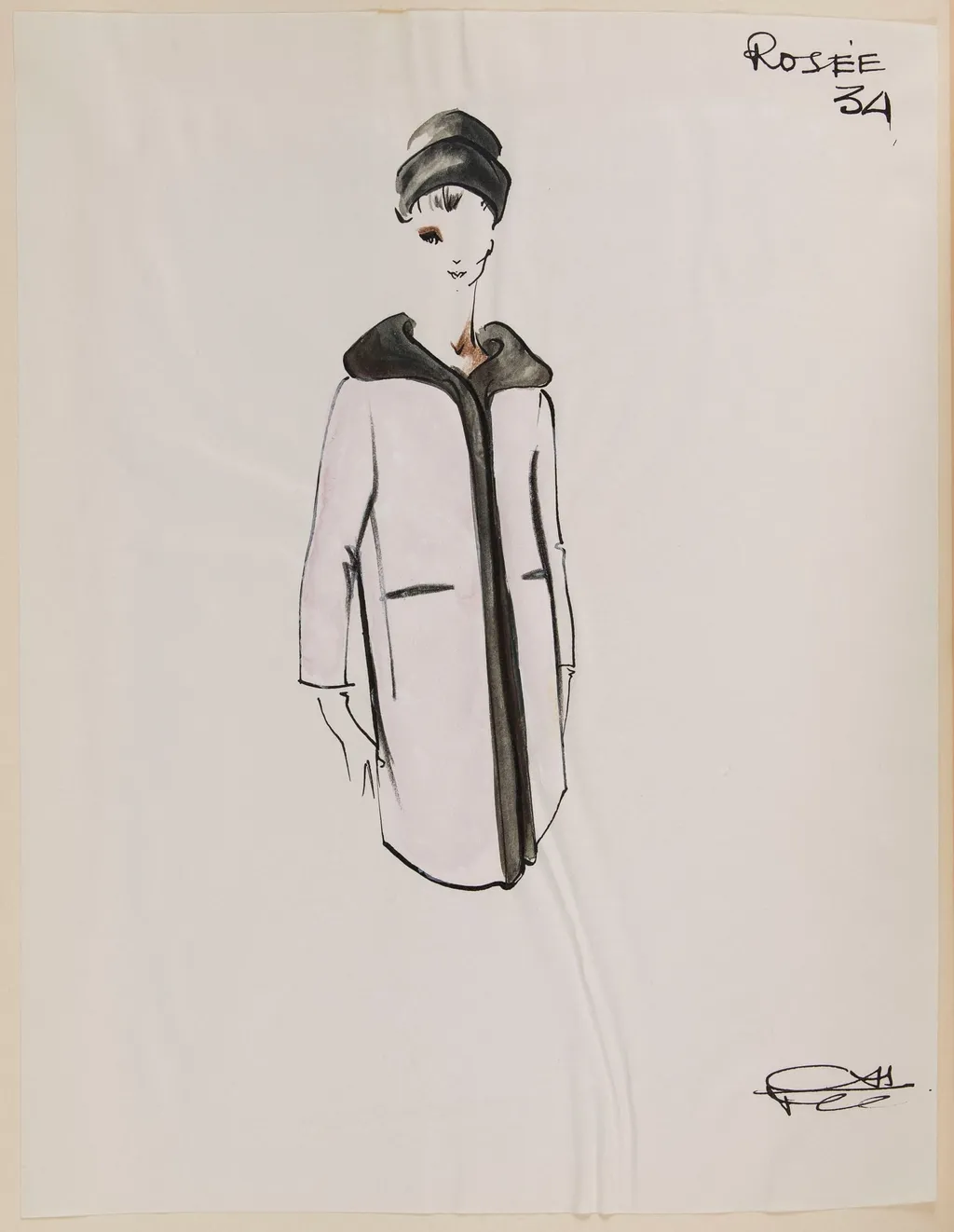
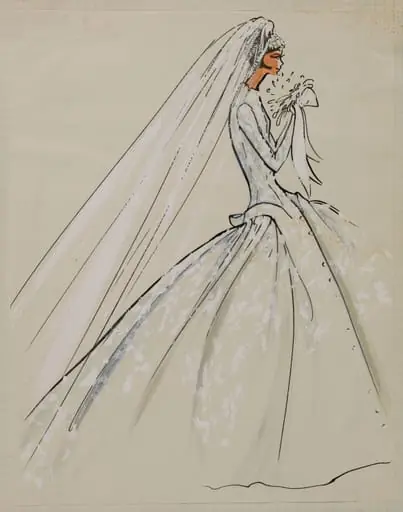
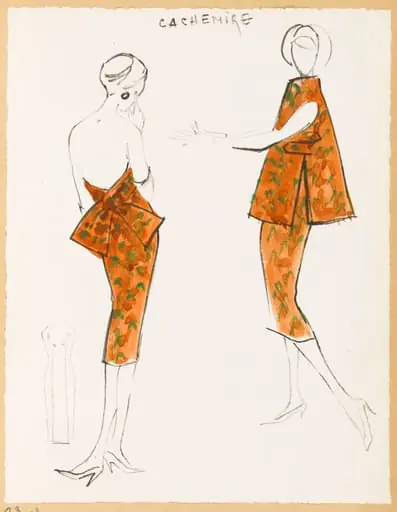
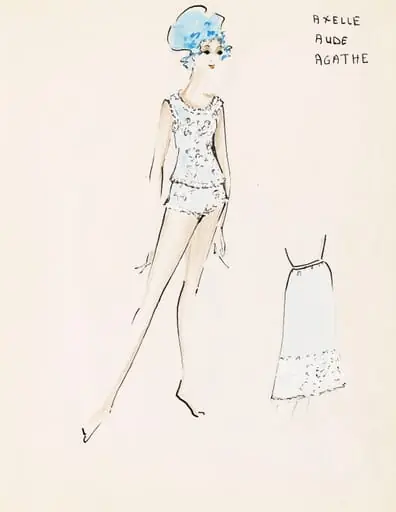
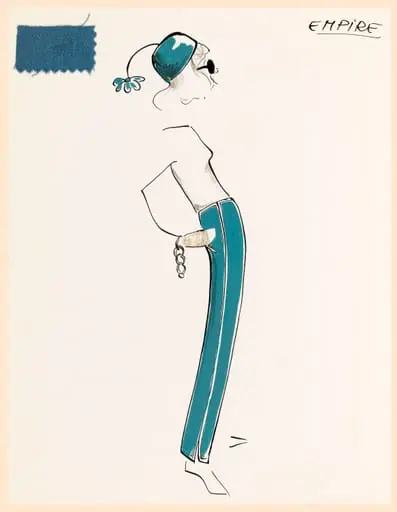
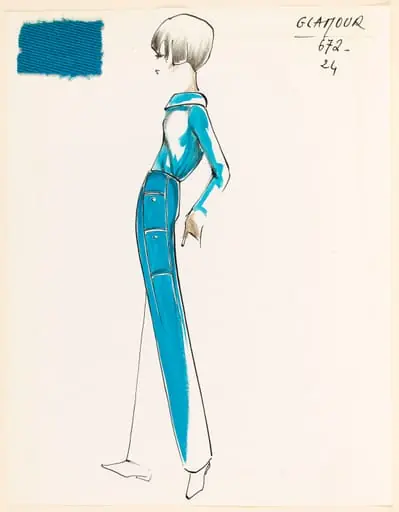
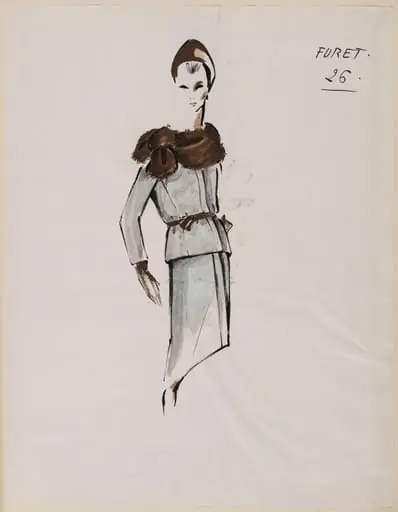
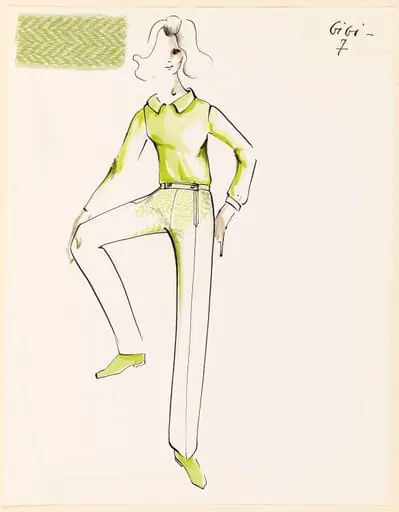
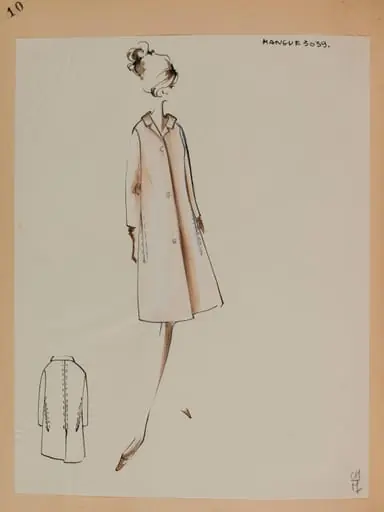
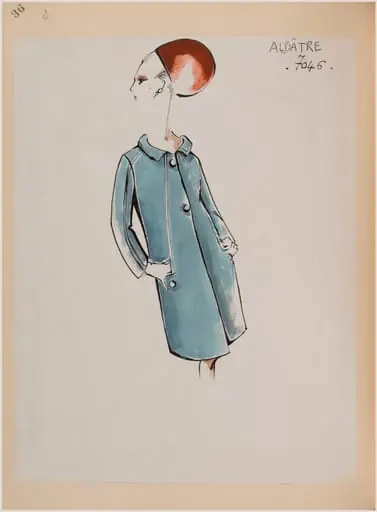
Rosée is a drawing by Carven. It dates from 1963 and is held in the collection of the Palais Galliera - Musée de la Mode de la Ville de Paris.
About this work
Overview
Its title, inscribed in the upper right, suggests a quiet, atmospheric quality, though the image itself offers no literal narrative.
Rosée is a pencil sketch dated around 1963, attributed to the artist Carven. It resides in the collection of the Museum of Ethnography. The work is one of several studies in a series, marked with the number 34. Its title, inscribed in the upper right, suggests a quiet, atmospheric quality, though the image itself offers no literal narrative. The drawing’s modest scale and informal execution point to its function as a personal observation rather than a finished piece.
Subject & Meaning
The figure depicted is cloaked in a long, light coat with dark edging and a low-drawn hat, obscuring the face. Two front pockets are subtly indicated, grounding the form in everyday attire. The anonymity of the subject invites interpretation—perhaps a solitary walker, a traveler, or a figure caught in morning mist. The title Rosée, meaning dew, may allude to stillness, transience, or the quiet dampness of early day, reinforcing the mood rather than defining a story.
Technique & Style
Carven employs swift, assured pencil strokes to suggest form without detail. The face and hands are rendered with minimal, energetic lines, avoiding definition in favor of suggestion. The coat’s folds and the hat’s shadow are indicated through rhythmic contours, not shading. The loose handling conveys immediacy, as if the figure was captured in passing. The signature, faint and hurried at the base, reinforces the sketch’s private, unpolished character.
History & Provenance
The drawing entered the Museum of Ethnography’s collection after Carven’s death, likely through a donation or acquisition of personal papers. Its presence among ethnographic materials suggests the museum valued its anthropological tone—depicting ordinary dress and posture rather than ceremonial or cultural ritual. No earlier exhibition history is documented, and it appears to have remained in the artist’s private archive until its institutional acquisition.
Context
Created in the early 1960s, Rosée reflects a period when many artists turned to intimate, observational drawing as a counterpoint to dominant abstract trends. Carven’s focus on solitary figures in mundane attire aligns with a broader interest in everyday life, akin to the work of contemporaries like Balthus or Giacometti. The sketch’s quietude and restraint place it within a quiet lineage of postwar European figure studies, uninterested in spectacle.
Legacy
Rosée remains a quiet example of Carven’s observational practice, rarely reproduced or discussed publicly. Its preservation in an ethnographic museum, rather than a fine arts institution, underscores its perceived documentary value over aesthetic ambition. While not widely known, it contributes to a fuller understanding of Carven’s sustained engagement with the human form in unadorned, untheatrical moments.
Artist & collection
Artist
These delicate ink-on-paper drawings capture the quiet poetry of everyday things: pinecones, reeds, apples.
Museum
Palais Galliera - Musée de la Mode de la Ville de Paris
Continue through works from the same source collection.