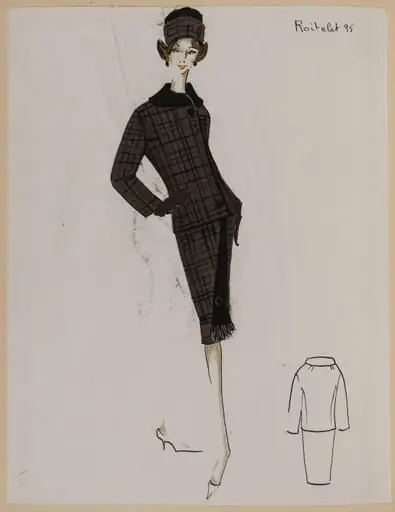
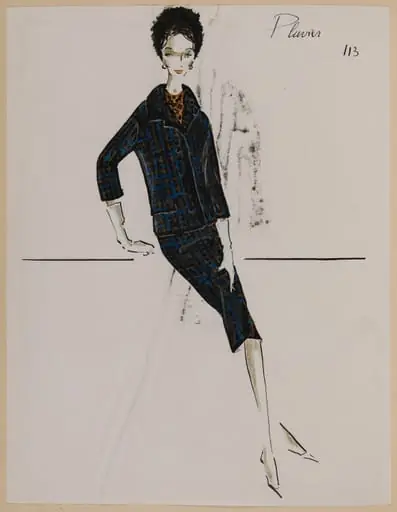
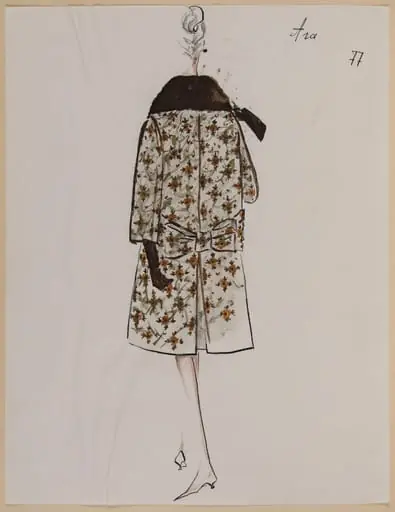
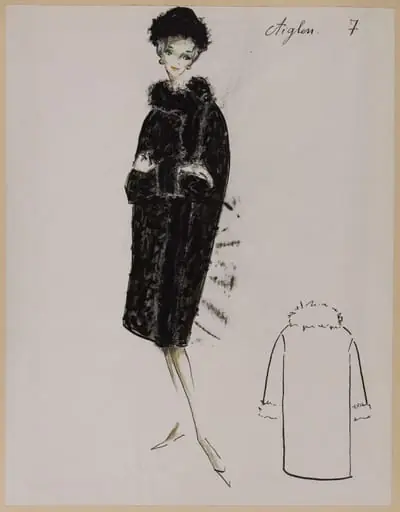
Artwork
Migrateur
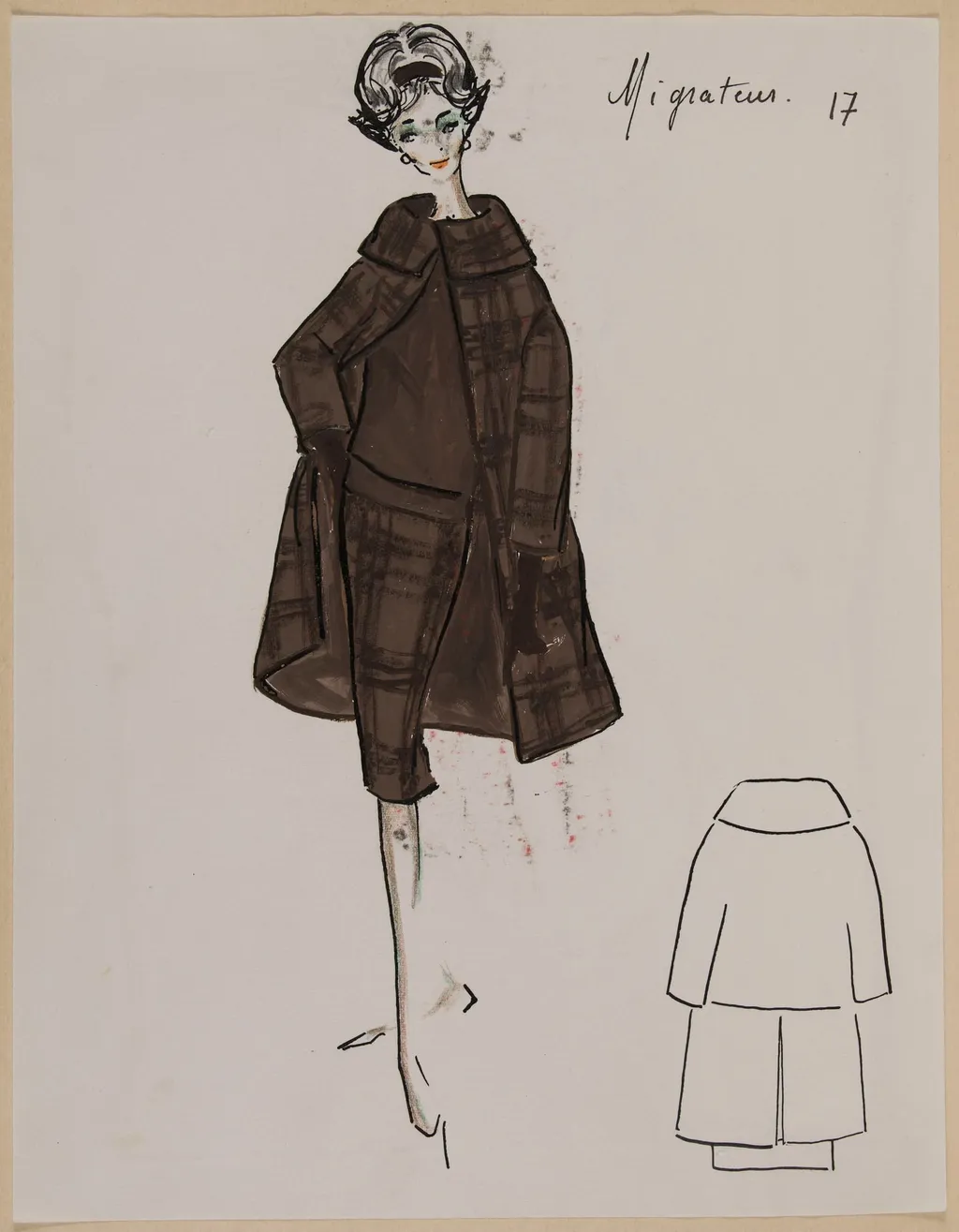
Migrateur is a drawing by Marie-Louise Carven. It dates from 1960 and is held in the collection of the Palais Galliera - Musée de la Mode de la Ville de Paris.
About this work
Overview
The work resides in the Museum of Ethnography’s collection, reflecting its significance beyond haute couture as a document of wearable design.
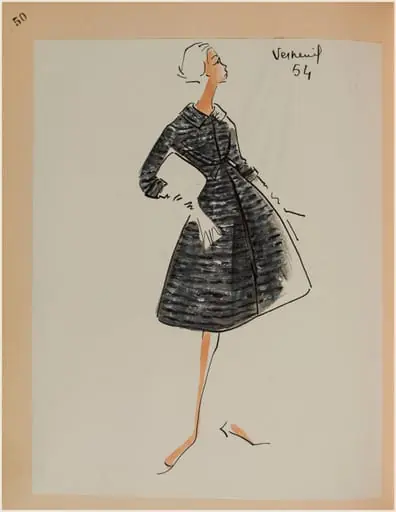
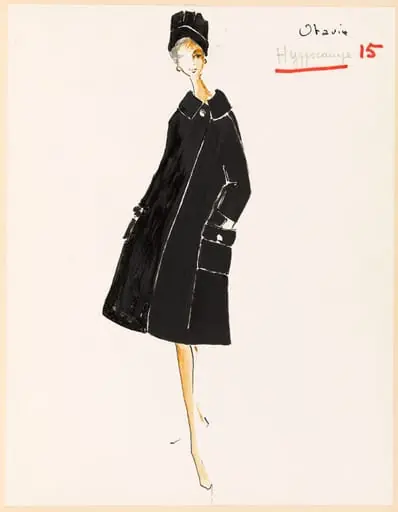
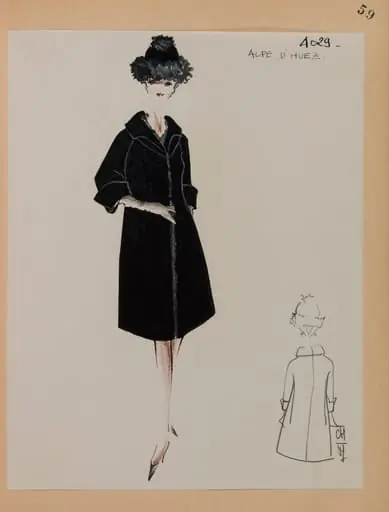
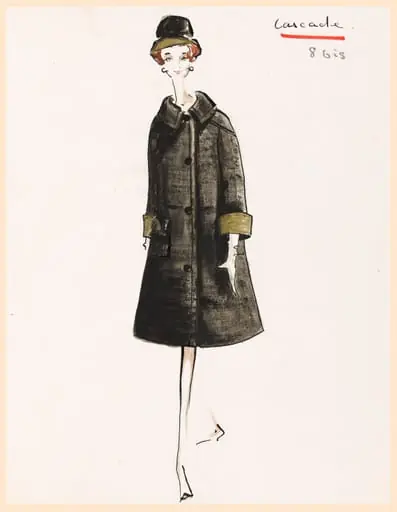
Created around 1960 by French designer Marie-Louise Carven, *Migrateur* is a fashion sketch depicting a long, belted coat worn by a woman. Executed in loose, fluid lines, the drawing captures both the garment’s structure and its dynamic potential. A secondary outline of the coat, detached from the figure, emphasizes its form. The work resides in the Museum of Ethnography’s collection, reflecting its significance beyond haute couture as a document of wearable design.
Subject & Meaning
The sketch portrays a woman in a practical yet elegant coat, suggesting movement and daily use. The high hairstyle and minimal jewelry imply a modern, understated femininity. The inclusion of a standalone coat outline signals an interest in the garment’s autonomy — not merely as adornment, but as a functional object. This duality reflects Carven’s focus on clothing that adapts to the wearer’s life, not just the runway.
Technique & Style
Carven rendered the sketch with swift, confident strokes that convey texture and volume without detail. The coat’s weight and drape are suggested through line variation, while the figure’s posture implies motion. The detached outline of the coat functions as a technical annotation, separating form from body. This approach reveals a designer’s eye for how garments behave in space — more than decoration, it is an analysis of movement and structure.
History & Provenance
Marie-Louise Carven founded her fashion house in 1945 and pioneered ready-to-wear collections for petite women, using light fabrics like gingham and lace. *Migrateur* dates from the early phase of her prêt-à-porter expansion, when sketches served as both creative notes and production guides. The work entered the Museum of Ethnography’s collection as part of a broader effort to preserve design artifacts that reflect everyday life, not just elite fashion.
Context
In the 1950s and 60s, Parisian couture was dominated by elaborate, custom-made garments. Carven’s shift toward accessible, wearable designs aligned with postwar demands for practicality and mobility. Her sketches, like *Migrateur*, document this transition — capturing garments designed for real bodies in motion, not idealized silhouettes. The sketch’s informal quality contrasts with formal fashion plates, signaling a new relationship between designer, garment, and wearer.
Legacy
Carven’s approach to design, evident in *Migrateur*, helped redefine fashion’s purpose in postwar society. By prioritizing ease, proportion, and movement, she influenced the normalization of ready-to-wear as a legitimate artistic domain. The sketch’s preservation in an ethnographic museum underscores its role as a cultural artifact — not just a design study, but a record of changing attitudes toward clothing as part of daily existence.
Artist & collection
Artist
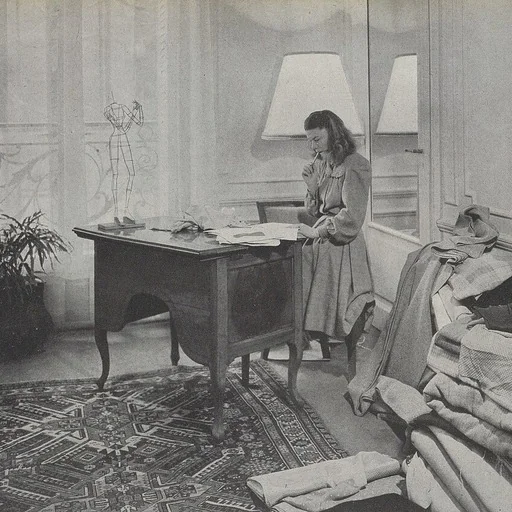
Marie-Louise Carven (31 August 1909 – 8 June 2015), born Carmen de Tommaso, was a French fashion designer who founded the house of Carven in 1945.
Museum
Palais Galliera - Musée de la Mode de la Ville de Paris
Continue through works from the same source collection.
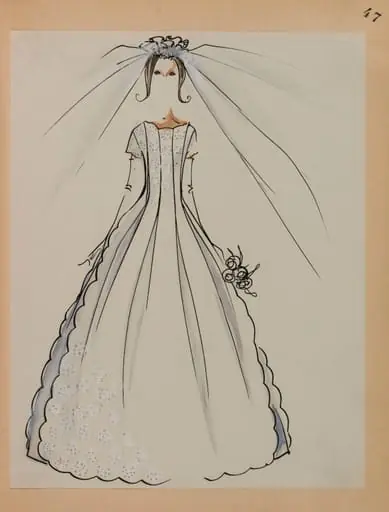 Robe de mariée festonnée et son voile
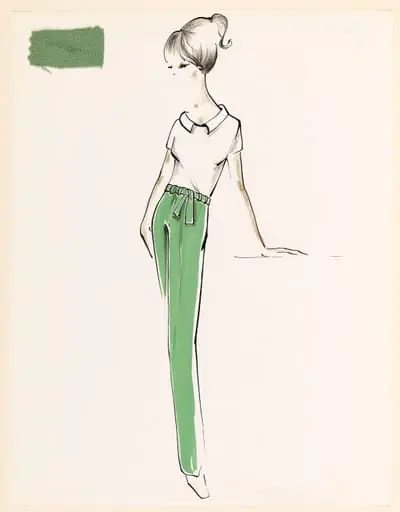 Haut blanc à manches courtes et pantalon vert à ceinture nouée
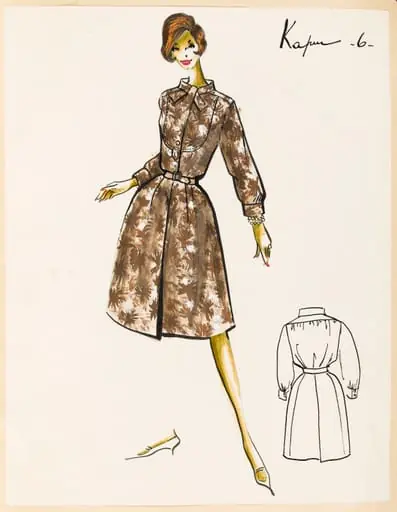 Kapur
Kapur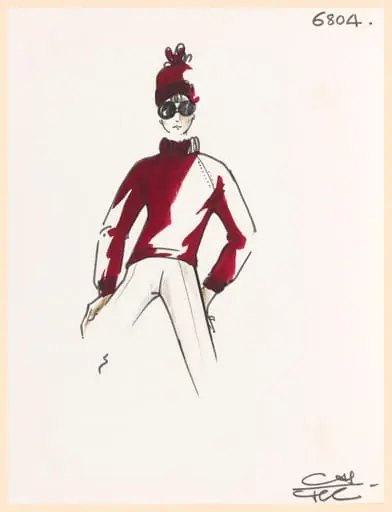 Pull-over à manches longues pourpre, bonnet assorti, pantalon et lunettes de soleil
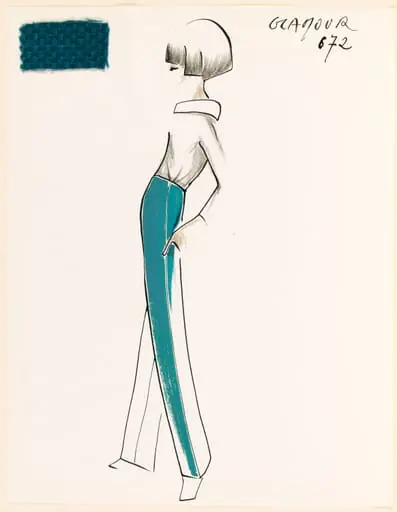 GLAMOUR
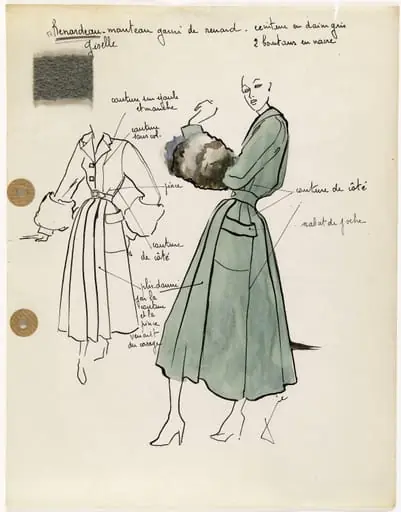 'Renardeau'
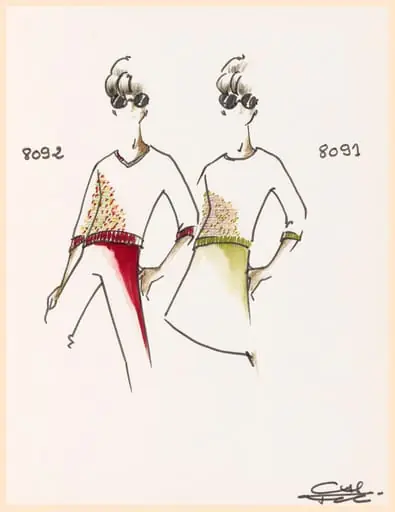 Pull-over à manches trois quarts et à encolure V à motifs multicolores, pantalon cerise et lunettes de soleil
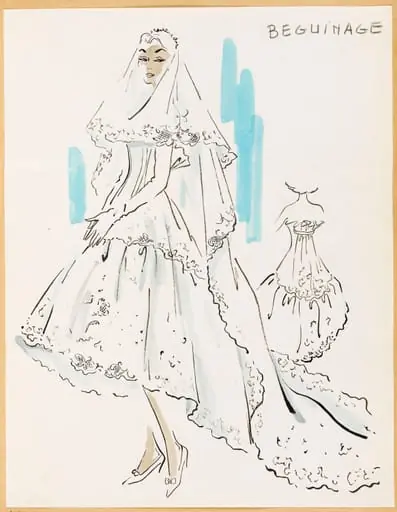 Béguinage