Artwork
'Rose des vents'
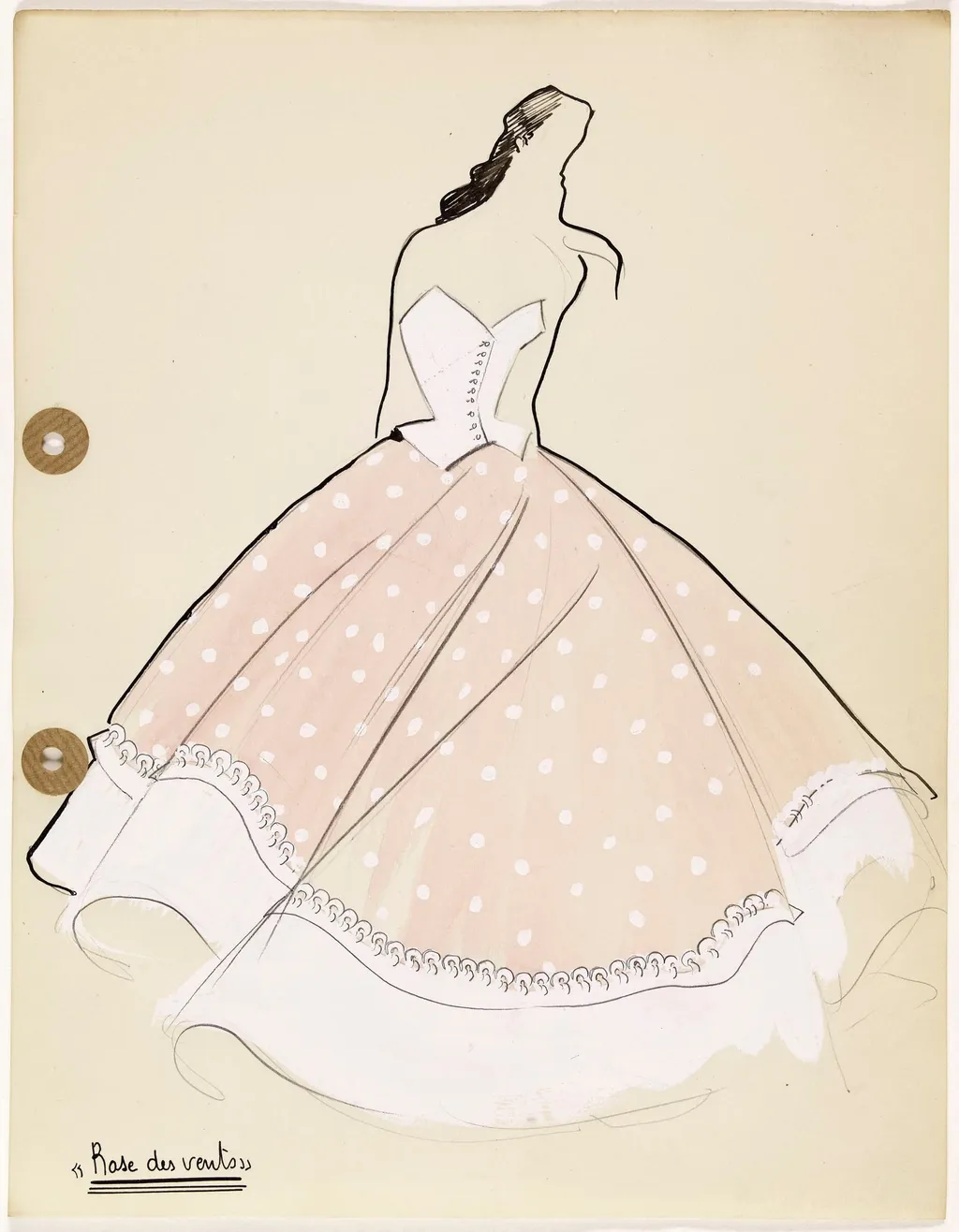
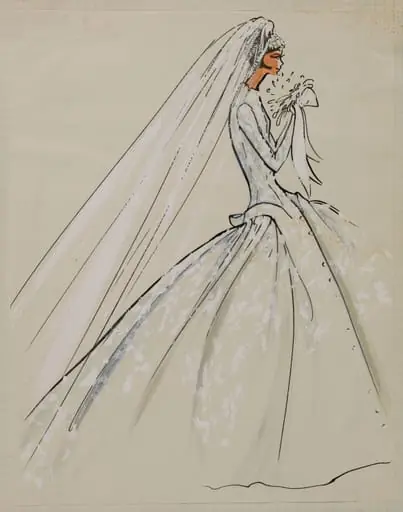
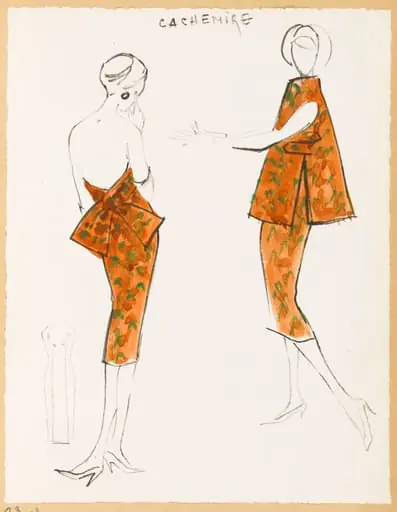
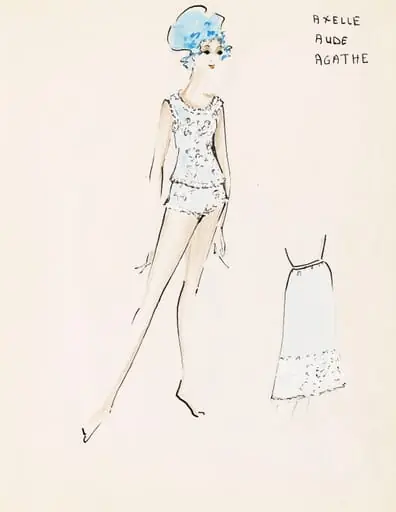
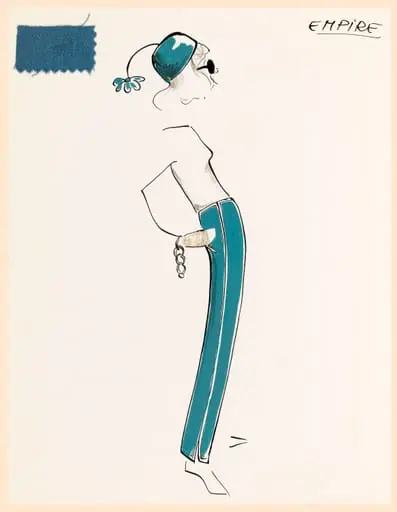
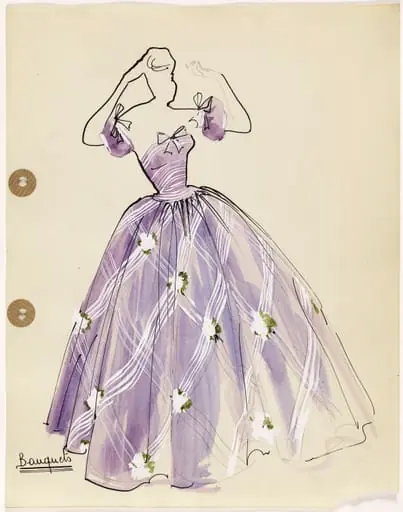
'Rose des vents' is a drawing by Carven. It dates from 1949 and is held in the collection of the Palais Galliera - Musée de la Mode de la Ville de Paris.
About this work
Overview
The work is part of the collection at the Museum of Ethnography, where it is preserved as a record of mid-century fashion design.
Created in 1949 by the French fashion designer Carven, 'Rose des vents' is a pencil sketch on paper depicting a woman’s dress. The work is part of the collection at the Museum of Ethnography, where it is preserved as a record of mid-century fashion design. Though rendered in minimal lines and light shading, the drawing captures intricate details of silhouette and ornamentation, reflecting the designer’s attention to textile and form.
Subject & Meaning
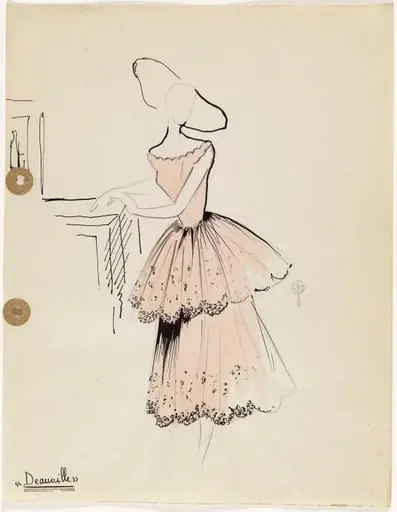
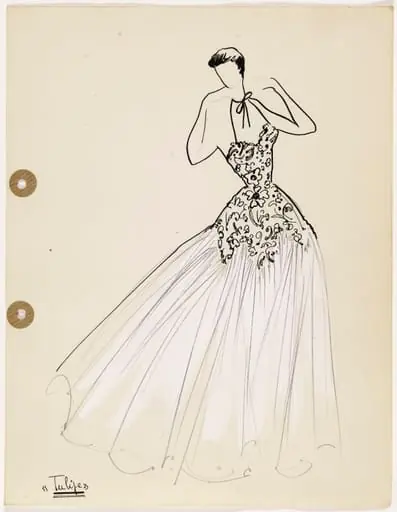
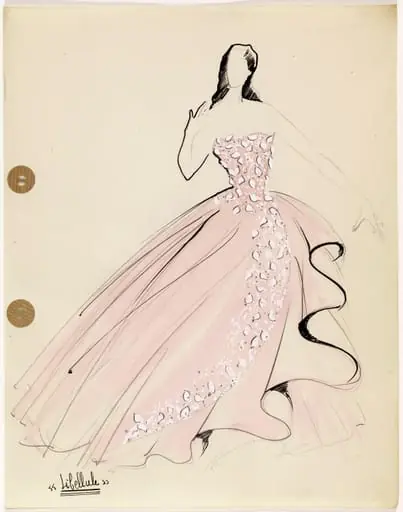
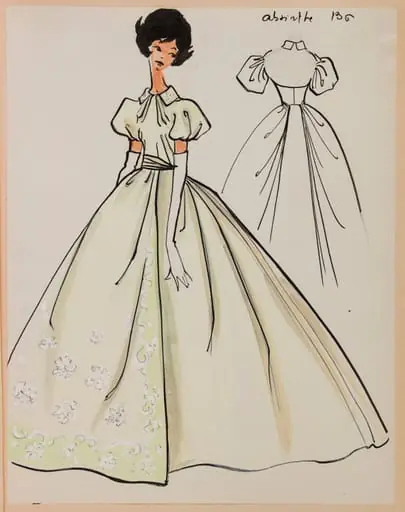
The dress illustrated features a fitted bodice, puffed sleeves, and a full skirt adorned with small white dots, ending in a scalloped hem with delicate loops. The title, 'Rose des vents'—French for 'rose of the winds'—hints at themes of direction, movement, or navigation, possibly alluding to the dress’s dynamic flow or its symbolic connection to travel and grace. The contrast between static drawing and evocative title invites interpretation beyond mere garment documentation.
Technique & Style
Executed in fine black ink with subtle tonal shading, the sketch employs clean, uncluttered lines to define the dress’s structure. The plain background isolates the garment, emphasizing its form and decorative elements. The precision of the scalloped hem and dotted pattern suggests careful observation, while the loose handling of shading conveys a sense of spontaneity. This restrained aesthetic aligns with mid-century fashion illustration, prioritizing clarity over ornamentation.
History & Provenance
The drawing was produced during Carven’s active years as a couturier in postwar Paris, a period when fashion houses relied on hand-drawn sketches to communicate designs to ateliers. It entered the Museum of Ethnography’s collection as part of a broader effort to document fashion as cultural artifact. Its preservation reflects institutional interest in the intersection of design, gender, and material culture in 20th-century Europe.
Context
In the late 1940s, French fashion was redefining itself after wartime austerity, favoring femininity and craftsmanship. Carven’s designs, known for their elegance and practicality, catered to a modern clientele. This sketch exemplifies the era’s emphasis on tailored silhouettes with playful details, such as polka dots and scalloped edges, which balanced structure with whimsy in response to changing social norms and consumer tastes.
Legacy
Though not widely exhibited, 'Rose des vents' remains a representative example of Carven’s design process and the role of sketching in couture. It contributes to scholarly understanding of how fashion was conceptualized before mass production. The work continues to inform studies on mid-century women’s wear, illustrating how subtle decorative choices carried cultural resonance beyond mere aesthetics.
Artist & collection
Artist
These delicate ink-on-paper drawings capture the quiet poetry of everyday things: pinecones, reeds, apples.
Museum
Palais Galliera - Musée de la Mode de la Ville de Paris
Continue through works from the same source collection.