Artwork
Sargasse
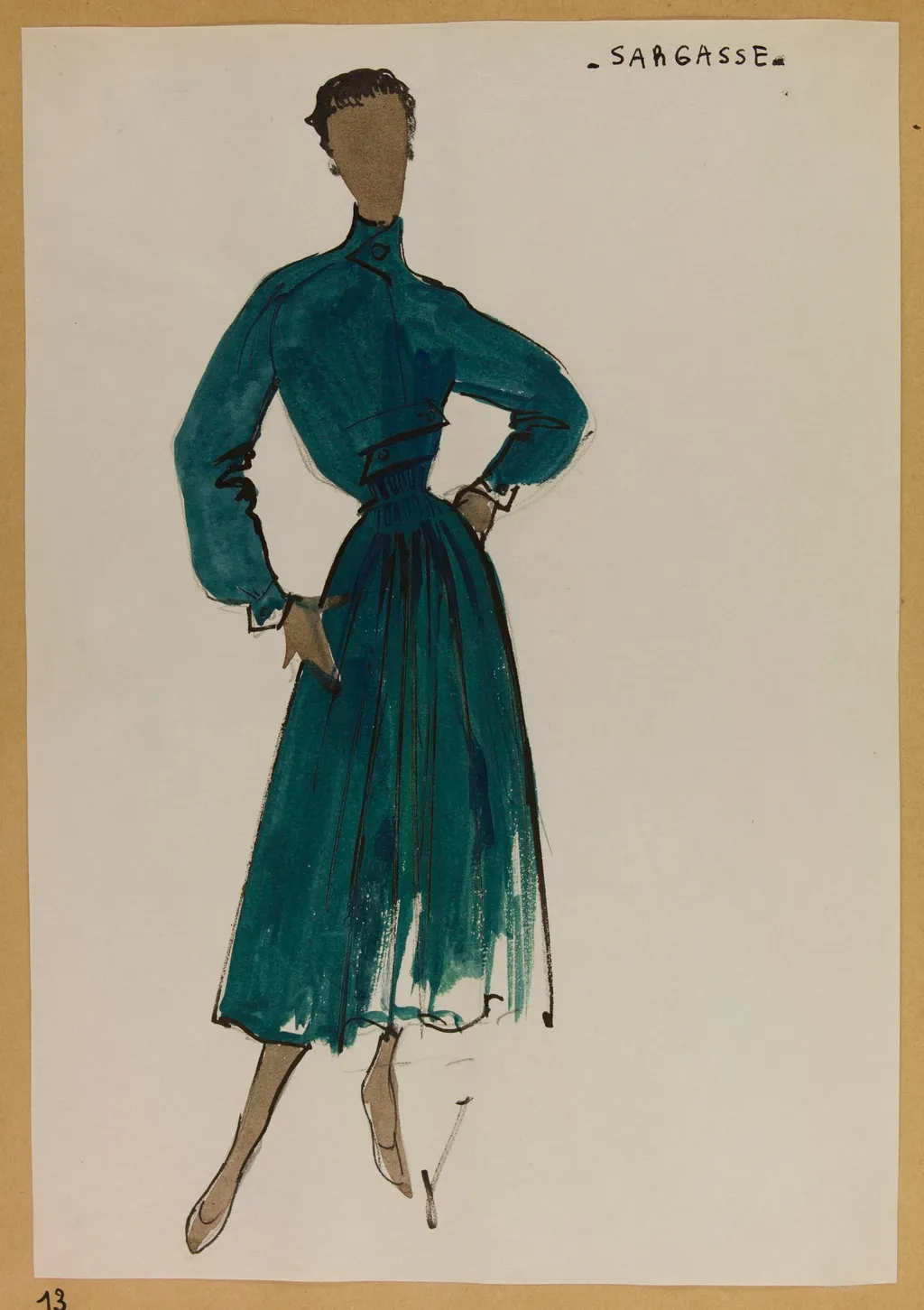
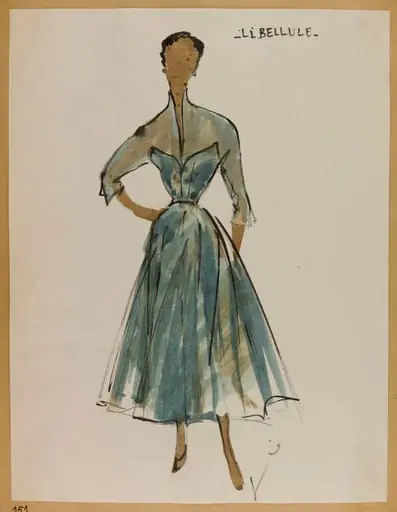
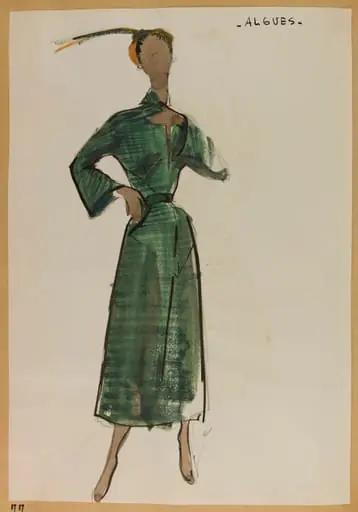
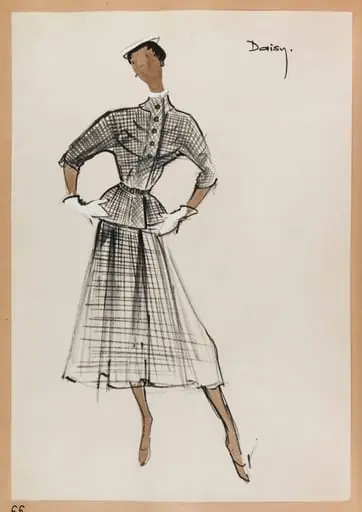
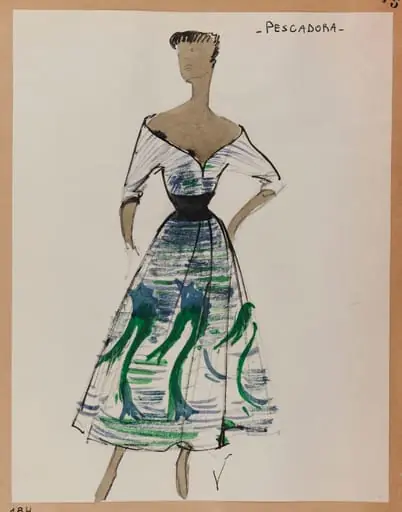
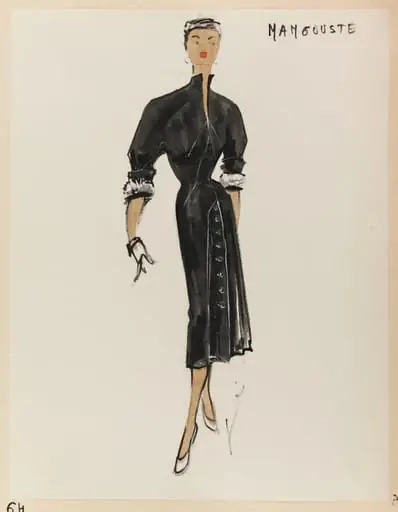
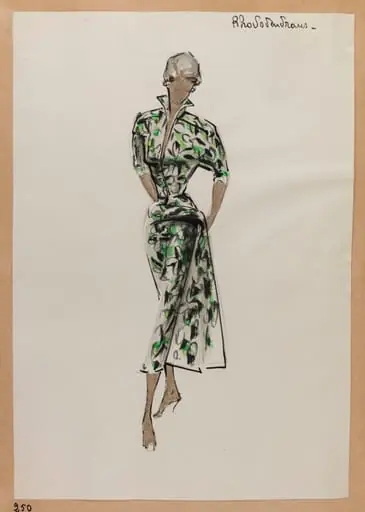
Sargasse is a drawing by Carven. It dates from 1952 and is held in the collection of the Palais Galliera - Musée de la Mode de la Ville de Paris.
About this work
Overview
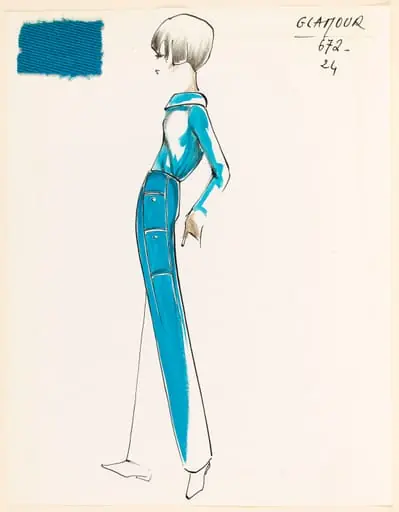
Sargasse is a 1952 drawing by the French designer Carven, held in the collection of the Museum of Ethnography. Executed in ink or pencil on paper, the work depicts a stylized female figure in a tailored dress. Its restrained composition and clean linework reflect the designer’s background in fashion, translating garment design into a graphic form that emphasizes silhouette over detail.
Subject & Meaning
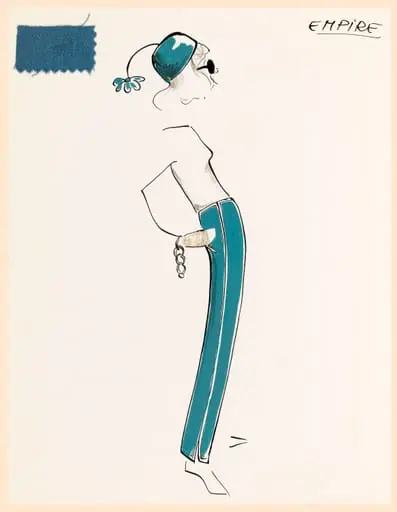
The figure stands with hands on hips, conveying a composed, self-possessed posture.
The figure stands with hands on hips, conveying a composed, self-possessed posture. The high-necked, long-sleeved dress in dark teal, cinched at the waist and ending just below the knee, suggests mid-century feminine modesty tempered with elegance. The high heels and minimal background focus attention on the costume, implying the drawing may have served as a fashion study or conceptual sketch rather than a portrait.
Technique & Style
Rendered with precise, unbroken lines and negligible shading, the drawing favors clarity over texture. The light beige background provides neutral contrast, allowing the dark teal garment to dominate visually. The absence of facial features or environmental context reinforces the focus on form and structure, aligning with the designer’s emphasis on cut and proportion in clothing design.
History & Provenance
Created in 1952, the drawing entered the Museum of Ethnography’s collection as part of a broader acquisition of fashion-related materials. Its inclusion among ethnographic artifacts suggests an interest in how fashion reflects cultural norms of the time. The work’s provenance traces directly to Carven’s studio, where such sketches were used to develop ready-to-wear lines for a postwar European market.
Context
In early 1950s France, fashion design was increasingly institutionalized, with couturiers producing detailed sketches as both creative and commercial tools. Carven, known for accessible yet refined styles, contributed to this shift. Sargasse reflects a moment when fashion illustration bridged art and industry, documenting everyday dress codes while subtly reinforcing ideals of grace and restraint in postwar society.
Legacy
Though not widely exhibited, Sargasse remains a representative example of mid-century fashion drawing within museum collections. It illustrates how designers like Carven translated aesthetic principles into visual language that prioritized structure and subtlety. The work continues to inform scholarly discussions on the intersection of fashion, gender, and visual culture in 20th-century Europe.
Artist & collection
Artist
These delicate ink-on-paper drawings capture the quiet poetry of everyday things: pinecones, reeds, apples.
Museum
Palais Galliera - Musée de la Mode de la Ville de Paris
Continue through works from the same source collection.