Artwork
Faïence
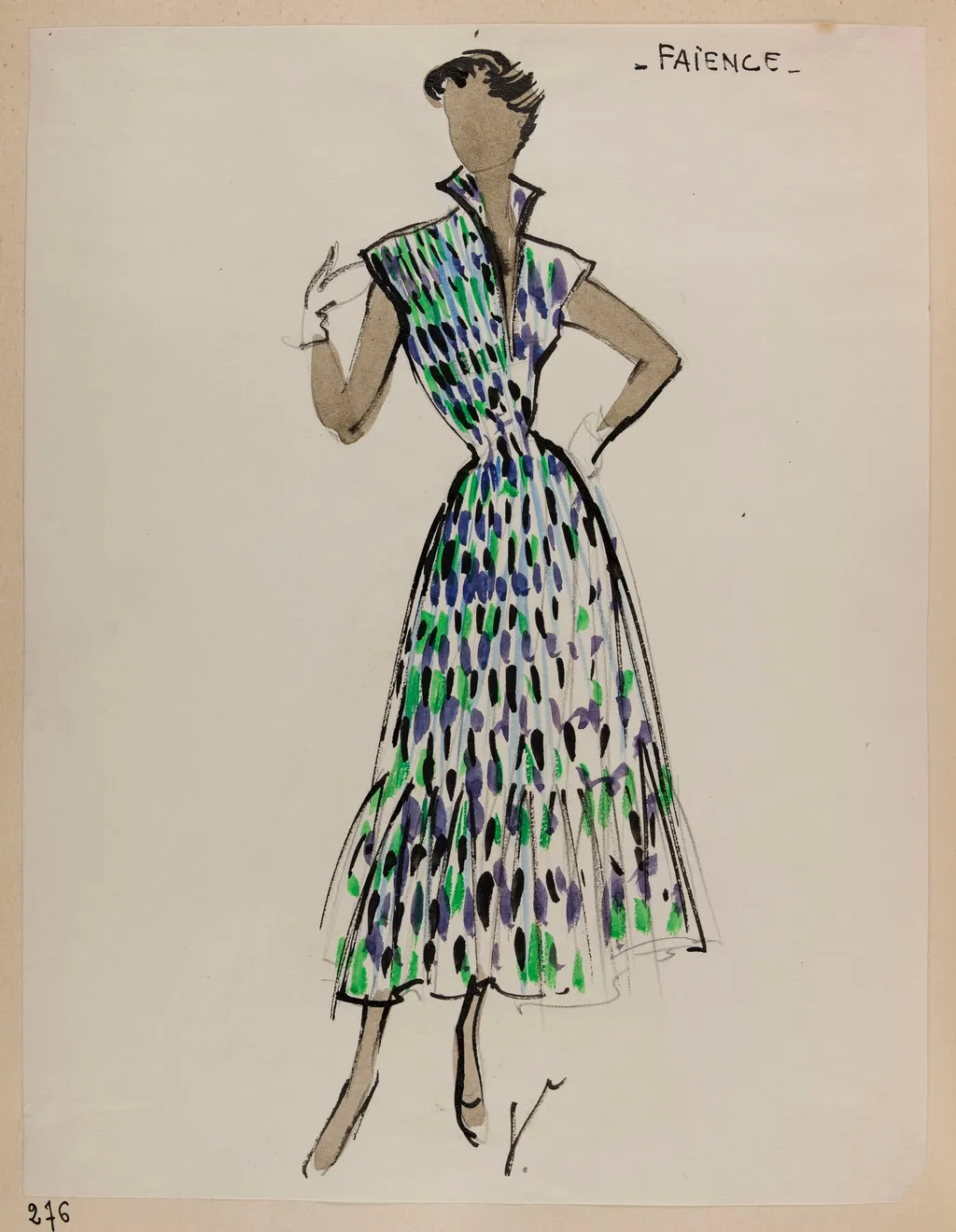
Faïence is a drawing by Marie-Louise Carven. It dates from 1952 and is held in the collection of the Palais Galliera - Musée de la Mode de la Ville de Paris.
About this work
Overview
Though produced as a design study, it was later acquired by the Museum of Ethnography, reflecting its cultural resonance beyond the runway.
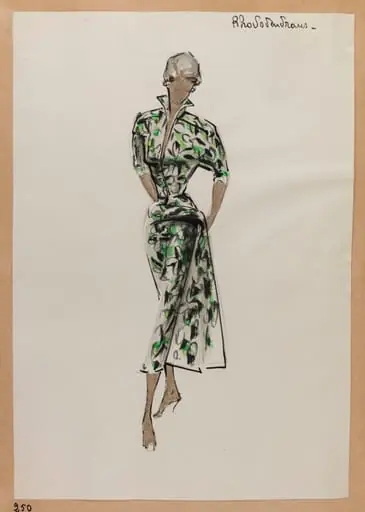
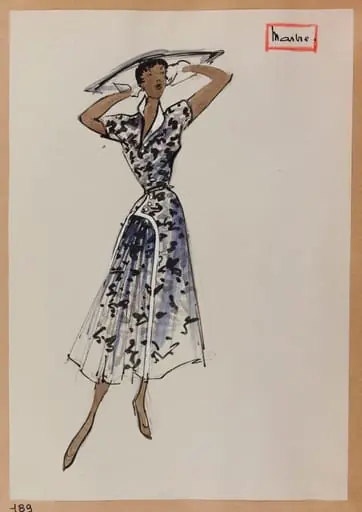
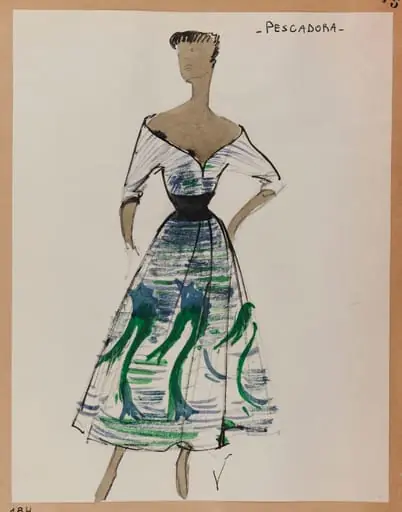
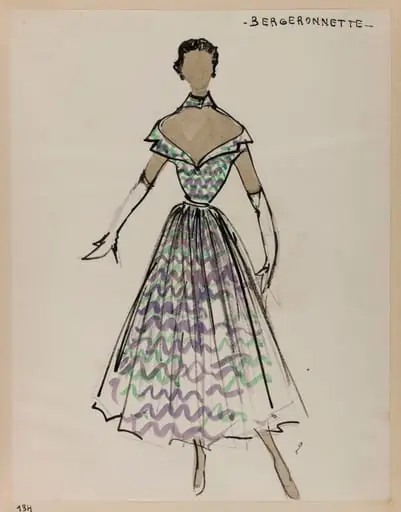
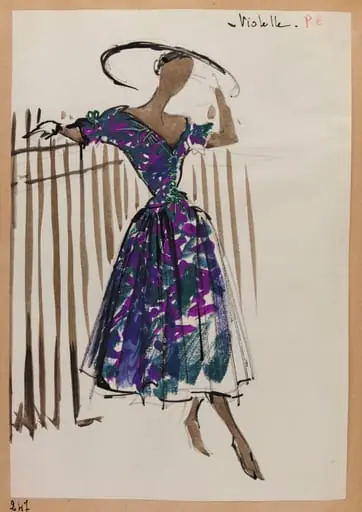
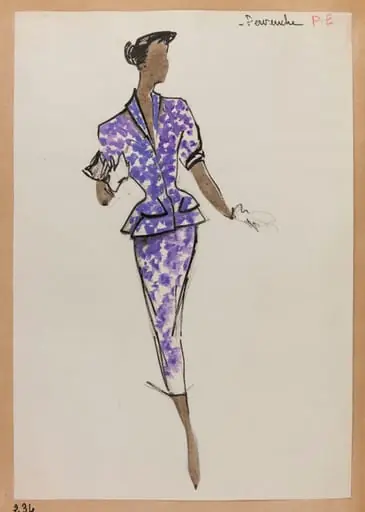
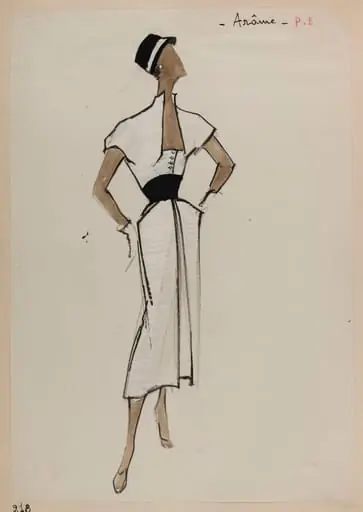
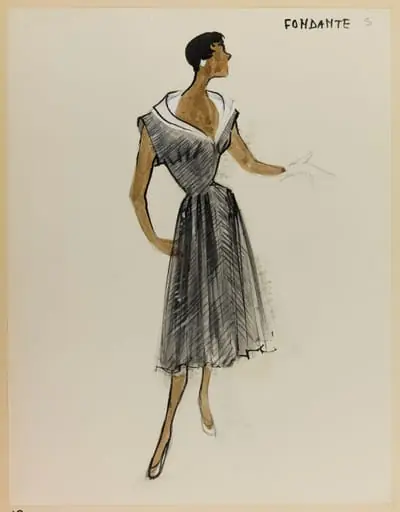
Created in 1952, *Faïence* is a fashion illustration by Marie-Louise Carven, founder of the Parisian fashion house Carven. The work captures a woman in a patterned dress, rendered with clean lines and vivid hues. Though produced as a design study, it was later acquired by the Museum of Ethnography, reflecting its cultural resonance beyond the runway. Carven’s approach merged artistic expression with wearable form, aligning with her broader vision for accessible fashion.
Subject & Meaning
The figure in *Faïence* stands with poised simplicity—hand on hip, arm bent—conveying quiet confidence. Her short hair and undetailed face emphasize posture and garment over individual identity. The dress, adorned with green and blue motifs, becomes the narrative center, suggesting movement and refinement. The illustration does not depict a specific person but rather an idealized archetype of modern femininity, rooted in mid-century ideals of grace and ease.
Technique & Style
Carven employed bold outlines and flat, saturated colors to define form and pattern, avoiding shading or texture. The drawing’s minimalism focuses attention on the dress’s design, with patterns rendered as rhythmic, decorative bands. The style reflects the influence of mid-century graphic design and Japanese woodblock prints, prioritizing clarity and elegance over realism. This approach made the illustration both a technical blueprint and an aesthetic statement.
History & Provenance
Marie-Louise Carven established her label in 1945 and pioneered ready-to-wear collections for women of smaller frames. *Faïence* was likely created as part of her design process for a seasonal line. It entered the Museum of Ethnography’s collection in the latter half of the 20th century, where it was preserved as an artifact of postwar French design culture, bridging fashion and visual art.
Context
In the early 1950s, Parisian fashion was transitioning from haute couture exclusivity toward more democratic styles. Carven’s embrace of prêt-à-porter aligned with broader societal shifts toward practicality and mobility. *Faïence* embodies this moment: its simplicity, color, and focus on wearable form reflect a design philosophy that valued accessibility without sacrificing artistry.
Legacy
Though not widely exhibited, *Faïence* remains a quiet testament to Carven’s role in redefining women’s fashion. Her integration of illustration as both design tool and cultural artifact influenced later generations of designers who saw fashion as a visual language. The work’s presence in an ethnographic museum underscores its significance as a material expression of mid-century identity and aesthetics.
Artist & collection
Artist
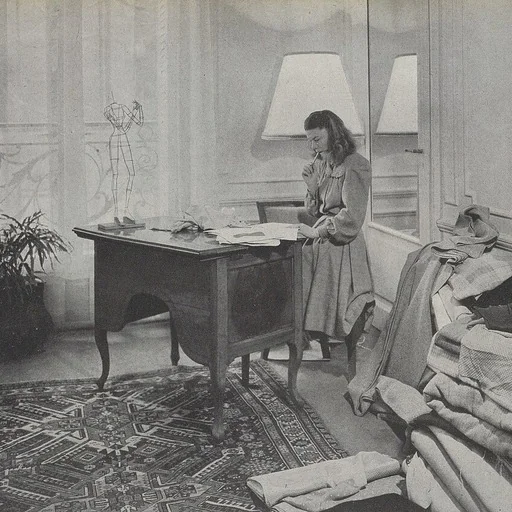
Marie-Louise Carven (31 August 1909 – 8 June 2015), born Carmen de Tommaso, was a French fashion designer who founded the house of Carven in 1945.
Museum
Palais Galliera - Musée de la Mode de la Ville de Paris
Continue through works from the same source collection.
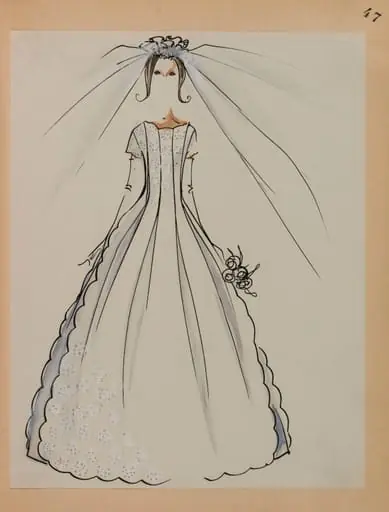 Robe de mariée festonnée et son voile
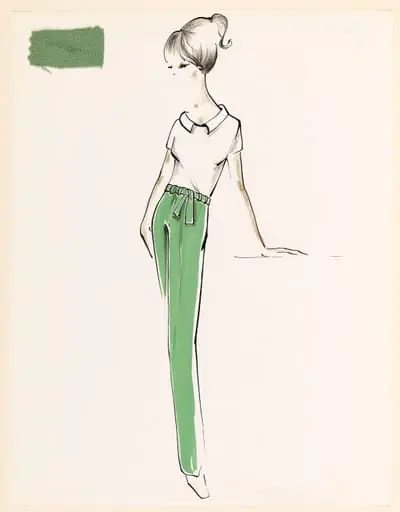 Haut blanc à manches courtes et pantalon vert à ceinture nouée
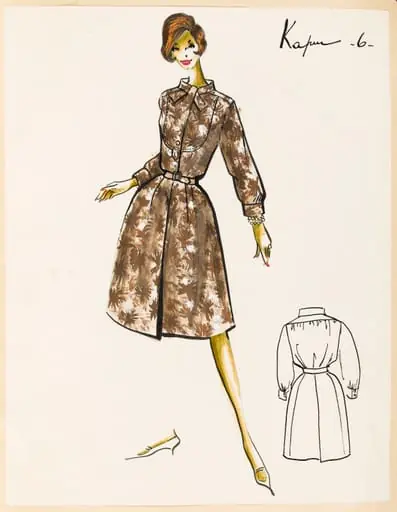 Kapur
Kapur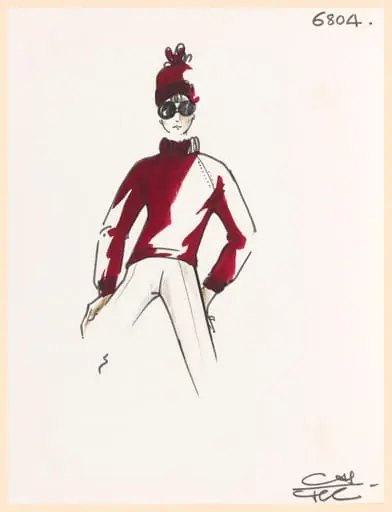 Pull-over à manches longues pourpre, bonnet assorti, pantalon et lunettes de soleil
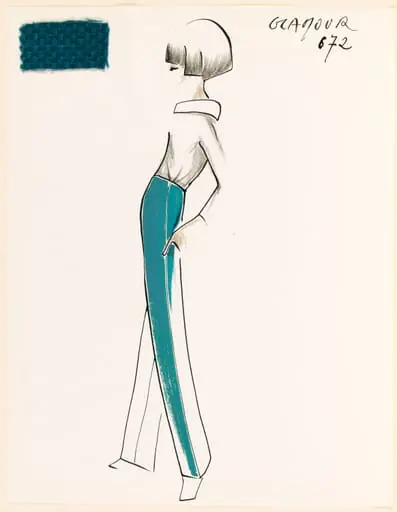 GLAMOUR
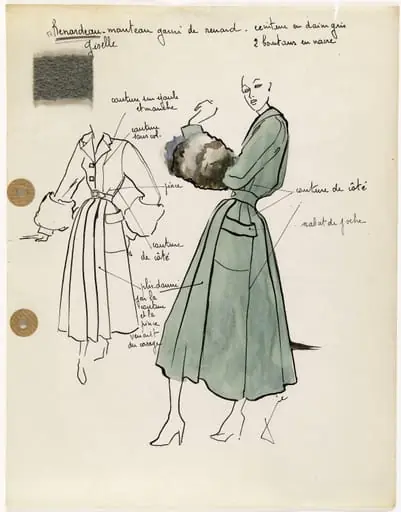 'Renardeau'
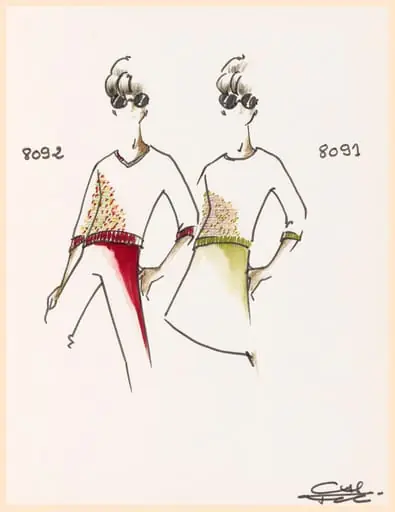 Pull-over à manches trois quarts et à encolure V à motifs multicolores, pantalon cerise et lunettes de soleil
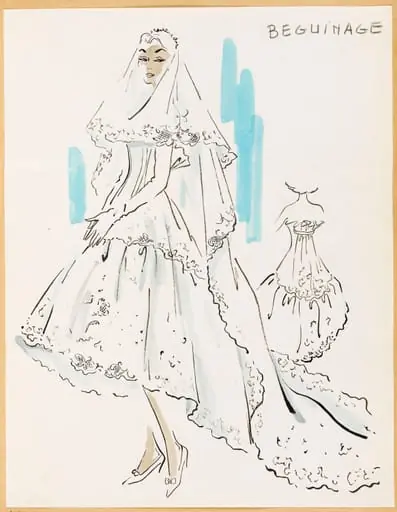 Béguinage