Artwork
Pescadora
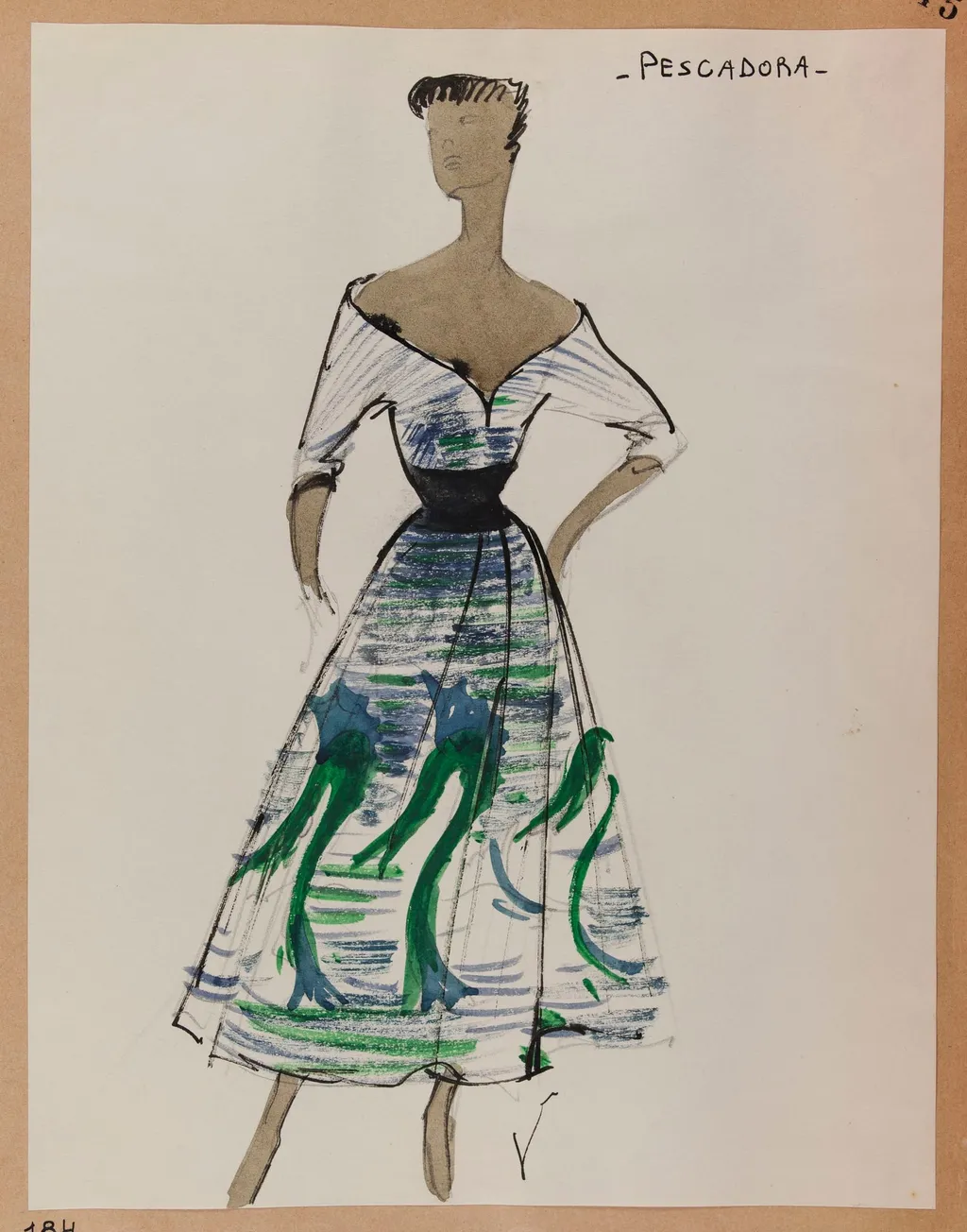
Pescadora is a drawing by Marie-Louise Carven. It dates from 1951 and is held in the collection of the Palais Galliera - Musée de la Mode de la Ville de Paris.
About this work
Overview
Pescadora is a fashion design sketch created by Marie-Louise Carven around 1951. The work depicts a fisherwoman in a distinctive, flowing dress, characterized by a deep V-neck, three-quarter sleeves, and a color scheme transitioning from white to bold blue and green stripes near the hem. The dress features a soft, loose, A-line silhouette.
Subject & Meaning
The subject, a fisherwoman, reflects Carven's interest in everyday themes and possibly regional inspirations. The title, meaning 'fisherwoman' in Spanish, reinforces this interpretation. The design may symbolize Carven's approach to accessible, relatable fashion.
Technique & Style
Executed with quick, loose brushstrokes, the sketch conveys a sense of spontaneity. The use of lightweight fabric effects and a flowing silhouette aligns with Carven's signature emphasis on comfort and suitability for petite women.
History & Provenance
Created in the early 1950s by Marie-Louise Carven, founder of the Carven fashion house (established in 1945), Pescadora is now part of the Museum of Ethnography's collection. Carven was a pioneer among Parisian couturiers in introducing prêt-à-porter lines.
Context
Pescadora situates itself within the post-war shift towards more accessible, ready-to-wear fashion in Paris. Carven's focus on petite women and everyday subjects positioned her brand as approachable and modern for its time.
Legacy
As part of Carven's oeuvre, Pescadora contributes to the legacy of a designer who successfully balanced couture heritage with the emerging prêt-à-porter market, influencing the development of accessible, high-quality fashion.
Artist & collection
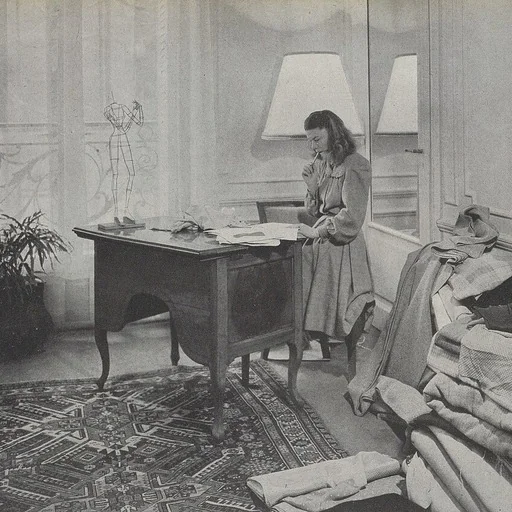
Artist
Marie-Louise Carven (31 August 1909 – 8 June 2015), born Carmen de Tommaso, was a French fashion designer who founded the house of Carven in 1945.
Museum
Palais Galliera - Musée de la Mode de la Ville de Paris
Continue through works from the same source collection.
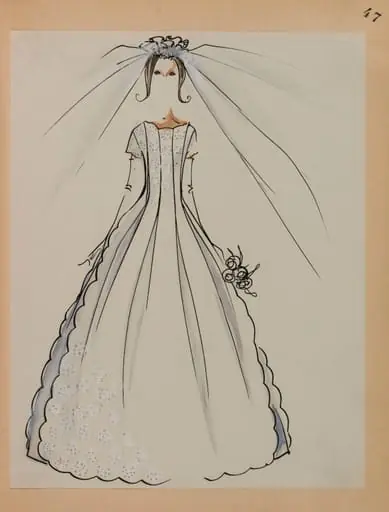 Robe de mariée festonnée et son voile
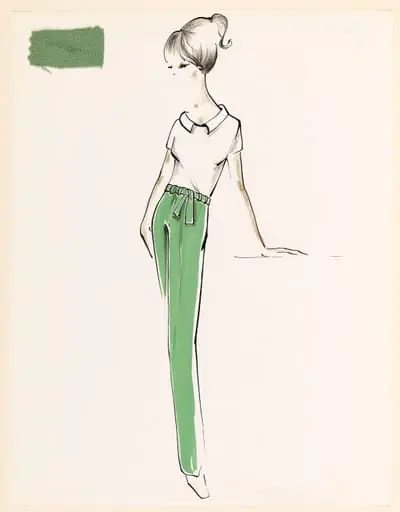 Haut blanc à manches courtes et pantalon vert à ceinture nouée
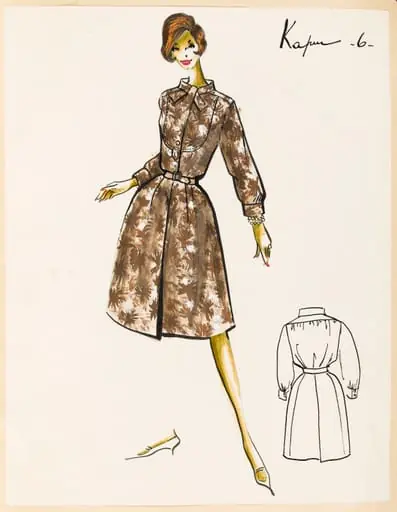 Kapur
Kapur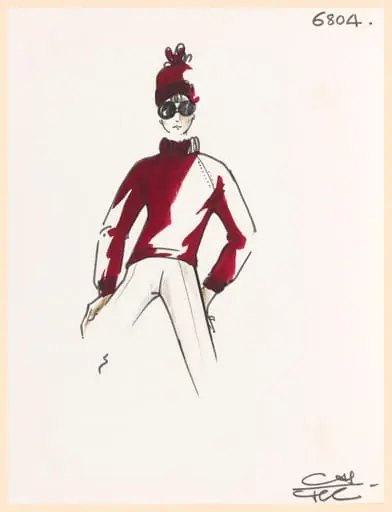 Pull-over à manches longues pourpre, bonnet assorti, pantalon et lunettes de soleil
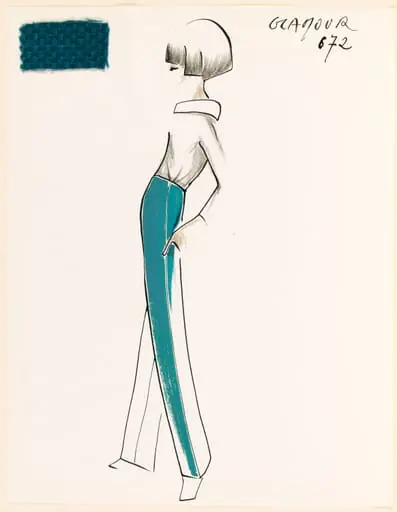 GLAMOUR
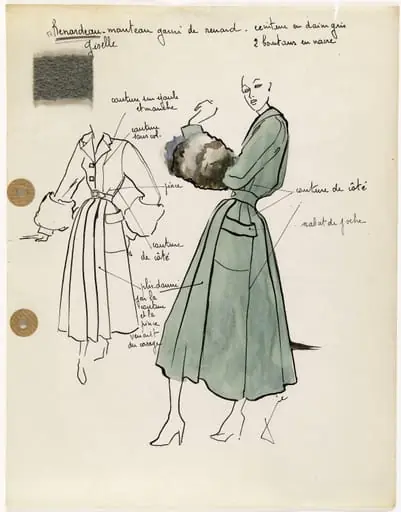 'Renardeau'
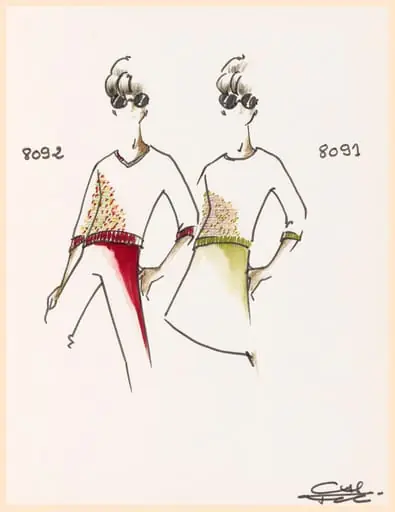 Pull-over à manches trois quarts et à encolure V à motifs multicolores, pantalon cerise et lunettes de soleil
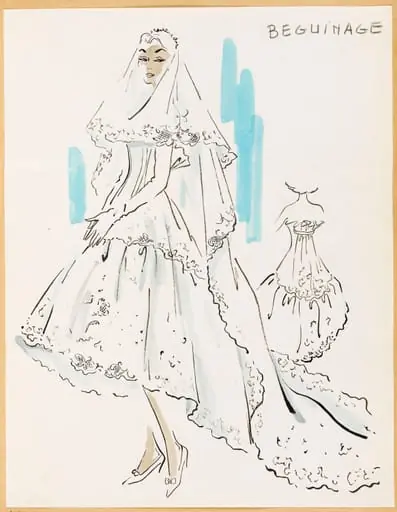 Béguinage