Artwork
Sarcelle
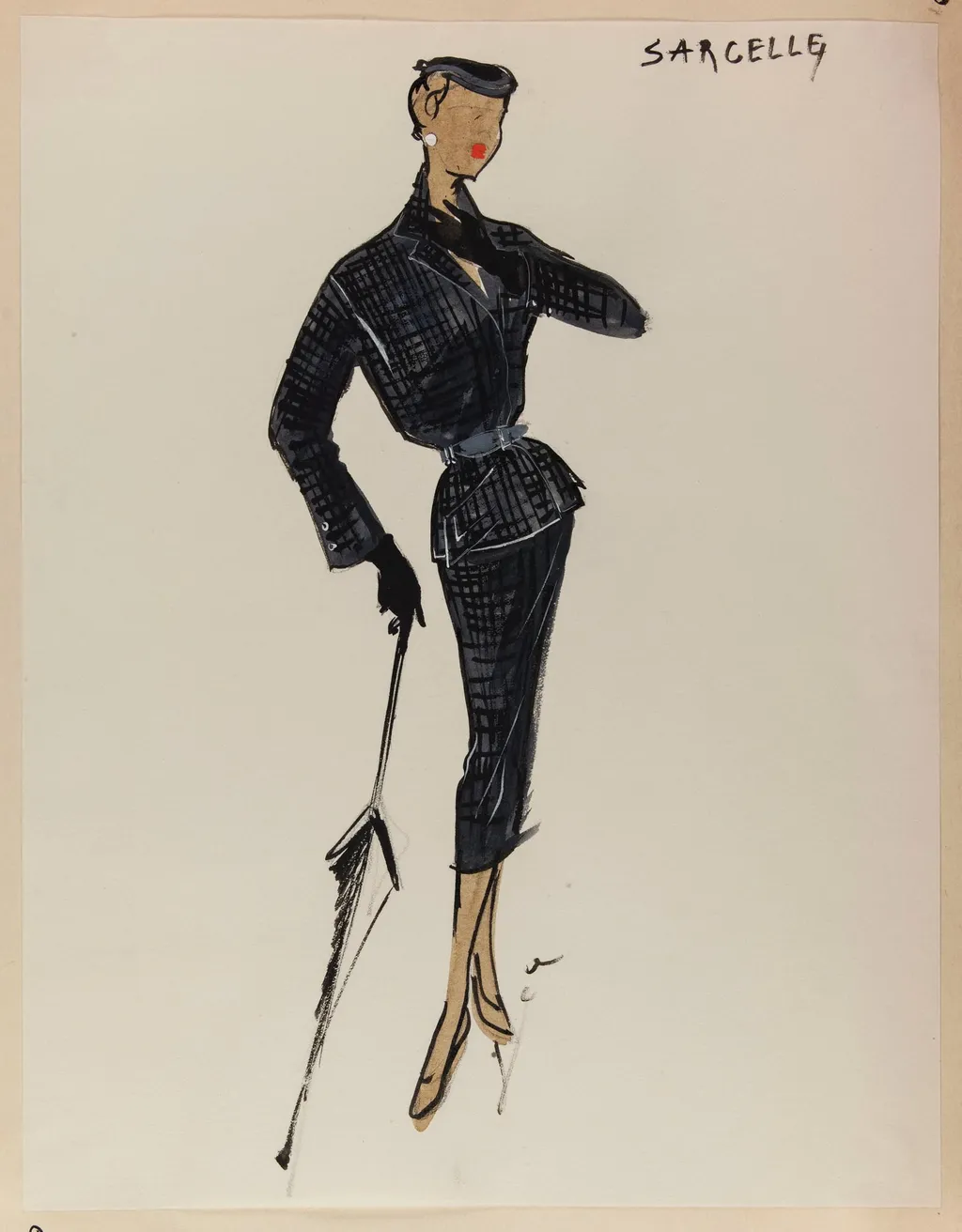
Sarcelle is a drawing by Marie-Louise Carven. It dates from 1952 and is held in the collection of the Palais Galliera - Musée de la Mode de la Ville de Paris.
About this work
Overview
Though labeled as an image, it functions as a design study for a garment line, preserved in the Museum of Ethnography’s collection.
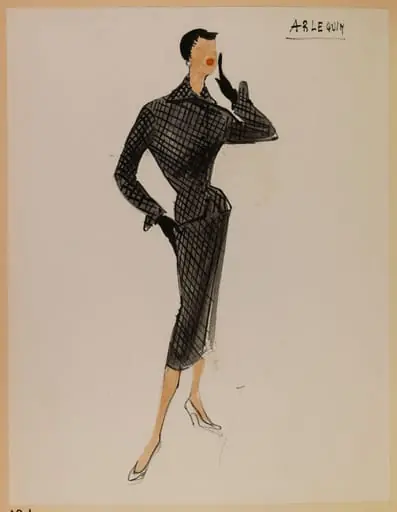
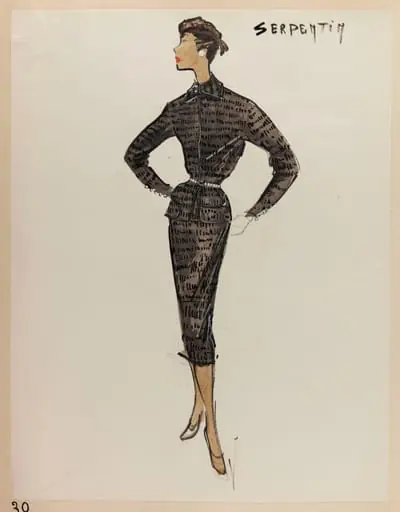
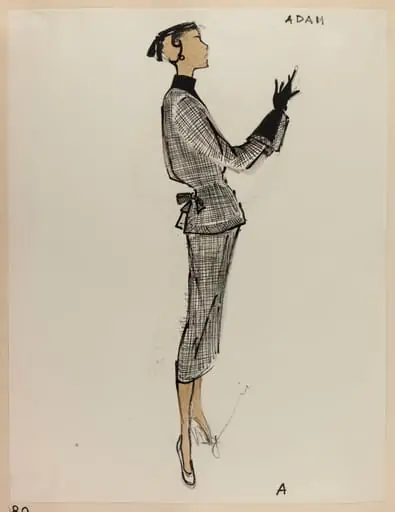
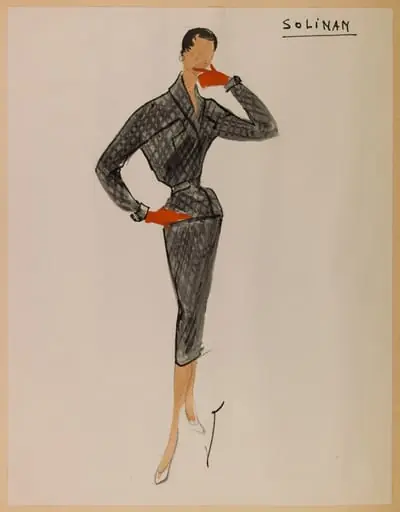
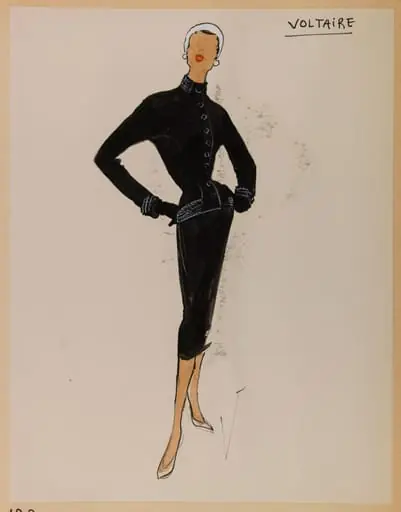
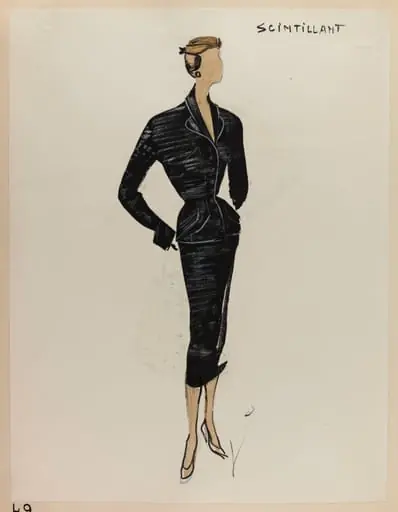
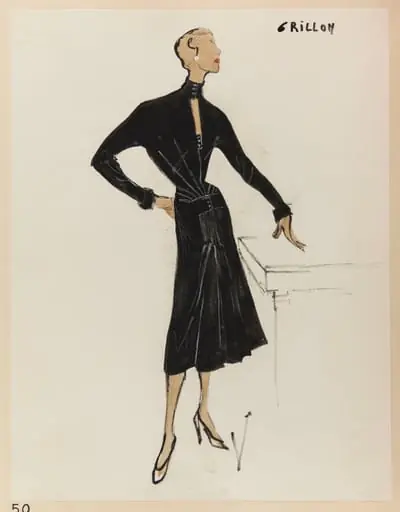
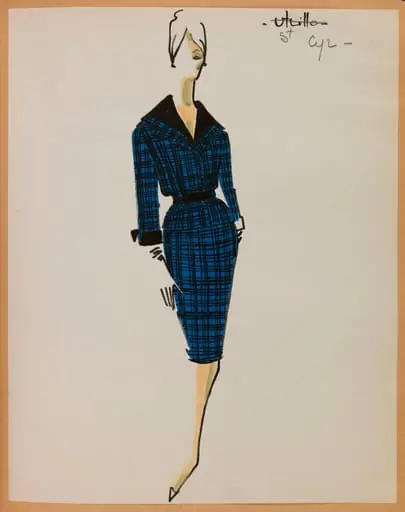
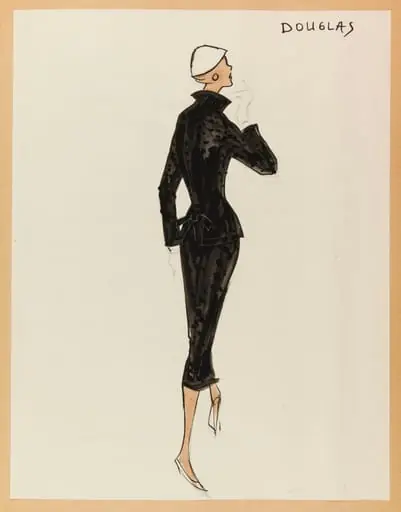
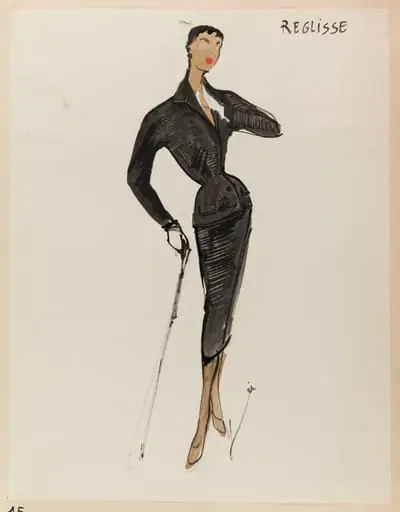
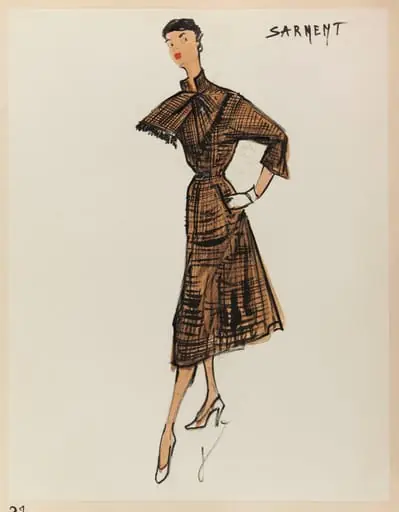
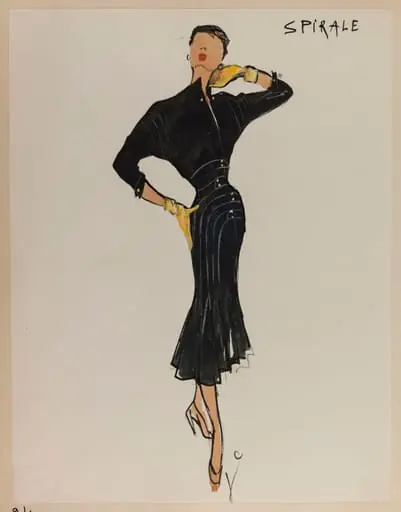
Sarcelle is a fashion illustration created around 1952 by French designer Marie-Louise Carven. It depicts a woman in a tailored black outfit—jacket, trousers, and heels—holding an umbrella with poised elegance. The drawing, rendered with fine white lines suggesting a plaid pattern, reflects Carven’s focus on refined, wearable design. Though labeled as an image, it functions as a design study for a garment line, preserved in the Museum of Ethnography’s collection.
Subject & Meaning
The figure in Sarcelle embodies a modern, urban woman of the early 1950s: composed, self-assured, and attired for both function and style. Her posture—slightly angled, umbrella held with deliberate grace—conveys quiet authority. The inclusion of accessories like red lipstick and earrings underscores attention to personal presentation. The work captures an ideal of feminine independence, rooted in Parisian daily life rather than theatrical couture.
Technique & Style
Carven rendered Sarcelle with precise, linear detailing, using white strokes to define texture and pattern on an otherwise monochrome ensemble. The drawing emphasizes silhouette and proportion, aligning with her design philosophy for petite figures. Minimal shading and clean contours prioritize clarity over ornamentation, reflecting the practicality of her approach. The illustration balances artistic expression with technical precision, typical of fashion sketches used in production.
History & Provenance
Marie-Louise Carven founded her fashion house in 1945 and pioneered one of Paris’s first prêt-à-porter lines, making high-quality design accessible beyond elite clients. Sarcelle, dated to 1952, likely served as a prototype for a seasonal collection. It entered the Museum of Ethnography’s holdings as part of a broader effort to document everyday fashion as cultural artifact, rather than merely high art.
Context
In postwar France, fashion was redefining gender roles and social norms. Carven’s designs catered to women seeking mobility and sophistication without excess. Sarcelle reflects this shift: practical yet polished, suited for city streets rather than salons. Its preservation in an ethnographic museum signals a growing recognition of ready-to-wear as culturally significant, not merely commercial.
Legacy
Sarcelle stands as a quiet testament to Carven’s influence in democratizing Parisian style. Her integration of tailored simplicity for everyday wear helped shape modern women’s wardrobes. Though not widely exhibited, the illustration remains a key example of how fashion design documentation bridges art, industry, and social history, preserving the aesthetics of ordinary life in mid-century Europe.
Artist & collection
Artist
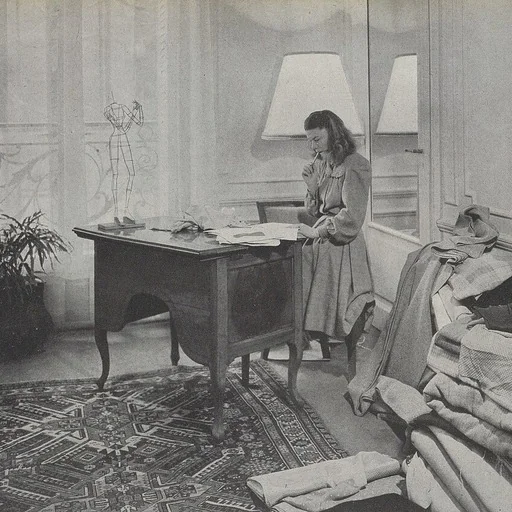
Marie-Louise Carven (31 August 1909 – 8 June 2015), born Carmen de Tommaso, was a French fashion designer who founded the house of Carven in 1945.
Museum
Palais Galliera - Musée de la Mode de la Ville de Paris
Continue through works from the same source collection.
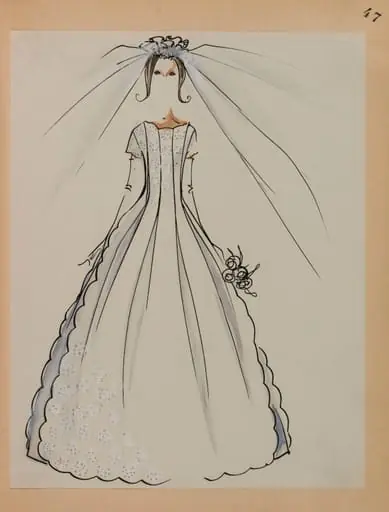 Robe de mariée festonnée et son voile
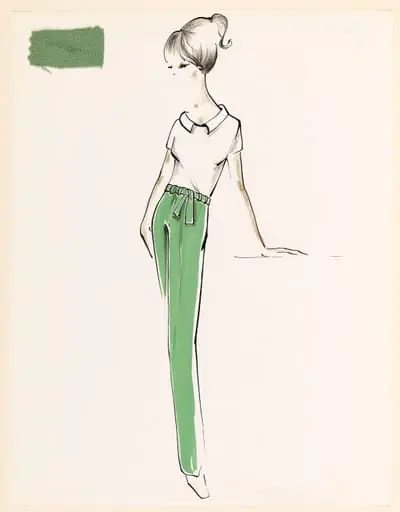 Haut blanc à manches courtes et pantalon vert à ceinture nouée
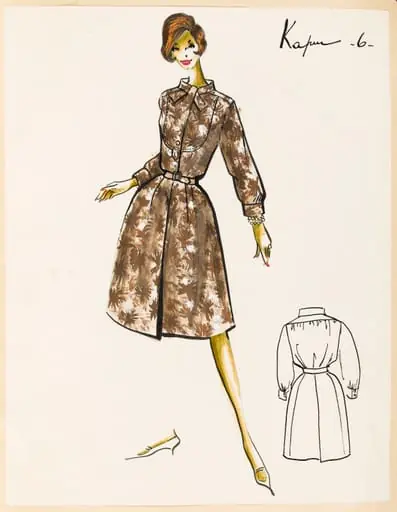 Kapur
Kapur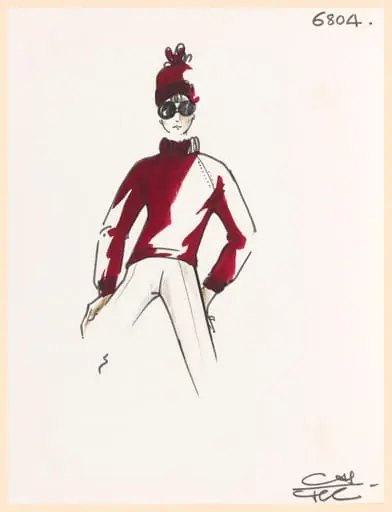 Pull-over à manches longues pourpre, bonnet assorti, pantalon et lunettes de soleil
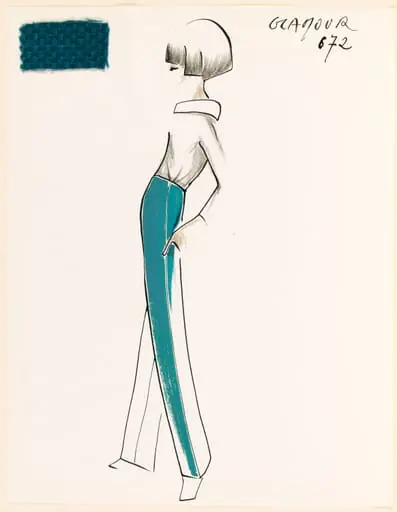 GLAMOUR
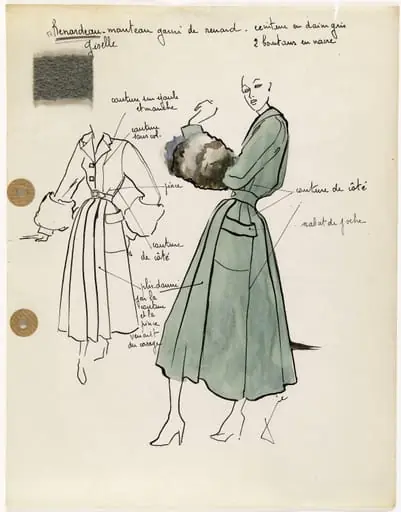 'Renardeau'
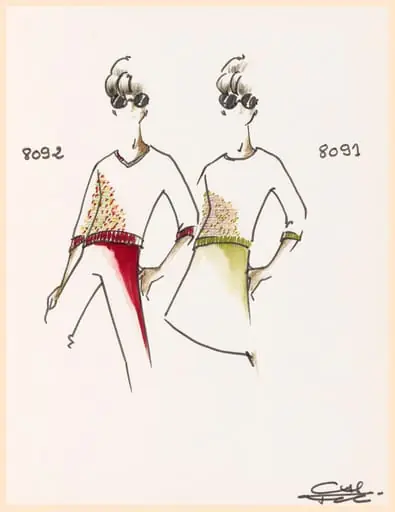 Pull-over à manches trois quarts et à encolure V à motifs multicolores, pantalon cerise et lunettes de soleil
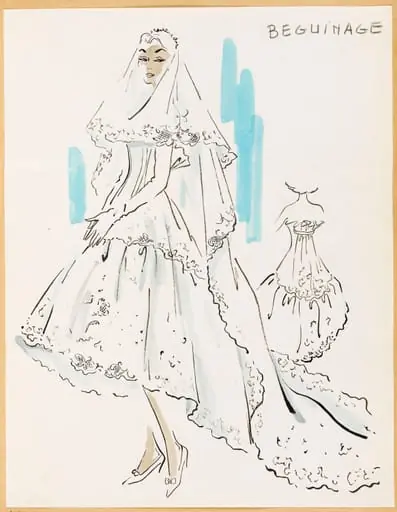 Béguinage