Artwork
Sinaï
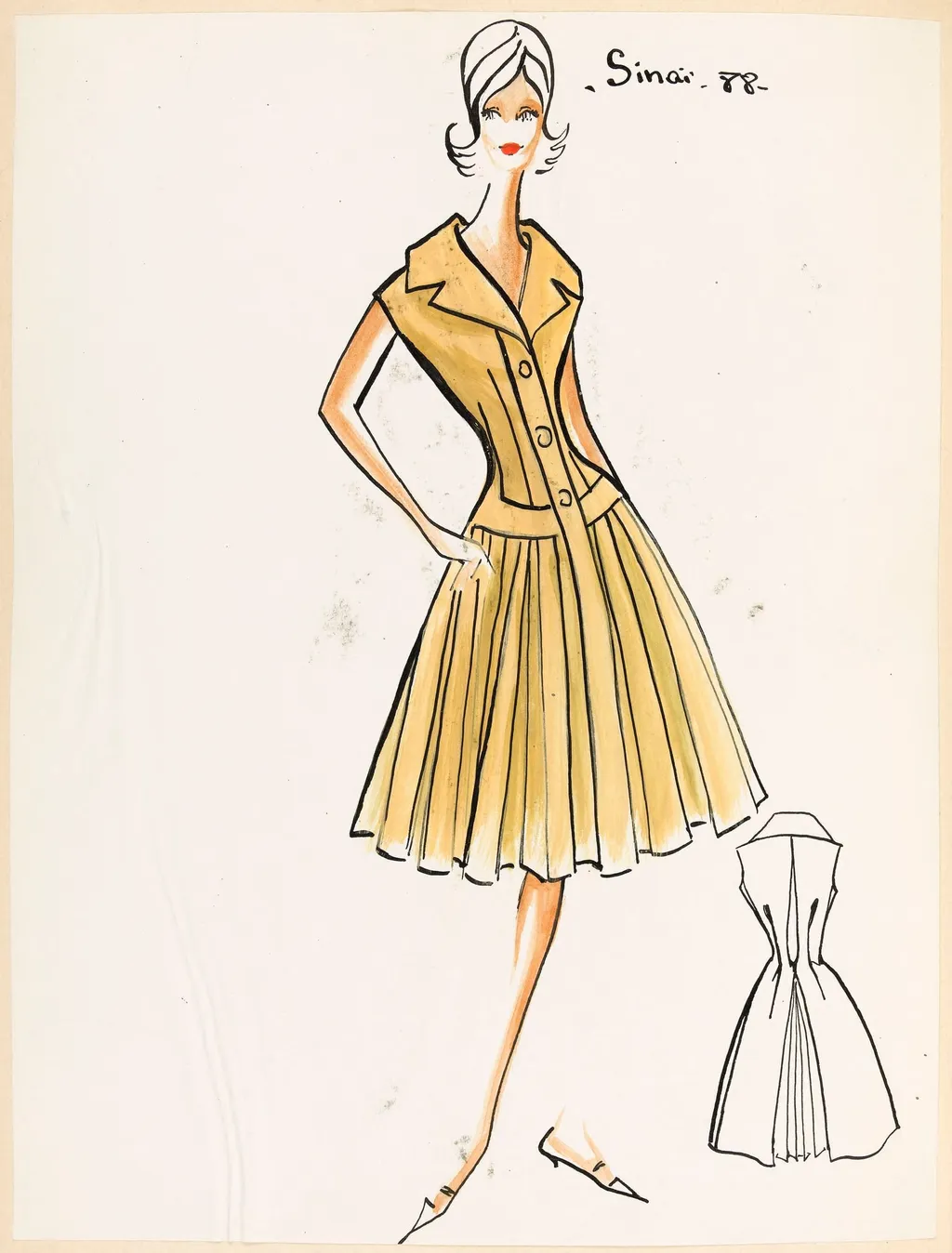
Sinaï is a drawing by Carven. It dates from 1959 and is held in the collection of the Palais Galliera - Musée de la Mode de la Ville de Paris.
About this work
Overview
Its modest scale and informal execution reflect its function within a creative process, likely tied to fashion development in mid-century France.
Sinaï is a pencil sketch created around 1959 by the designer Carven. It resides in the collection of the Museum of Ethnography. The work captures a single figure in a candid, gestural style, suggesting it was made as a design study rather than a finished illustration. Its modest scale and informal execution reflect its function within a creative process, likely tied to fashion development in mid-century France.
Subject & Meaning
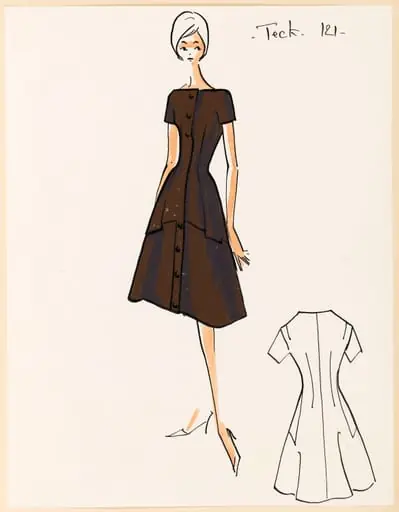
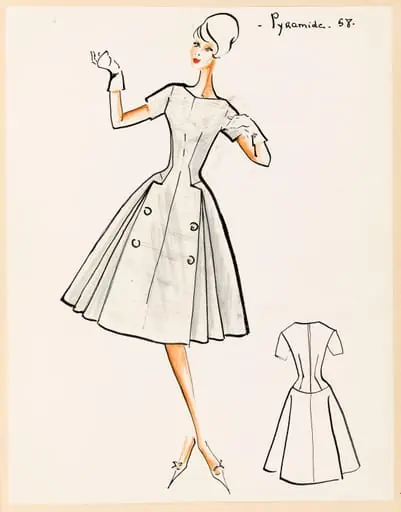
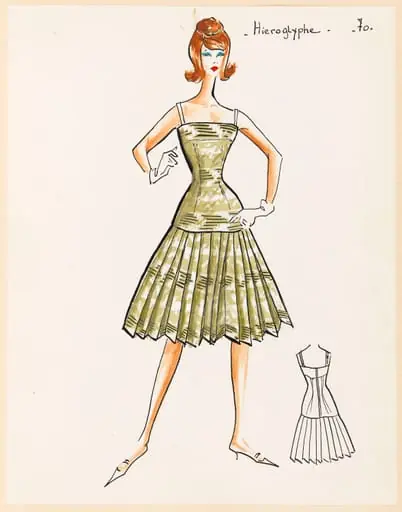
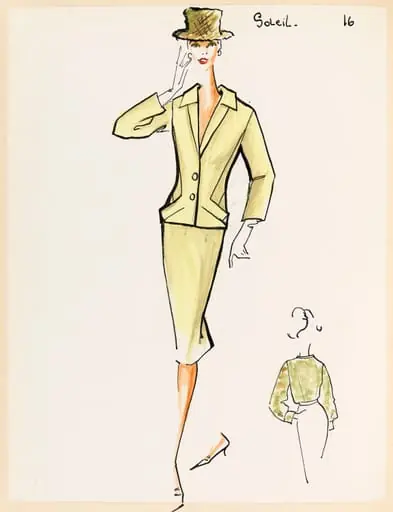
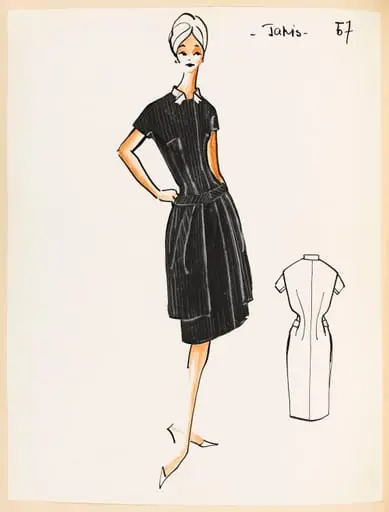
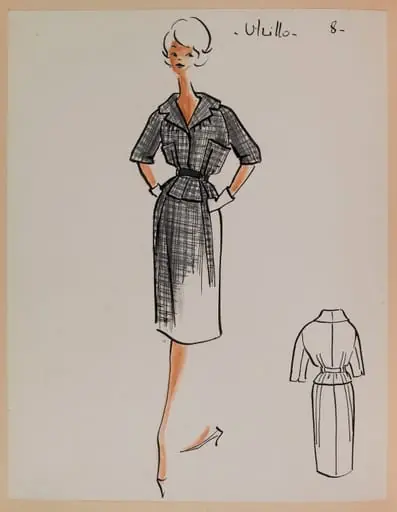
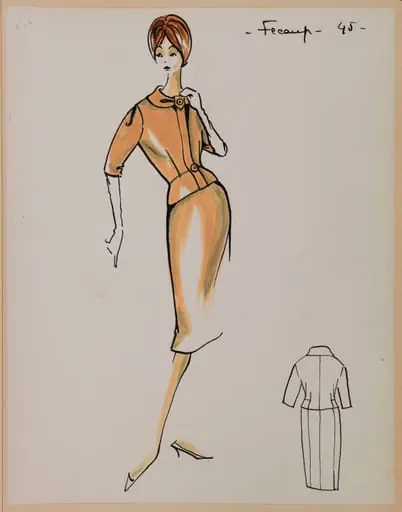
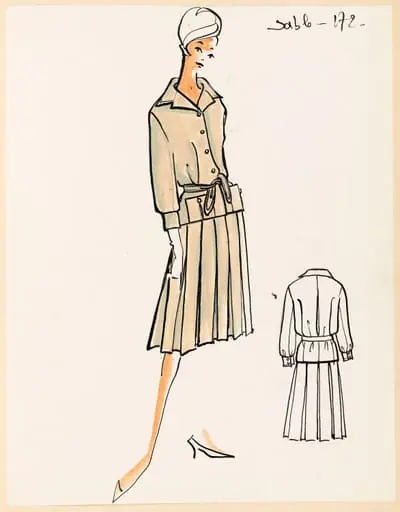
The figure is a woman dressed in a tailored short jacket and a full, pleated skirt, both in a uniform warm brown tone. Her posture—hand on hip—conveys quiet assurance, avoiding theatricality. The simplicity of the attire and the absence of ornamentation suggest an emphasis on wearable elegance. The sketch’s focus on silhouette and structure implies an interest in form over narrative, aligning with functional fashion design principles of the era.
Technique & Style
Carven employed loose, confident lines with minimal shading to define the figure’s form. The drawing’s speed and economy of stroke indicate a working sketch, not a polished rendering. A small auxiliary sketch in the corner isolates the skirt’s shape, revealing a methodical approach to refining garment details. The unified color scheme and flowing contours reflect an intuitive grasp of balance and movement in textile design.
History & Provenance
The sketch entered the Museum of Ethnography’s collection as part of a broader archive of mid-century fashion materials. Its origin lies within Carven’s studio practice during the late 1950s, a period when the designer was refining her signature blend of Parisian refinement and practicality. The work’s preservation suggests its value as a document of design methodology rather than as a standalone artwork.
Context
Created during a time when haute couture was transitioning toward more accessible ready-to-wear, Sinaï reflects the era’s emphasis on clean lines and wearable silhouettes. Carven’s work often bridged elegance and functionality, responding to postwar demands for practical yet stylish clothing. This sketch exemplifies how designers used rapid drawing to explore form, fabric, and movement before production.
Legacy
Sinaï remains a quiet testament to the iterative nature of fashion design. Its preservation in an ethnographic context underscores how clothing studies extend beyond finished garments to include the processes behind them. The sketch continues to inform scholars examining the relationship between hand-drawn design and the evolution of mid-century women’s wear in Europe.
Artist & collection
Artist
These delicate ink-on-paper drawings capture the quiet poetry of everyday things: pinecones, reeds, apples.
Museum
Palais Galliera - Musée de la Mode de la Ville de Paris
Continue through works from the same source collection.