Artwork
Terre brûlée
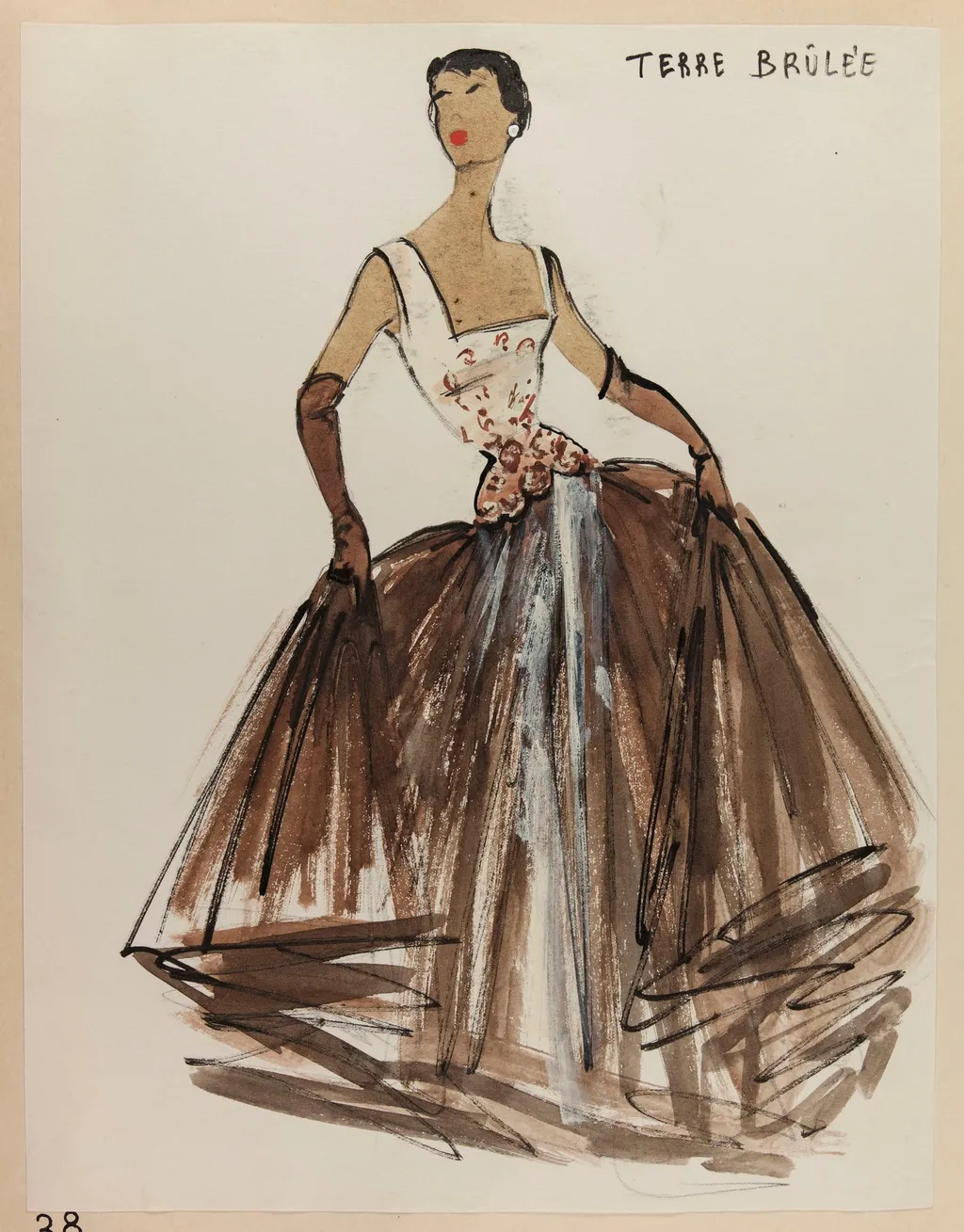
Terre brûlée is a drawing by Carven. It dates from 1952 and is held in the collection of the Palais Galliera - Musée de la Mode de la Ville de Paris.
About this work
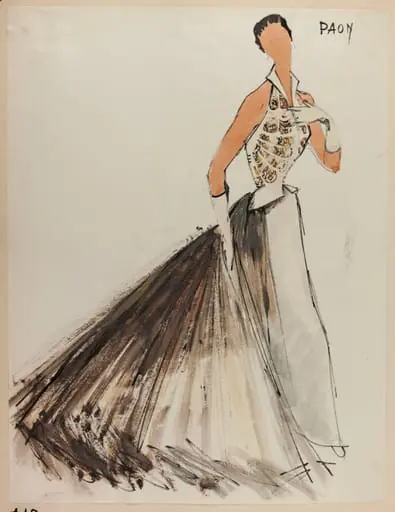
The woman's dress is a mix of brown and white, with a full skirt that appears to be made of layers of fabric.
The painting depicts a woman in a long dress with a full skirt, her hands on her hips. She wears a white sleeveless top with a floral design and brown gloves that reach up to her elbows. Her dark hair is styled in an updo, and she has red lips. The background is off-white.
The woman's dress is a mix of brown and white, with a full skirt that appears to be made of layers of fabric. Her gloves add a touch of elegance to her overall appearance. The painting's style is reminiscent of fashion illustrations from the mid-20th century.
This painting is held at the Museum of Ethnography.
Overview
Terre brûlée, dated around 1952, is a painted image by the artist Carven. It resides in the collection of the Museum of Ethnography. The work presents a single figure in a stylized, formal pose, rendered with attention to textile detail and atmospheric tone. Its medium and composition align with mid-century illustrative traditions, though its context within an ethnographic museum suggests a broader cultural inquiry beyond fashion.
Subject & Meaning
The central figure is a woman standing with hands on hips, dressed in a layered skirt of brown and white fabric, a sleeveless top adorned with floral motifs, and elbow-length brown gloves. Her dark updo and red lips emphasize a deliberate, composed demeanor. The image evokes a sense of ritualized presentation, possibly reflecting ideals of femininity or ceremonial dress in postwar Europe, though no explicit narrative is provided by the artist.
Technique & Style
Carven employs a flattened perspective and clean outlines reminiscent of fashion plate illustrations from the 1940s–50s. The palette is restrained, with soft contrasts between the off-white background and the muted tones of the dress and gloves. Fabric texture is suggested through subtle tonal shifts rather than detailed brushwork, prioritizing silhouette and pattern over naturalism. The style leans toward stylized representation rather than realism.
History & Provenance
The painting was created circa 1952 and entered the collection of the Museum of Ethnography at an unspecified date. No documentation exists regarding its initial exhibition or ownership prior to museum acquisition. Its presence in an ethnographic institution, rather than a fine arts setting, implies a curatorial interest in dress as cultural artifact, though the artist’s intent remains unrecorded.
Context
In the early 1950s, fashion illustration flourished as a bridge between haute couture and mass media. Carven, known for textile design and clothing, may have produced this image as part of a broader exploration of identity and adornment. Its placement in an ethnographic museum suggests an attempt to frame contemporary dress as a cultural expression, linking personal style to collective tradition.
Legacy
Terre brûlée remains a quiet example of postwar visual culture, reflecting how fashion imagery was increasingly viewed through anthropological lenses. While not widely exhibited, its inclusion in an ethnographic collection signals a shift in how institutions began to regard everyday attire as worthy of study. The work contributes to ongoing dialogues about gender, representation, and the boundaries between art and anthropology.
Artist & collection
Artist
These delicate ink-on-paper drawings capture the quiet poetry of everyday things: pinecones, reeds, apples.
Museum
Palais Galliera - Musée de la Mode de la Ville de Paris
Continue through works from the same source collection.