Artwork
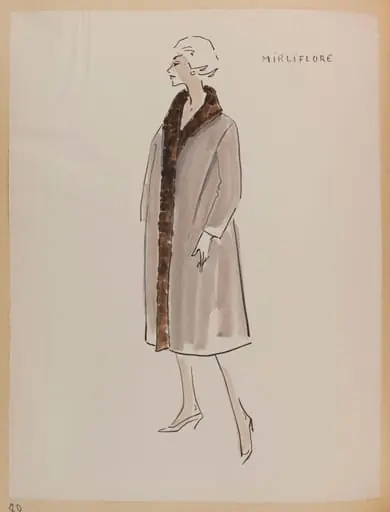
Mirliflore
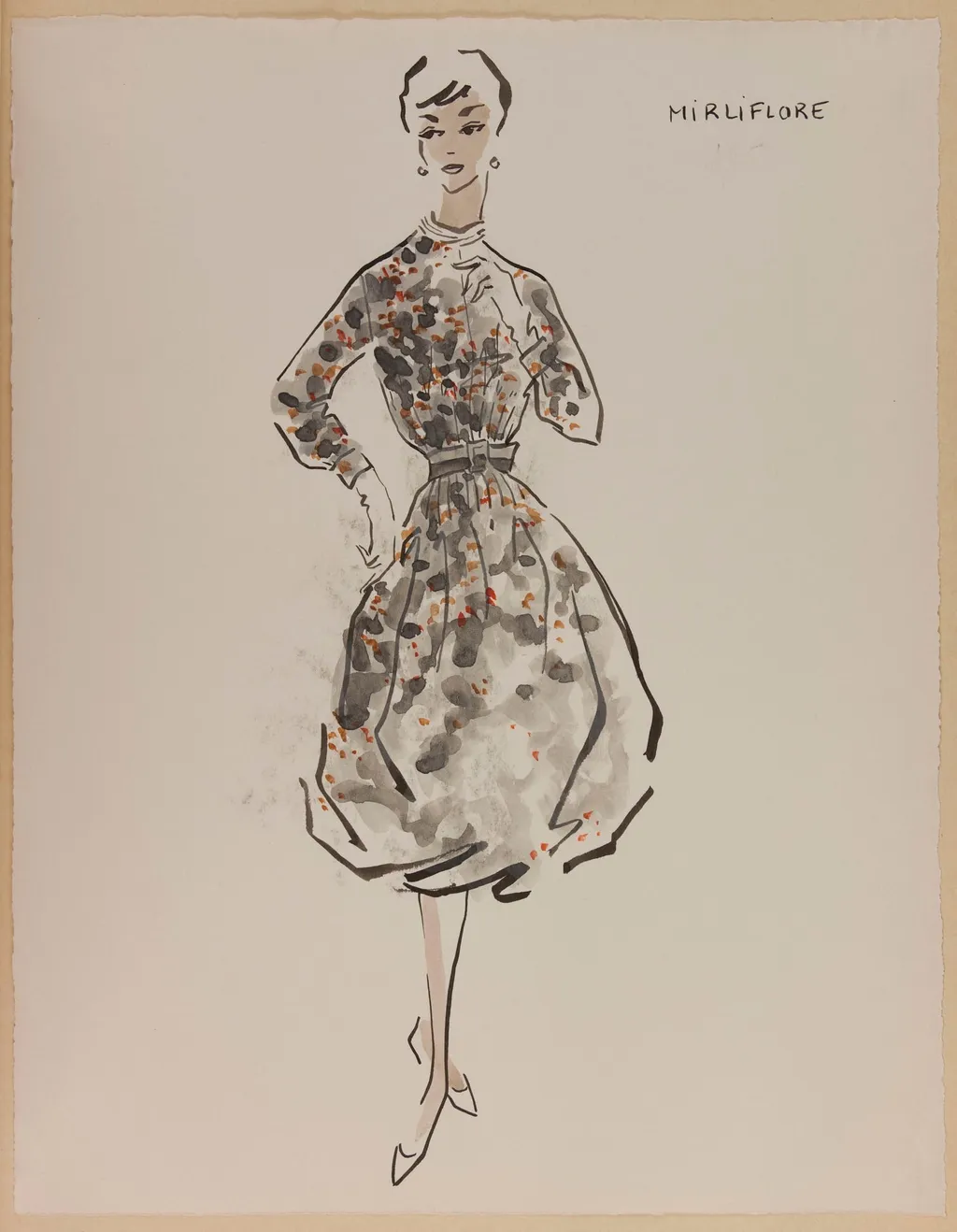
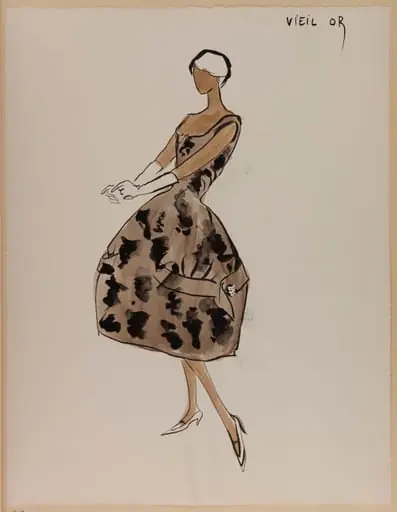
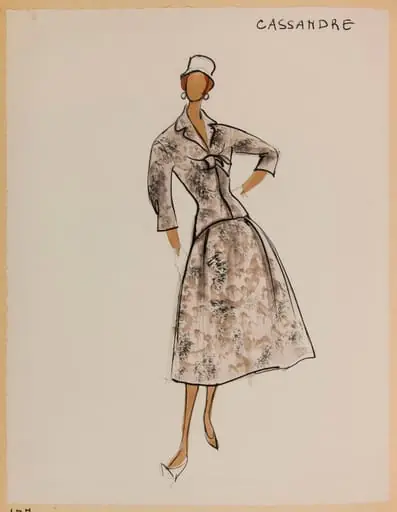
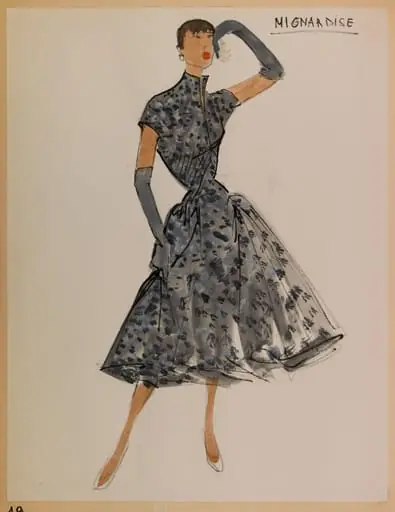
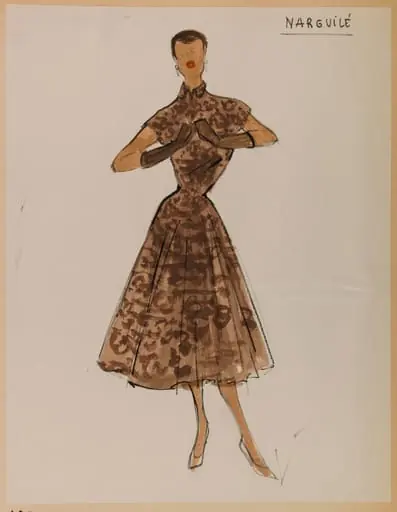
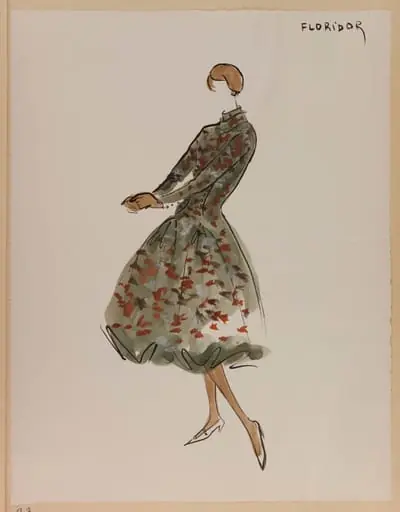
Mirliflore is a drawing by Marie-Louise Carven. It dates from 1956 and is held in the collection of the Palais Galliera - Musée de la Mode de la Ville de Paris.
About this work
Overview
Executed in ink or pencil, the drawing emphasizes movement through fluid lines and minimal detail.
Created around 1956 by French designer Marie-Louise Carven, *Mirliflore* is a fashion sketch depicting a knee-length dress with a defined waist and softly puffed sleeves. Executed in ink or pencil, the drawing emphasizes movement through fluid lines and minimal detail. The piece reflects Carven’s focus on lightweight, wearable designs for petite figures and is part of the Museum of Ethnography’s collection, underscoring its role as a document of mid-century fashion practice.
Subject & Meaning
The figure in *Mirliflore* wears a dress adorned with scattered red and brown floral motifs on a dark ground, suggesting a playful yet restrained aesthetic. The name, possibly referencing the fabric’s pattern or a poetic allusion, aligns with Carven’s tendency to infuse whimsy into practical garments. The sketch captures not just a silhouette but an attitude—light, feminine, and unpretentious—consistent with postwar ideals of effortless elegance.
Technique & Style
Carven rendered *Mirliflore* with swift, assured strokes that convey volume and drape without heavy shading. The dress flows naturally from a fitted waist, its fullness suggested by minimal contour lines. Details like small earrings and tapered sleeves are hinted at, not overdefined. The simplicity of the medium enhances the garment’s sense of motion, prioritizing silhouette over ornamentation, a hallmark of Carven’s design philosophy.
History & Provenance
Marie-Louise Carven founded her eponymous house in 1945 and was among the earliest French couturiers to embrace prêt-à-porter. *Mirliflore* emerged during a period when her designs were gaining recognition for their accessibility and innovation, including early adaptations of the push-up bra. The sketch entered the Museum of Ethnography’s holdings as part of a broader effort to preserve everyday fashion as cultural artifact, rather than elite haute couture.
Context
In the mid-1950s, women’s fashion shifted toward livelier, less structured silhouettes after wartime austerity. Carven’s designs, including *Mirliflore*, responded to this by blending feminine details—like floral prints and puff sleeves—with practical cuts suited to active lifestyles. The sketch reflects a broader trend in Parisian design: democratizing elegance through thoughtful, wearable forms that rejected excessive ornament.
Legacy
Though *Mirliflore* is a preparatory drawing, it encapsulates Carven’s lasting influence on modern womenswear. Her integration of couture sensibility into ready-to-wear helped redefine fashion’s accessibility. The sketch remains a quiet testament to her ability to balance charm and functionality, influencing later designers who prioritized movement and proportion over rigid formality.
Artist & collection
Artist
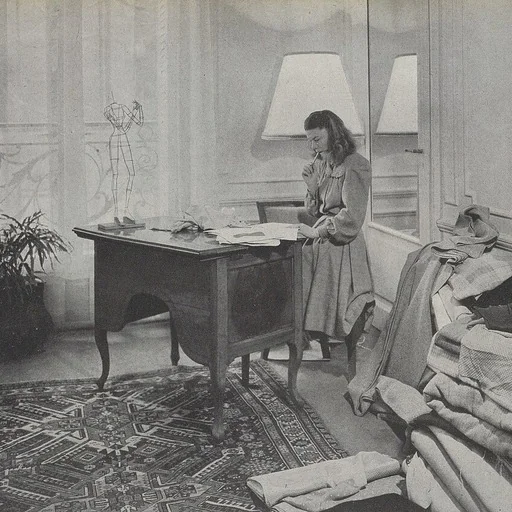
Marie-Louise Carven (31 August 1909 – 8 June 2015), born Carmen de Tommaso, was a French fashion designer who founded the house of Carven in 1945.
Museum
Palais Galliera - Musée de la Mode de la Ville de Paris
Continue through works from the same source collection.
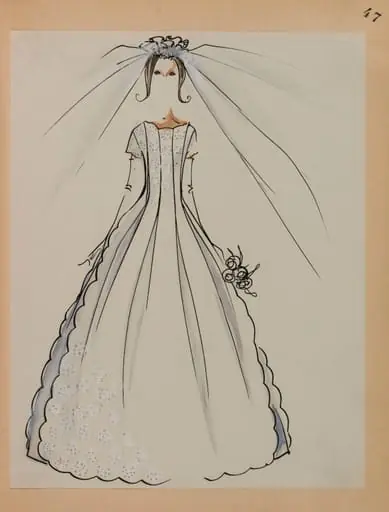 Robe de mariée festonnée et son voile
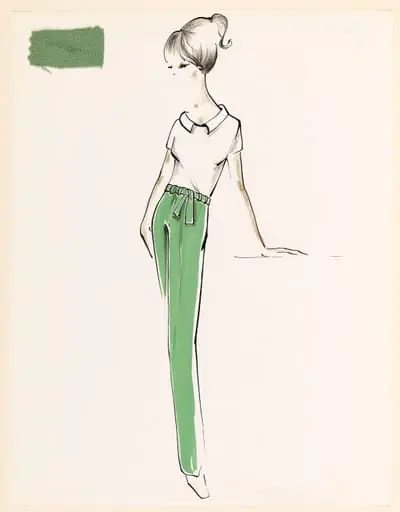 Haut blanc à manches courtes et pantalon vert à ceinture nouée
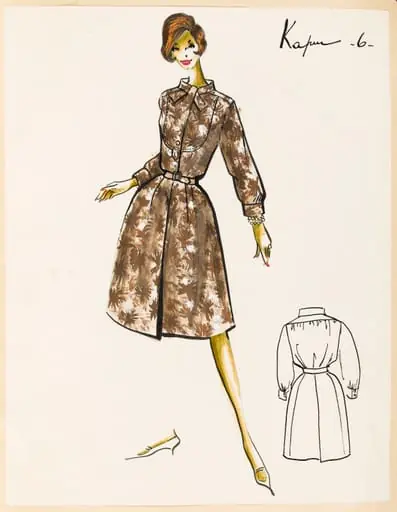 Kapur
Kapur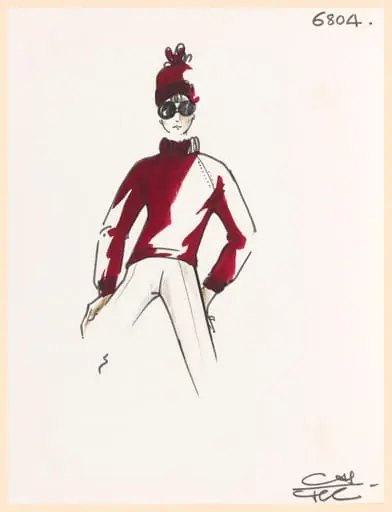 Pull-over à manches longues pourpre, bonnet assorti, pantalon et lunettes de soleil
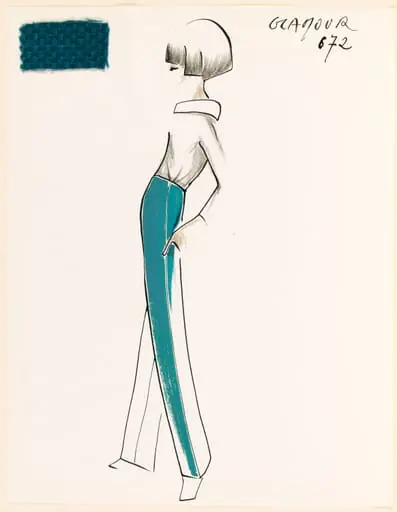 GLAMOUR
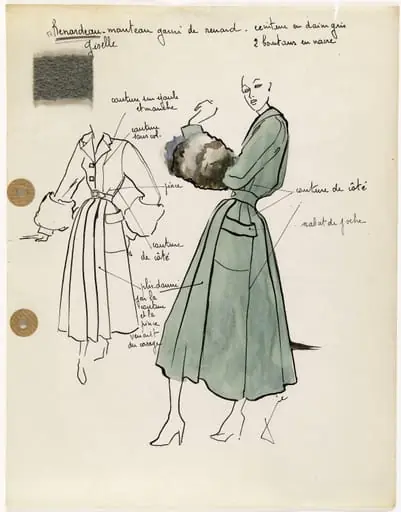 'Renardeau'
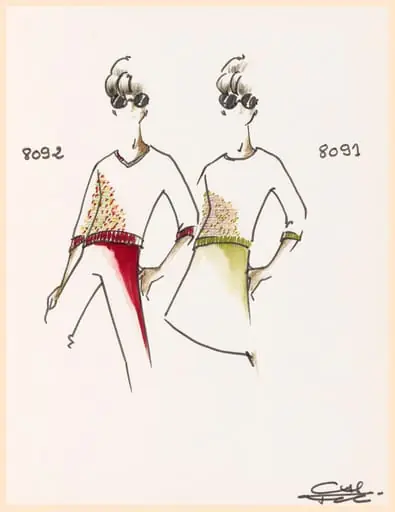 Pull-over à manches trois quarts et à encolure V à motifs multicolores, pantalon cerise et lunettes de soleil
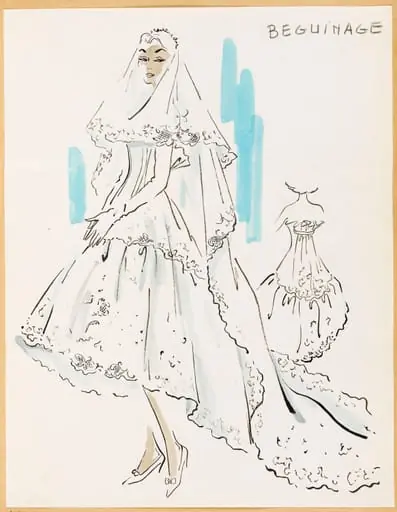 Béguinage