Artwork
Marron glacé
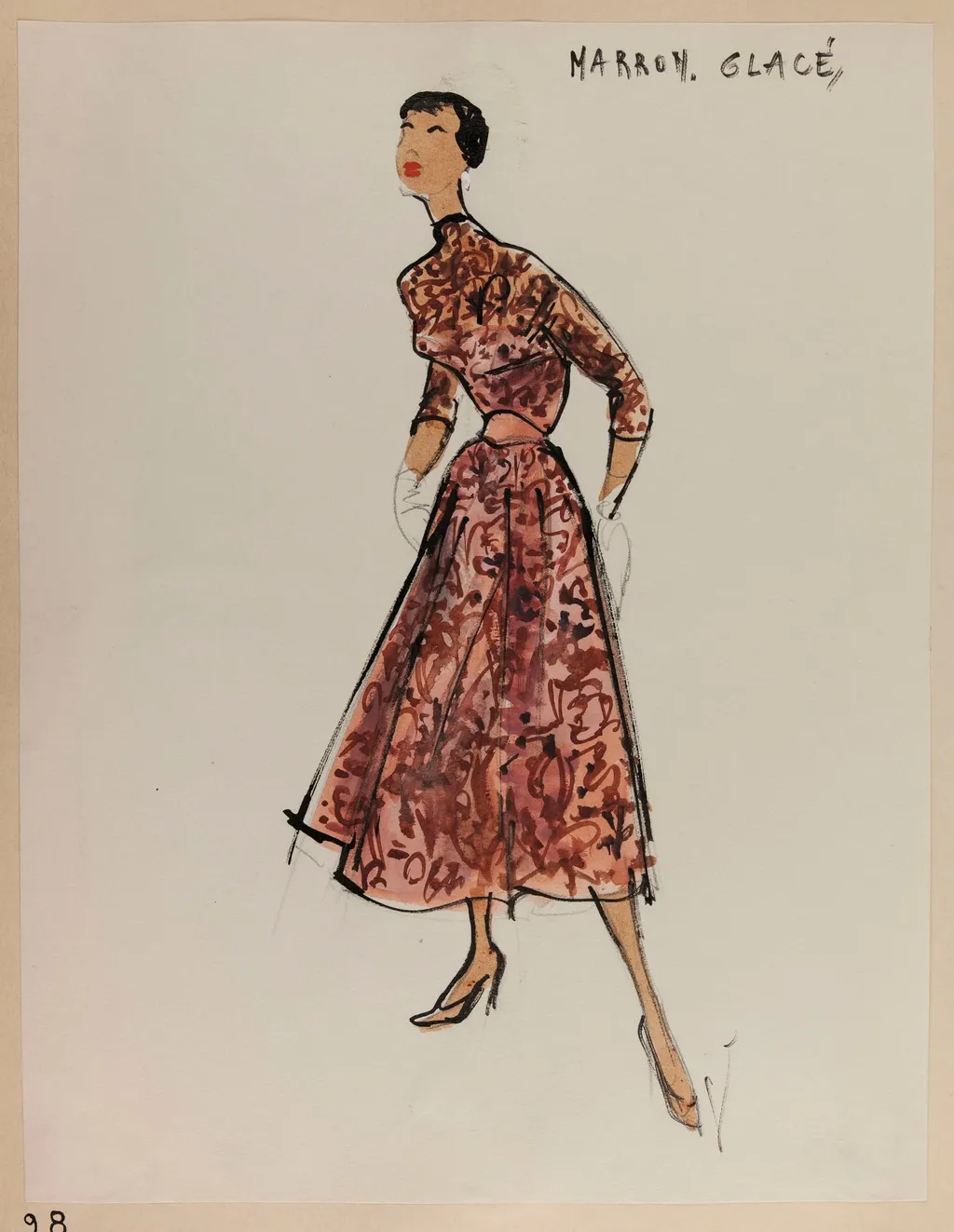
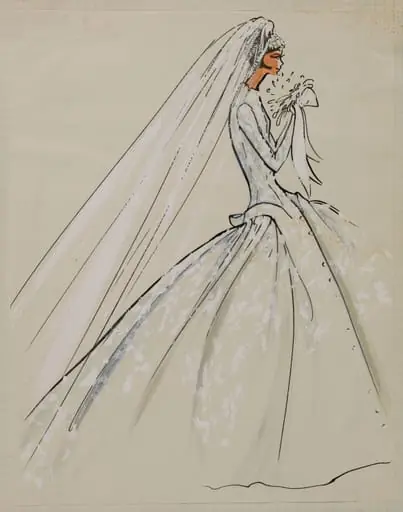
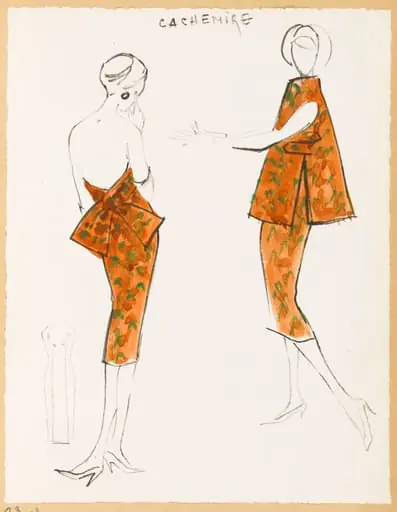
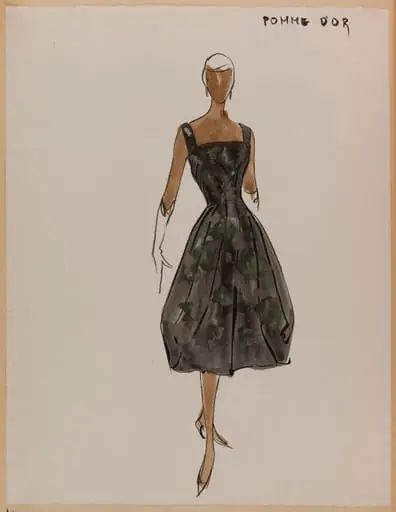
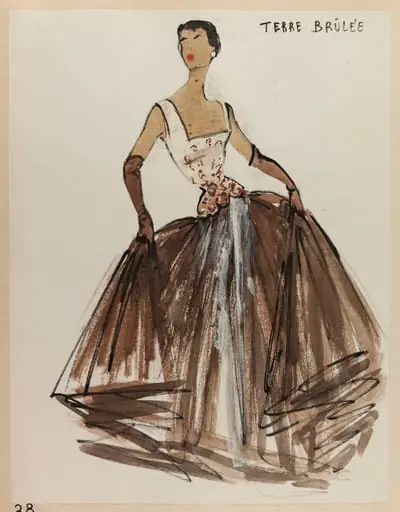
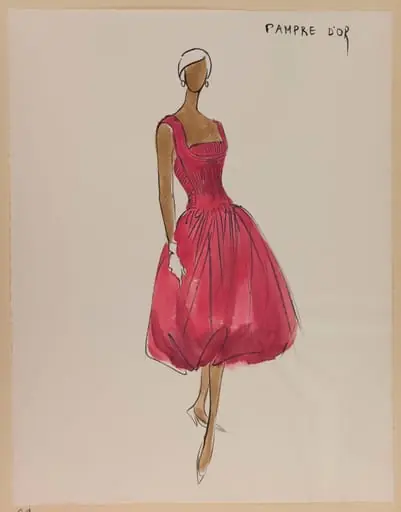
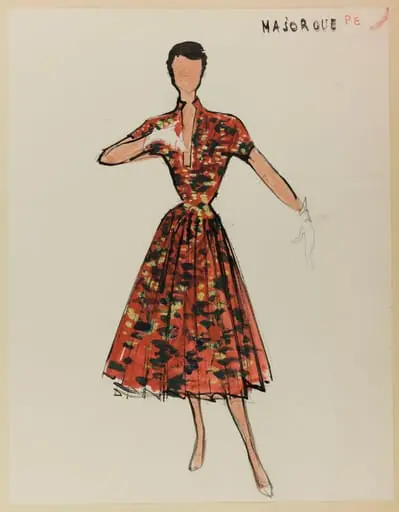
Marron glacé is a drawing by Carven. It dates from 1952 and is held in the collection of the Palais Galliera - Musée de la Mode de la Ville de Paris.
About this work
Overview
The work is part of the Museum of Ethnography’s collection, reflecting Carven’s interest in documenting contemporary dress through spontaneous draftsmanship.
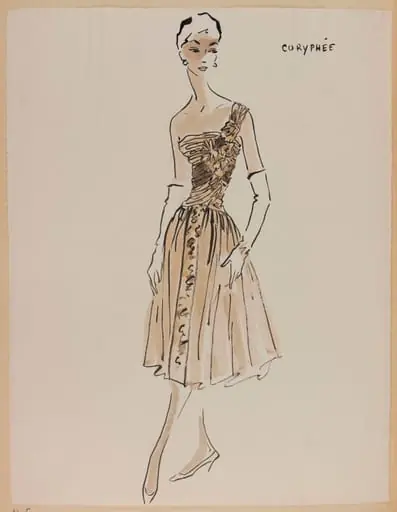
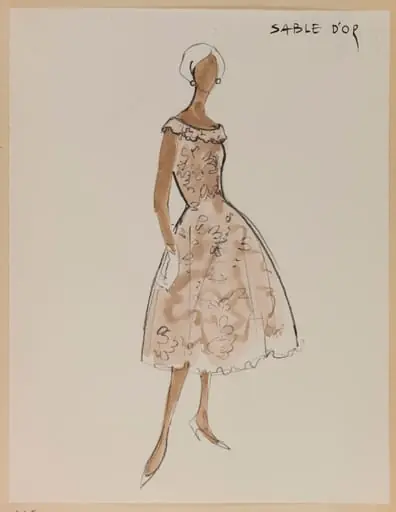
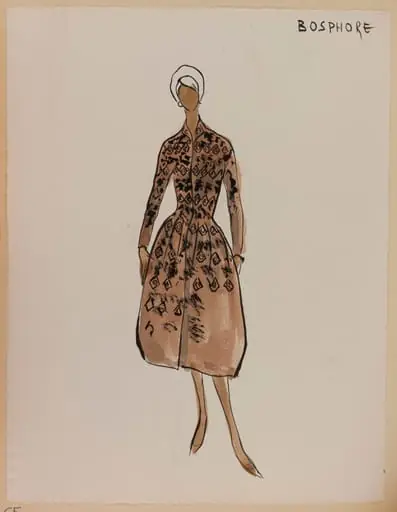
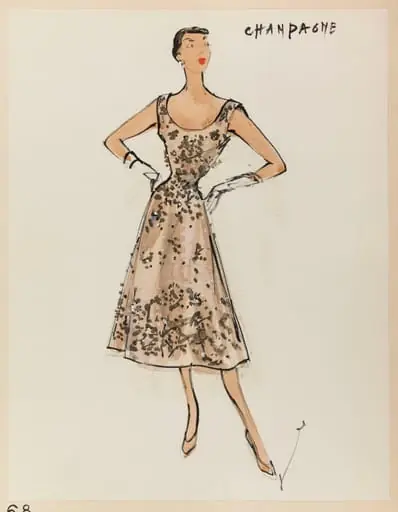
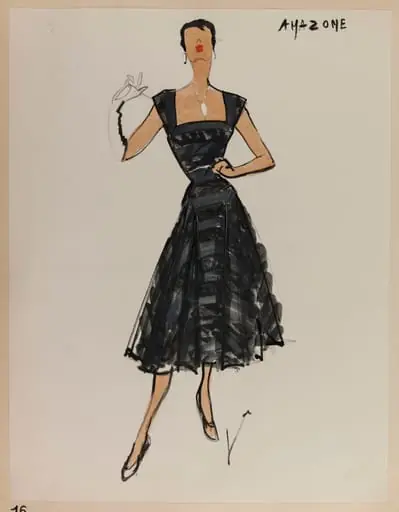
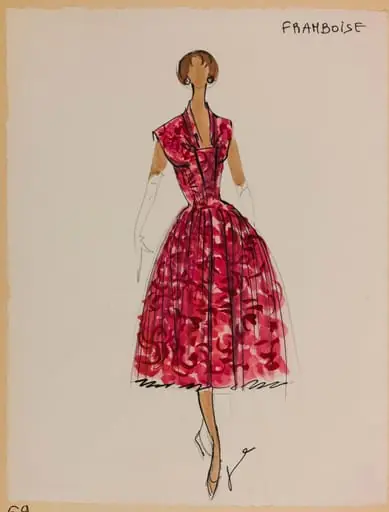
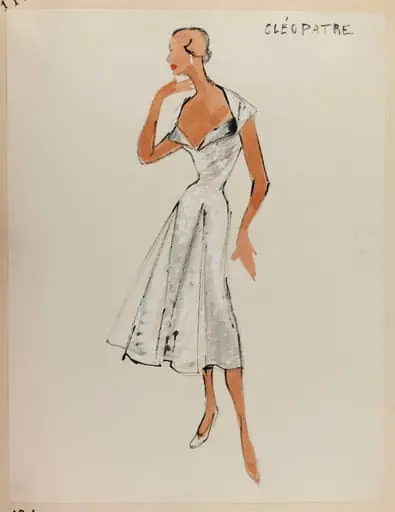
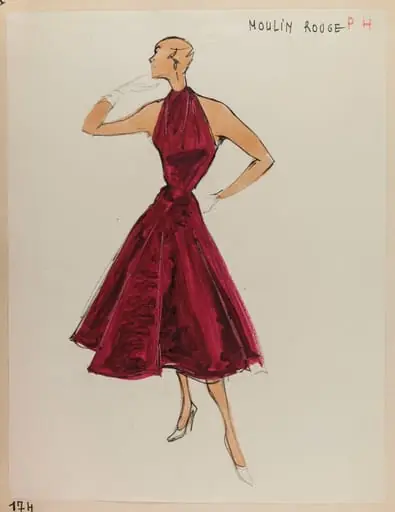
Created around 1952 by French designer Carven, this ink sketch titled 'Marron glacé' captures a woman in a dress of flowing lines and floral motifs. Executed with swift, fluid strokes, it resembles a fashion illustration rather than a finished painting. The work is part of the Museum of Ethnography’s collection, reflecting Carven’s interest in documenting contemporary dress through spontaneous draftsmanship.
Subject & Meaning
The figure wears a fitted bodice and a flared skirt adorned with a bold floral pattern, suggesting mid-century femininity and elegance. The subdued palette of brown and beige, accented by a single red lip, evokes a quiet sophistication. The title, referencing candied chestnuts, may allude to the dress’s warm, glazed tones or its refined, almost edible texture, linking fashion to sensory metaphor.
Technique & Style
The drawing employs loose, gestural lines typical of fashion sketches, emphasizing movement and silhouette over detail. Ink washes suggest fabric folds and shadow, while minimal color accents—mainly on the lips—draw attention to the face. The spontaneity of the brushwork conveys immediacy, as if the design was captured in real time during a fitting or inspiration session.
History & Provenance
The sketch entered the Museum of Ethnography’s holdings in the latter half of the 20th century, likely through donation or acquisition from Carven’s personal archive. Its inclusion among ethnographic materials signals an interest in fashion as cultural artifact, though the precise path from studio to museum remains undocumented in public records.
Context
In the early 1950s, Parisian couture houses like Carven’s were refining ready-to-wear aesthetics for a growing middle class. This sketch reflects the era’s blend of haute couture elegance and accessible design. The emphasis on naturalistic draping and floral motifs aligns with postwar trends favoring soft femininity over wartime austerity.
Legacy
Though not widely exhibited, the sketch contributes to understanding Carven’s design process and the role of sketching in mid-century fashion. Its preservation in an ethnographic context underscores how clothing was increasingly viewed as a cultural expression, not merely a commodity, influencing later scholarly approaches to fashion history.
Artist & collection
Artist
These delicate ink-on-paper drawings capture the quiet poetry of everyday things: pinecones, reeds, apples.
Museum
Palais Galliera - Musée de la Mode de la Ville de Paris
Continue through works from the same source collection.