Artwork
Baccio Bandinelli
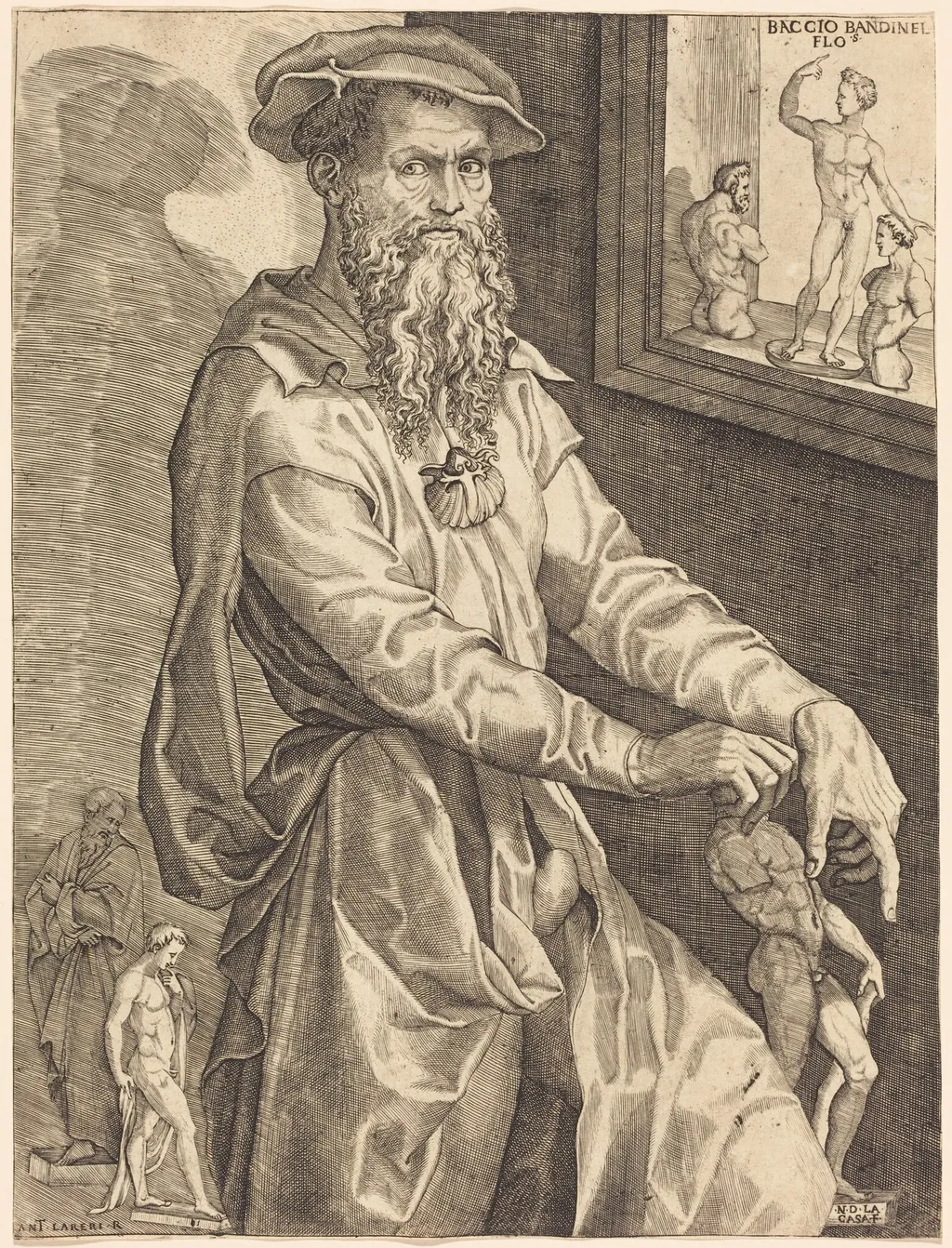
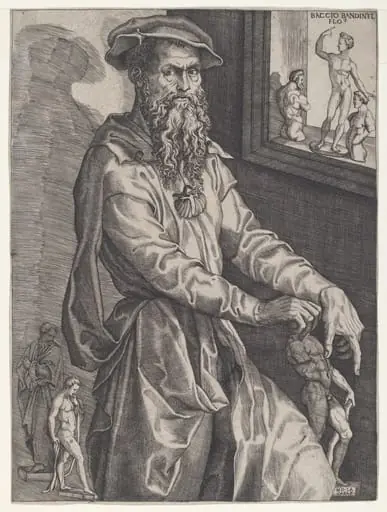
Baccio Bandinelli is an ink print by the Renaissance artist Nicolò della Casa. It dates from 1544 and is held in the collection of the National Gallery of Art.
About this work
Overview
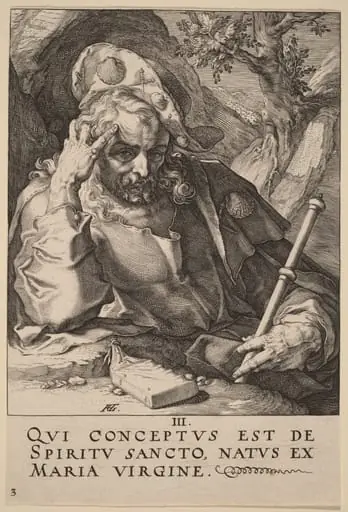
This engraving, created around 1544 by Nicolò della Casa, depicts the sculptor Baccio Bandinelli in a contemplative pose.
This engraving, created around 1544 by Nicolò della Casa, depicts the sculptor Baccio Bandinelli in a contemplative pose. Rendered in fine linear detail typical of Renaissance printmaking, the image captures Bandinelli as an older man with a long beard, dressed in a loose robe, holding a scroll and leaning on a stone block. Behind him, three nude figures are sketched in, suggesting his engagement with anatomical study.
Subject & Meaning
The portrait presents Bandinelli not as a public figure but as a working artist, absorbed in intellectual and creative labor. The scroll may reference classical texts or his own design notes, while the nude studies behind him reflect the Renaissance emphasis on anatomical accuracy derived from direct observation. His posture and gaze convey quiet concentration, aligning him with the humanist ideal of the scholar-artist.
Technique & Style
Della Casa employed precise engraving techniques to render texture and form: fine lines define the folds of fabric, the grain of stone, and the contours of the nude figures. The background sketches are rendered with lighter, more fluid strokes, distinguishing them as preparatory drawings. The composition balances the solid, grounded figure of Bandinelli with the dynamic, fleeting forms behind him, a visual metaphor for the creative process.
History & Provenance
The print was made during Bandinelli’s active years in Florence, likely as a tribute or record of his status among artists. Nicolò della Casa, known for reproductive engravings, produced this image shortly after Bandinelli’s major commissions for the Medici. No early ownership records are widely documented, but the print circulated among artist circles as a model of professional identity.
Context
In mid-16th century Florence, artists frequently used engraved portraits to assert their intellectual standing. Bandinelli, though controversial for his style, was respected for his mastery of classical form. The inclusion of nude studies reflects the workshop practice of drawing from live models and ancient sculpture—a method central to artistic training and the revival of antiquity in Renaissance art.
Legacy
This engraving survives as a rare visual document of a sculptor at work, illustrating the link between drawing, theory, and execution in Renaissance practice. While Bandinelli’s own sculptures drew criticism over time, this portrait endures as a testament to the era’s reverence for the artist as thinker and craftsman, preserving his image through the enduring medium of print.
Artist & collection