Artwork
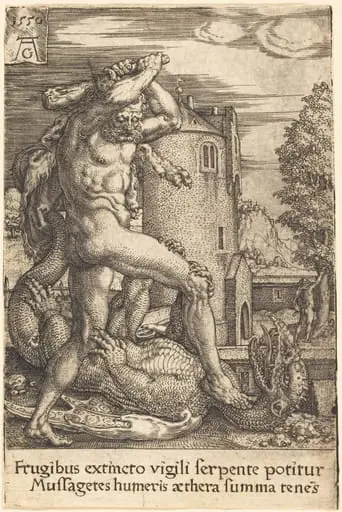
Hercules Fighting with the Hydra of Lernea
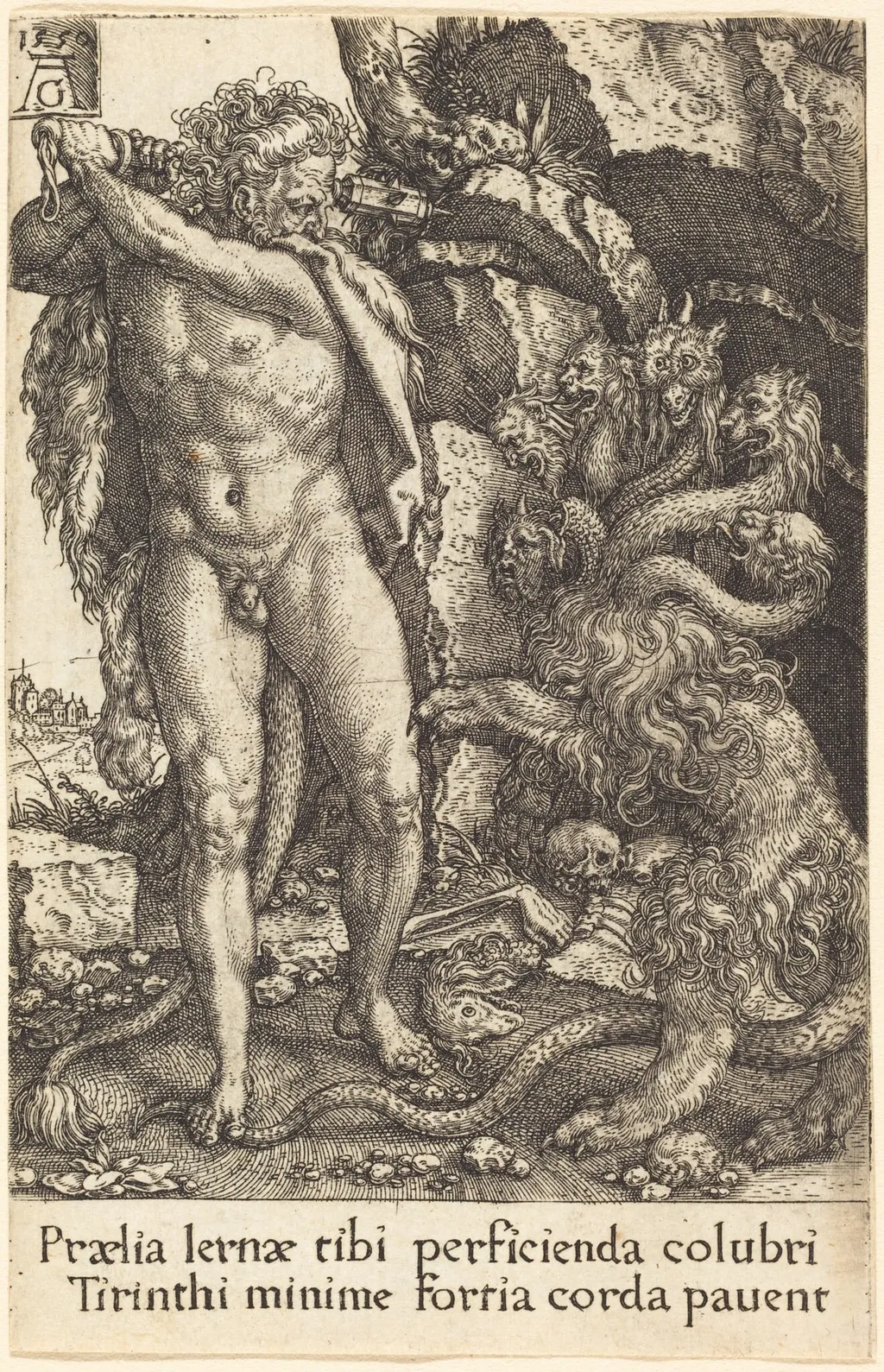
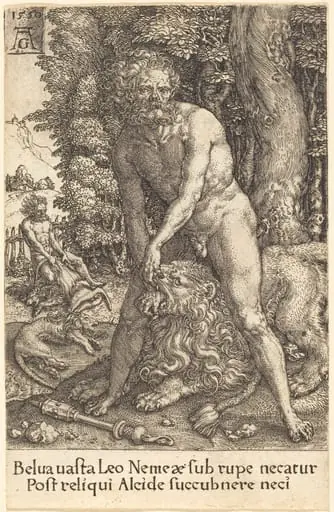
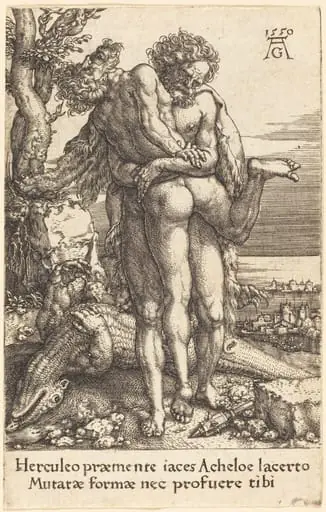
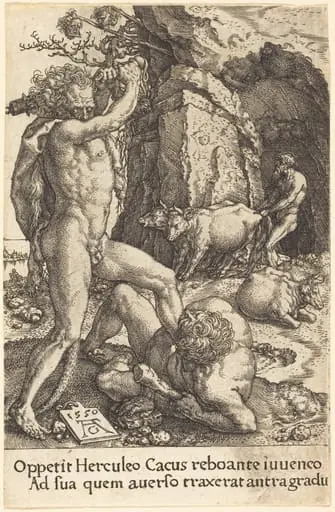
Hercules Fighting with the Hydra of Lernea is a print by the Northern Renaissance artist Heinrich Aldegrever. It dates from 1550 and is held in the collection of the National Gallery of Art.
About this work
Overview
This work captures a moment from the Labors of Hercules, rendered with precision and compressed spatial depth typical of his style.
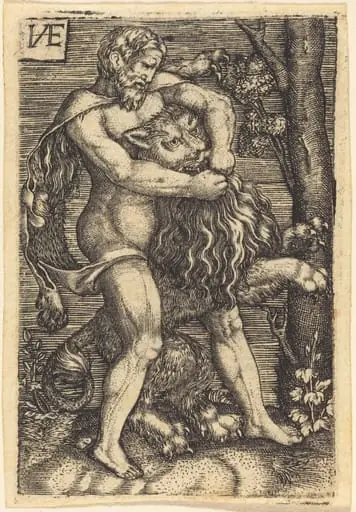
Heinrich Aldegrever, a German artist active in the mid-16th century, produced this small copper engraving in 1550. A member of the group known as the Little Masters, he specialized in intricate, finely detailed prints that catered to collectors interested in mythological and moral themes. This work captures a moment from the Labors of Hercules, rendered with precision and compressed spatial depth typical of his style.
Subject & Meaning
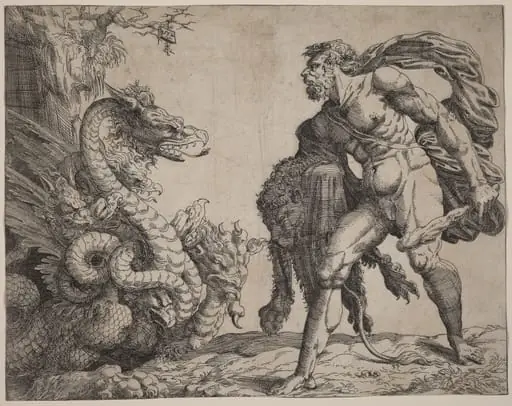
The print illustrates Hercules’ second labor: his struggle against the Hydra, a serpent-like creature with multiple heads that regrew when cut. Aldegrever emphasizes the physical exertion and danger of the task, aligning with Renaissance interest in classical heroism and moral endurance. The scene reflects broader humanist themes of perseverance against overwhelming odds, drawn from ancient myth but framed for contemporary viewers.
Technique & Style
Aldegrever employed fine, controlled lines in copper engraving to render texture and movement with remarkable clarity. His figures are compactly arranged, with muscular forms defined by sharp contours and minimal background detail. The small scale—typical of the Little Masters—demands close viewing, rewarding the observer with intricate rendering of anatomy, armor, and the Hydra’s scaled body.
History & Provenance
Created in 1550 during Aldegrever’s mature period in Paderborn, the print circulated among Northern European collectors and scholars. It was likely produced in limited editions, as was standard for engraved works of the time. No definitive early ownership records survive, but similar prints by Aldegrever appear in major European collections from the 17th century onward.
Context
Aldegrever worked in the decades after Albrecht Dürer, adapting the tradition of fine engraving to smaller, more intimate formats. His prints responded to a growing market for portable, collectible images among educated elites. Mythological subjects like Hercules’ labors were popular for their allegorical potential, blending classical learning with moral instruction in a visually engaging form.
Legacy
Though overshadowed by larger Renaissance figures, Aldegrever’s technical precision influenced later Northern engravers. His Hercules print exemplifies how mythological narratives were sustained in print culture beyond monumental painting. Today, it remains a reference point for understanding the evolution of small-scale printmaking in 16th-century Germany.
Artist & collection

Artist
Heinrich Aldegrever or Aldegraf was a German painter and engraver. He was one of the "Little Masters", the group of German artists making small old master prints in the generation after Albrecht Dürer.