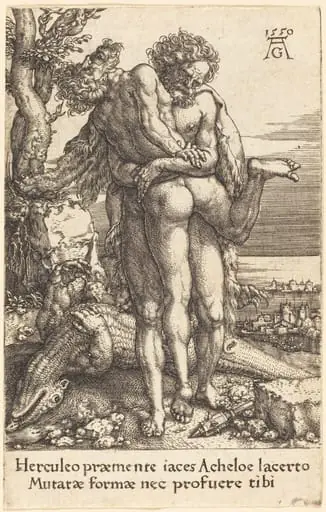
Artwork
Hercules and Atlas
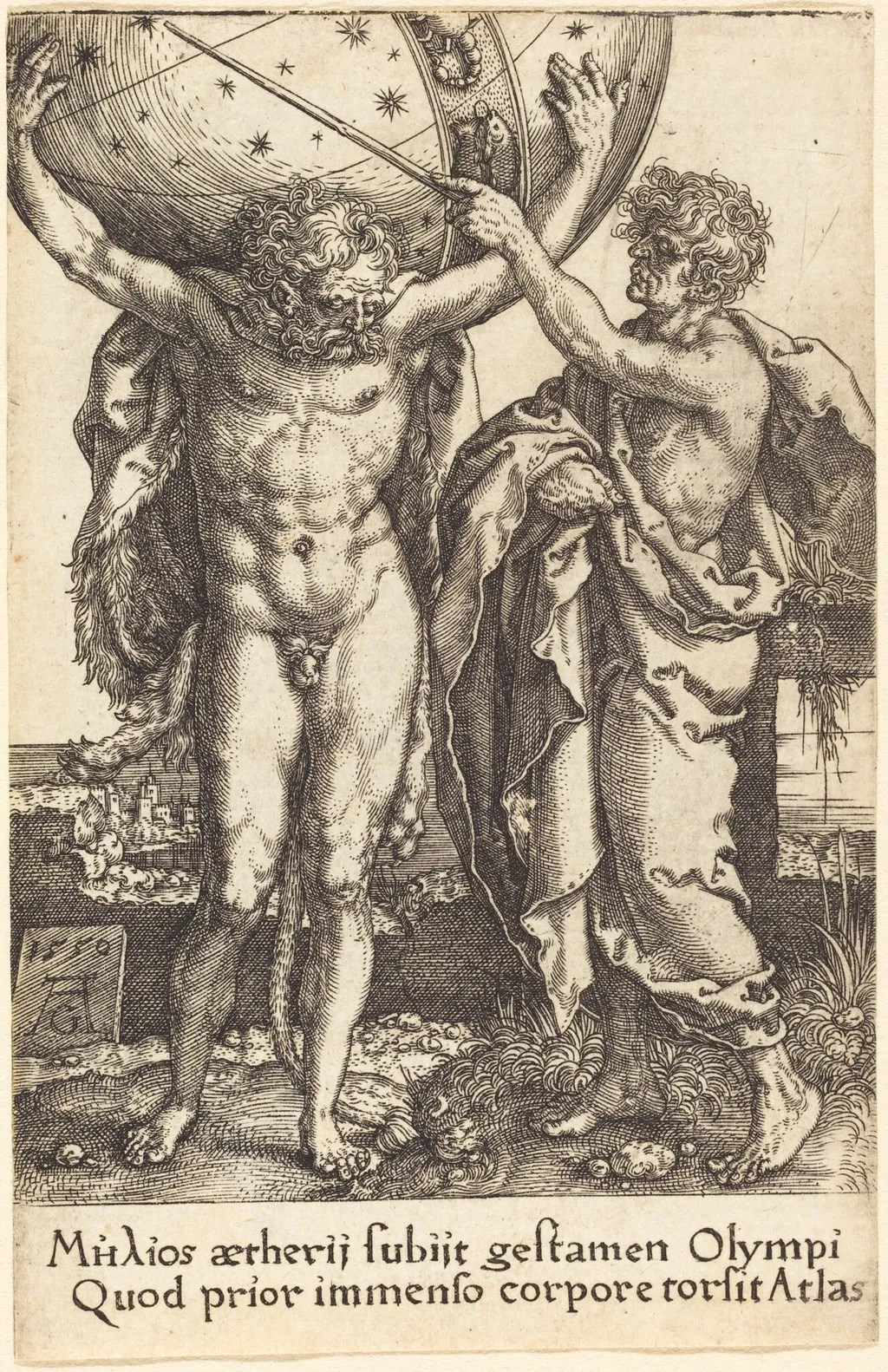
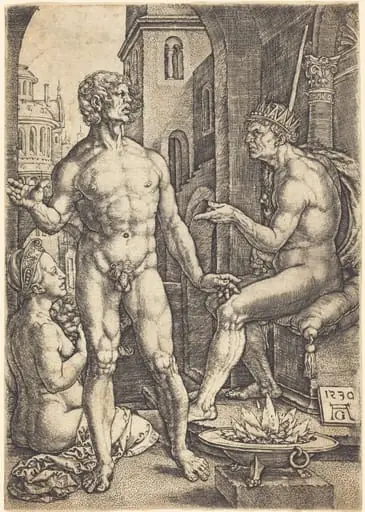
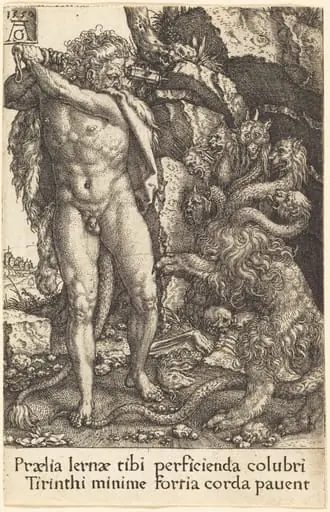
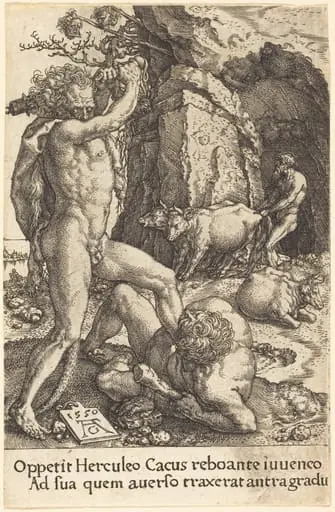
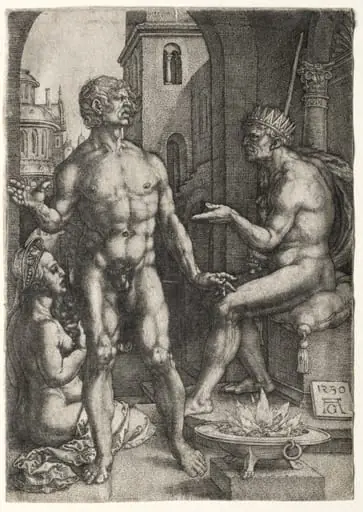
Hercules and Atlas is a print by the Northern Renaissance artist Heinrich Aldegrever. It dates from 1550 and is held in the collection of the National Gallery of Art.
About this work
Overview
The print captures a moment from classical myth with minimal means, relying solely on linear technique to convey weight, tension, and spatial depth.
Heinrich Aldegrever produced this small copper engraving in 1550, part of a group of German artists known as the Little Masters who specialized in intricate, finely detailed prints. Working in the wake of Albrecht Dürer, he focused on mythological subjects rendered with precision and economy of line. The print captures a moment from classical myth with minimal means, relying solely on linear technique to convey weight, tension, and spatial depth.
Subject & Meaning
The scene depicts Hercules demanding Atlas hold the heavens while he briefly takes the burden of supporting the sky. Atlas, bent under the celestial sphere, is clasped by Hercules, who leans in with urgent force. The quiet town below contrasts the monumental struggle above, suggesting the myth’s cosmic scale against human insignificance. The moment captures endurance, obligation, and the fragile exchange of burden between divine and mortal.
Technique & Style
Aldegrever used fine, controlled lines to model form and suggest mass without shading or tone. Musculature, fabric folds, and the globe’s curvature are defined by precise cross-hatching and contouring. The absence of color heightens focus on structure and movement. The composition’s tight framing and detailed background architecture reflect Northern Renaissance attention to realism, even in miniature scale.
History & Provenance
Created during Aldegrever’s mature period in Paderborn, the print was likely made for a collector’s cabinet rather than public display. It circulated among educated German and Netherlandish patrons familiar with classical literature. No early ownership records are widely documented, but its technical refinement suggests it was valued for its craftsmanship rather than its narrative novelty.
Context
In mid-16th-century Germany, mythological prints served as intellectual ornaments, reflecting humanist interests in antiquity. Aldegrever’s work responded to a market that prized Dürer’s legacy but sought smaller, more affordable works. His style bridged the detailed precision of Northern engraving with the classical themes gaining currency through Italian Renaissance texts and imagery.
Legacy
Aldegrever’s *Hercules and Atlas* exemplifies the Little Masters’ contribution to print culture: intimate, technically accomplished, and intellectually grounded. While overshadowed by larger Renaissance paintings, his prints influenced later engravers through their disciplined line work and compression of narrative into compact forms. The work remains a reference for how minimal means can convey complex mythic weight.
Artist & collection

Artist
Heinrich Aldegrever or Aldegraf was a German painter and engraver. He was one of the "Little Masters", the group of German artists making small old master prints in the generation after Albrecht Dürer.