Artwork
Voyage Pittoresque et Historique de l'Istrie et de la Dalmatie
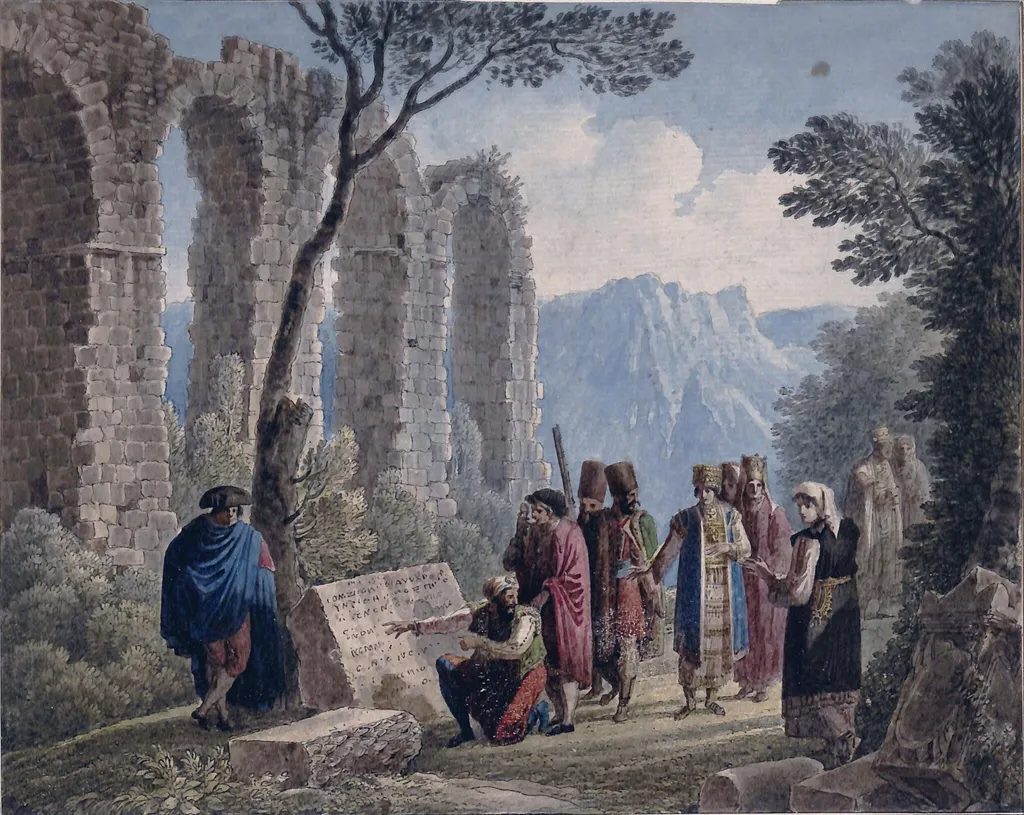
Voyage Pittoresque et Historique de l'Istrie et de la Dalmatie is a watercolor work on paper by the Rococo painting artist Louis-François Cassas. It dates from 1782 and is held in the collection of the Victoria and Albert Museum.
About this work
This watercolor shows locals near Split, Croatia in 1782. One man wears a white cap, another a dark jacket. A long stone aqueduct runs behind them, half-ruined and dusty.
Cassas traveled here for art, not war. He sketched what he saw with care, adding details later in his studio. His drawings became prints for a travel book in 1802.
See this at the Victoria and Albert Museum.
Overview
This watercolour, executed by Louis François Cassas, depicts a group of local figures standing before the remnants of the Diocletian aqueduct near Salona, now part of modern Split, Croatia. The scene captures everyday dress of the late 18th century, with one figure in a white cap and another in a dark jacket, set against a partially ruined, dust‑covered stone structure.
Subject & Meaning
The composition juxtaposes human presence with ancient Roman engineering, highlighting the continuity of daily life amid historic ruins. By portraying ordinary inhabitants alongside the aqueduct, Cassas underscores the persistence of the region’s cultural layers, from antiquity to his contemporary era.
Technique & Style
Rendered in delicate watercolour, the work combines precise draughtsmanship with a soft, atmospheric palette typical of Cassas’s picturesque approach. Fine linear detail records the architecture, while washes suggest light and texture, creating a balanced view that merges documentary accuracy with aesthetic appeal.
History & Provenance
Created during Cassas’s 1782 visit to the Dalmatian coast, the drawing was later refined in his studio and incorporated into a series of original sketches that were engraved for the 1802 publication Voyage pittoresque et historique de l’Istrie et de la Dalmatie. The watercolour now forms part of the Victoria and Albert Museum’s collection.
Context
Cassas, renowned for travel sketches of classical monuments, produced this work as part of a broader effort to document and disseminate images of ancient architecture. His visual records contributed to the early‑19th‑century Neo‑Classical movement, providing architects and scholars with accessible references to Roman structures.
Artist & collection


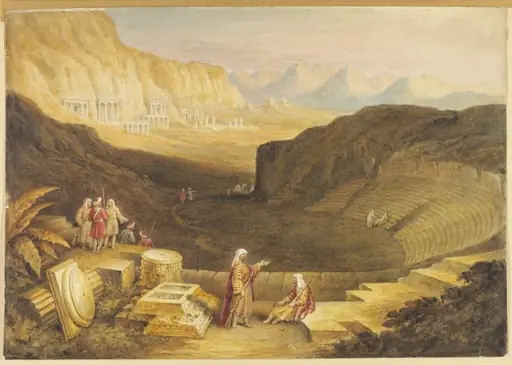 View of Petra from the top of the Theatre
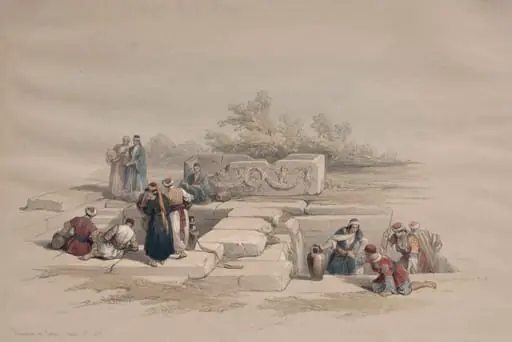 Fountain at Cana
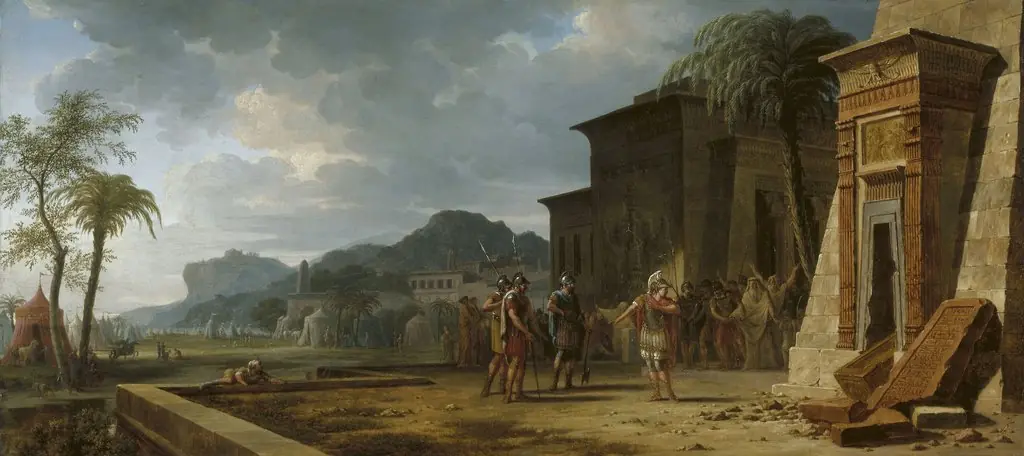 Alexander at the Tomb of Cyrus the Great
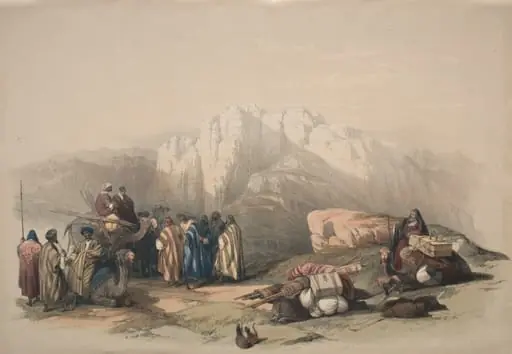 Tomb of Aaron, Summit of Mount Horeb
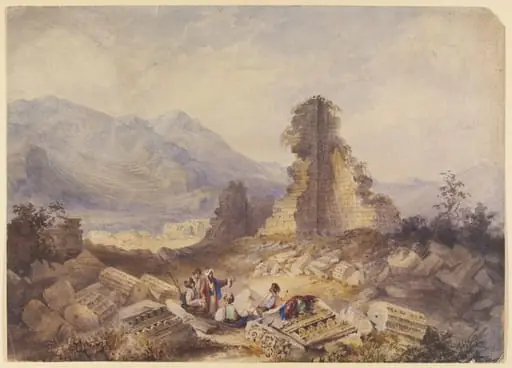 Ephesus (Ruins of the Temple of Diana)
![Yediküle with a Muslim Cemetery, Constantinople, by Michel-François Préaulx [Préaux]](https://artifactworldgallery.com/img/michel-francois-preaulx-preaux--yedikule-with-a-muslim-cemetery-constantinople--c422bdec8e9c6ba8-w320.webp) Yediküle with a Muslim Cemetery, Constantinople
Yediküle with a Muslim Cemetery, Constantinople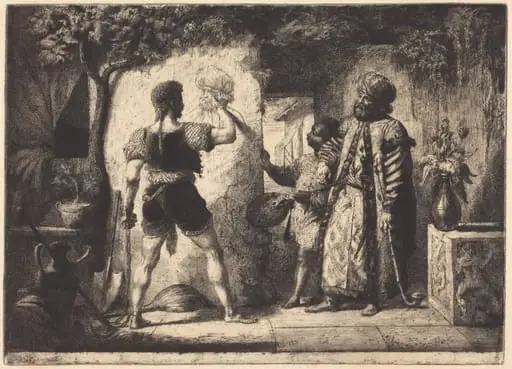 Fra Filippo Lippi, Enslaved in Algiers, Painting a Portrait of His Captor
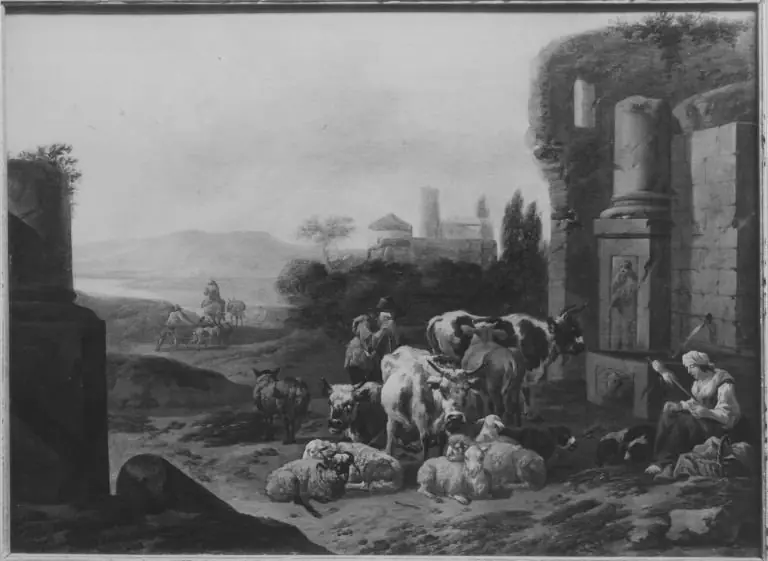 Ruinen
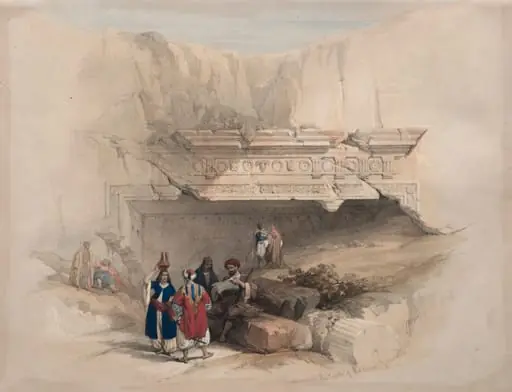 Entrance to the Tombs of the Kings, Jerusalem
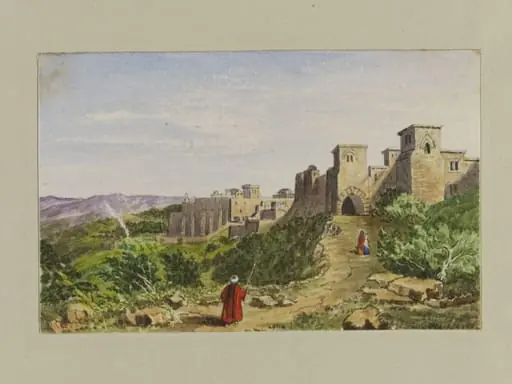 Bethlehem
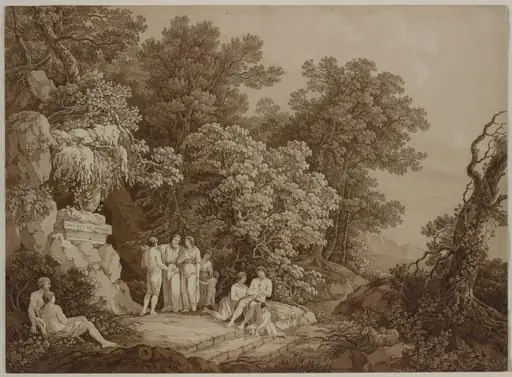 I was also in Arcadia (Kai ego en Arkadia)