Artwork
Tea
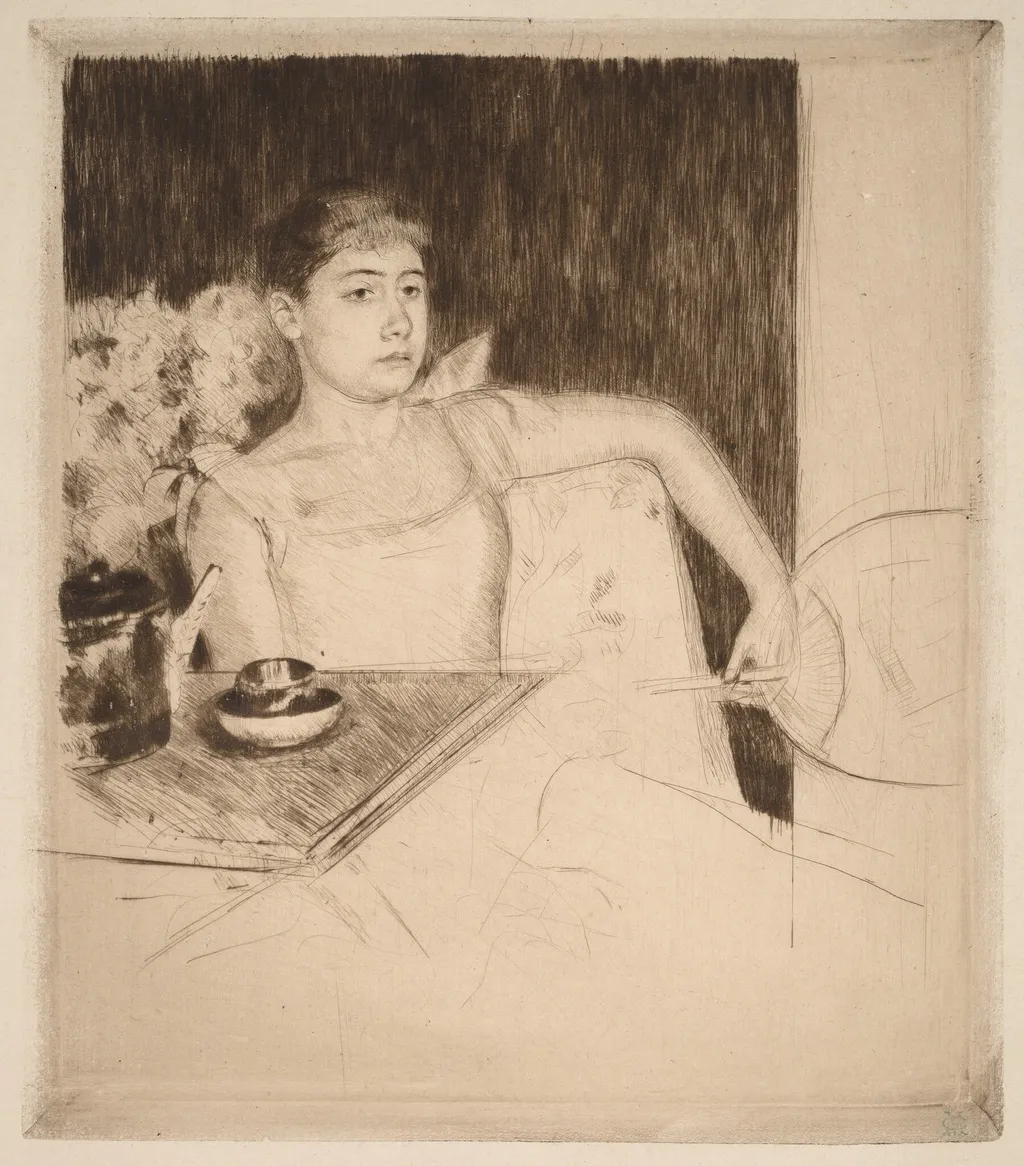
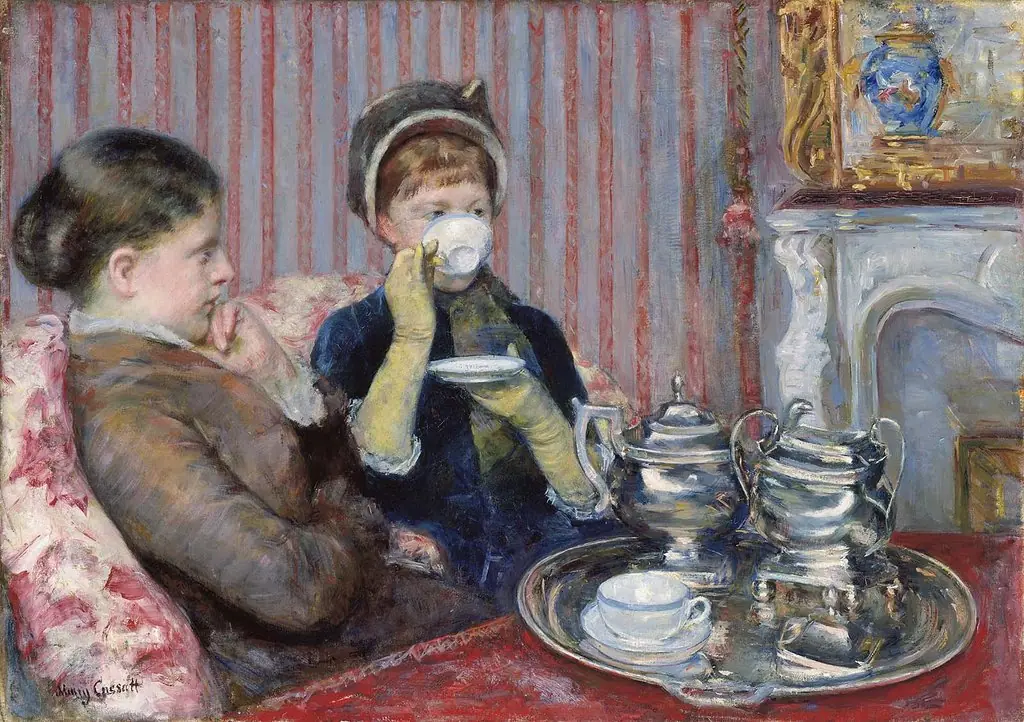
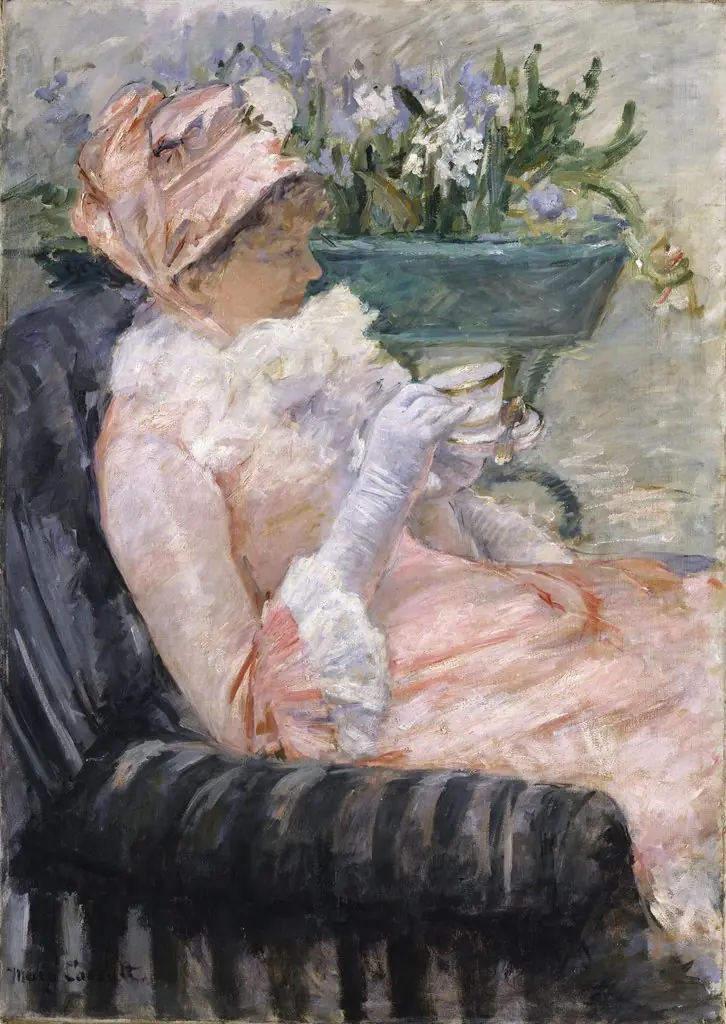
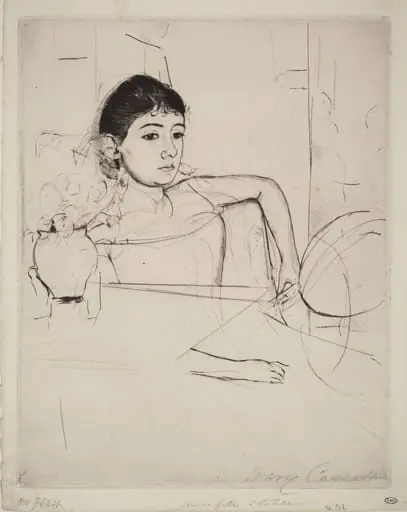
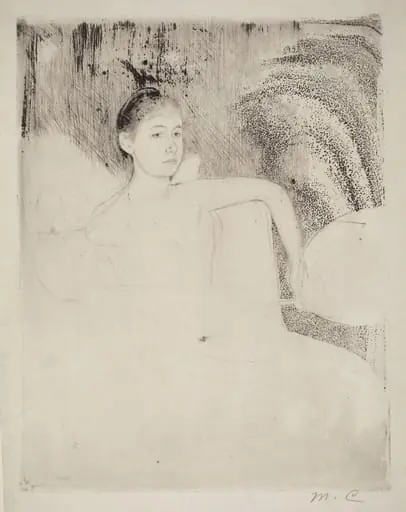
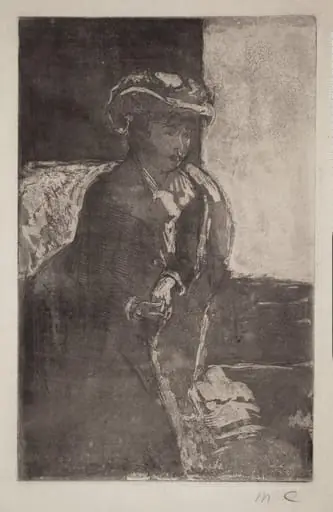
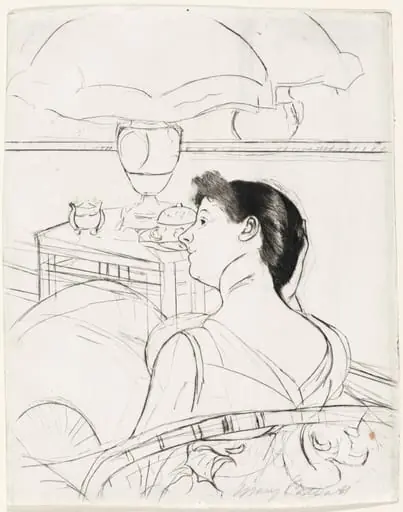
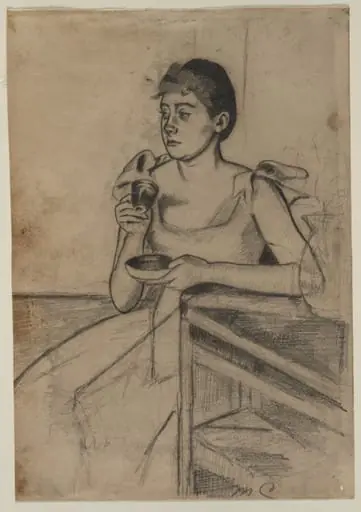
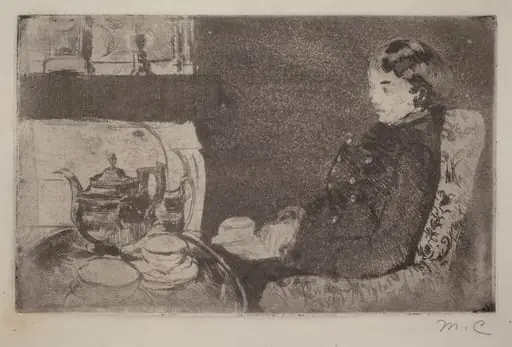
Tea is an ink print by the Impressionist artist Mary Cassatt. It dates from 1890 and is held in the collection of the National Gallery of Art.
About this work
The scene is set in a quiet, domestic interior, with a simple background that focuses attention on the woman and her tea.
This painting, titled "Tea", is a drypoint on laid paper created by Mary Cassatt around 1890. The image depicts a woman seated at a table, with a teapot and cup in front of her. The woman is dressed in a long, dark dress and has her hair pulled back.
The scene is set in a quiet, domestic interior, with a simple background that focuses attention on the woman and her tea. The overall mood is one of calmness and serenity.
If you're interested in learning more about this style of art, you might want to explore the Impressionism movement, which emphasizes capturing everyday life and light in a realistic way.
Overview
Mary Cassatt created *Tea* in 1890 as a drypoint print on laid paper, part of her sustained engagement with intimate domestic life. As an American artist living in France, she aligned herself with the Impressionists, though her focus remained on private, feminine spheres. This work exemplifies her preference for quiet, unguarded moments over grand narratives, using printmaking to explore texture and tone with subtle precision.
Subject & Meaning
The print portrays a single woman seated at a table, engaged in the solitary act of tea-drinking. Dressed in a dark, modest gown with her hair neatly gathered, she is neither interacting nor performing; her stillness suggests introspection. Cassatt avoids narrative drama, instead elevating routine ritual into a quiet meditation on solitude and self-possession within the domestic realm.
Technique & Style
Cassatt employed drypoint to achieve soft, velvety lines and rich tonal contrasts. The technique’s inherent delicacy suits the subdued atmosphere, with fine scratches on the plate capturing the texture of fabric and the gleam of ceramic. The background is minimized, directing focus to the figure and tableware. Her use of line and shadow reflects both Impressionist sensitivity to light and the graphic precision of Japanese woodblock prints, which influenced her later work.
History & Provenance
Created during Cassatt’s mature period, *Tea* belongs to a series of prints she produced between 1888 and 1890, often in collaboration with Degas. These works were intended for limited circulation among collectors and fellow artists, not mass reproduction. The print’s survival in museum collections today reflects its early recognition within avant-garde circles and its significance in the history of American printmaking.
Context
In late 19th-century France, women’s domestic roles were rarely depicted with psychological depth. Cassatt’s prints countered prevailing artistic norms by portraying women not as objects of spectacle but as subjects of quiet agency. Her work resonated with contemporary feminist discourse and the growing interest in private life as worthy artistic subject matter, distinguishing her within the Impressionist circle.
Legacy
Cassatt’s drypoints, including *Tea*, expanded the possibilities of printmaking as a medium for serious artistic expression. Her focus on women’s interiority influenced later generations of female artists and contributed to the redefinition of domestic scenes in modern art. Today, her prints are studied for their technical innovation and their nuanced portrayal of everyday life beyond the male gaze.
Artist & collection
Artist
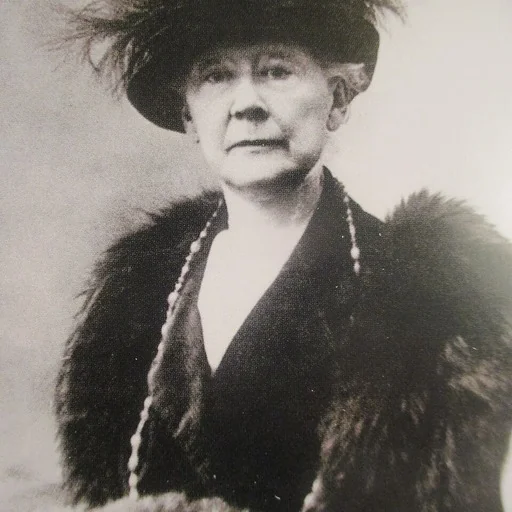
Mary Stevenson Cassatt (; May 22, 1844 – June 14, 1926) was an American painter and printmaker.