Artwork
The Silk Gown (La Robe de Soie)
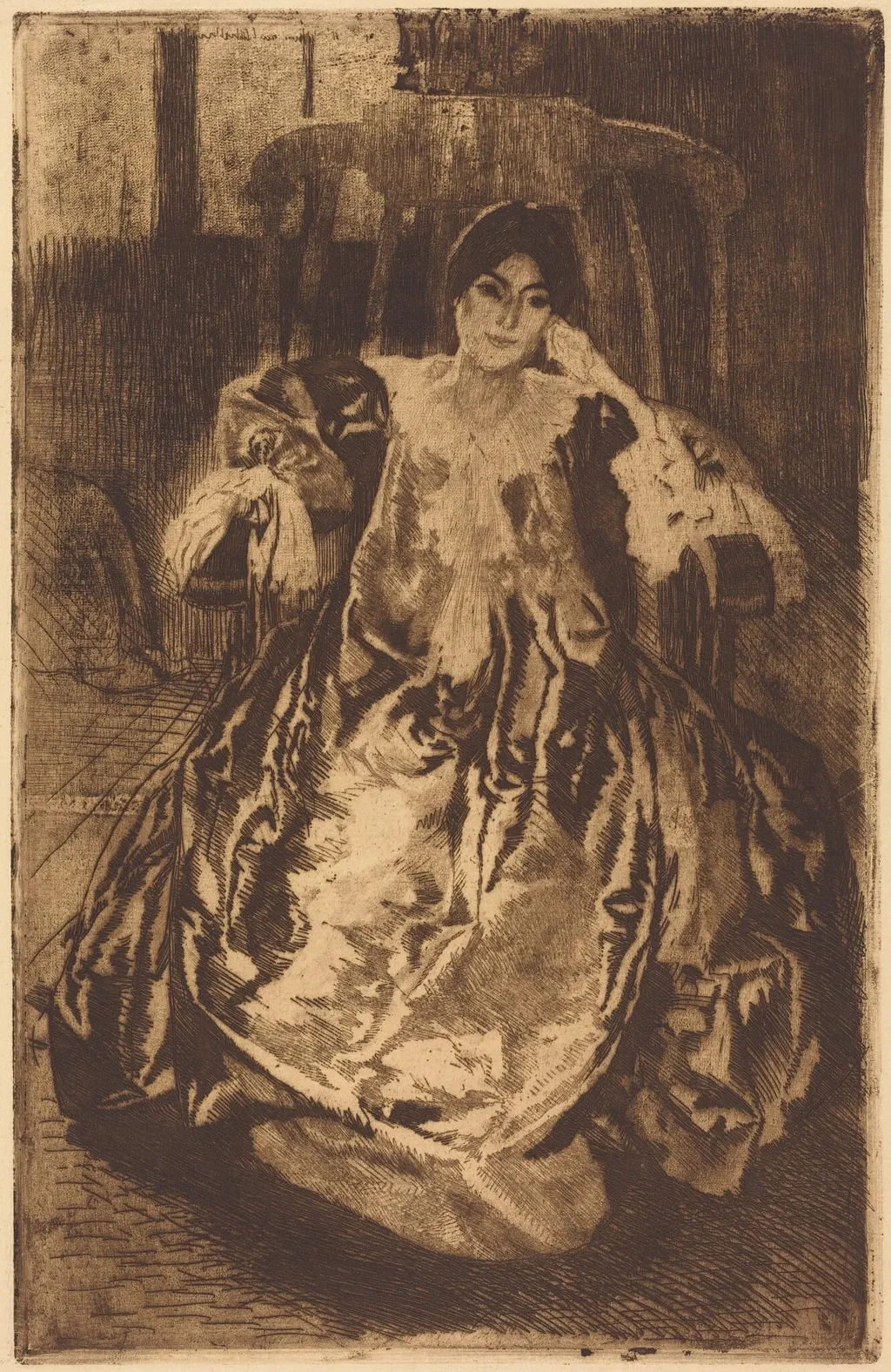
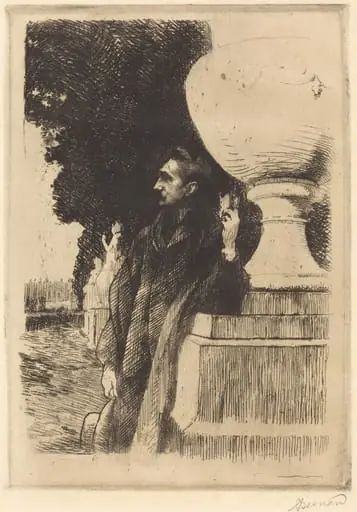
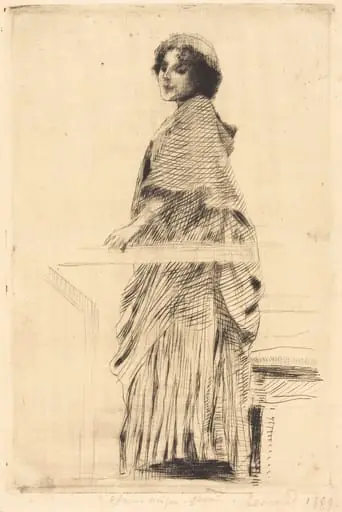
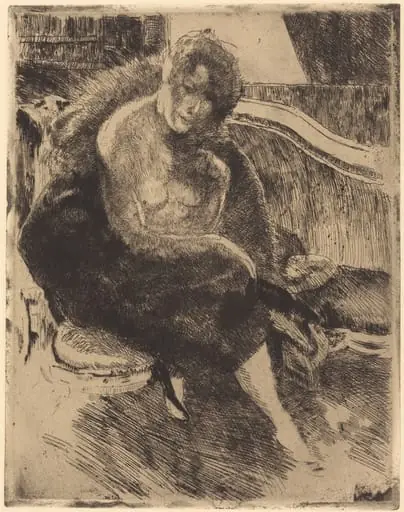
The Silk Gown (La Robe de Soie) is an ink print by the Impressionist artist Paul-Albert Besnard. It dates from 1887 and is held in the collection of the National Gallery of Art.
About this work
Overview
Its quiet intimacy and technical complexity reflect Besnard’s interest in the subtle interplay of light, fabric, and atmosphere within domestic settings.
Created in 1887, The Silk Gown is a multi-technique print by Albert Besnard, combining etching, drypoint, aquatint, and roulette on Arches laid paper. The work captures a solitary woman in a dim interior, rendered with nuanced tonal gradations and textured line work. Its quiet intimacy and technical complexity reflect Besnard’s interest in the subtle interplay of light, fabric, and atmosphere within domestic settings.
Subject & Meaning
The figure, seated and enveloped in a heavy fur coat over a dark silk gown, holds a small, indistinct object in her left hand, suggesting a moment of pause or contemplation. The absence of narrative detail invites interpretation rather than storytelling. The fur and gown imply wealth, yet the blurred background and solitary pose convey solitude, emphasizing mood over circumstance.
Technique & Style
Besnard employed drypoint for rich, velvety lines and aquatint to achieve soft gradations of tone, particularly in the fur’s texture. Roulette added stippled depth to the gown’s folds, while etching defined finer contours. The dark, indistinct background isolates the figure, heightening the tactile quality of her attire. The print’s layered methods reveal an interest in materiality over linear clarity.
History & Provenance
The work was produced during Besnard’s mature period, when he increasingly focused on intimate portraits and domestic scenes. It entered public collections in the early 20th century, likely through acquisitions by institutions interested in French printmaking. Its survival in good condition reflects careful preservation, though its specific early ownership remains undocumented.
Context
Made in the late 19th century, the print aligns with a broader European shift toward psychological realism in printmaking. While not overtly political, it echoes the quiet introspection found in the works of Degas and Whistler. Besnard’s use of mixed media techniques distinguished him from traditional etchers, situating him within a generation exploring print as a medium for atmospheric expression.
Legacy
The Silk Gown remains a notable example of French printmaking’s evolution toward tonal experimentation and psychological nuance. Though less widely known than Besnard’s paintings, the print influenced later artists interested in the expressive potential of texture and shadow. It is held in several major museum collections as a representative work of his graphic output.
Artist & collection
Artist
Paul-Albert Besnard (1849–1934) was a French artist, born in 7th arrondissement of Paris.