Artwork
The Resurrection of Lazarus
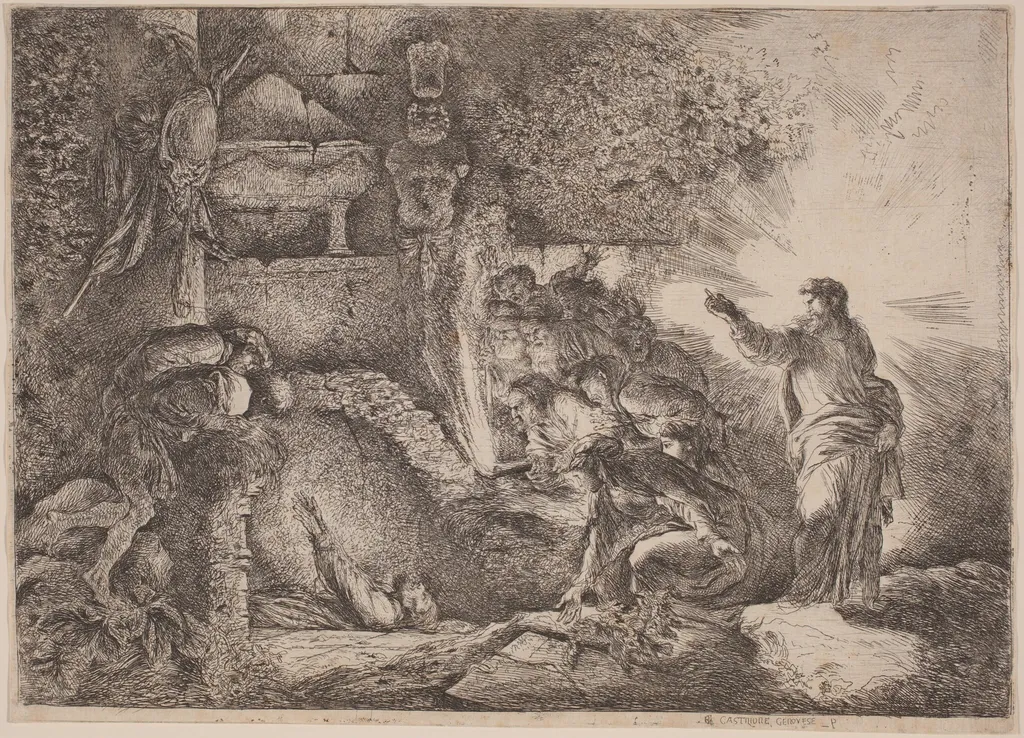
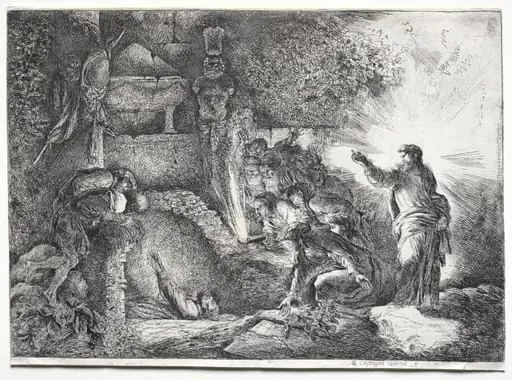
The Resurrection of Lazarus is an ink print by the Baroque artist Giovanni Benedetto Castiglione. It dates from 1645 and is held in the collection of the National Gallery of Art.
About this work
Overview
The Resurrection of Lazarus is an etching on laid paper created by Italian Baroque artist Giovanni Benedetto Castiglione around 1645. This print showcases a pivotal biblical scene, characteristic of Castiglione's narrative-driven compositions.
Subject & Meaning
The print depicts the dramatic moment of Lazarus's resurrection, with a figure pointing heavenward amidst a group gathered at an open tomb. The scene conveys spiritual intensity and transformation.
Technique & Style
Castiglione employed etching techniques to achieve depth and movement. Shading and texture render figures and rocks in near three-dimensionality, while swirling lines in the sky evoke dynamic energy.
History & Provenance
Created circa 1645, this etching exemplifies Castiglione's innovative printmaking, notably preceding his invention of monotyping. The work's provenance details are not specified here.
Context
As a product of the Genoese school, The Resurrection of Lazarus reflects Baroque sensibilities. Castiglione's exploration of narrative subjects through etching contributed to the medium's growing prominence.
Legacy
This etching, among Castiglione's celebrated works, highlights his influence on printmaking. His innovations, including the later development of monotyping, left a mark on the artistic techniques of his time.
Artist & collection
Artist
Giovanni Benedetto Castiglione
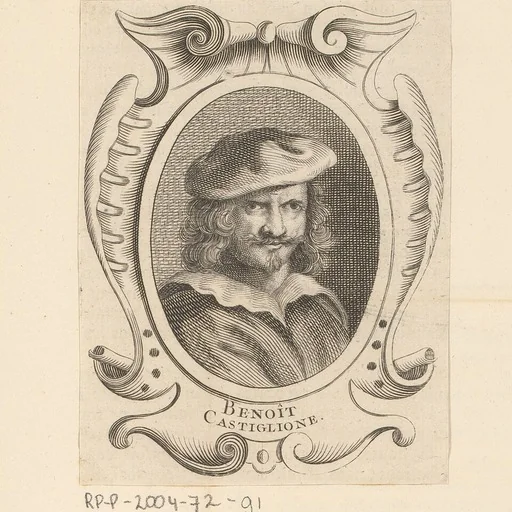
Giovanni Benedetto Castiglione (baptized 23 March 1609 – 5 May 1664) was an Italian Baroque painter, printmaker and draftsman, of the Genoese school.

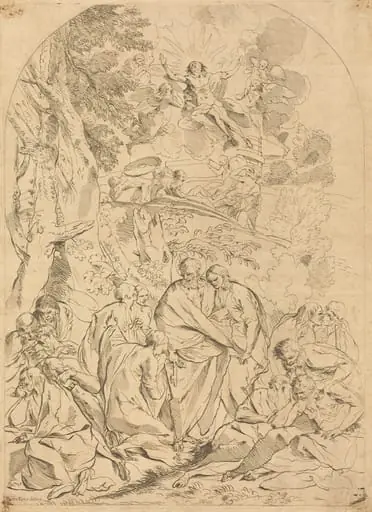 The Resurrection
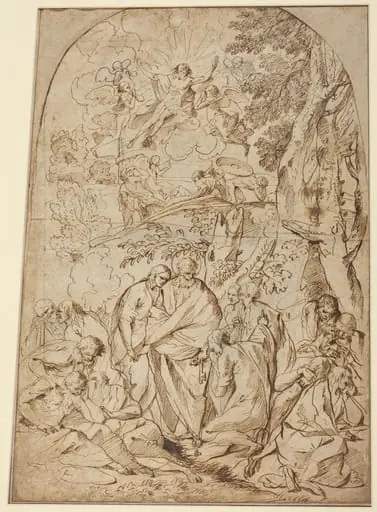 The Resurrection
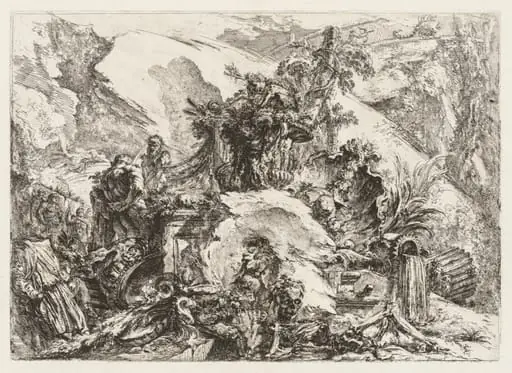 The Skeletons
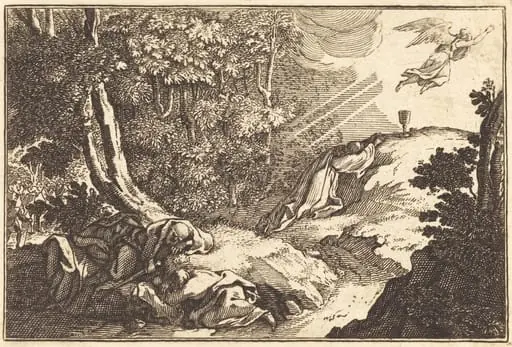 Agony in the Garden
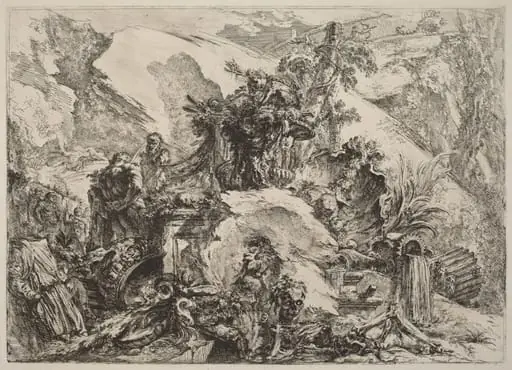 The Skeletons
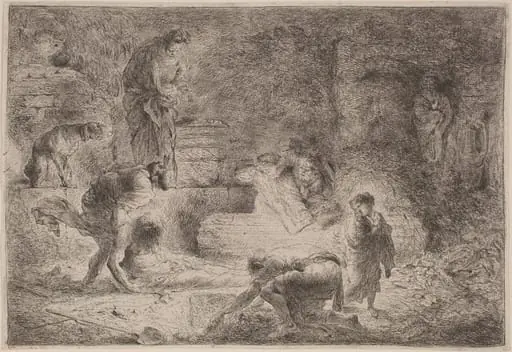 Tobit Burying the Dead
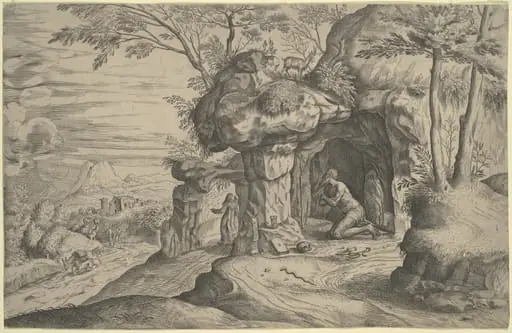 Landscape with Penitent Saints
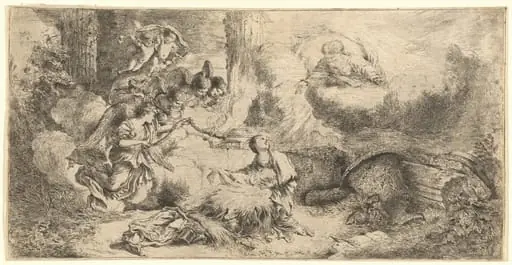 God the Father and Angels Adoring the Christ Child
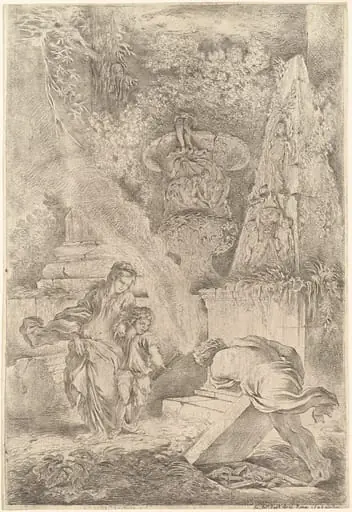 Theseus Finding Aegeus' Arms
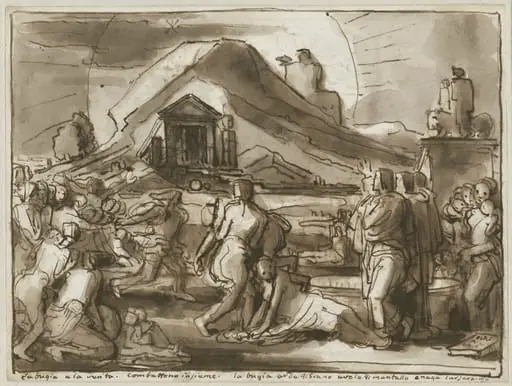 An Allegory of Truth and Falsehood (verso)
 The Rest on the Flight, with Adoring Angels
 The Resurrection of Lazarus