Artwork
Virgin and Saints
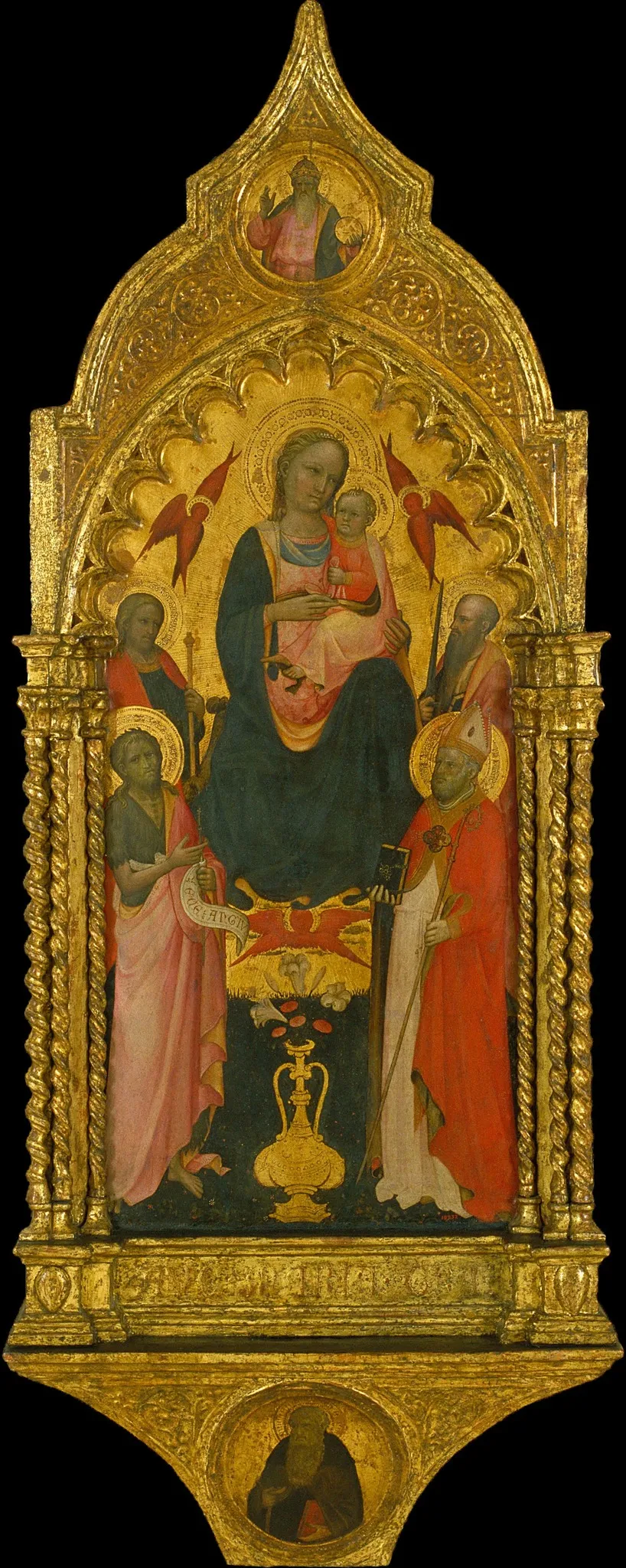
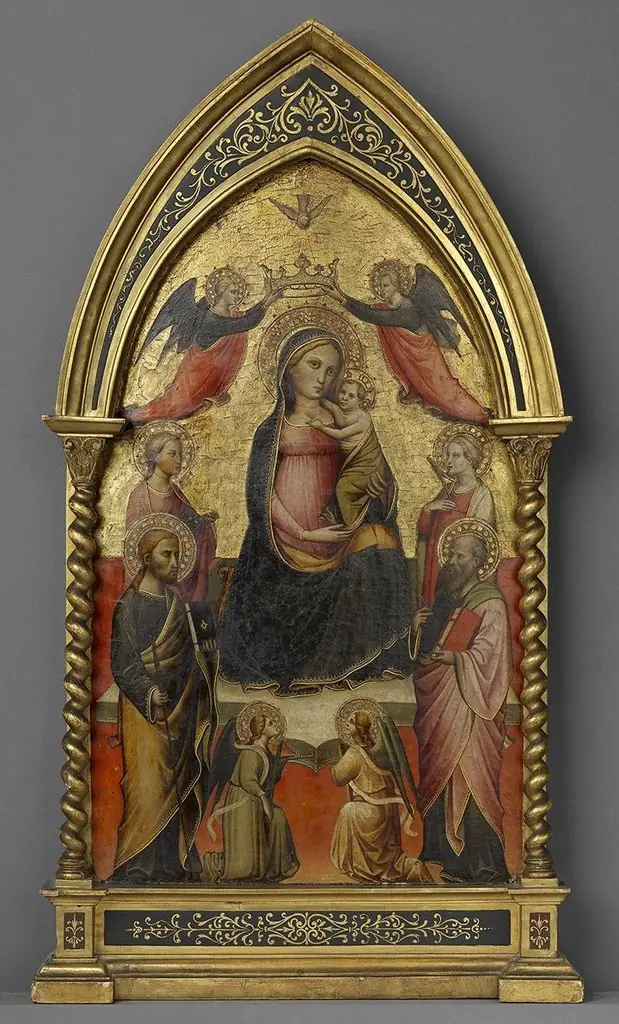
Virgin and Saints is an unspecified painting by Rossello di Jacopo Franchi. It dates from 1426 and is held in the collection of the Museu Nacional d'Art de Catalunya.
About this work
Overview
Franchi’s work belongs to a transitional phase in Florentine painting, bridging late Gothic conventions with emerging naturalism.
Created around 1426 by the Florentine painter Rossello di Jacopo Franchi, this panel painting presents the Virgin Mary with attendant saints in a traditional devotional composition. It resides today in the Museu Nacional d'Art de Catalunya, reflecting the widespread circulation of religious art across Italian city-states during the early Renaissance. Franchi’s work belongs to a transitional phase in Florentine painting, bridging late Gothic conventions with emerging naturalism.
Subject & Meaning
The Virgin Mary, seated centrally, holds the Christ Child, surrounded by saints who serve as intercessors. Their presence underscores the devotional function of the image, intended for private or ecclesiastical veneration. The inclusion of symbolic objects—a golden jug marked with a red cross and a bird with crimson wings—likely alludes to divine sacrifice and the Holy Spirit, reinforcing theological themes of redemption and grace.
Technique & Style
Franchi employs gold leaf for the background and halos, a hallmark of earlier medieval traditions, while the figures exhibit a modest attempt at volume through soft modeling. Drapery folds are rendered with rhythmic lines rather than deep chiaroscuro, indicating adherence to International Gothic aesthetics. The use of rich, saturated colors—especially in the Virgin’s pink shawl and the saints’ robes—adds ceremonial solemnity without overt naturalism.
History & Provenance
The painting likely originated in a Florentine chapel or private oratory, common contexts for such devotional panels. It entered the collection of the Museu Nacional d'Art de Catalunya through the consolidation of Spanish ecclesiastical holdings in the 19th century, possibly transferred from a Catalan monastery. Its survival reflects the mobility of Italian artworks during the Renaissance and their later absorption into broader European collections.
Context
In early 15th-century Florence, religious imagery remained central to artistic production, even as artists began experimenting with perspective and anatomy. Franchi’s work reflects the persistence of Byzantine and Gothic influences alongside nascent Renaissance ideals. His style aligns with contemporaries like Lorenzo Monaco, who balanced spiritual solemnity with decorative elegance, catering to patrons who valued both piety and visual richness.
Legacy
Though Franchi is not among the most celebrated figures of the Florentine Renaissance, his paintings contribute to understanding the regional diversity of early 15th-century art. This work exemplifies how traditional iconography endured in smaller workshops even as major masters like Masaccio revolutionized painting. Its preservation offers insight into the devotional practices and aesthetic preferences of a broader, non-elitist segment of Renaissance society.
Artist & collection
Artist
Rossello di Jacopo Franchi (c. 1376/77 – c. 1456) was a Florentine Renaissance painter, active from about 1408 until 1451.

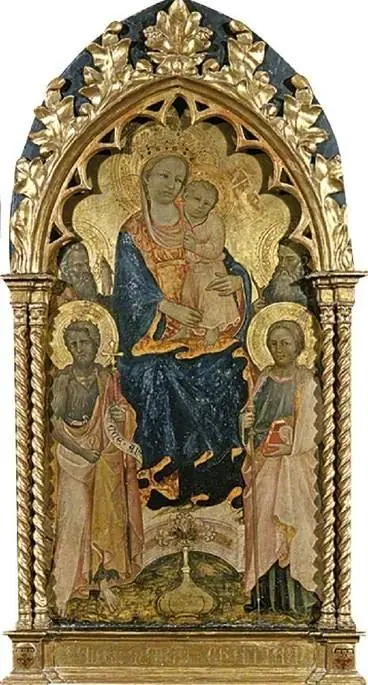
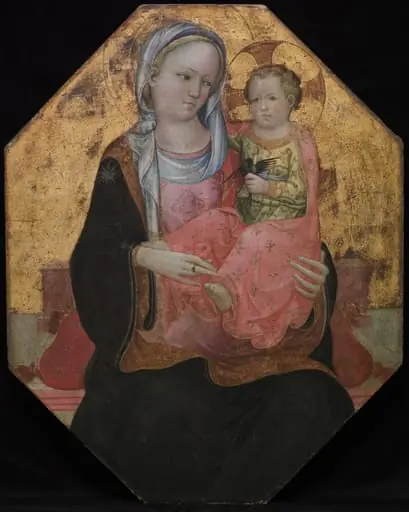
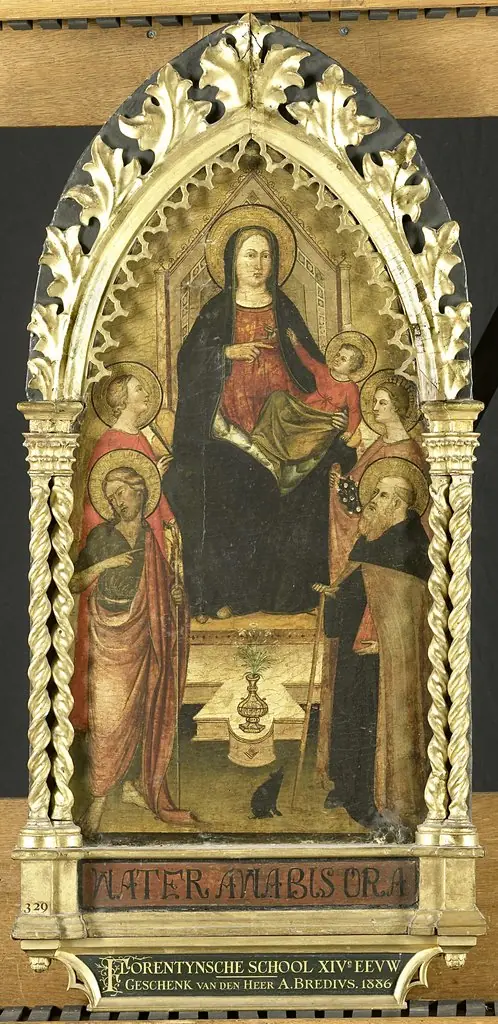 Virgin and Child Enthroned with Four Saints, Saints John the Baptist, Antony Abbot, Elizabeth of Hungary, a female saint
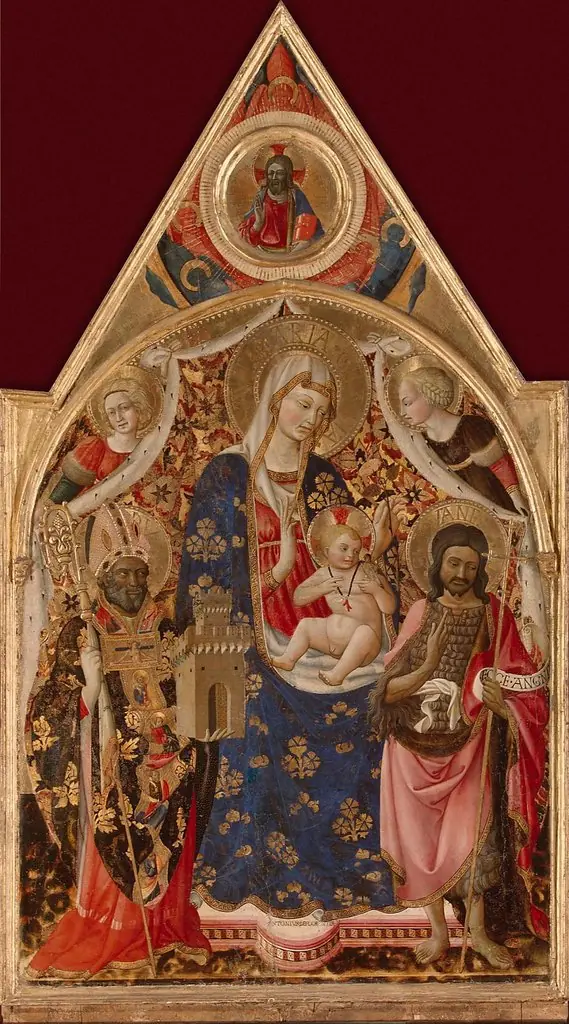 Madonna and Child, with a Bishop, St John The Baptist and Angels
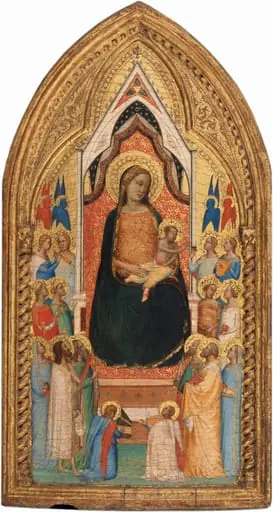 Madonna and Child with Saints and Angels
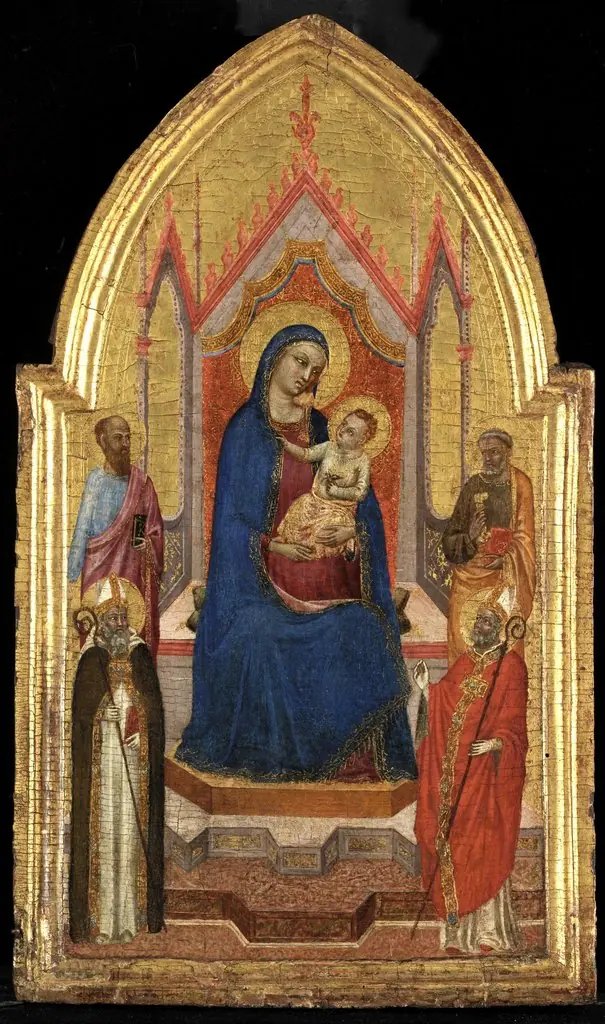 Madonna and Child Enthroned with Four Saints
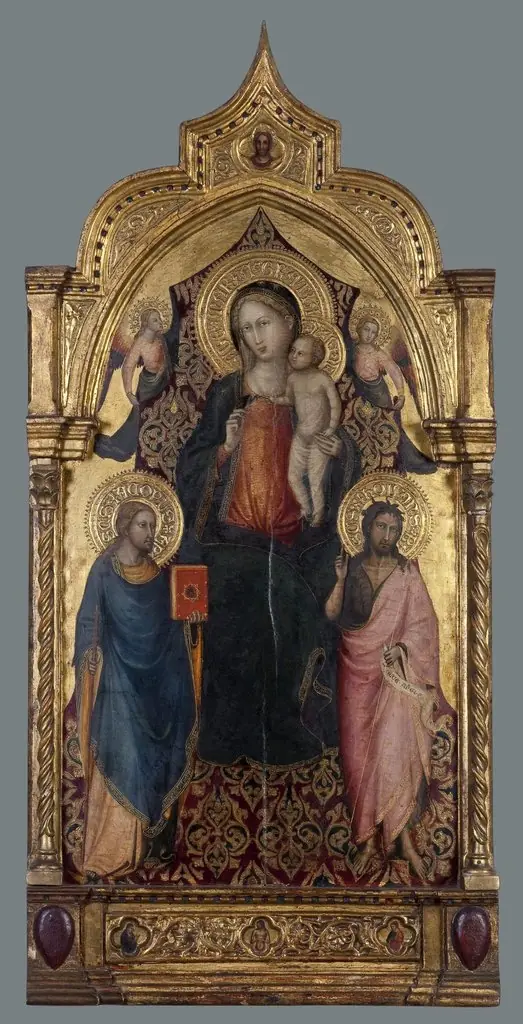 Madonna and Child, with St Jacob the Younger, St John The Baptist and Angels
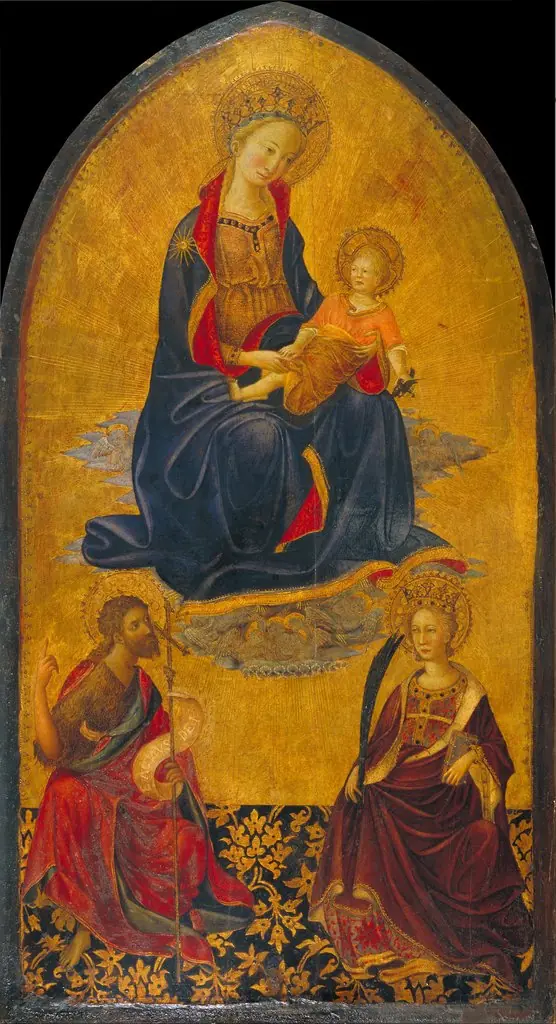 Adoration of the Virgin and Child by Saint John the Baptist and Saint Catherine
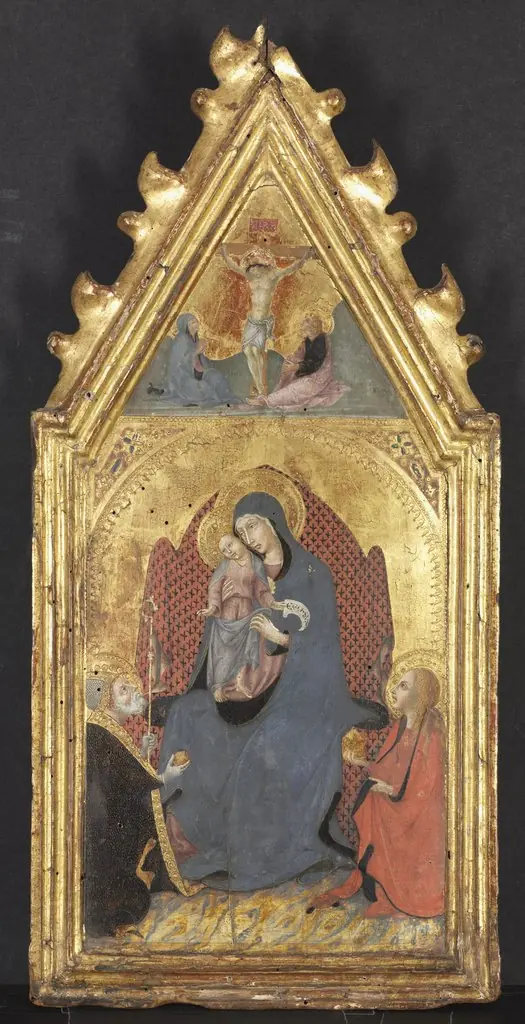 Virgin and Child Adored by Saints Mary Magdalene and Nicolas of Bari; Christ Crucified with the Virgin and Saint John the Evangelist
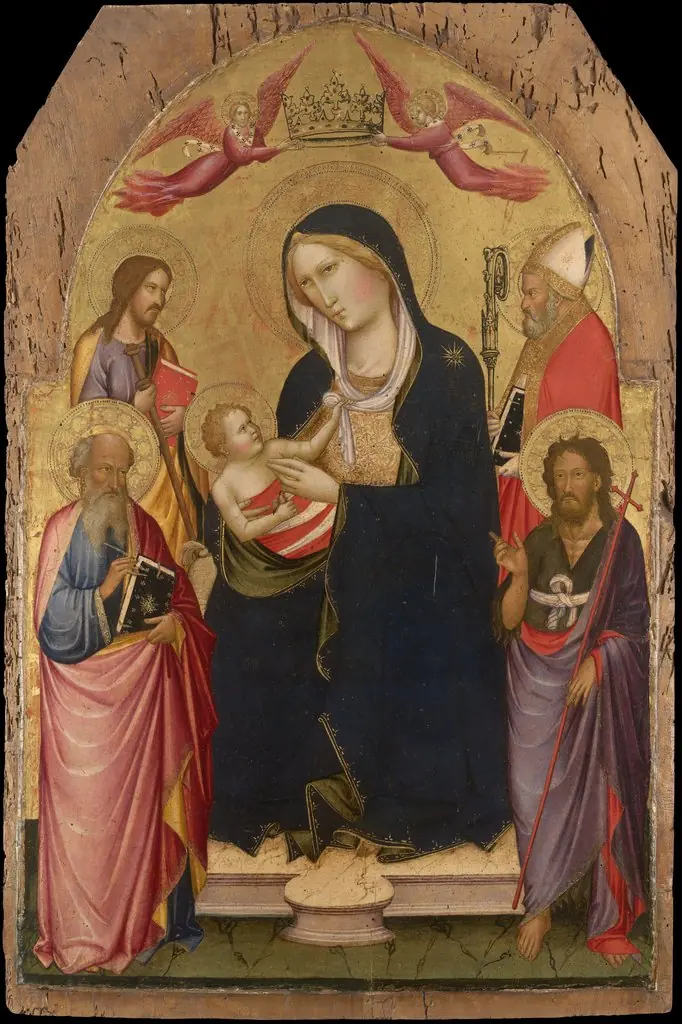 Madonna and Child with SS. John the Evangelist,John the Baptist, James of Compostela and Nicholas of Bari
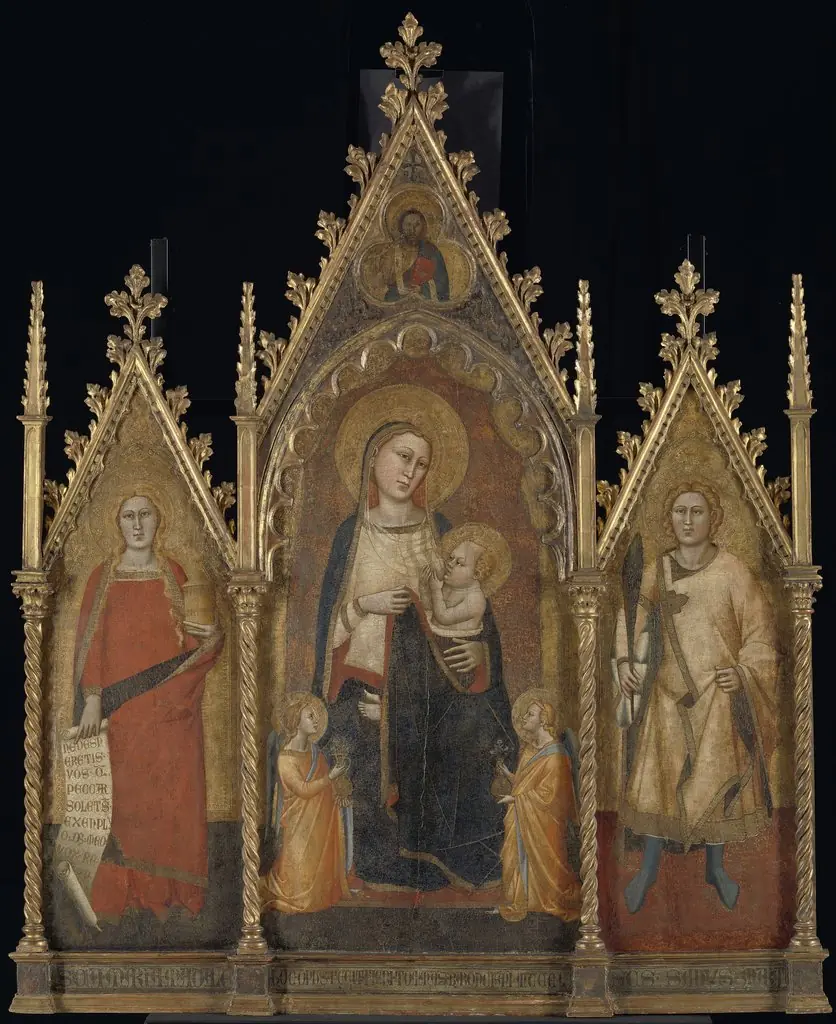 Triptych with the Virgin and Child, and Saints Mary Magdalene and Ansanus
 Madonna mit vier Heiligen und Engeln (?)
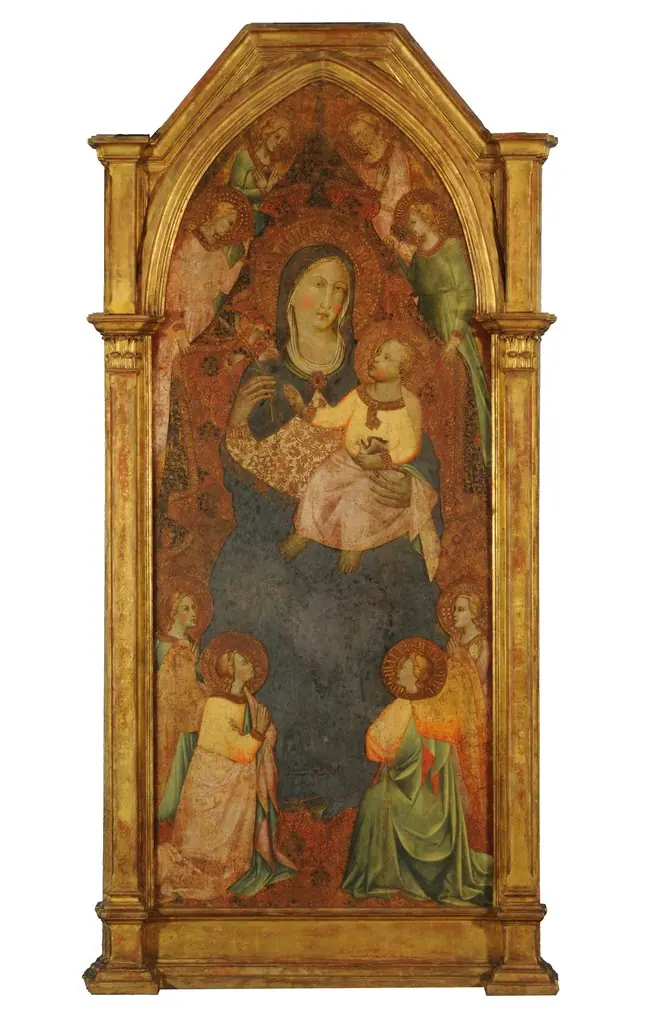 Virgin with child
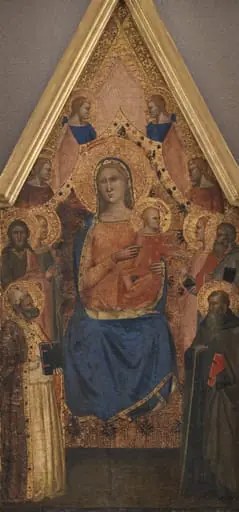 The Virgin and Child with Saints and Angels