Artwork
The Little Brown Flycatcher
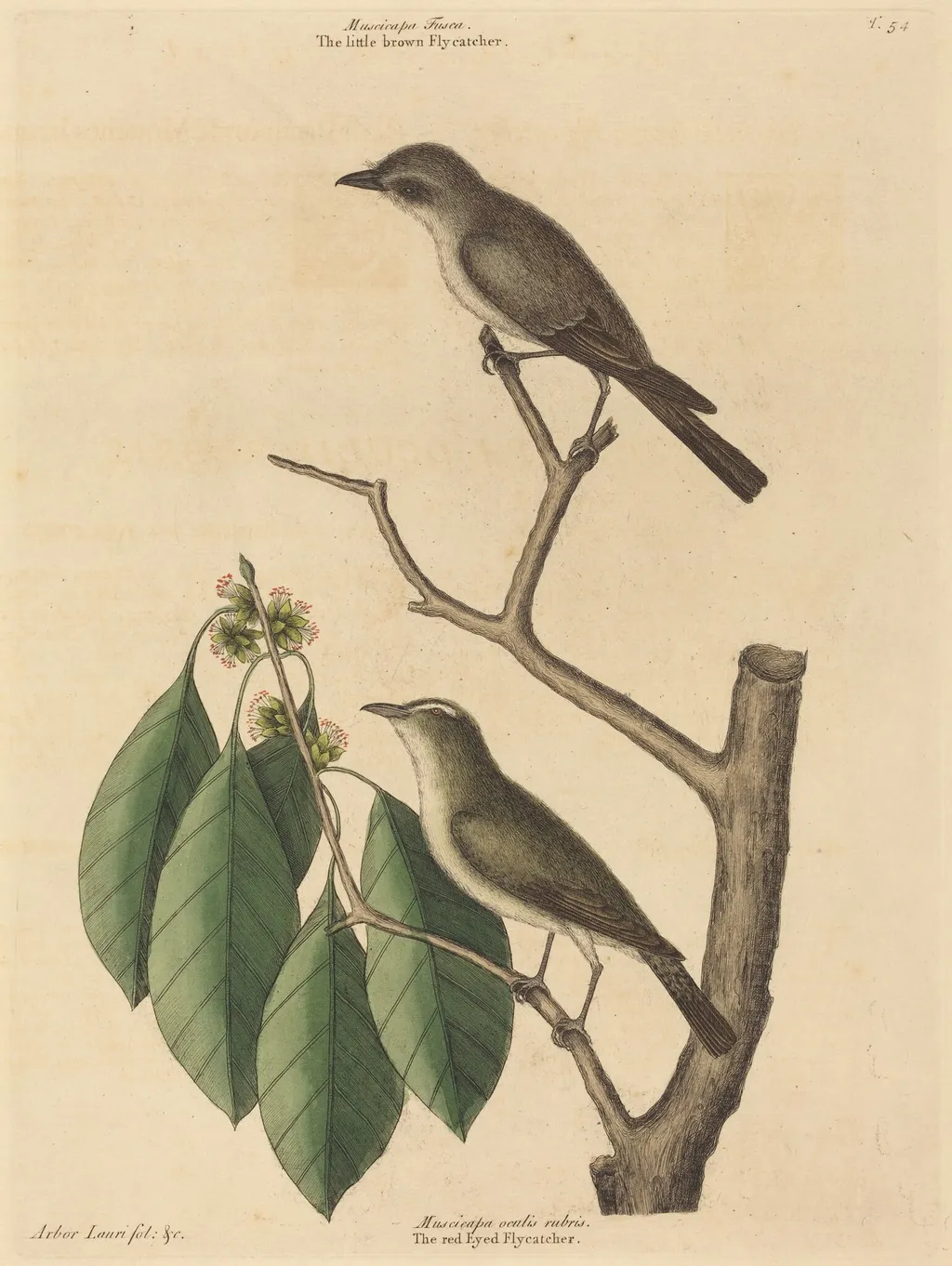
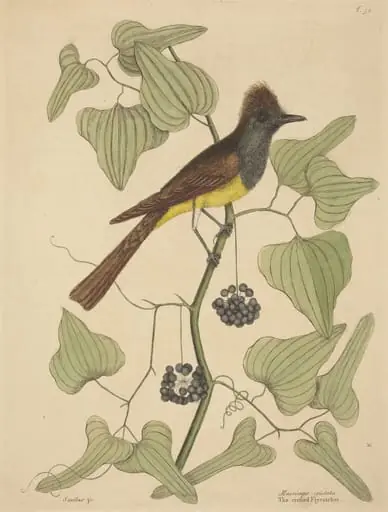
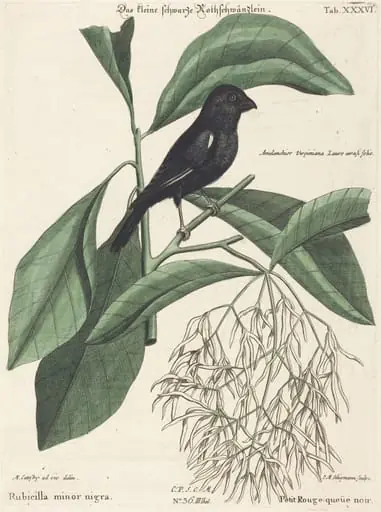
The Little Brown Flycatcher is an ink print by the Baroque artist Mark Catesby. It dates from 1737 and is held in the collection of the National Gallery of Art.
About this work
Overview
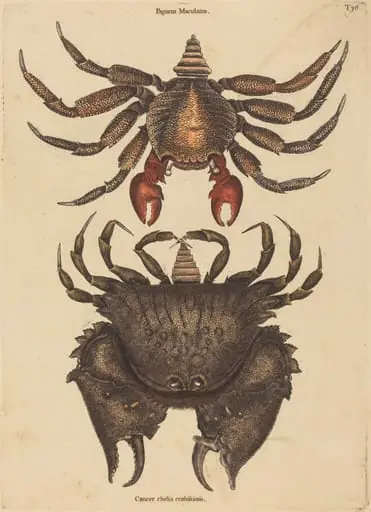
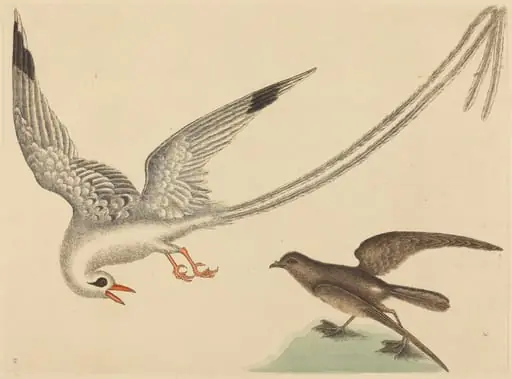
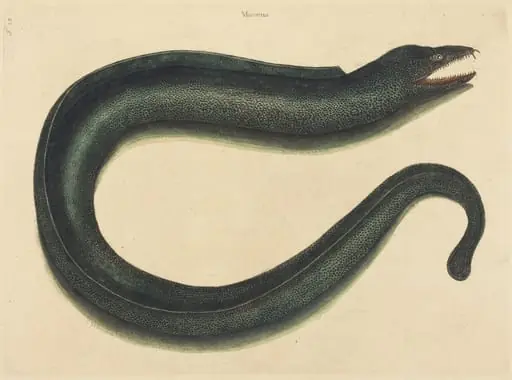
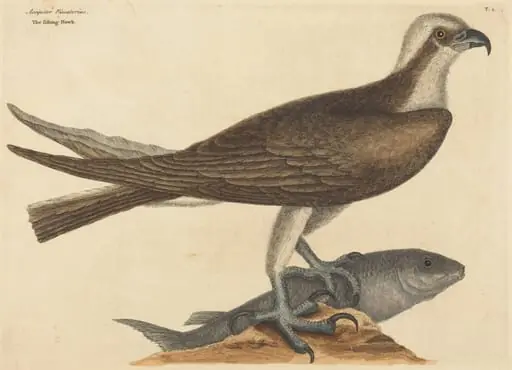
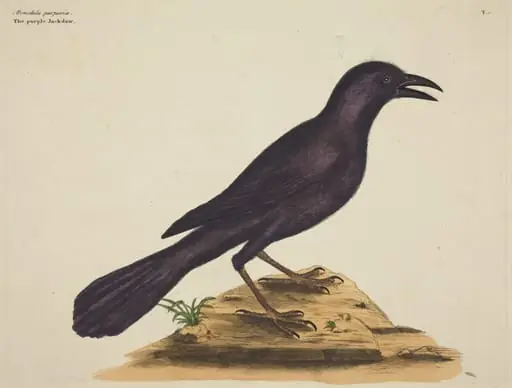
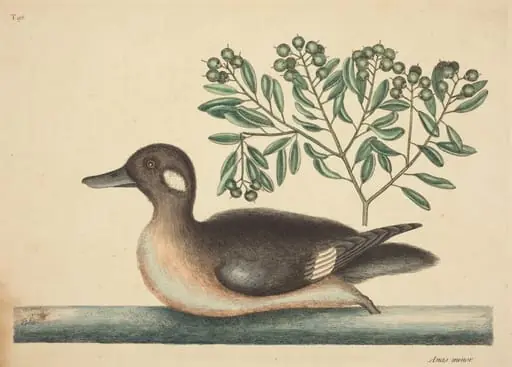
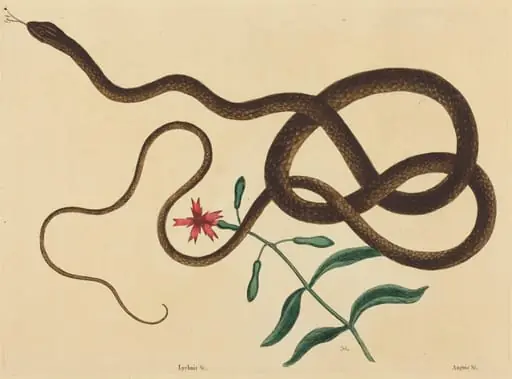
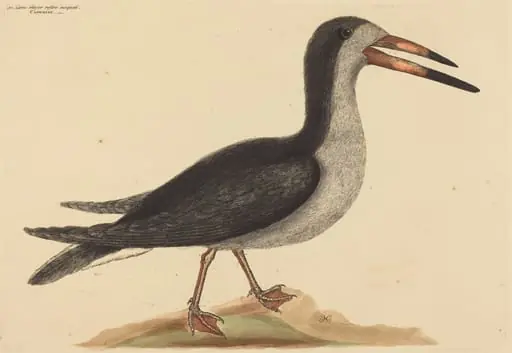
Created in 1737 by English naturalist Mark Catesby, this print is one of 220 plates in his comprehensive study of North American wildlife.
Created in 1737 by English naturalist Mark Catesby, this print is one of 220 plates in his comprehensive study of North American wildlife. Executed in etching and engraving with hand-applied watercolor on laid paper, it captures a pair of small birds among native vegetation. The work belongs to Catesby’s broader effort to document the flora and fauna of the southeastern colonies and the Bahamas, combining scientific observation with artistic precision.
Subject & Meaning
The image depicts two flycatchers perched on slender, twisted branches amid sparse foliage and delicate blossoms. One bird is labeled as the little brown flycatcher, reflecting Catesby’s attempt to classify and name species newly encountered by Europeans. The composition emphasizes naturalistic behavior and habitat, avoiding idealization. The plain background directs focus to the birds’ form and their interaction with the environment, reinforcing the project’s empirical aims.
Technique & Style
Catesby used etching and engraving to achieve fine, controlled lines that define the birds’ feathers and the branching structure of the plants. Hand coloring, applied with subtle washes, enhances realism without overwhelming the delicate inkwork. The textures of bark, leaves, and feathers are rendered with observational care, avoiding theatricality. The muted palette and restrained composition reflect a commitment to accuracy over ornamentation, typical of early natural history illustration.
History & Provenance
Catesby produced this print during two extended expeditions to the American colonies between 1712 and 1726, with publication occurring in London after his return. The plates were printed in England using techniques learned from continental printmakers. The work was distributed in parts over several years, reaching scientific circles and collectors. Original impressions are rare, with surviving copies held in major institutional collections, including the British Library and the New York Public Library.
Context
Catesby’s work emerged during a period of expanding European interest in New World biodiversity. Unlike earlier travelers who recorded specimens sporadically, he systematically observed, collected, and illustrated species in situ. His publication preceded Linnaeus’s taxonomic system but laid groundwork for it. The project was among the first to present American wildlife as worthy of detailed study, challenging the notion that the New World lacked natural richness.
Legacy
Catesby’s illustrations influenced subsequent naturalists, including Audubon, and set a precedent for combining field observation with printed documentation. His plates remain valuable for identifying historical distributions of species and understanding early scientific visualization. Though later works surpassed his taxonomy, his commitment to depicting organisms within their environments established a lasting model for biological illustration in the natural sciences.
Artist & collection

Artist
Mark Catesby (24 March 1683 – 23 December 1749) was an English naturalist who studied the flora and fauna of the New World.