Artwork
The Red Mottled Rock-crab (Cancer grapsus)
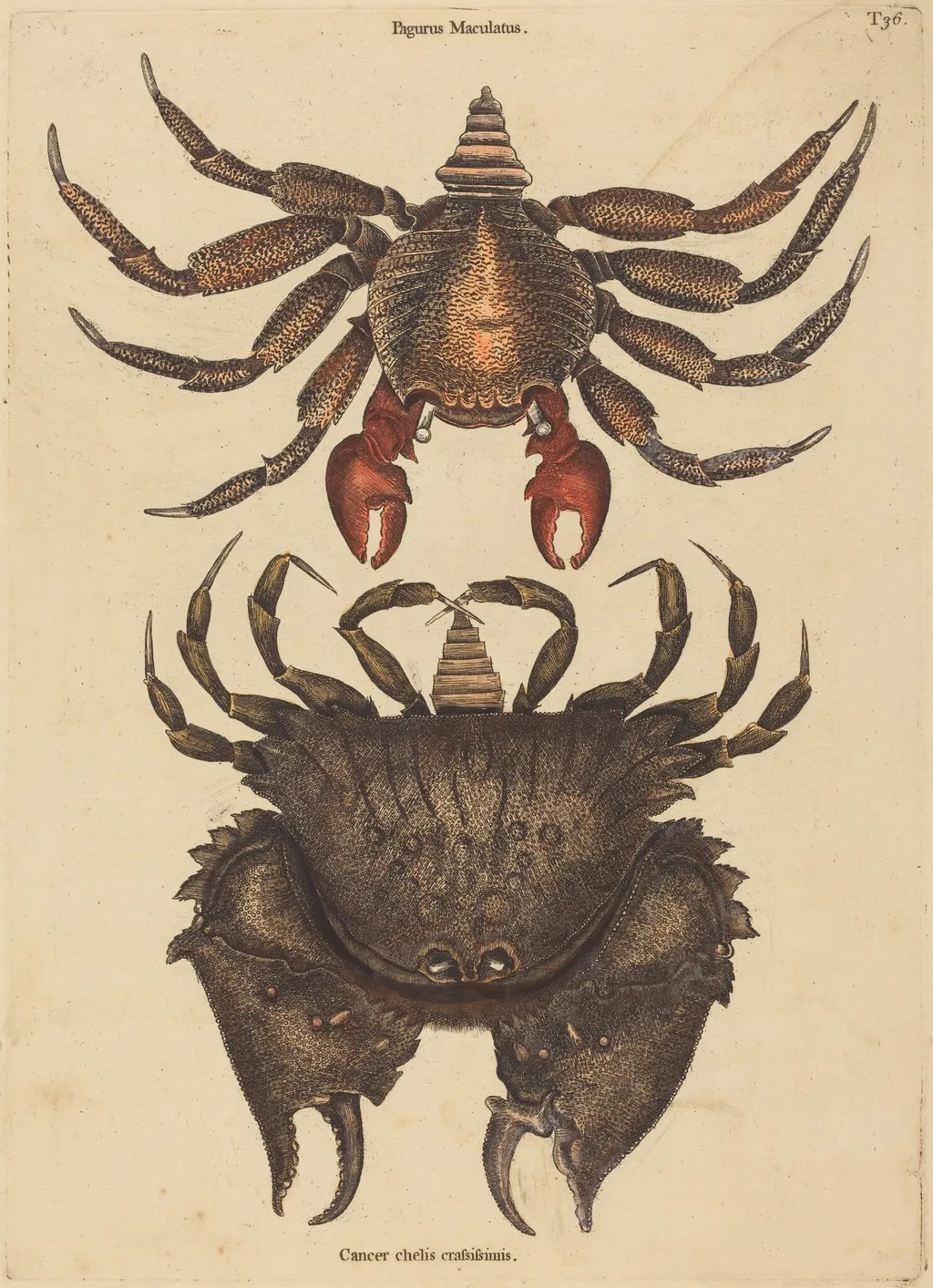
The Red Mottled Rock-crab (Cancer grapsus) is an ink print by the Baroque artist Mark Catesby. It dates from 1737 and is held in the collection of the National Gallery of Art. Created in 1737, this print portrays a red‑mottled rock crab (Grapsus grapsus) rendered on laid paper.
About this work
Overview
Created in 1737, this print portrays a red‑mottled rock crab (Grapsus grapsus) rendered on laid paper. The image combines etched lines with engraved details, then receives hand‑applied color, giving the creature its characteristic reds and browns against a neutral backdrop.
Subject & Meaning
The work serves as a scientific illustration, identifying the species by its Latin name, Cancer grapsus, a practice intended to aid naturalists in recognizing and cataloguing the fauna of the Atlantic coastal regions.
Technique & Style
Catesby employed a two‑stage print process: first an acid‑etched plate to outline forms, followed by a finer engraving to enhance texture. After printing, each impression was hand‑colored, a method that allowed subtle variation in hue while preserving the precision of the line work.
History & Provenance
The print is part of Mark Catesby’s larger project, *The Natural History of Carolina, Florida and the Bahama Islands*, issued in installments from 1729 to 1747. This publication was the first illustrated compendium of the area’s wildlife, containing roughly 220 plates that documented plants and animals encountered during Catesby’s travels.
Context
Produced during the early Enlightenment, the image reflects the period’s drive to systematically record nature. Catesby, an English naturalist and explorer, combined field observation with artistic skill, contributing to the emerging field of natural history illustration in the Atlantic world.
Artist & collection

Artist
Mark Catesby (24 March 1683 – 23 December 1749) was an English naturalist who studied the flora and fauna of the New World.

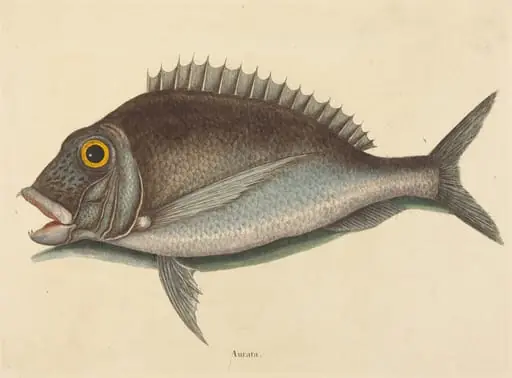
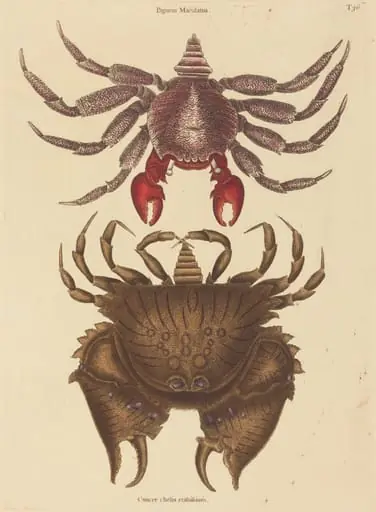 Red Mottled Rock-crab (Cancer grapsus)
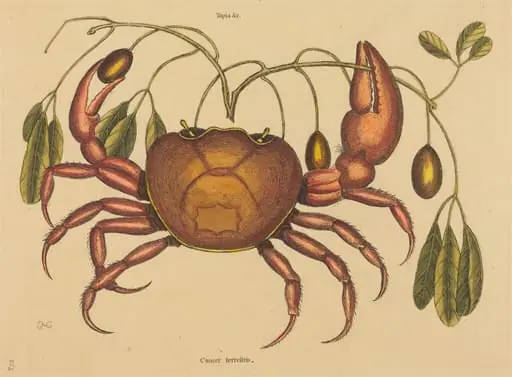 The Land-crab (Cancer ruricola)
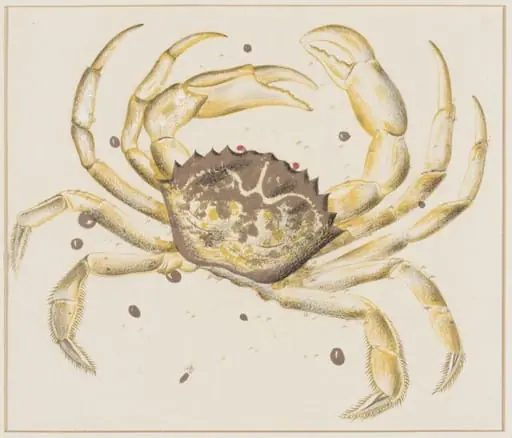 Crab
Crab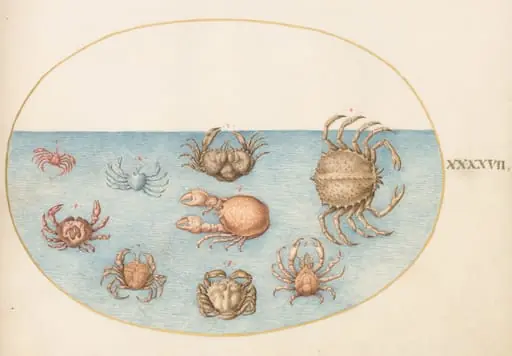 Plate 47: Nine Crabs
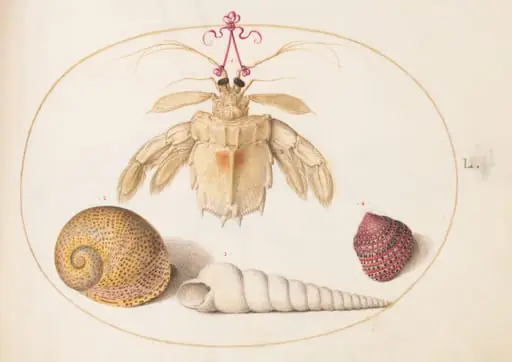 Plate 50: A Partial Mantis Shrimp with Tower Snail Shells
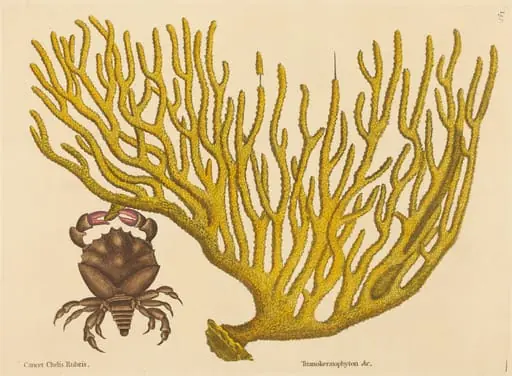 The Red Clawed Crab (Cancer erythropus)
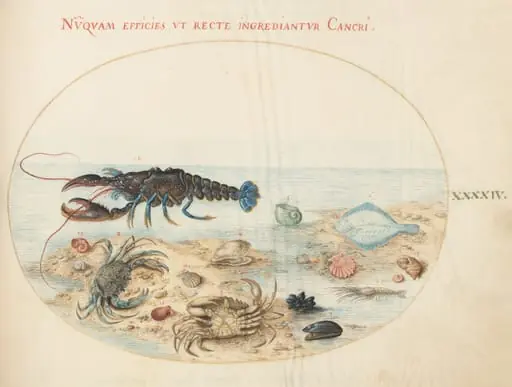 Plate 44: Lobster, Two Crabs, Scallop Shells, and Other Sea Life
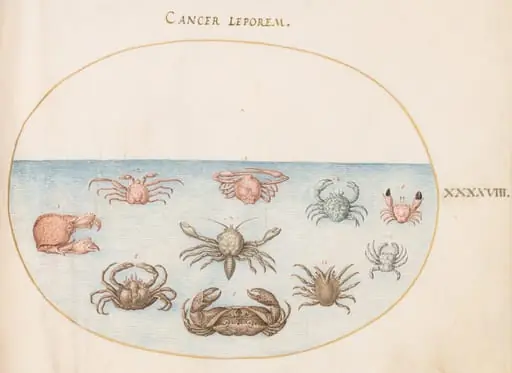 Plate 48: Ten Crabs
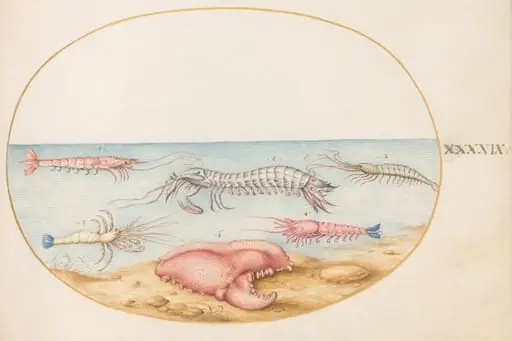 Plate 49: Mantis Shrimp and the Claw of a European Crayfish
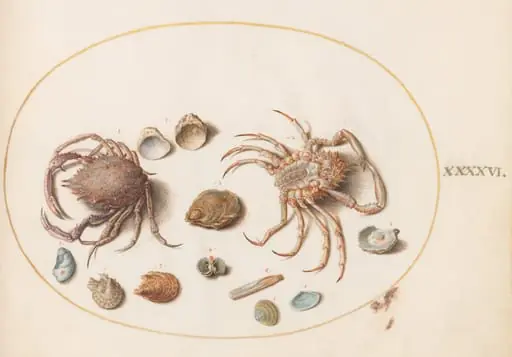 Plate 46: Two Crabs with Seashells
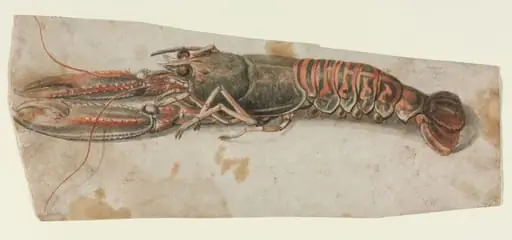 Lobster (recto)