Artwork
The Rice-bird (Emberiza oryzivora)
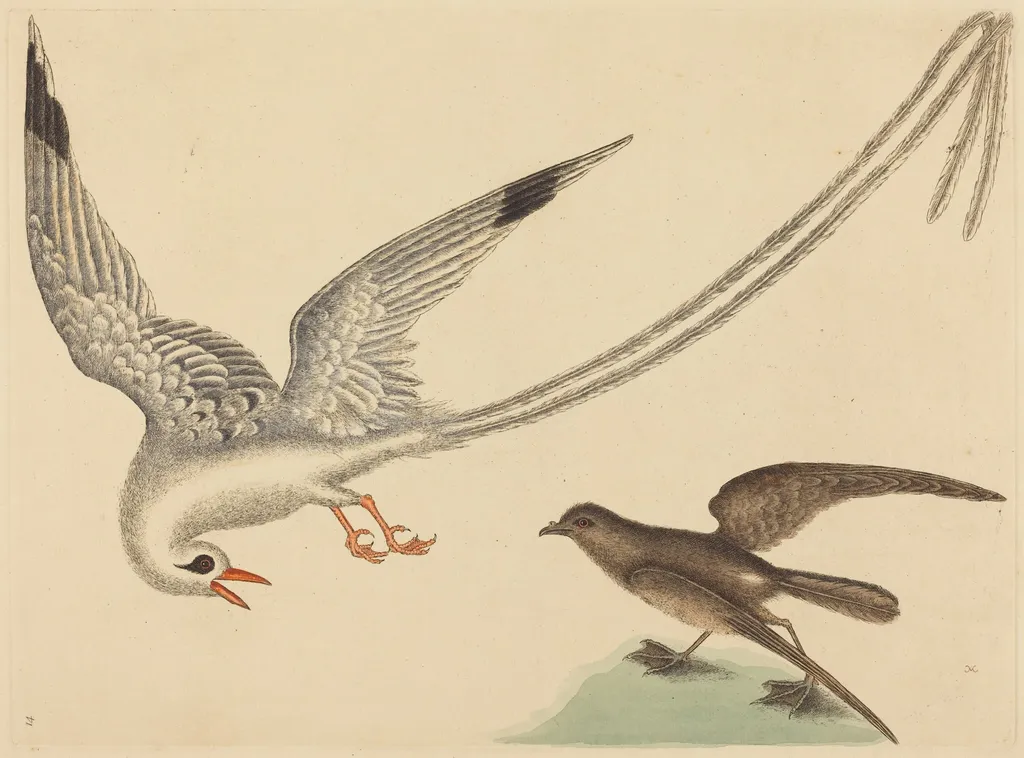
The Rice-bird (Emberiza oryzivora) is an ink print by the Baroque artist Mark Catesby. It dates from 1737 and is held in the collection of the National Gallery of Art.
About this work
Overview
The work reflects direct observation rather than secondhand accounts, grounding its imagery in field study.
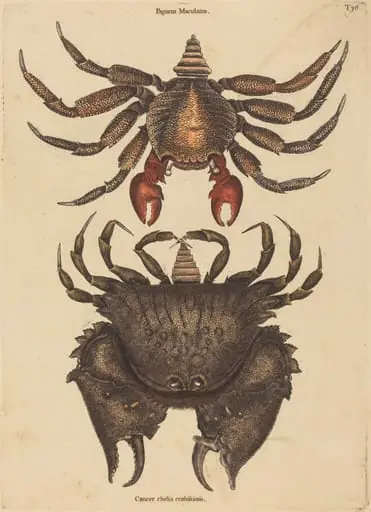
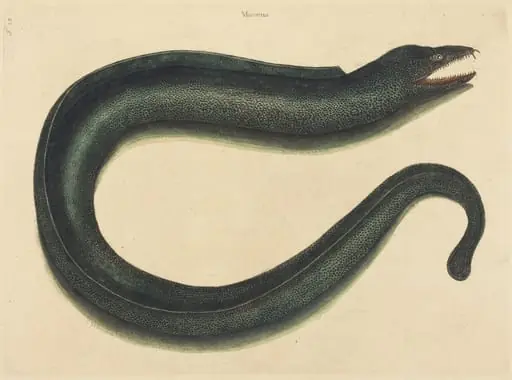
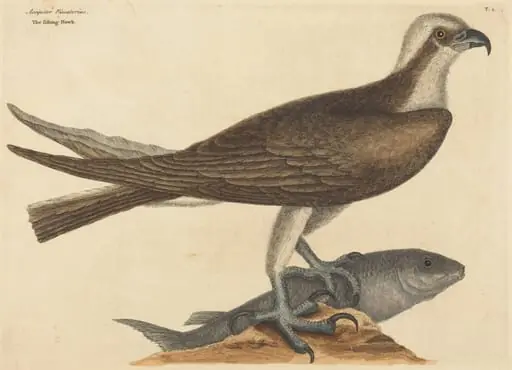
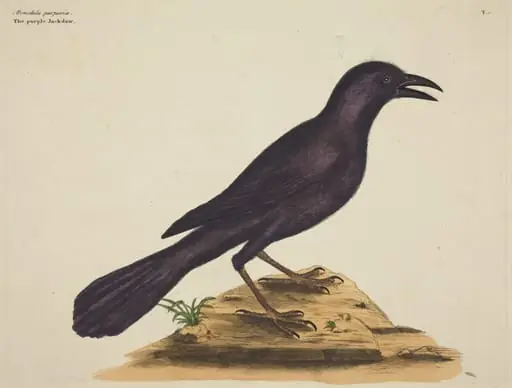
Created in 1737 by English naturalist Mark Catesby, this print depicts the Rice-bird (Emberiza oryzivora) as part of his comprehensive documentation of North American wildlife. Executed in etching and engraving with hand coloring on laid paper, it belongs to a series of 220 plates published between 1729 and 1747 in *The Natural History of Carolina, Florida and the Bahama Islands*. The work reflects direct observation rather than secondhand accounts, grounding its imagery in field study.
Subject & Meaning
The image shows two Rice-birds in mid-flight, oriented in opposite directions—one with an elongated tail and fully extended wings, the other more compact with shorter wings. Their dynamic posture suggests motion, capturing the moment before or after takeoff. The birds are rendered without artificial backdrop, emphasizing their natural behavior and ecological presence. The composition avoids symbolic interpretation, focusing instead on accurate representation of species in their native state.
Technique & Style
Catesby employed fine etching and engraving lines to define feather textures, then applied delicate hand coloring to replicate natural hues. Earth tones—browns, tans, and muted grays—enhance realism, while the pale beige paper provides subtle contrast without distraction. Details such as individual barbs on wing feathers and subtle gradations in plumage demonstrate meticulous craftsmanship. The absence of landscape elements directs attention entirely to the birds’ form and movement.
History & Provenance
The print originated in Catesby’s multi-year expedition through the southeastern colonies and the Bahamas, where he sketched specimens in situ. Plates were engraved in London and hand-colored under his supervision. Copies were distributed to European scientific institutions and collectors, contributing to early transatlantic knowledge of American avifauna. The work remains among the earliest systematic visual records of North American birds produced by a European observer.
Context
Catesby’s project emerged during a period of expanding natural history inquiry in Europe, when colonial specimens were being cataloged for scientific and imperial interest. Unlike earlier illustrators who relied on preserved specimens or artists’ imagination, Catesby prioritized direct observation. His work bridged artistic tradition and empirical science, influencing later naturalists like Linnaeus and Audubon by demonstrating the value of field-based documentation.
Legacy
Though the Rice-bird’s scientific classification has since changed, Catesby’s plate endures as a foundational visual record of early American ornithology. Its precision and restraint set a standard for natural history illustration, distinguishing it from more ornamental or fantastical depictions of the era. The print continues to be referenced in studies of colonial-era natural science and the history of biological illustration.
Artist & collection

Artist
Mark Catesby (24 March 1683 – 23 December 1749) was an English naturalist who studied the flora and fauna of the New World.