Artwork
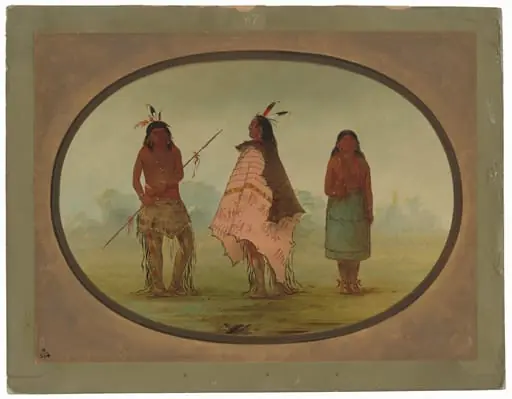
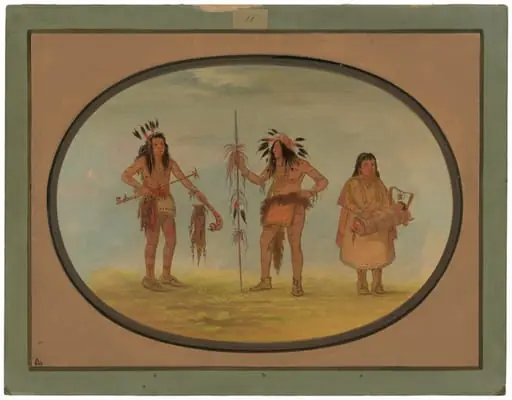
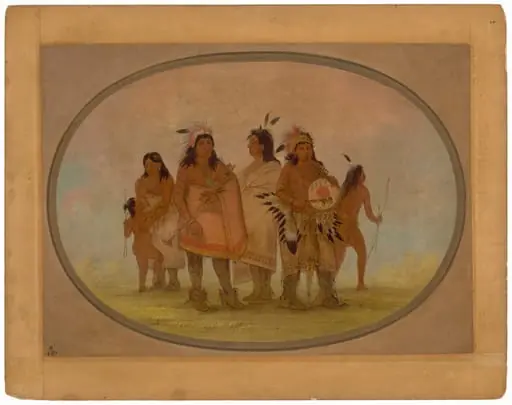
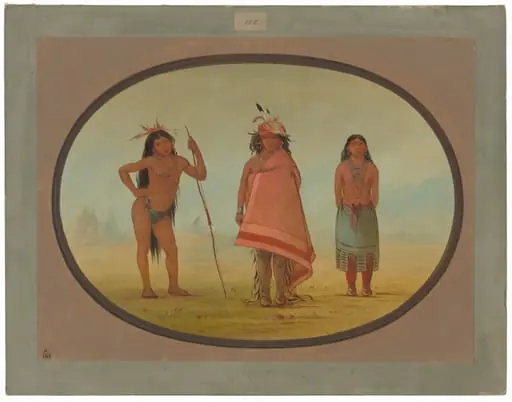
Two Saukie Chiefs and a Woman
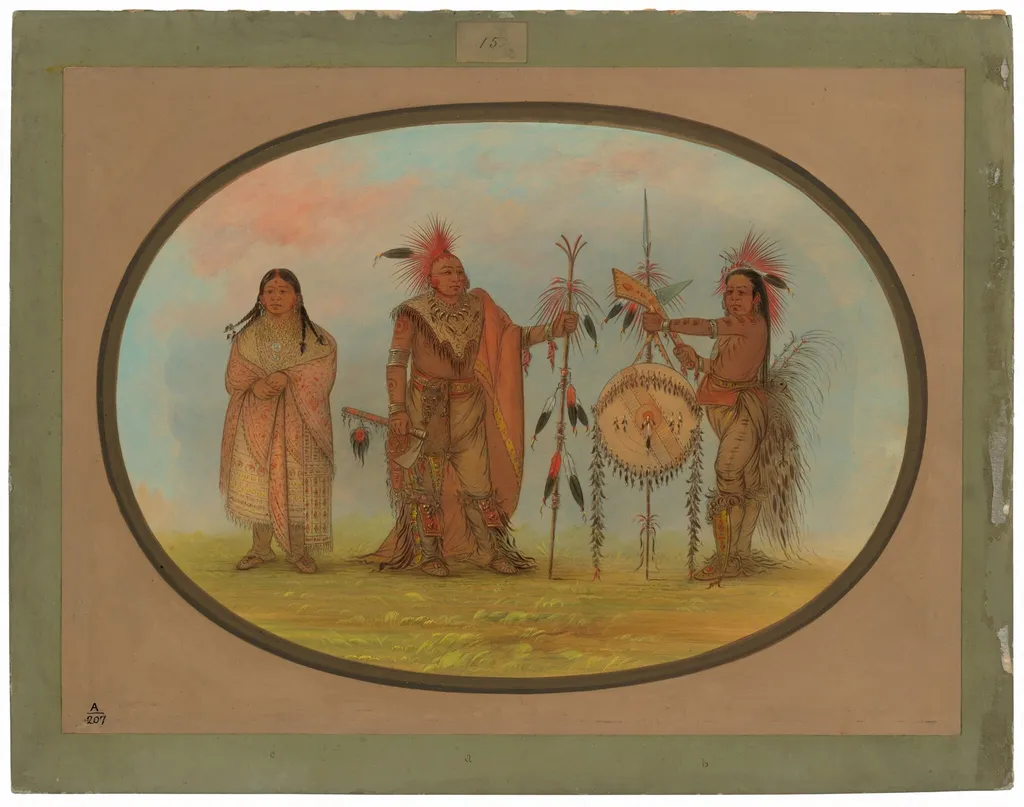
Two Saukie Chiefs and a Woman is an oil painting by the Impressionist artist George Catlin. It dates from 1865 and is held in the collection of the National Gallery of Art.
About this work
In this 1861 painting, George Catlin shows two Sauk chiefs sitting side by side with a woman standing between them.
In this 1861 painting, George Catlin shows two Sauk chiefs sitting side by side with a woman standing between them. The chiefs wear traditional feathers and beads while the woman holds a fan of feathers. Their faces look calm but serious.
Catlin traveled west in the 1830s to paint Native tribes. He met the Sauk in 1861 and sketched this scene years later. His work helps us see how people dressed and posed in daily life long ago.
Check out another Catlin, George painting to compare styles.
Overview
George Catlin’s oil on card, mounted on paperboard, titled *Two Saukie Chiefs and a Woman*, was completed in 1865. The work presents a small group portrait: two Sauk chiefs seated side by side with a standing woman positioned between them. The figures are rendered with a calm, solemn expression, and their attire includes traditional feathered headdresses, beadwork, and a feather fan held by the woman.
Subject & Meaning
The painting records a moment of tribal representation, focusing on leadership and gender roles within the Sauk community. The chiefs’ feathered ornaments signal status, while the woman’s feather fan suggests a ceremonial or domestic function. The composed stillness of the trio conveys dignity and a sense of cultural continuity amid the broader changes affecting Native peoples in the mid‑nineteenth century.
Technique & Style
Catlin employed oil pigments on a prepared card surface, a medium that allowed fine detail and a matte finish when mounted on paperboard. His brushwork balances precise rendering of decorative elements—feathers, beads, textiles—with broader, softer modeling of faces and drapery. The composition follows a straightforward portrait format, emphasizing vertical alignment and a muted palette that foregrounds the subjects’ attire.
History & Provenance
Catlin first encountered the Sauk tribe during his 1861 expedition to the Midwest, producing sketches that later informed this oil painting. The work remained in his personal collection before entering the holdings of a regional museum in the early twentieth century, where it has been catalogued as part of his extensive series documenting Plains Indian life.
Context
The painting belongs to Catlin’s larger project of recording Native American cultures after years of travel across the western frontier in the 1830s and 1840s. By the 1860s, his focus had shifted from landscape to portraiture, aiming to preserve visual records of tribal leaders and customs as U.S. expansion increasingly threatened their traditional ways of life.
Artist & collection

Artist
George Catlin ( KAT-lin; July 26, 1796 – December 23, 1872) was an American lawyer, painter, author, and traveler, who specialized in portraits of Native Americans in the American frontier.

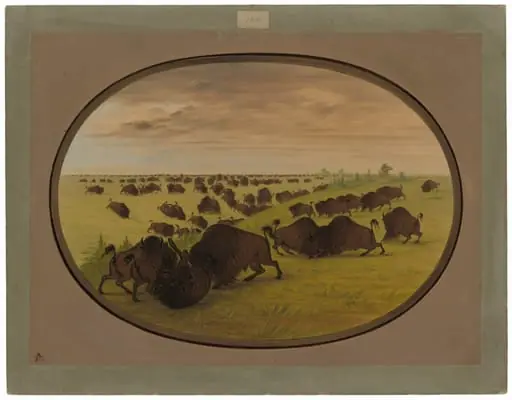 Bulls Fighting
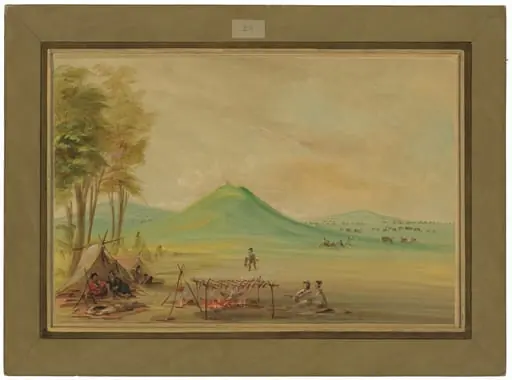 Expedition Encamped on a Texas Prairie. April 1686
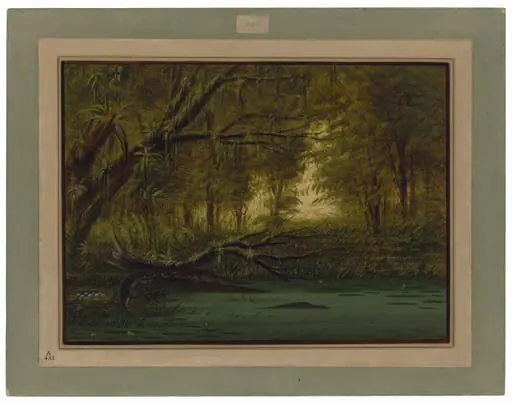 An Alligator's Nest
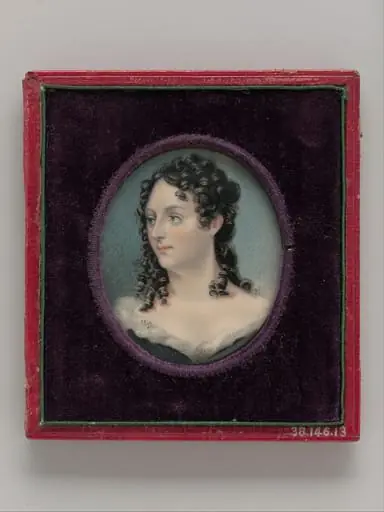 Mrs. George Catlin (Clara Bartlet Gregory)
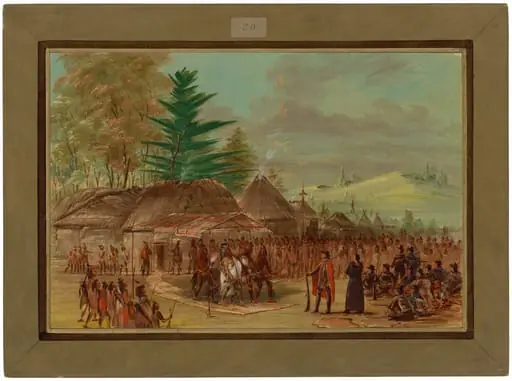 Chief of the Taensa Indians Receiving La Salle. March 20, 1682
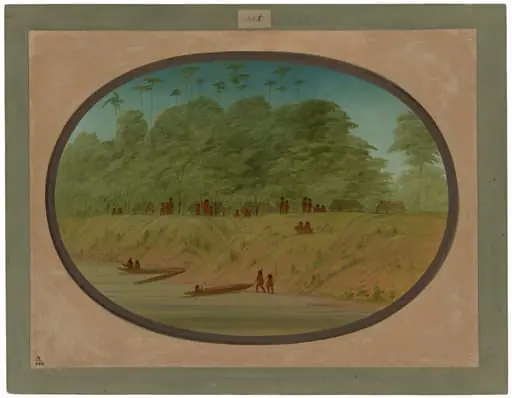 A Small Village - Payaguas Indians
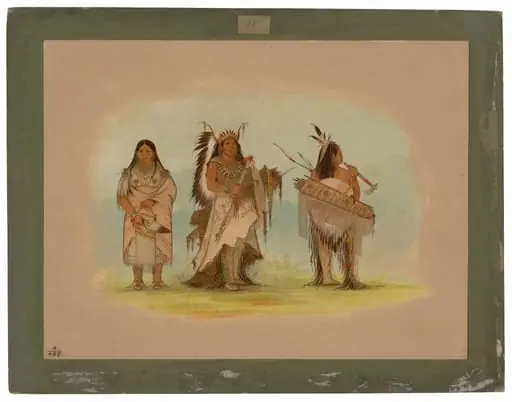 Omaha Chief, His Wife, and a Warrior
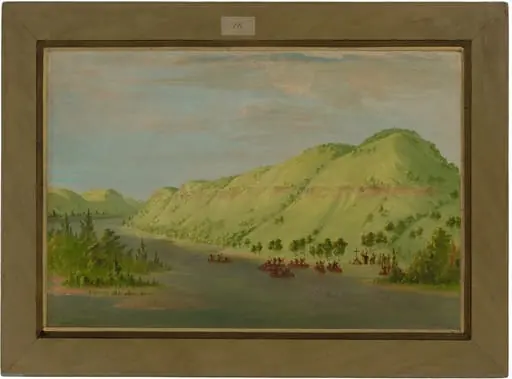 Father Hennepin Leaving the Mississippi to Join La Salle. May 8, 1680