Artwork
Two Sioux Chiefs, a Medicine Man, and a Woman with a Child
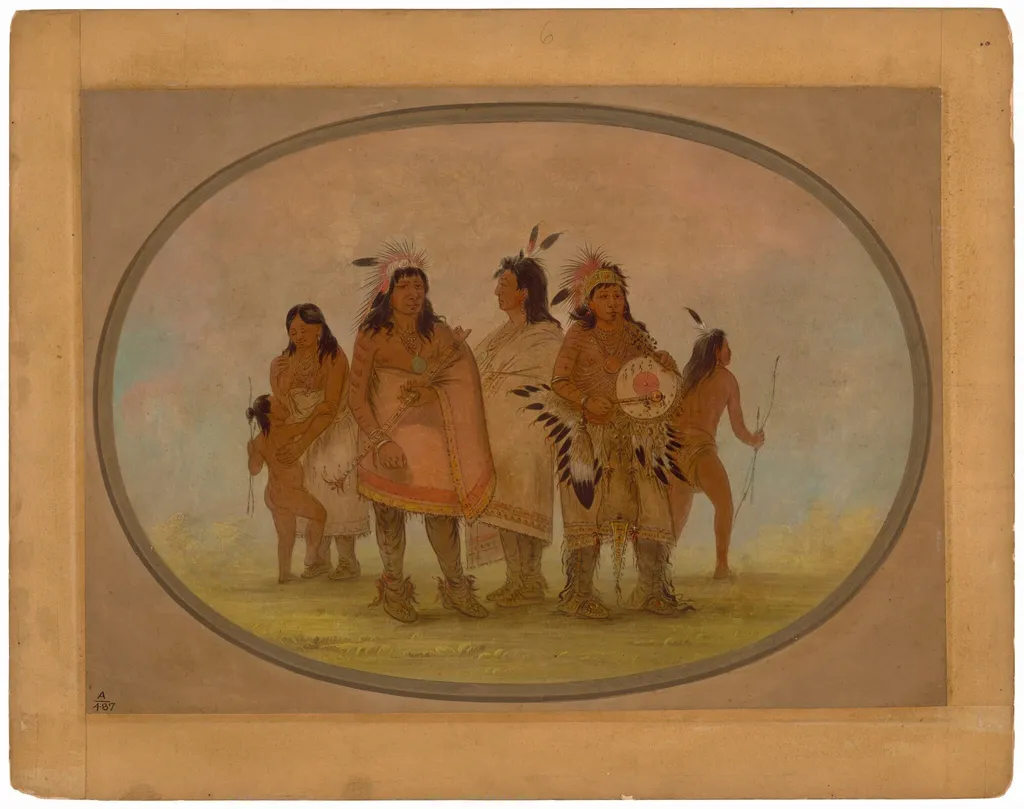
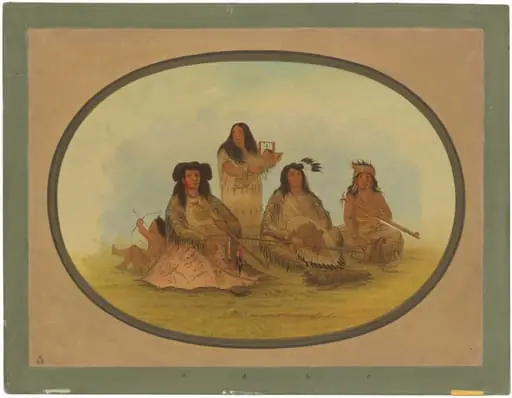
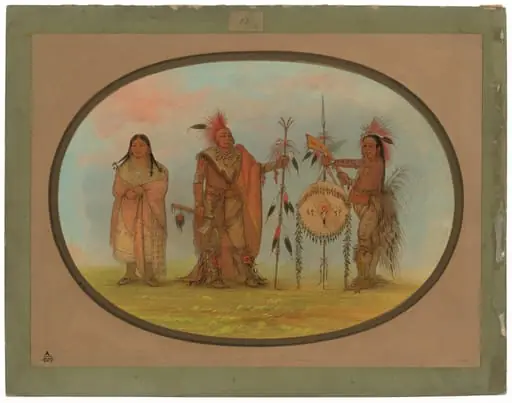
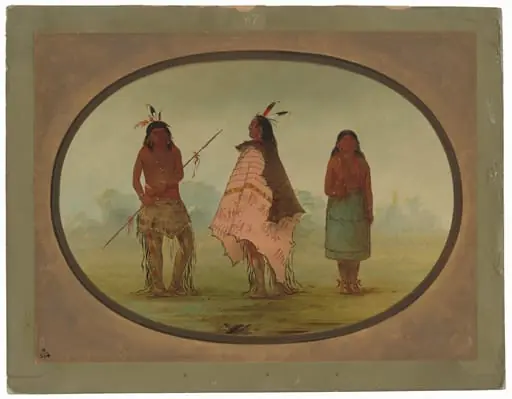
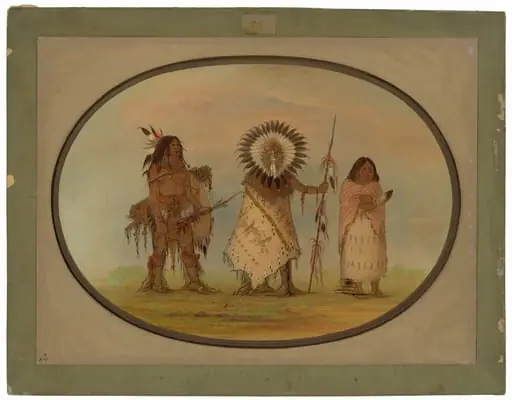
Two Sioux Chiefs, a Medicine Man, and a Woman with a Child is an oil painting by the American Folk Art artist George Catlin. It dates from 1865 and is held in the collection of the National Gallery of Art. Created in 1865, this oil painting on card mounted to paperboard presents a small group from the Sioux nation.
About this work
Overview
Created in 1865, this oil painting on card mounted to paperboard presents a small group from the Sioux nation. Four figures stand beside a woman who cradles a child, each adorned with feathered headdresses and traditional regalia. The composition emphasizes the collective presence of the individuals rather than a single portrait.
Subject & Meaning
The work portrays a woman with her infant, accompanied by two chiefs and a medicine man, reflecting roles within Sioux society. By grouping these figures together, the artist suggests a snapshot of communal life, highlighting familial bonds and the ceremonial importance of leadership and healing within the tribe.
Technique & Style
Executed with oil pigments applied to a card support, the artist employs a muted palette of browns, beiges, and earth tones to render clothing and background. Fine attention to decorative details—feathers, beadwork, and facial features—demonstrates a documentary approach typical of early American folk art, where realism serves ethnographic observation.
History & Provenance
The painting was produced by George Catlin, a lawyer‑turned‑artist who made five expeditions into the western frontier during the 1830s. His purpose was to record the lives of Native peoples through both written accounts and visual sketches. This piece remains part of the body of work that documented Sioux individuals during that period.
Artist & collection

Artist
George Catlin ( KAT-lin; July 26, 1796 – December 23, 1872) was an American lawyer, painter, author, and traveler, who specialized in portraits of Native Americans in the American frontier.

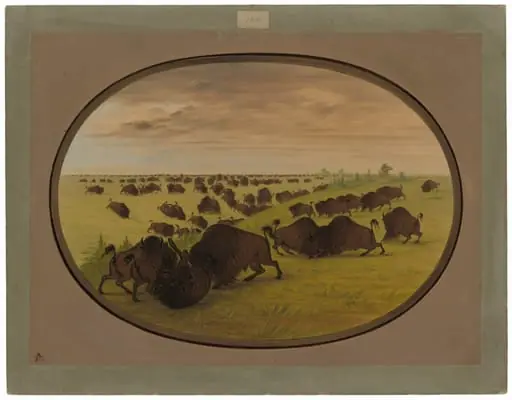 Bulls Fighting
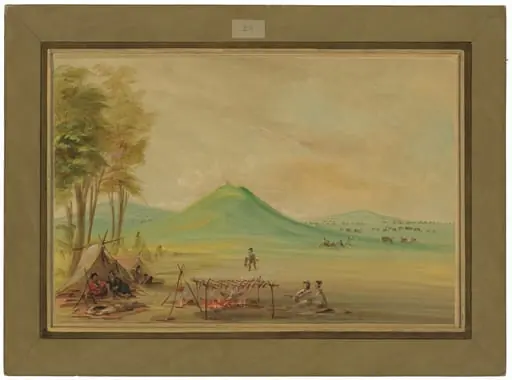 Expedition Encamped on a Texas Prairie. April 1686
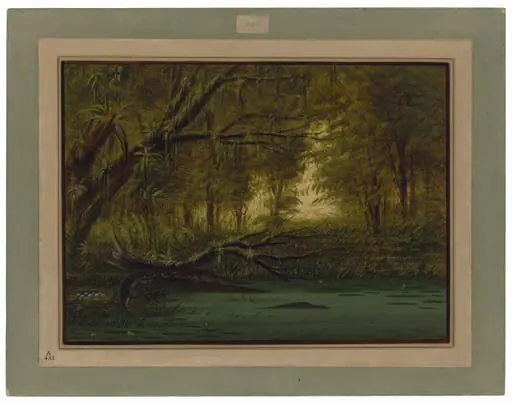 An Alligator's Nest
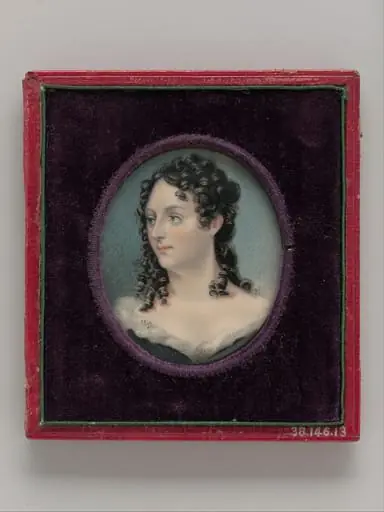 Mrs. George Catlin (Clara Bartlet Gregory)
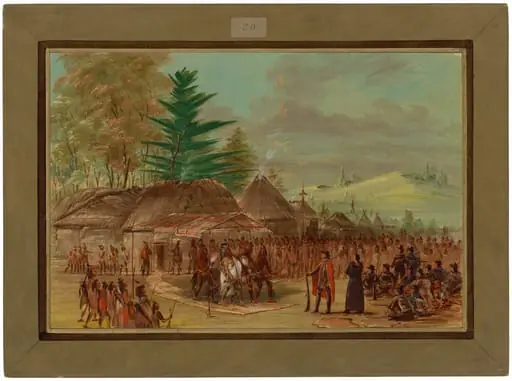 Chief of the Taensa Indians Receiving La Salle. March 20, 1682
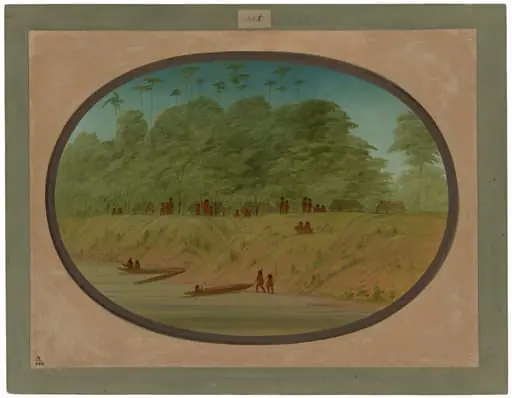 A Small Village - Payaguas Indians
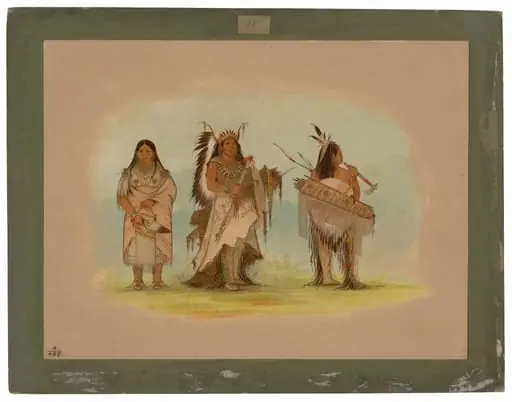 Omaha Chief, His Wife, and a Warrior
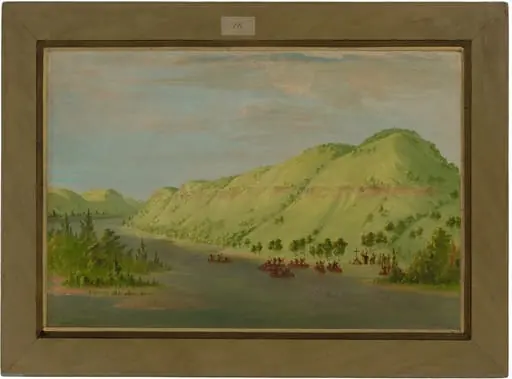 Father Hennepin Leaving the Mississippi to Join La Salle. May 8, 1680