Artwork
Forest glen, with travellers approaching an ambuscade
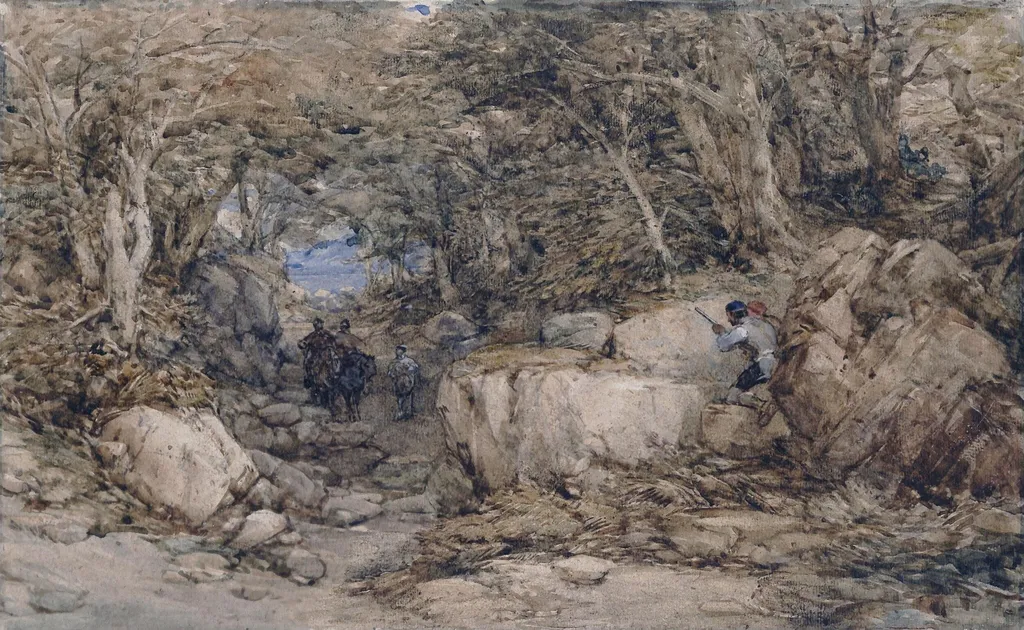
Forest glen, with travellers approaching an ambuscade is a watercolor work on paper by the British Romanticist artist George Cattermole. It dates from 1825 and is held in the collection of the Victoria and Albert Museum.
About this work
Overview
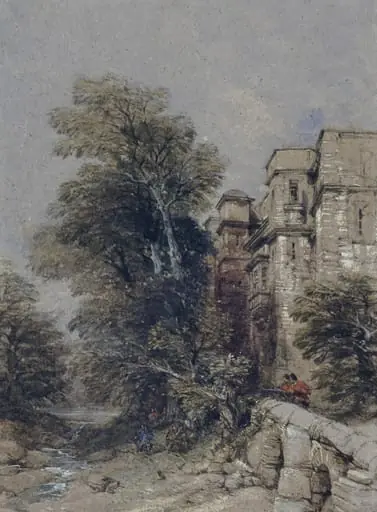
This watercolour portrays a secluded forest path where a group of travellers moves cautiously forward, unaware of hidden figures poised to intercept them.
This watercolour portrays a secluded forest path where a group of travellers moves cautiously forward, unaware of hidden figures poised to intercept them. The scene is rendered in delicate washes of pigment, capturing the dim, dappled light of a wooded glen. The composition directs the viewer’s eye along the winding trail toward an unseen point of conflict, heightening the sense of impending tension.
Subject & Meaning
The painting depicts a moment of latent violence: travellers on foot and horseback advance along a narrow trail, oblivious to two armed men concealed among the rocks and undergrowth. The narrative suggests a common theme of ambush in travel routes, evoking the dangers of remote landscapes in an era before secure roads. The contrast between the travellers’ calm progress and the hidden threat underscores vulnerability in nature’s solitude.
Technique & Style
The artist employs watercolour with layered glazes to suggest depth and atmospheric haze, allowing the forest’s dense foliage to recede into shadow. Subtle shifts in tone, achieved through controlled washes and reserved highlights, define form without heavy outline. Chiaroscuro is used sparingly but effectively, accentuating the contrast between sunlit clearings and the shadowed ambush points, enhancing the scene’s dramatic stillness.
History & Provenance
The work’s origin and early ownership are not documented in public records. It appears to belong to a tradition of 18th- or early 19th-century British watercolours that dramatized landscape with narrative tension. Its survival suggests it was held in private collections, possibly by patrons interested in topographical art infused with storytelling elements, though no exhibition history is established.
Context
During the period this work likely originated, travel through rural areas carried real risks from highwaymen and bandits, a theme frequently explored in literature and visual art. Landscape painting was increasingly valued not just for its beauty but for its capacity to convey human drama within nature. This piece aligns with a broader interest in depicting nature as both serene and perilous.
Legacy
Though not widely reproduced or studied, the painting exemplifies how watercolour could convey narrative suspense with subtlety. Its quiet intensity reflects a shift in artistic priorities—from idealized scenery to psychologically charged environments. It remains a quiet testament to the genre’s capacity to suggest story through atmosphere rather than explicit action.
Own this work as a print
Artist & collection
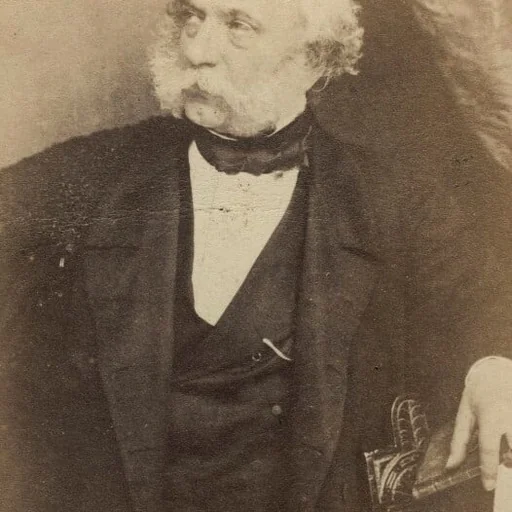
Artist
George Cattermole was a British painter and illustrator, chiefly in watercolours.

 Travelers Resting by a Fallen Tree
 The Sabine Hills and Rocca Santo Stefano, Seen from Civitella
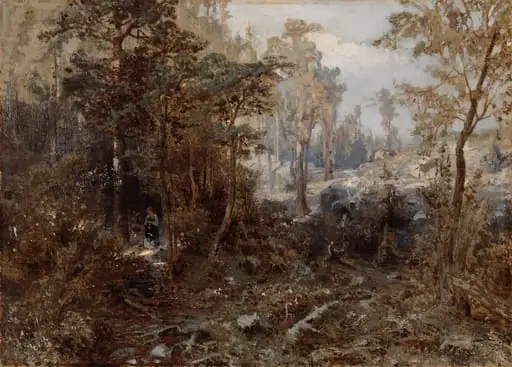 Metsämaisema Näsijärven lähistöllä ; keskeneräinen
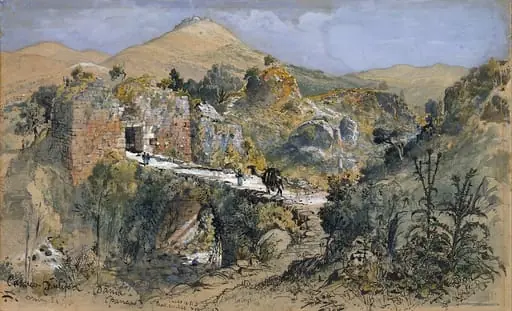 Caesarea Philippi (Banias)
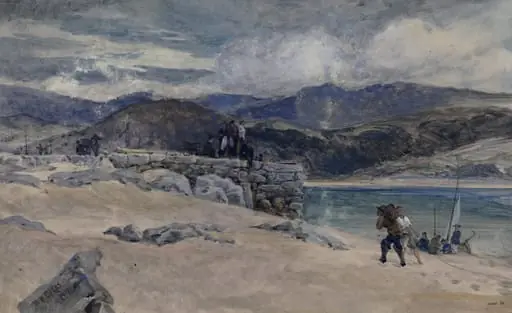 Barmouth, North Wales
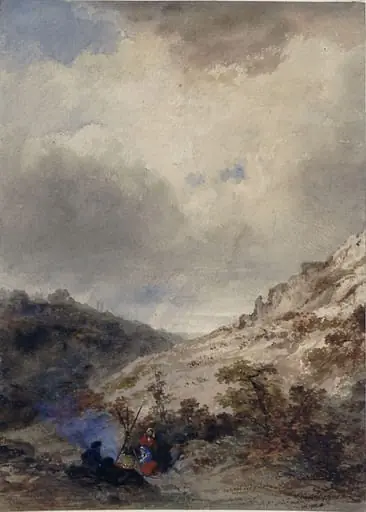 Landscape with two women sitting by a fire
 The Daryles, Ireland
 'The Bite', two boys fishing beside a brook
 Rocks and Oaks in the Serpentara
 Gravel Pit at Hampstead, 1855