Artwork
Rocks and Oaks in the Serpentara
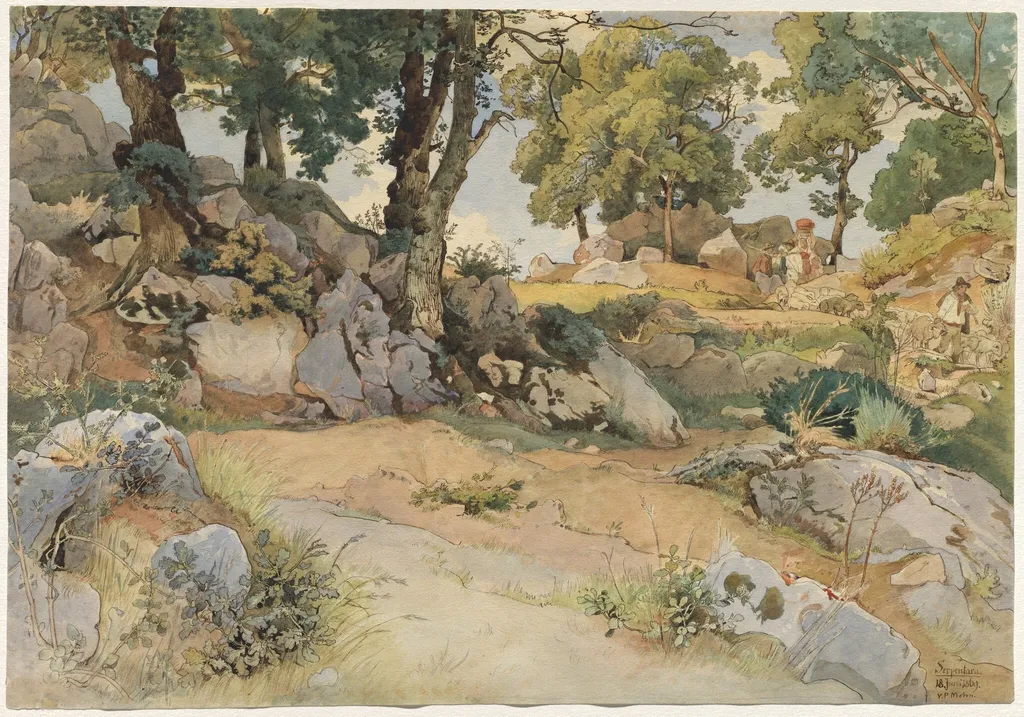
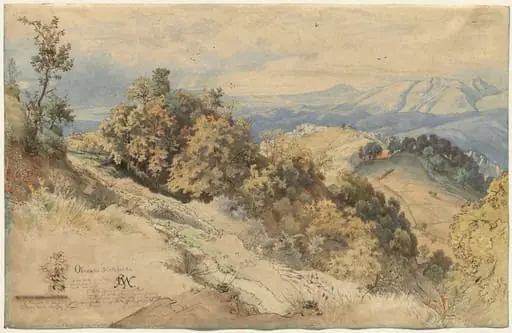
Rocks and Oaks in the Serpentara is an ink drawing by the Impressionist artist Victor Paul Mohn. It dates from 1869 and is held in the collection of the National Gallery of Art.
About this work
Overview
Created in 1869 by Victor Paul Mohn, this drawing depicts a rugged hillside in the Serpentara region. Executed in pen and brown ink with watercolor over graphite on wove paper, it captures a quiet, sun-dappled landscape. The work avoids sharp outlines, instead relying on translucent washes to suggest texture and depth, reflecting a restrained, observational approach to natural form.
Subject & Meaning
The scene centers on two ancient oaks rooted among weathered stones, their gnarled trunks and sprawling roots anchoring the composition.
The scene centers on two ancient oaks rooted among weathered stones, their gnarled trunks and sprawling roots anchoring the composition. Surrounding vegetation—dry grasses and sparse shrubs—hints at arid conditions. Distant trees and a barely discernible structure suggest human presence without intrusion. The image conveys endurance and quiet coexistence between flora and terrain, devoid of narrative or symbolism.
Technique & Style
Mohn employed thin, layered watercolor washes over delicate ink lines to model form subtly. Shadows and light are suggested through gradations of tone rather than defined edges. The graphite underdrawing guides composition but remains largely obscured, allowing the watercolor to dominate. This method creates a soft, atmospheric effect, emphasizing texture over detail and reinforcing the naturalism of the scene.
History & Provenance
The work was completed in 1869 during Mohn’s period of landscape study in southern Italy. It remained in private hands until the mid-20th century, when it entered a public collection. No exhibition history or significant alterations are documented. Its preservation in good condition reflects careful handling and a consistent focus on its material integrity over time.
Context
Mohn worked during a time when European artists increasingly turned to direct observation of nature, moving away from idealized compositions. His focus on unembellished terrain aligns with broader 19th-century trends in topographical drawing and plein air study. The Serpentara region, known for its rugged topography, offered a compelling subject for artists seeking authenticity in landscape representation.
Legacy
Though not widely exhibited, this drawing exemplifies Mohn’s commitment to quiet, detailed observation. It contributes to a lesser-known strand of 19th-century European drawing that prioritized atmospheric nuance over dramatic effect. Its restrained technique and unadorned subject matter continue to inform studies of watercolor practice and landscape documentation from the period.
Own this work as a print
Artist & collection


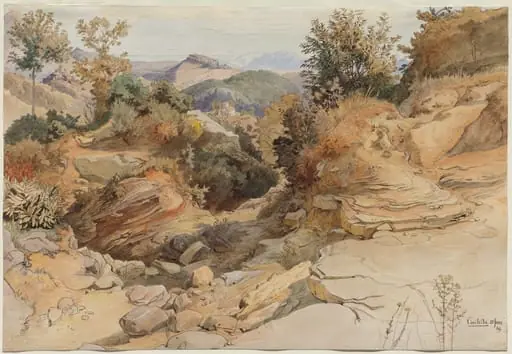 The Sabine Hills and Rocca Santo Stefano, Seen from Civitella
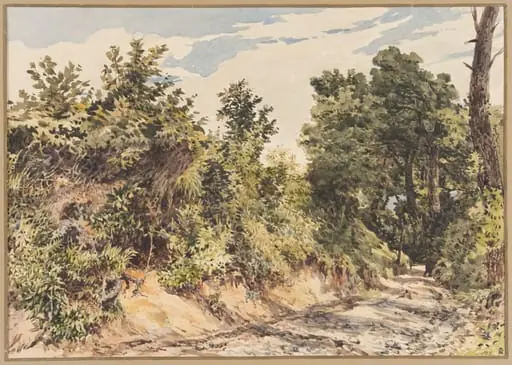 The Bridle Road
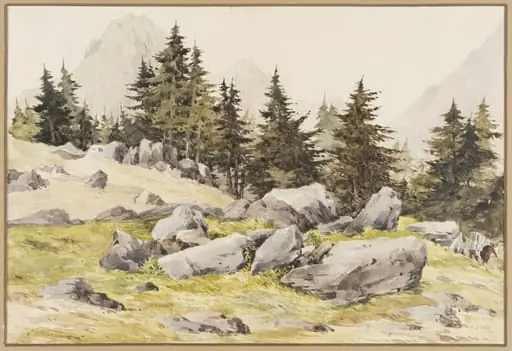 View at Handeck, Switzerland
 A Country Lane
 A Woody Bit, North Wales
 Study of Trees, 1852
 Choropiskopos, June 16th & 17th 1856
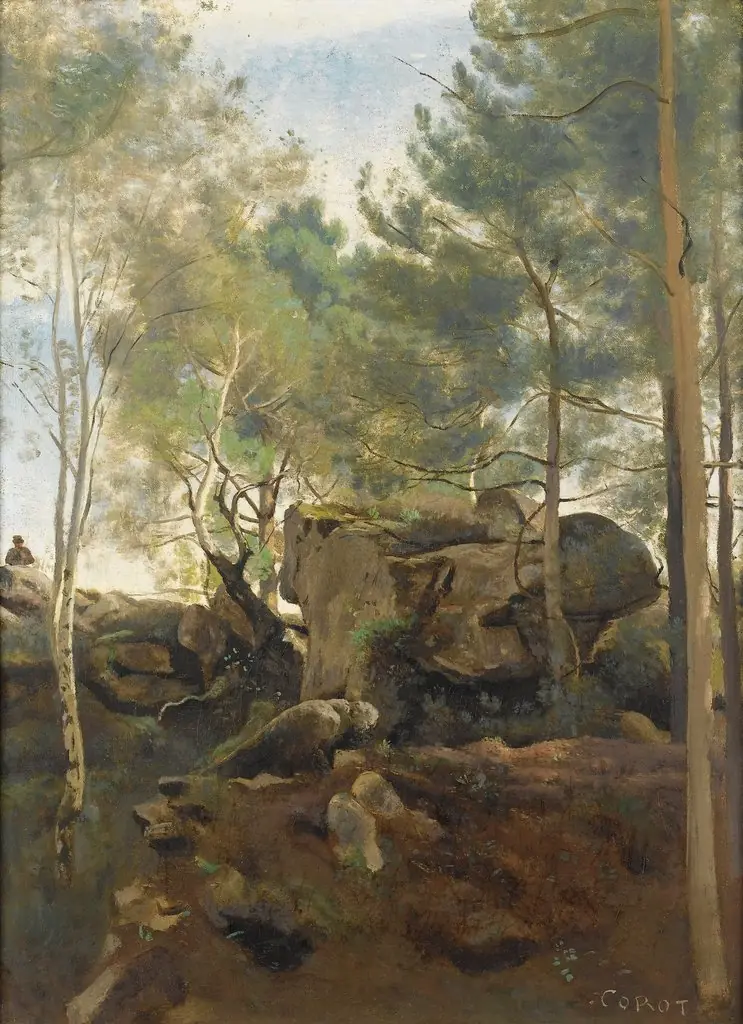 In Fontainebleau Forest. Pines and Birches Among the Rocks
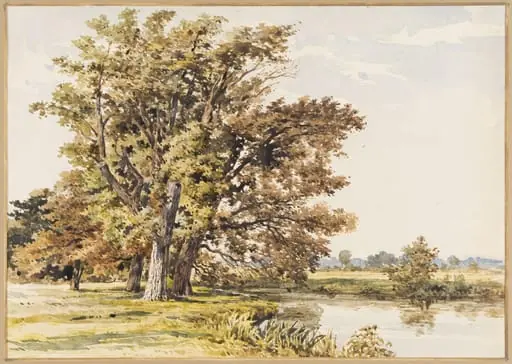 River scene in Surrey
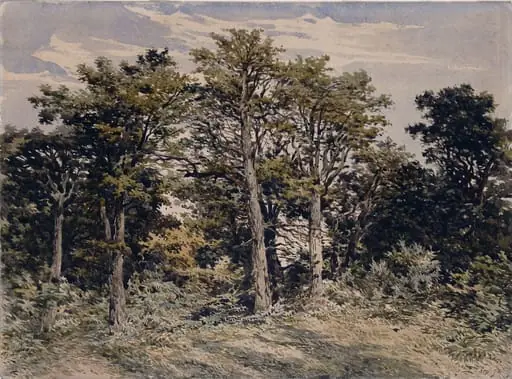 Study of trees
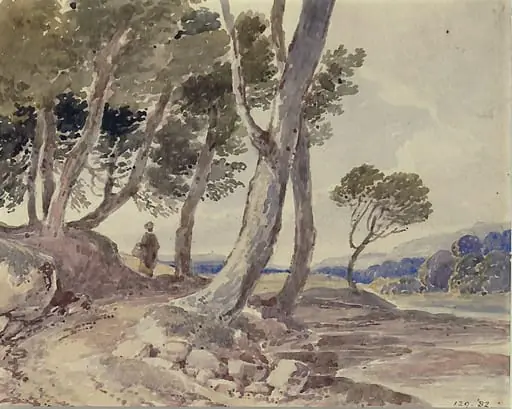 Landscape with trees and water
 Sun and Rain in the Serpentara near Olevano