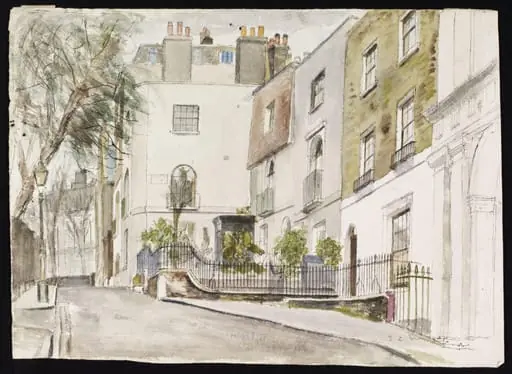
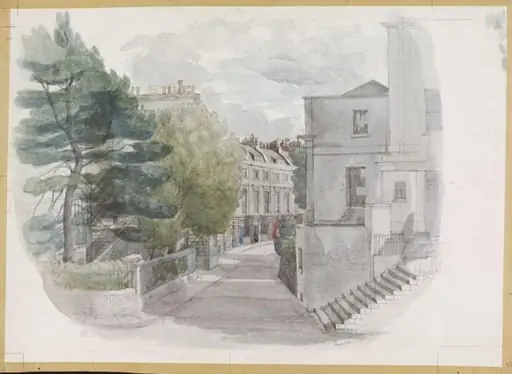
Artwork
Gloucester Street, Pimlico
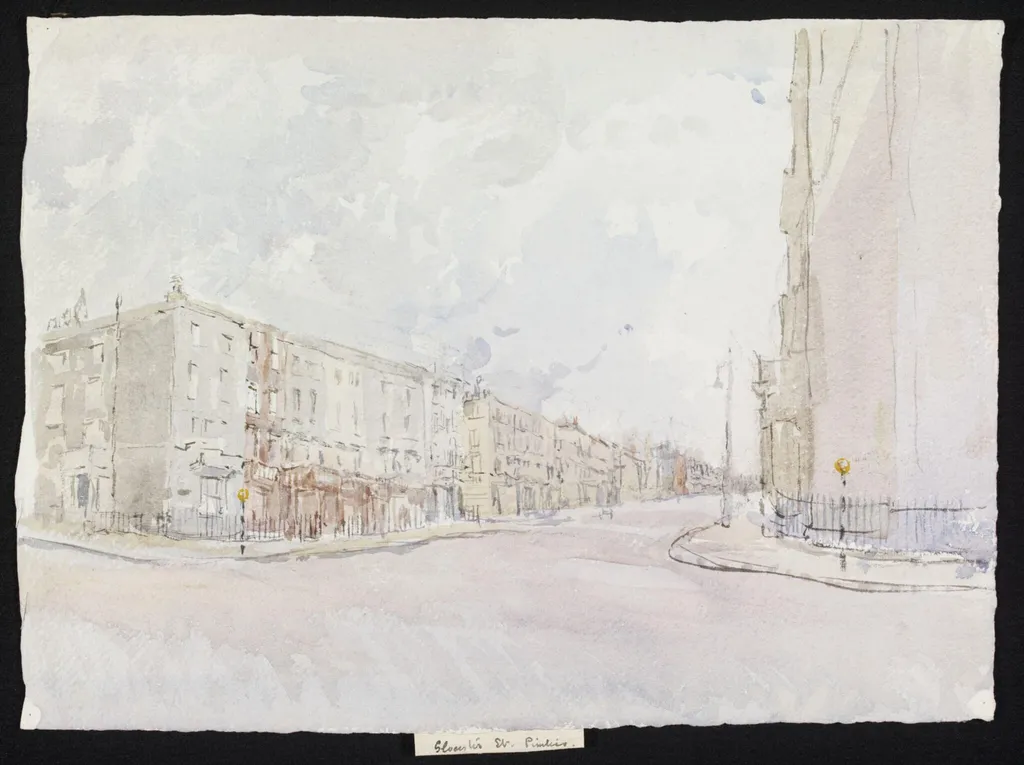
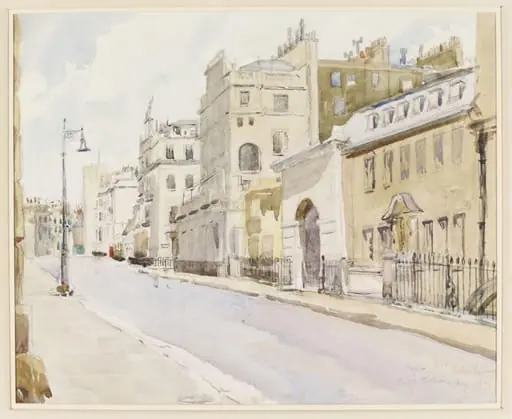
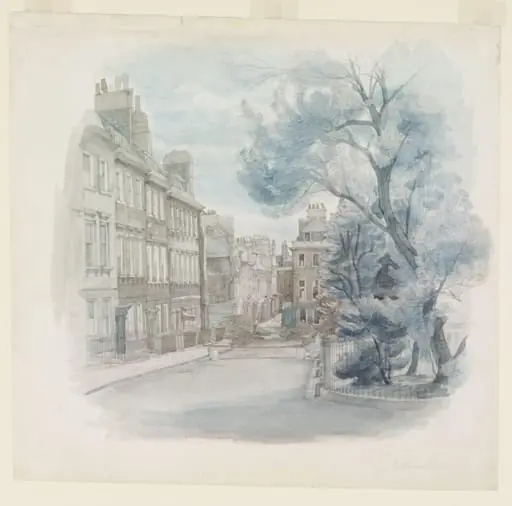
Gloucester Street, Pimlico is a watercolor work on paper by the Social Realist artist Ediss. It dates from 1942 and is held in the collection of the Victoria and Albert Museum.
About this work
Overview
Created in 1942, Gloucester Street, Pimlico is a watercolour by artist Ediss, produced as part of the Recording Britain initiative.
Created in 1942, Gloucester Street, Pimlico is a watercolour by artist Ediss, produced as part of the Recording Britain initiative. This wartime project, supported by the Pilgrim Trust and directed by Sir Kenneth Clark, commissioned artists to document everyday British environments under threat from conflict. The work belongs to a larger collection of over 1,500 pieces, intended to preserve visual records of places deemed integral to the nation’s character during a time of upheaval.
Subject & Meaning
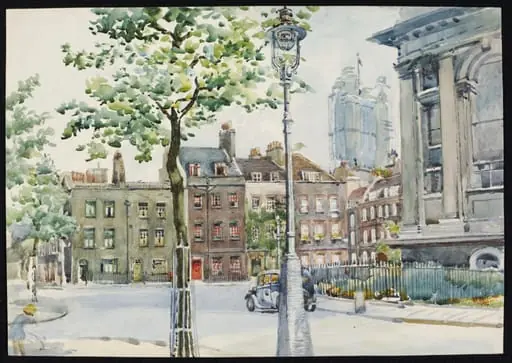
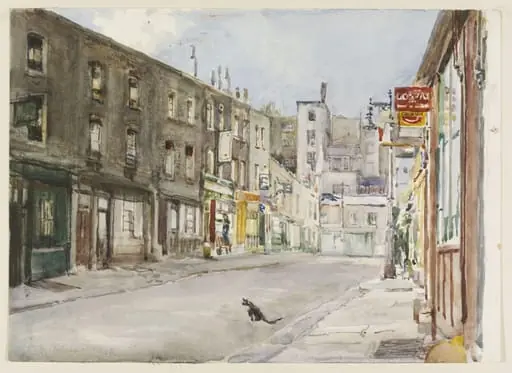
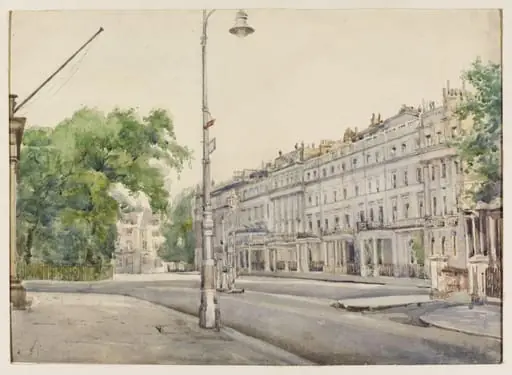
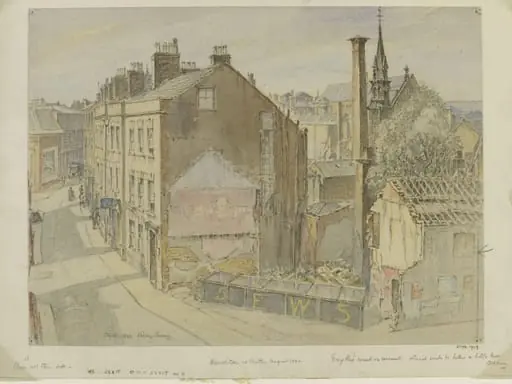
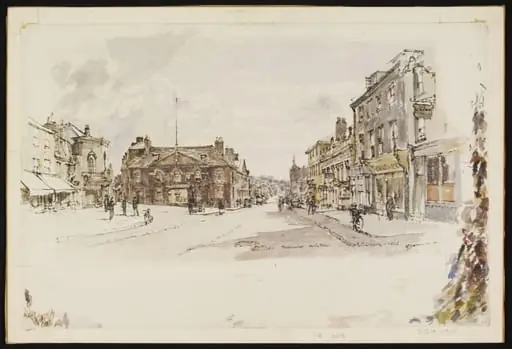
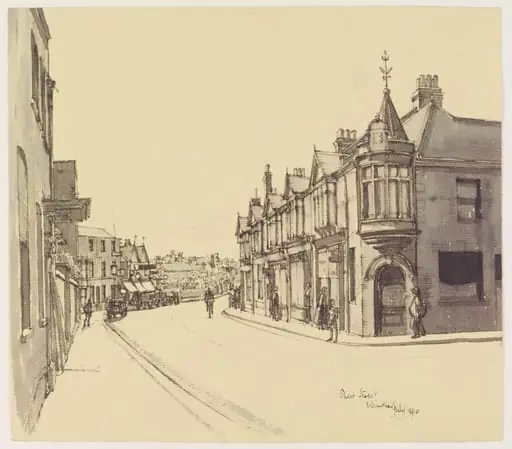
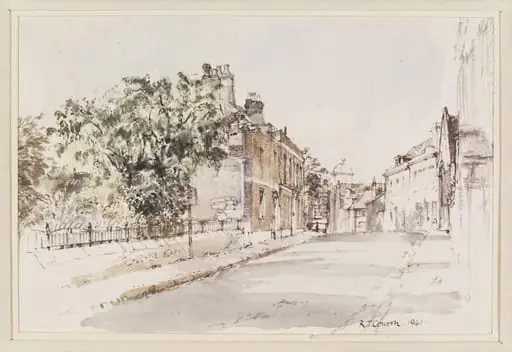
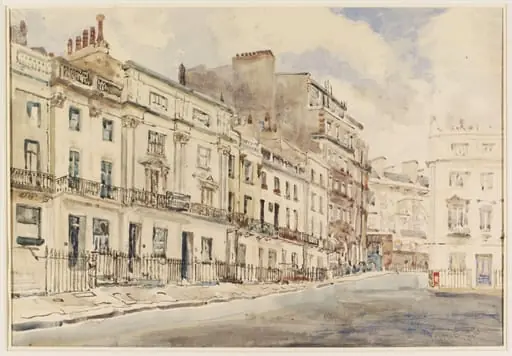
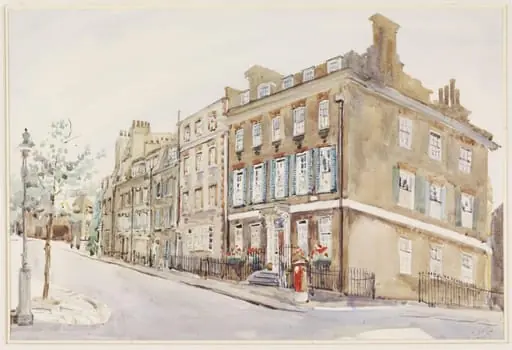
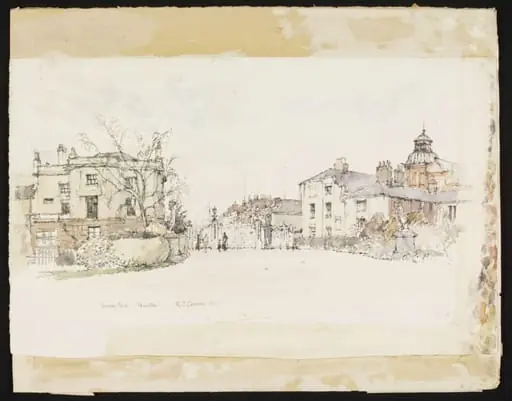
The painting captures a quiet urban street in Pimlico, London, with modest brick buildings lining either side and a central roadway. Rather than emphasizing grandeur, the scene highlights ordinary, unremarkable architecture—homes, shops, and streetscapes that defined daily life. Its significance lies in its quiet documentation of a familiar environment, preserving a sense of continuity amid wartime disruption and potential loss.
Technique & Style
Ediss employed watercolour to render the street with a restrained palette of muted greys, browns, and soft accents of colour. The medium’s transparency allows for subtle layering, lending a gentle luminosity to the architecture while softening the rigid lines of urban structures. Brushwork is deliberate yet unobtrusive, avoiding dramatic contrasts in favour of a calm, observational tone that aligns with the project’s documentary aims.
History & Provenance
The painting was commissioned under the Committee for the Employment of Artists in Wartime, a government-backed scheme to sustain artists during the Second World War. It entered the Recording Britain collection, now held by the Victoria and Albert Museum, alongside works by John Piper, Rowland Hilder, and others. Its preservation reflects the project’s success in both cultural documentation and economic support for artists during a period of national crisis.
Context
Recording Britain emerged as a response to the destruction of historic sites and the fear of cultural erasure during aerial bombardment. Artists were sent across England to record vernacular architecture, rural lanes, and urban streets before they vanished. Gloucester Street, Pimlico represents one such fragment of ordinary urban life—unremarkable in its time, yet historically valuable as a testament to resilience and place.
Legacy
The Recording Britain collection endures as a vital archive of mid-20th-century British topography. Ediss’s watercolour contributes to this legacy by offering a quiet, unembellished view of a London street that might otherwise have been forgotten. It stands as a quiet counterpoint to wartime propaganda, valuing the mundane as worthy of preservation and reflection.
Artist & collection
Artist
Ediss painted London’s quiet streets and squares in delicate watercolours during the early 1940s.