Artwork
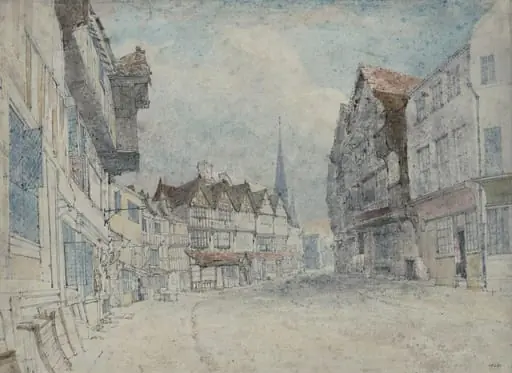
The Deanery, Lich Street, Worcester
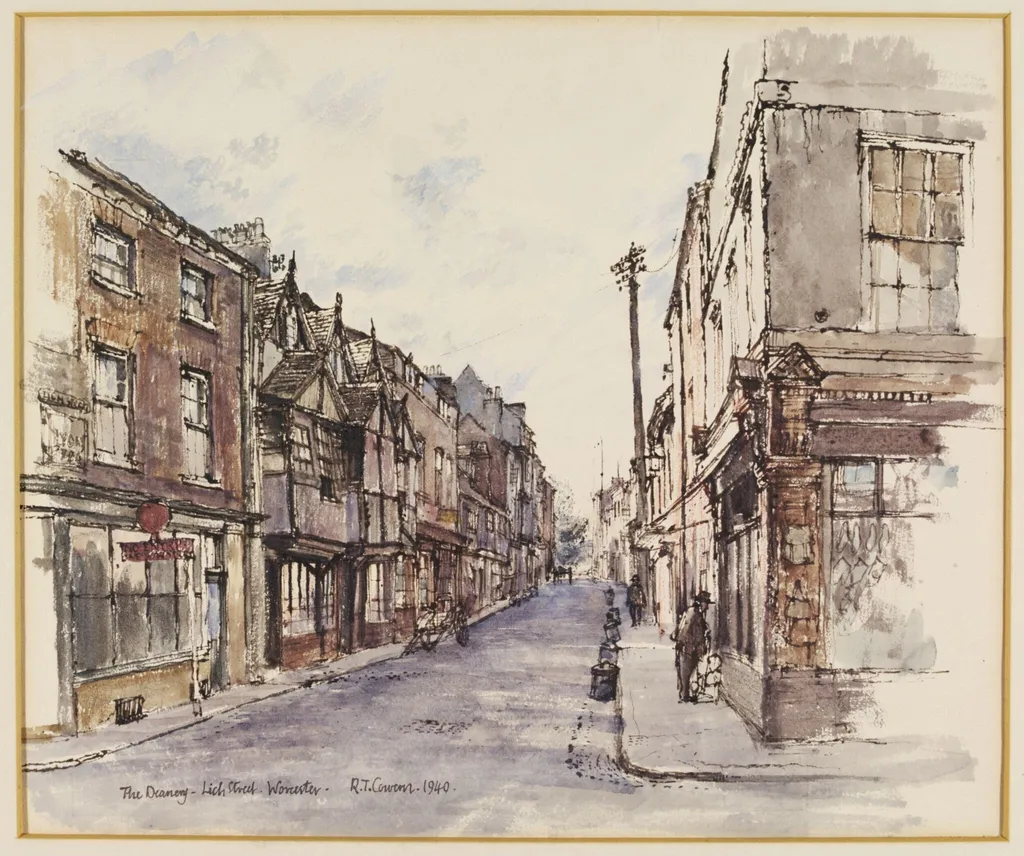
The Deanery, Lich Street, Worcester is a watercolor work on paper by the Social Realist artist Raymond Teague Cowern. It dates from 1940 and is held in the collection of the Victoria and Albert Museum.
About this work
The colors are mostly muted browns and grays, with a light sky in the background.
This painting shows a quiet street lined with old, narrow buildings. The houses have dark wood frames and big windows, some with shutters. A few people walk down the empty road, and a lamppost stands near the center. The colors are mostly muted browns and grays, with a light sky in the background.
The artist signed it in the corner, noting it’s from 1940 in Worcester. The brushstrokes are loose, giving the scene a soft, sketchy feel.
Check out the Victoria and Albert Museum to see more of this artist’s work.
Overview
Created in 1940, this watercolour by Raymond Teague Cowern captures The Deanery on Lich Street in Worcester as part of the Recording Britain project. Commissioned during World War II, the initiative sought to preserve visual records of Britain’s architectural heritage amid threats from urban change and wartime damage. Cowern’s work contributes to a national effort to document everyday landscapes before they disappeared.
Subject & Meaning
The scene portrays a quiet residential street lined with timber-framed houses, their dark wooden beams and large windows suggesting historic construction. A solitary lamppost and a few pedestrians lend a sense of stillness, emphasizing the ordinary rhythm of life. The absence of grandeur or spectacle underscores the project’s focus on modest, vulnerable structures that embodied local identity and continuity.
Technique & Style
Cowern employed loose, fluid brushwork to convey atmosphere rather than precise detail. Muted tones of brown, gray, and pale sky dominate, creating a subdued, contemplative mood. The watercolour medium allows for soft transitions and delicate washes, enhancing the sense of quietude. The signed date and location in the corner anchor the work in its historical moment without disrupting the composition’s calm.
History & Provenance
The painting was produced under the Recording Britain scheme, initiated by Sir Kenneth Clark and administered by the Victoria and Albert Museum. It was one of thousands of works commissioned to document at-risk sites during the war. The piece entered the V&A’s collection as part of this official archive, ensuring its preservation as a historical document rather than merely an artistic expression.
Context
During the early 1940s, Britain faced widespread disruption from bombing and redevelopment. The Recording Britain project responded to fears that traditional architecture and rural scenes would vanish. Artists like Cowern were sent across the country to record places deemed culturally significant. This work reflects a broader cultural anxiety about loss and the desire to safeguard collective memory through visual means.
Legacy
Cowern’s watercolour remains part of a vital archive held by the Victoria and Albert Museum, offering insight into Britain’s architectural landscape during wartime. Its quiet realism and unembellished approach have contributed to scholarly understanding of how artists responded to national crisis. The work continues to serve as a reference for historians studying domestic architecture and wartime cultural policy.
Artist & collection
Artist
Raymond Teague Cowern painted quiet watercolors of mid-century Worcestershire life during the Second World War.

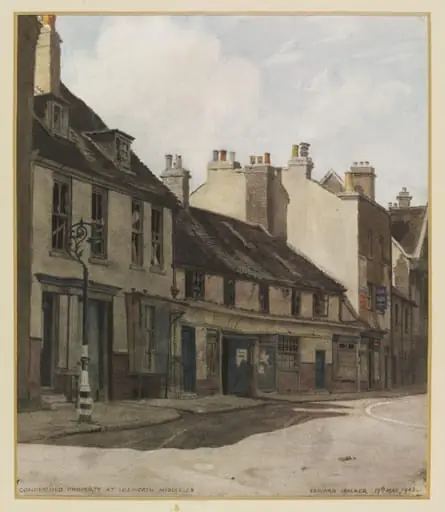 Condemned Property at Isleworth
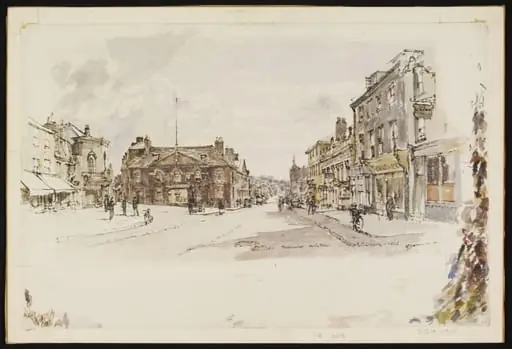 High Street and Rutland Arms, Newmarket
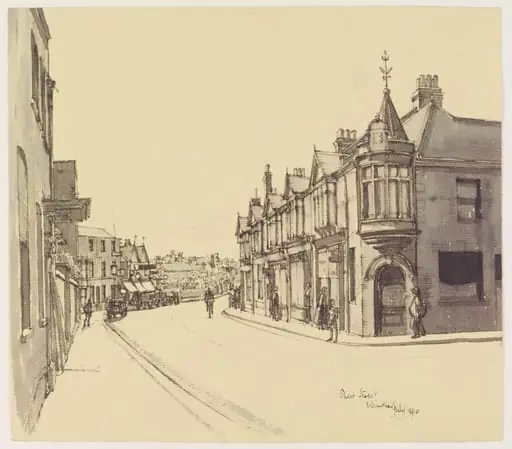 Sheet Street, Windsor
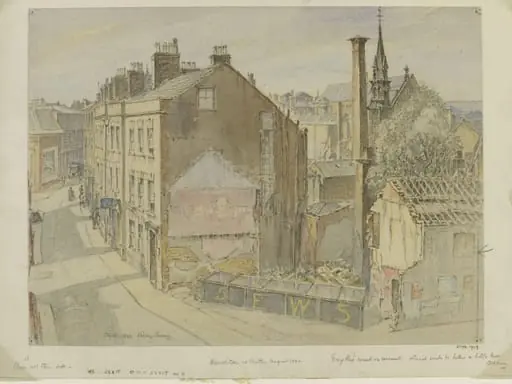 Demolition at Chester 1942
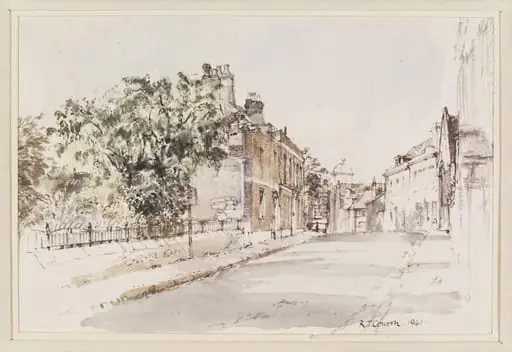 St. Thomas Street, Winchester
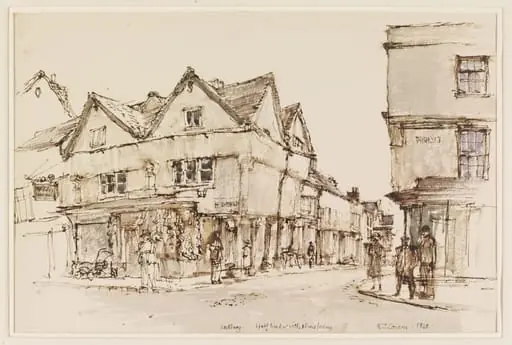 Entrance to New Street, Ledbury
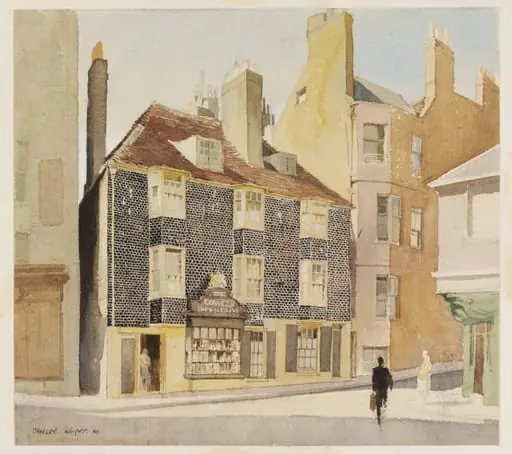 House and Shop in Pool Valley, Brighton
 Ashbourne
 Epping High Street
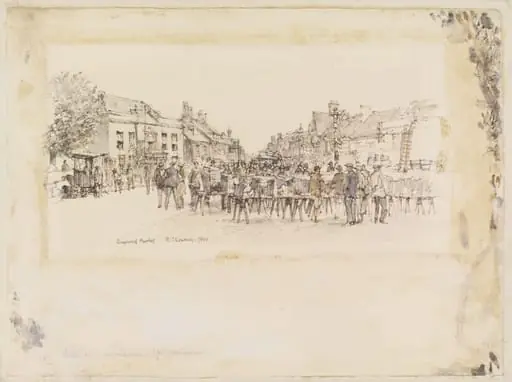
 Market Day, Newmarket
 King's Road, Windsor
 Street view in Hereford