Artwork
Untitled
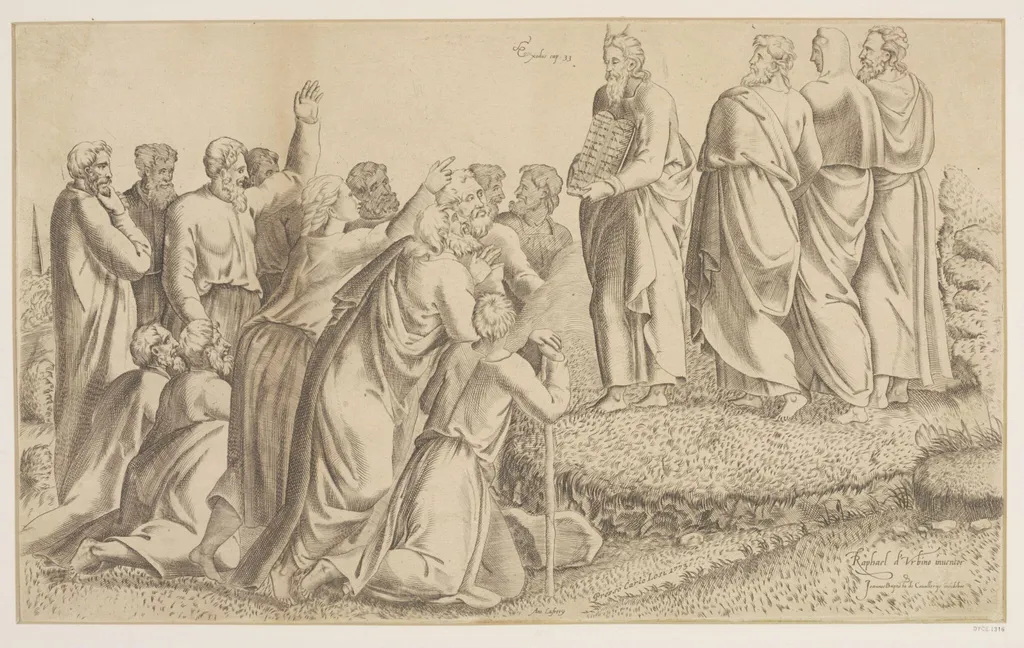
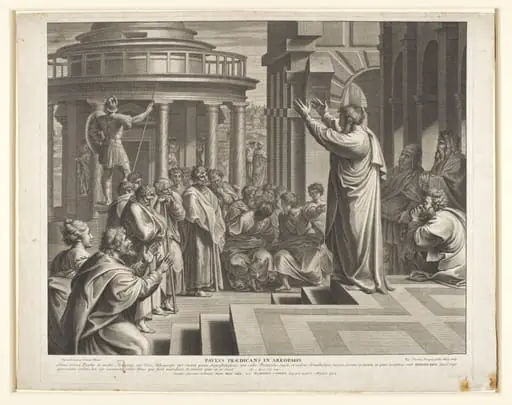
Untitled is a print by Giovanni Battista de' Cavalieri. It dates from 1550 and is held in the collection of the Victoria and Albert Museum. This black-and-white print reproduces a scene from the biblical story of Moses delivering the Ten Commandments.
About this work
Overview
Its restrained palette and focused lighting reflect a tradition of reproductive engraving popular in early modern Europe.
This black-and-white print reproduces a scene from the biblical story of Moses delivering the Ten Commandments. Rendered in ink on paper, it draws from a composition originally designed by Raphael. The image avoids color, relying instead on tonal contrast and linear precision to convey depth and structure. Its restrained palette and focused lighting reflect a tradition of reproductive engraving popular in early modern Europe.
Subject & Meaning
The scene captures Moses presenting the newly inscribed Tablets to a gathered assembly, symbolizing divine law made manifest among the people. Figures are arranged in a loose semicircle, their postures suggesting reverence and attention. The central raised arm and the held scroll emphasize the moment of transmission. The absence of overt drama conveys solemnity rather than spectacle, aligning with the gravity of the religious subject.
Technique & Style
The artist employs chiaroscuro to model forms through subtle gradations of shadow and light, isolating key elements like the raised arm and the scroll. Lines are clean and deliberate, defining drapery and facial features without ornament. The background remains sparse, allowing the figures to emerge from muted tones. This method prioritizes clarity and emotional restraint, typical of prints made to disseminate Renaissance compositions.
History & Provenance
The print is a reproductive work, likely created in the 16th or 17th century to circulate Raphael’s design beyond original paintings. Such prints were often made by skilled engravers working from drawings or paintings in royal or ecclesiastical collections. Its survival suggests it was valued for educational or devotional use, possibly in monastic or scholarly settings where visual aids reinforced religious instruction.
Context
During the Renaissance, biblical narratives were frequently adapted for print to reach wider audiences beyond the elite. Raphael’s compositions, admired for their harmony and clarity, became popular sources for engravers. This print reflects a broader trend: the translation of high art into accessible formats, bridging the gap between elite painting and public religious culture through disciplined, monochromatic reproduction.
Legacy
Though unsigned and unattributed to a specific engraver, the print preserves Raphael’s compositional structure for later generations. It exemplifies how reproductive prints functioned as cultural conduits, sustaining visual narratives across centuries. Its quiet, unadorned aesthetic influenced later traditions of religious illustration, emphasizing narrative clarity over theatricality in printed imagery.
Artist & collection

Artist
Giovanni Battista de' Cavalieri
Giovanni Battista de' Cavalieri (1526–1597), an Italian engraver, was born at Villa Lagarina and died at Rome.

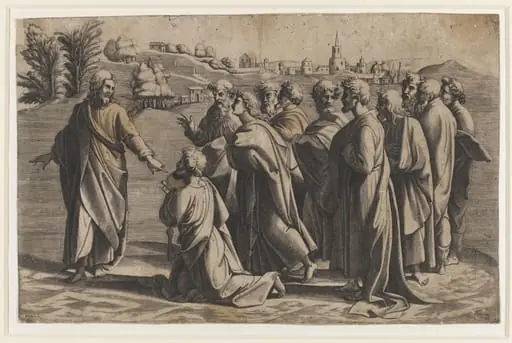 Christ's Charge to Peter
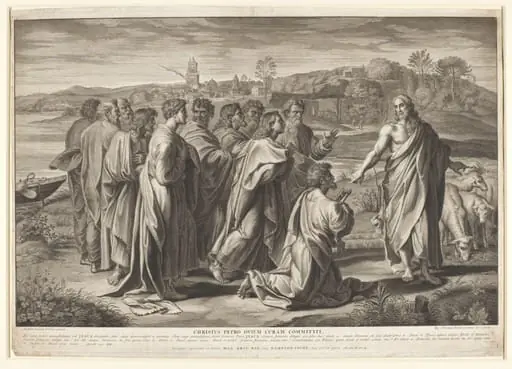 Christ's Charge to Peter
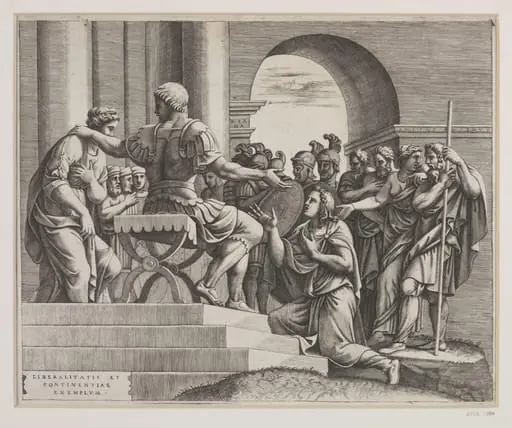 The Continence of Scipio
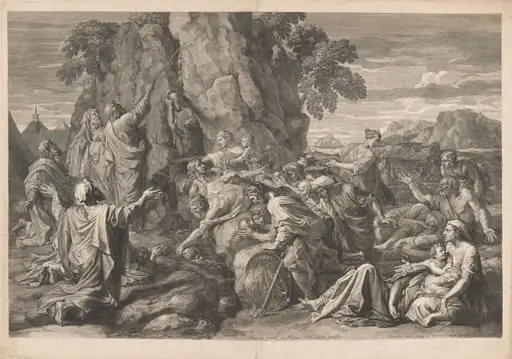 Moses Striking the Rock
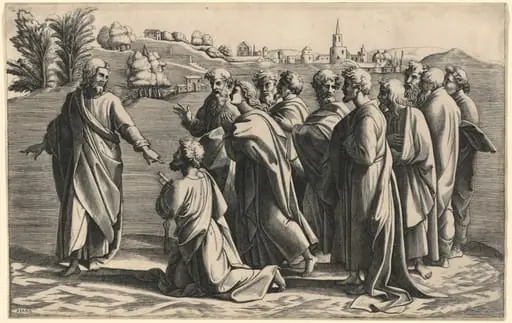 Christ Making Saint Peter Head of the Church
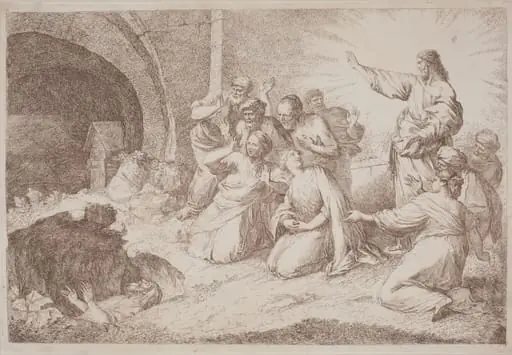 The Raising of Lazarus
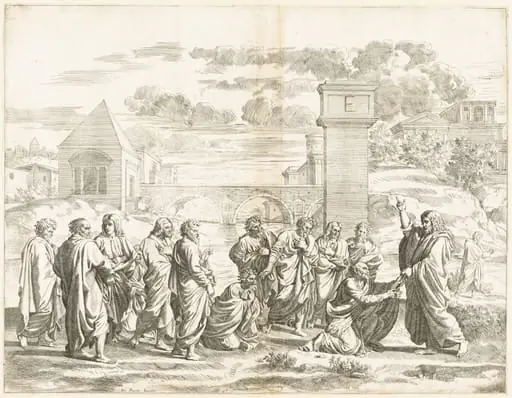 Ordination
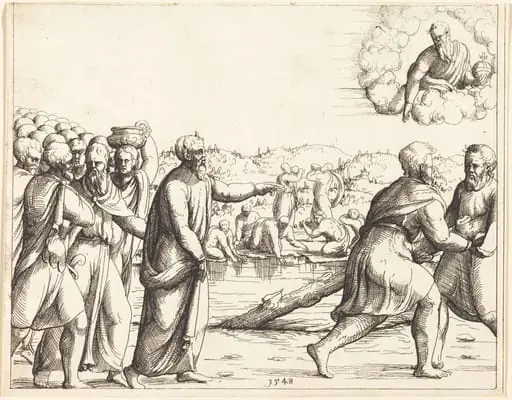 The Lord Sweetens the Waters of Marah
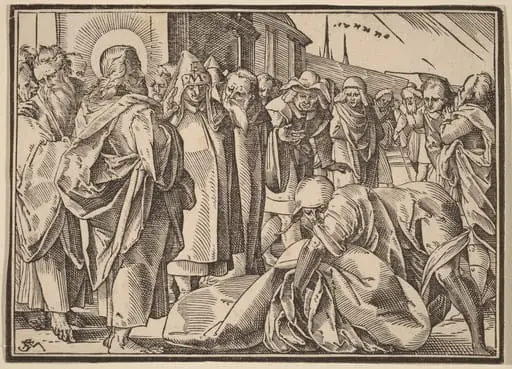 The Paralytic Healed by Christ Picks up His Pallet
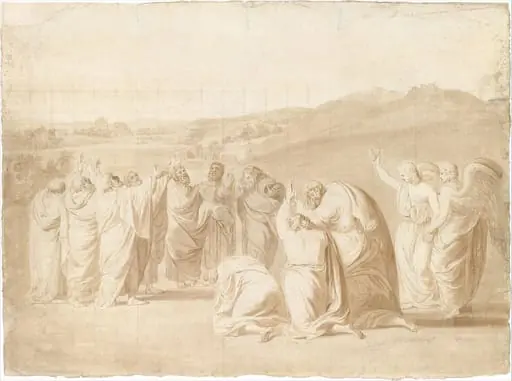 Study for "The Ascension"
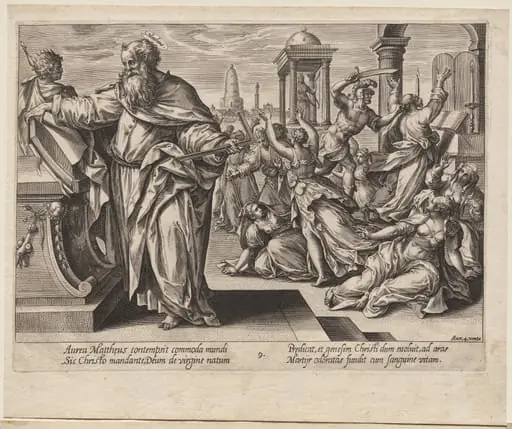 St. Matthew
 St Paul Preaching at Athens