Artwork
St Paul Preaching at Athens
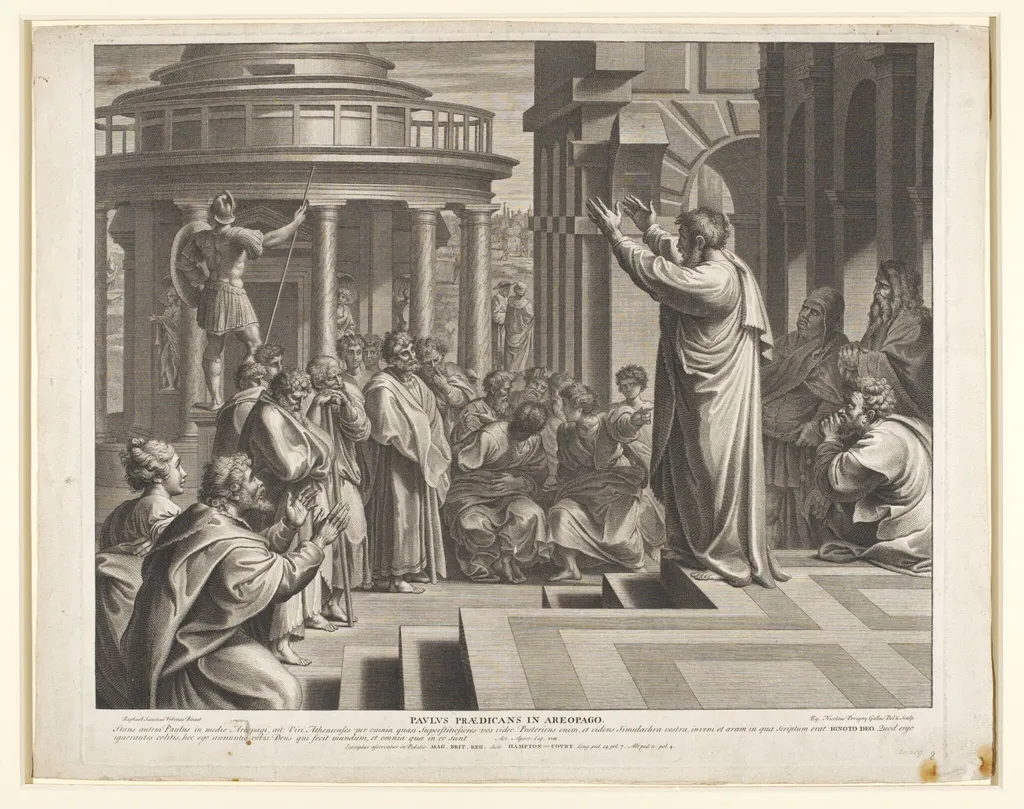
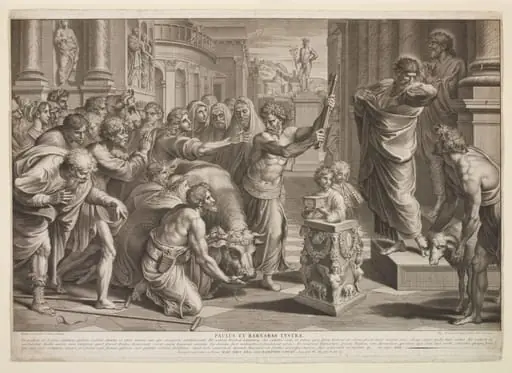
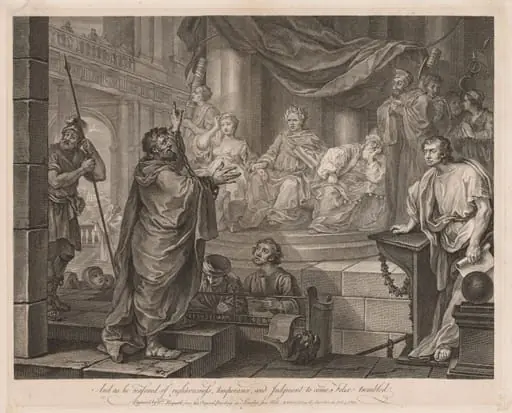
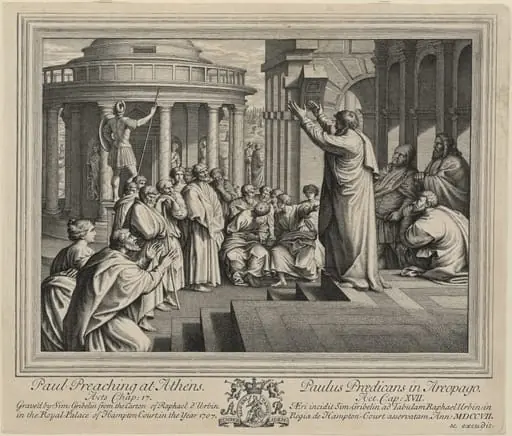
St Paul Preaching at Athens is a print by the Baroque artist Nicholas Dorigny. It dates from 1719 and is held in the collection of the Victoria and Albert Museum. The print depicts the scene of Saint Paul delivering a sermon in Athens and is reproduced as a mirror image of the original Raphael cartoon.
About this work
Overview
The print depicts the scene of Saint Paul delivering a sermon in Athens and is reproduced as a mirror image of the original Raphael cartoon.
The print depicts the scene of Saint Paul delivering a sermon in Athens and is reproduced as a mirror image of the original Raphael cartoon. The cartoon, one of seven large designs created by the Renaissance master Raphael for a series of tapestries, measures roughly ten feet high by thirteen feet wide. The tapestry version presents the image in its intended orientation, while this print reflects the design.
Subject & Meaning
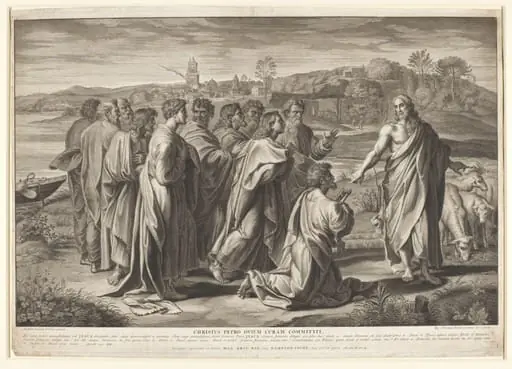
Illustrating a biblical episode, the composition shows Paul addressing a group of philosophers in the Athenian agora, emphasizing the clash between Christian doctrine and classical thought. The narrative underscores the apostle’s role as a bridge between pagan philosophy and emerging Christian theology, a theme central to the larger series that also includes scenes from Saint Peter’s life.
Technique & Style
Executed in the early 16th century, the print follows the conventions of copperplate engraving, reproducing the intricate details of Raphael’s drawing. The reversal of the image aligns the print with the final tapestry, allowing viewers to experience the composition as it would appear on the woven work. The fine line work captures the dynamic poses and architectural backdrop characteristic of Raphael’s design.
History & Provenance
The earliest known print of the Raphael cartoons dates to 1516, the year Raphael received his final payment for the commission. The present print, produced by the French engraver Nicholas Dorigny, entered the Royal Collection and has been on loan to the museum since 1865. Dorigny’s editions were praised in contemporary publications, including an 1711 editorial in the Spectator, which highlighted the value of making the cartoons accessible beyond the royal household.
Context
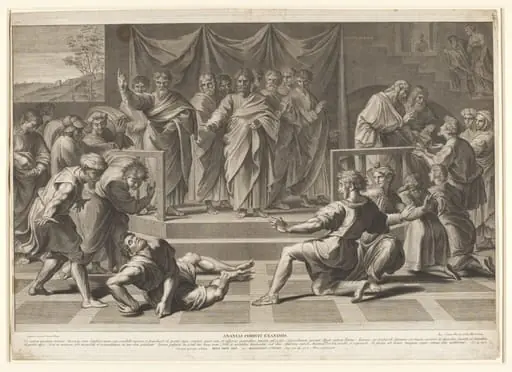
The Raphael cartoons were intended as full‑scale models for tapestries woven for the Sistine Chapel, illustrating key moments from the Acts of the Apostles. Their large size and narrative complexity made them influential references for artists and printmakers across Europe, prompting a succession of reproductions that spanned more than four centuries and involved diverse printmaking techniques.
Legacy
The print’s circulation contributed to the diffusion of Raphael’s compositional language throughout the early modern period. By providing a portable version of the monumental design, it allowed artists, scholars, and patrons to study the work without direct access to the tapestries, reinforcing Raphael’s enduring impact on Western art history.
Artist & collection
Artist
This guy made prints that feel like travel souvenirs from another century. He carved religious scenes so crisp they look like photographs—except the robes are a little too dramatic. A friend once pointed out how he…