Artwork
Seated Warrior Holding a Sword and Shield [recto]
![Seated Warrior Holding a Sword and Shield [recto], by Giacomo Cavedone, chalk, 1612](https://artifactworldgallery.com/img/giacomo-cavedone--seated-warrior-holding-a-sword-and-shield-recto--de09e3afb7f53aa9-w1024.webp)
Seated Warrior Holding a Sword and Shield [recto] is a chalk drawing by the Baroque artist Giacomo Cavedone. It dates from 1612 and is held in the collection of the National Gallery of Art.
About this work
Overview
Created around 1612, this drawing by Giacomo Cavedone depicts a seated warrior grasping a sword in one hand and a round shield in the other. Executed in black chalk heightened with white on gray‑blue laid paper, the work measures a modest size and presents a compact, study‑like composition typical of early seventeenth‑century preparatory sketches.
Subject & Meaning
The figure is a heavily armored combatant, helmet tipped back, seated upon a simple bench or set of steps suggested by faint lines. The sword and shield, rendered with clear outlines, emphasize the martial readiness of the subject, while the relaxed posture hints at a moment of pause or contemplation before action.
Technique & Style
White highlights accentuate the curvature of the shield’s spiral motif and the gleam of metal, creating a subtle contrast against the gray‑blue ground.
Cavedone employs swift, gestural chalk strokes to define musculature and drapery, leaving portions of the drawing loosely rendered. White highlights accentuate the curvature of the shield’s spiral motif and the gleam of metal, creating a subtle contrast against the gray‑blue ground. The sketch’s immediacy reflects the Baroque interest in dynamic movement and dramatic chiaroscuro, even in a preparatory study.
History & Provenance
The drawing is catalogued as the recto side of a sheet, suggesting it may have been part of a larger sketchbook or a two‑sided study. Its attribution to Cavedone, an artist active in Bologna during the early Baroque period, aligns with his known practice of producing detailed figure studies for larger compositions.
Context
In the early 1600s, Italian workshops frequently used such drawings to plan complex narrative scenes for frescoes or altarpieces. The warrior’s armor and weaponry correspond to contemporary martial attire, indicating Cavedone’s attention to realistic detail within the broader theatricality characteristic of Baroque visual culture.
Artist & collection


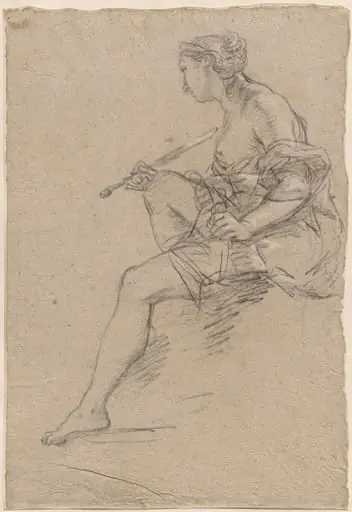 Study for an Allegory of Painting
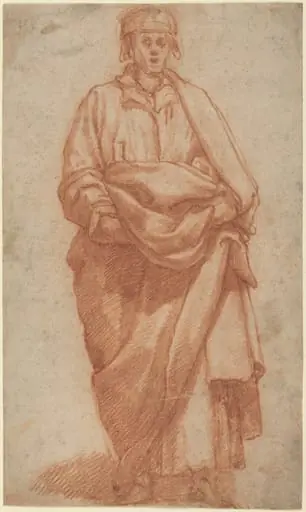 Standing Man
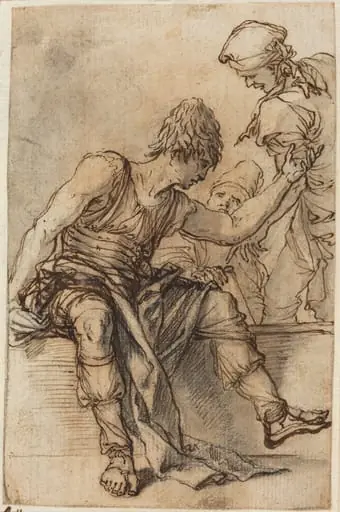 Youth Sitting on a Wall in Conversation with Two Men
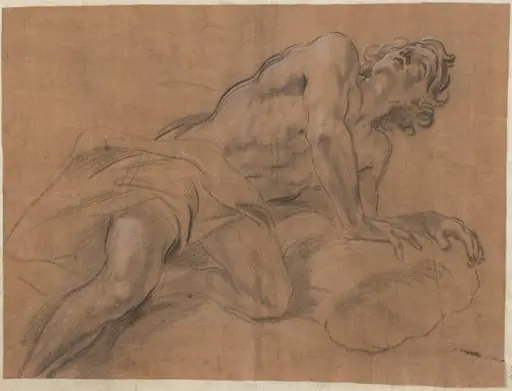 Nude Youth Leaning on a Cloud and Gazing Upward
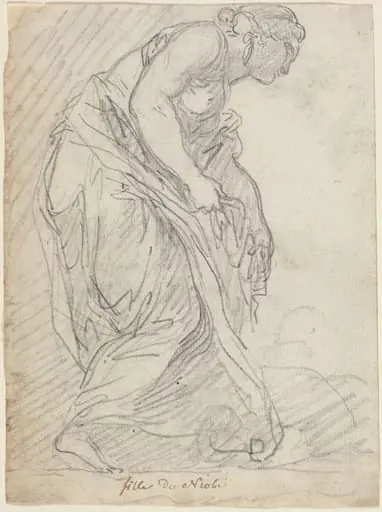 One of Niobe's Daughters
![Studies of Legs and Drapery [recto], by Abraham Bloemaert](https://artifactworldgallery.com/img/abraham-bloemaert--studies-of-legs-and-drapery-recto--93eb35075fbdb28d-w320.webp) Studies of Legs and Drapery [recto]
Studies of Legs and Drapery [recto]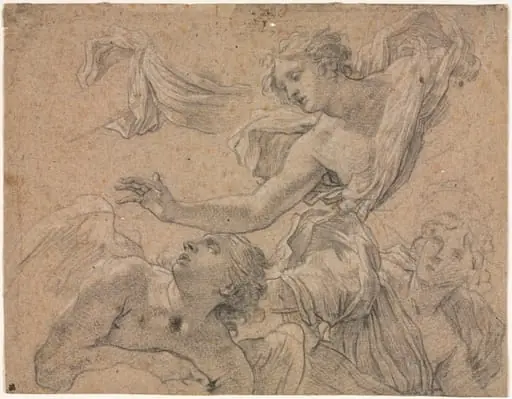 Studies of Angels (recto)
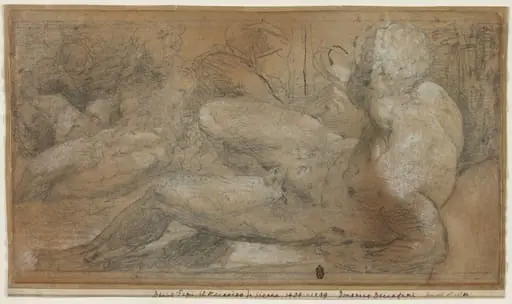 Three Male Nudes
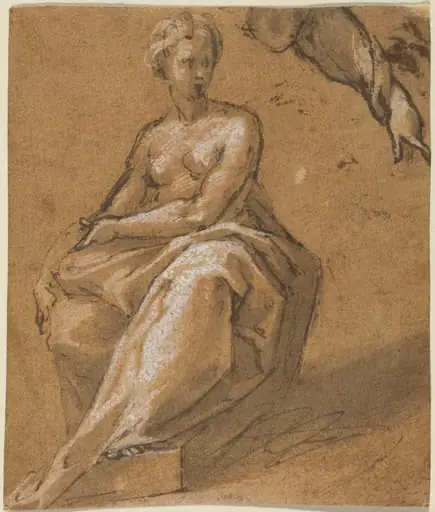 Seated Nude with Drapery
![Two Reclining Figures [verso], by French 17th Century](https://artifactworldgallery.com/img/french-17th-century--two-reclining-figures-verso--06163eb1c0b367f2-w320.webp) Two Reclining Figures [verso]
Two Reclining Figures [verso]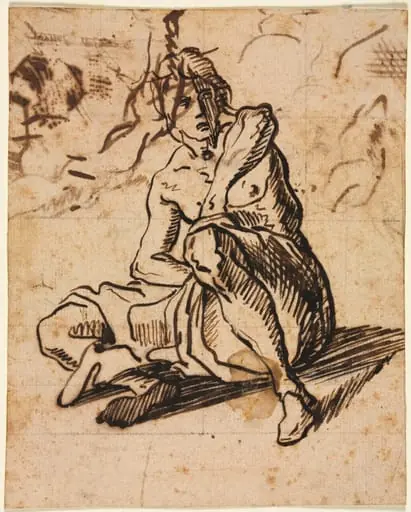 Seated Figure
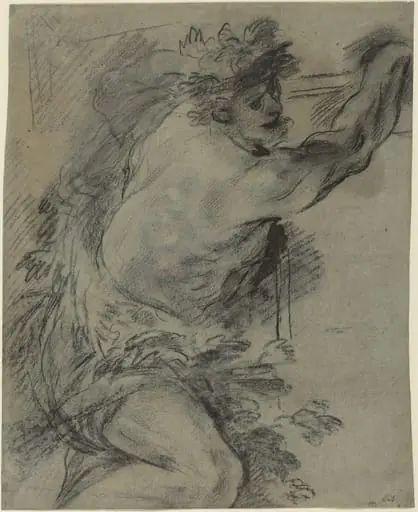 Bacchus