Artwork
Studies of Angels (recto)
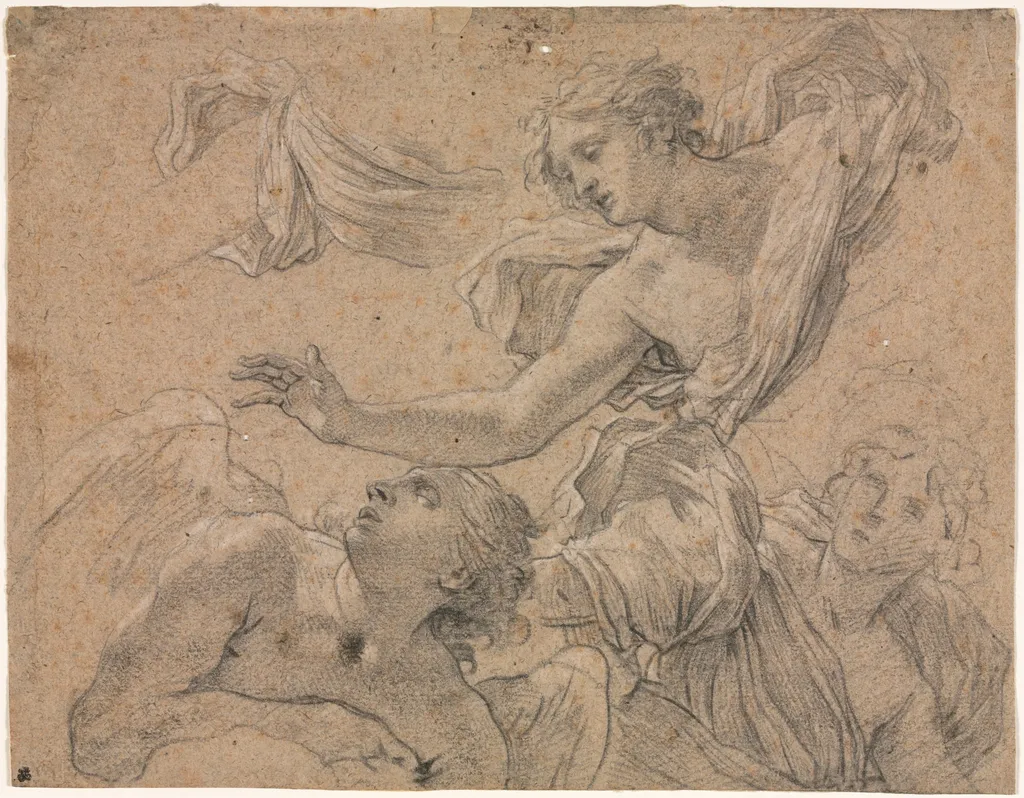
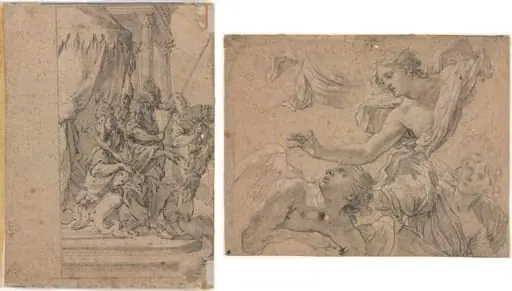
Studies of Angels (recto) is a drawing by the Baroque artist Michel Dorigny. It dates from 1658 and is held in the collection of the Cleveland Museum of Art. This black‑chalk drawing presents a group of angels in mid‑flight, their garments rendered with light, flowing folds.
About this work
Overview
This black‑chalk drawing presents a group of angels in mid‑flight, their garments rendered with light, flowing folds. The composition is confined to a single sheet, where the figures are delineated by confident contour lines and a network of parallel hatching that models form and volume. The overall effect is airy yet clearly defined, emphasizing the ethereal nature of the subjects.
Subject & Meaning
The angels are depicted soaring, suggesting a celestial or divine scene, though no accompanying narrative or specific biblical episode is identified. Their graceful poses and billowing drapery convey a sense of spiritual elevation, indicating that the artist intended a religious theme, perhaps as preparatory work for a larger altarpiece or devotional painting.
Technique & Style
Executed in black chalk, the drawing employs firm, continuous outlines to define the figures, while regular parallel hatching supplies tonal shading and a sense of three‑dimensionality. The treatment of the drapery is notably light and translucent, a hallmark of Michel Dorigny’s approach, distinguishing his hand from that of his contemporary Simon Vouet despite broader stylistic affinities.
History & Provenance
Initially ascribed to Simon Vouet, the work was later reattributed to his son‑in‑law and collaborator Michel Dorigny, whose drawing methods align with the observed line work and hatching. No surviving painting directly linked to this study has been identified, leaving the drawing as an independent testament to Dorigny’s preparatory practice in the mid‑17th‑century Parisian workshop.
Context
During the 1640s and 1650s, Parisian artists frequently produced detailed studies to plan complex religious compositions. Dorigny, active in the workshop of Vouet, contributed to the diffusion of French Baroque aesthetics, integrating dramatic chiaroscuro with elegant, fluid drapery—a synthesis evident in this sketch of airborne angels.
Artist & collection
Artist
A French painter and engraver from the mid-1600s, he turned biblical and mythological scenes into dramatic, candlelit dramas.

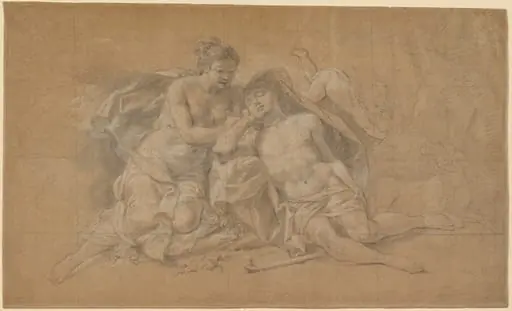 Diana and Endymion
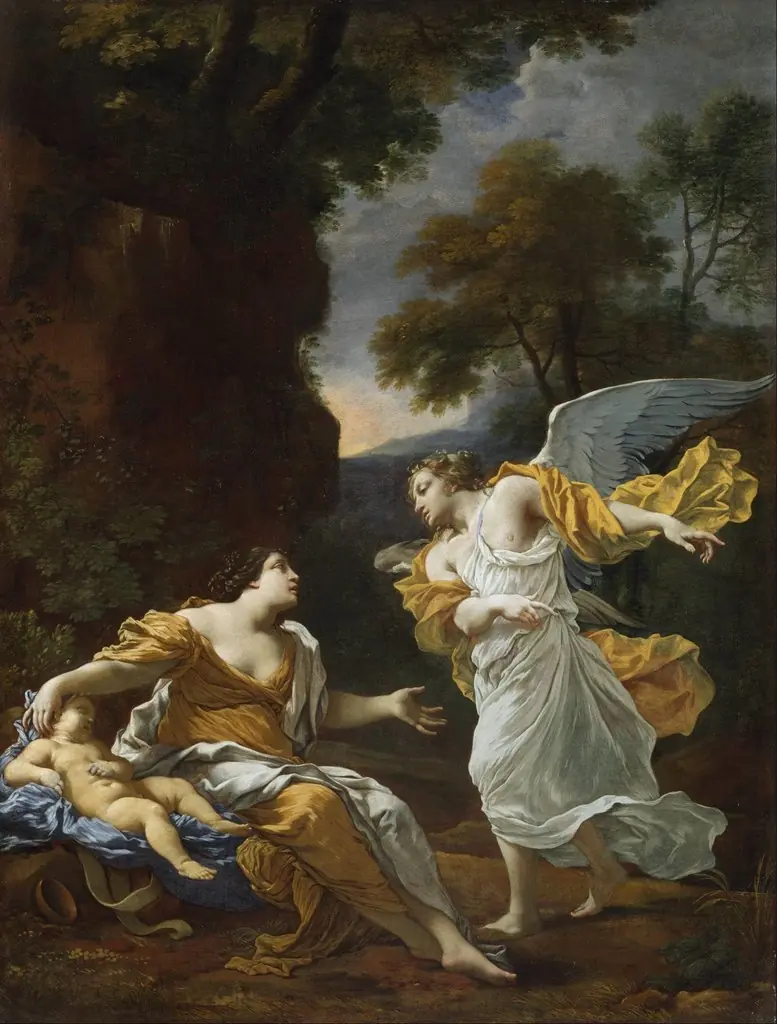
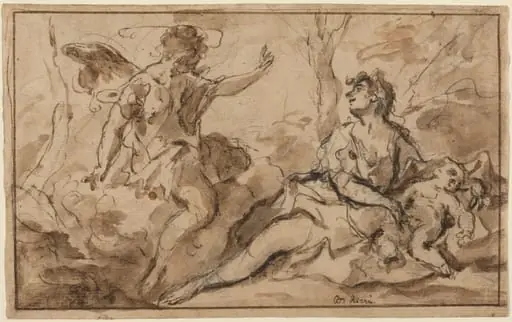 The Angel Appearing to Hagar and Ishmael
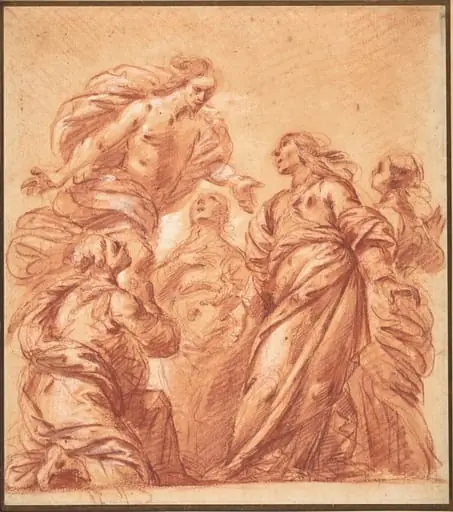 The Women at the Sepulchre with Christ of the Noli me Tangere
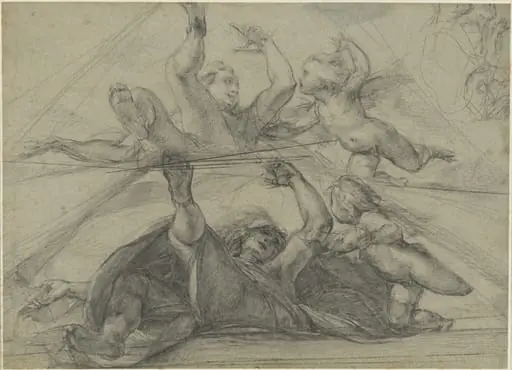 Ceiling Studies of a Prophet and a Putto Seen from Below
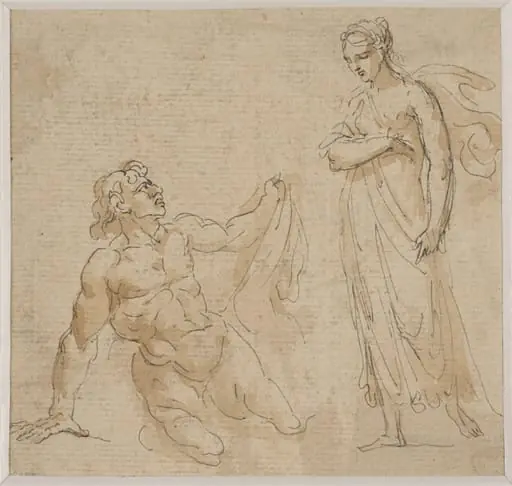 A woman approaching a kneeling man
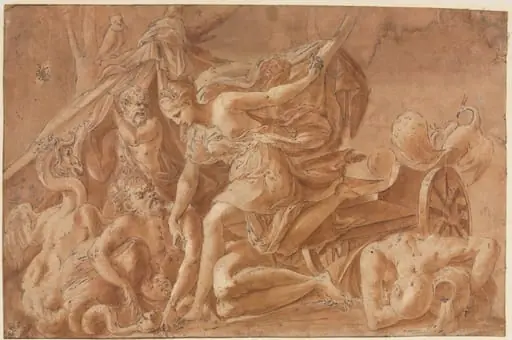 Copy after Primaticcio's Juno Awakening Sleep
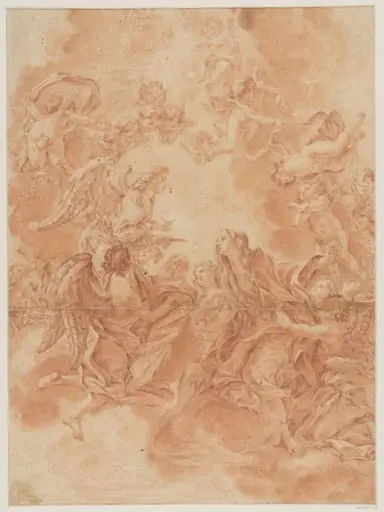 The Communion of St Mary Magdalene
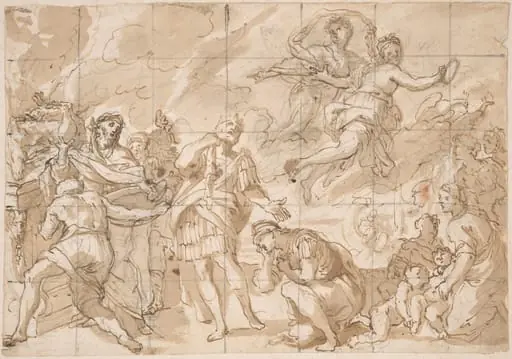 The Sacrifice of Iphigenia
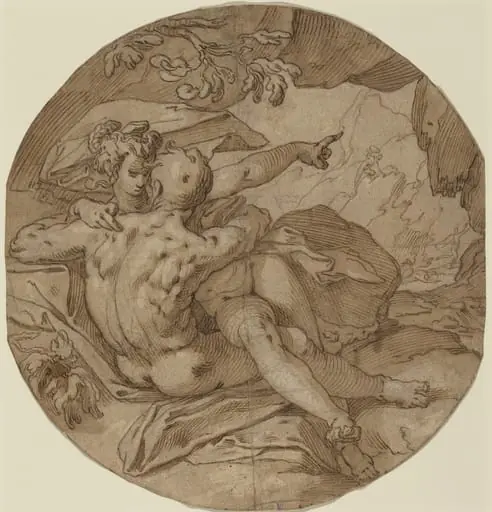 Acis and Galatea
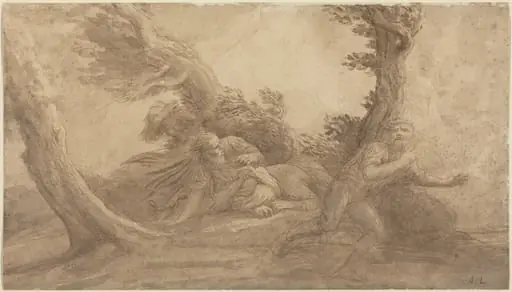 Clap of Thunder
![Studies for an Annunciation [recto], by Jacopo Palma il Giovane](https://artifactworldgallery.com/img/jacopo-palma-il-giovane--studies-for-an-annunciation-recto--a15d0411b7678b1e-w320.webp) Studies for an Annunciation [recto]
Studies for an Annunciation [recto]