Artwork
Maisema Ranskasta
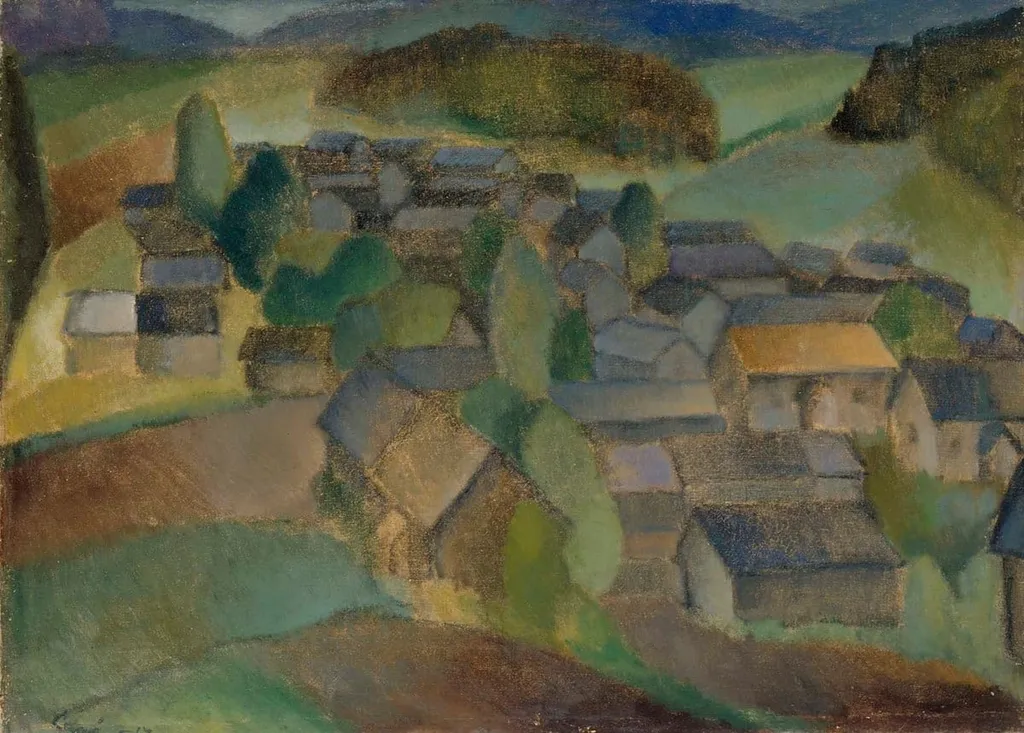
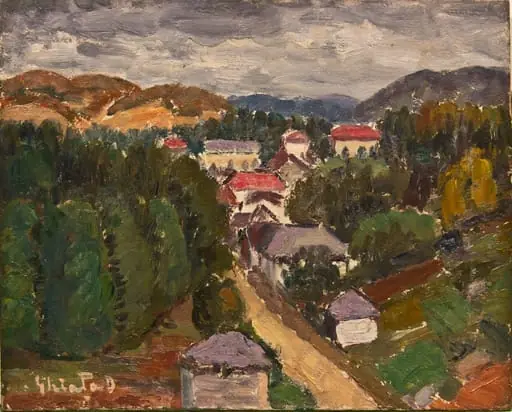
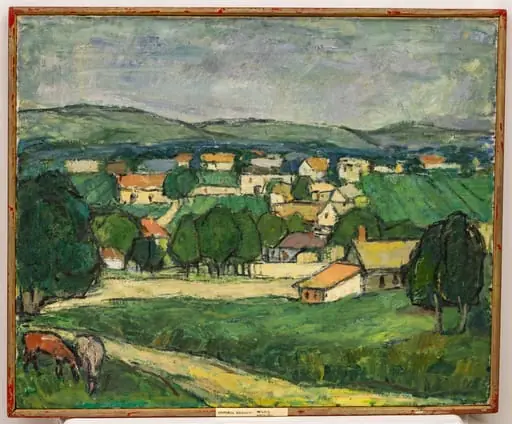
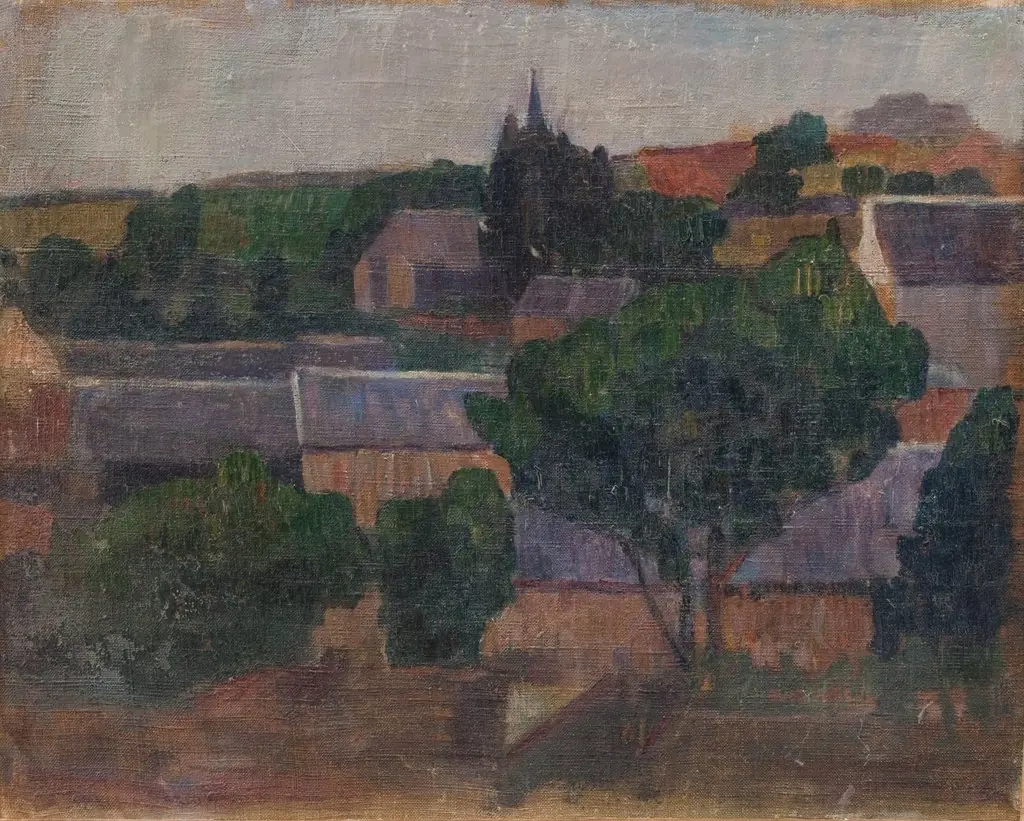
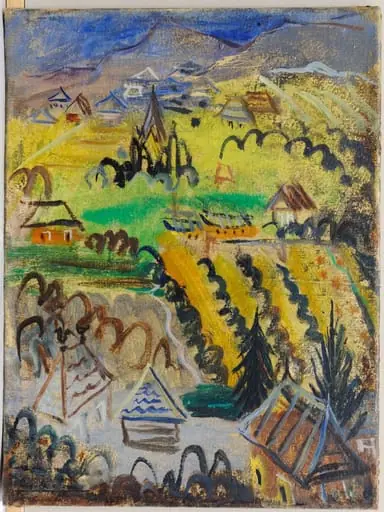
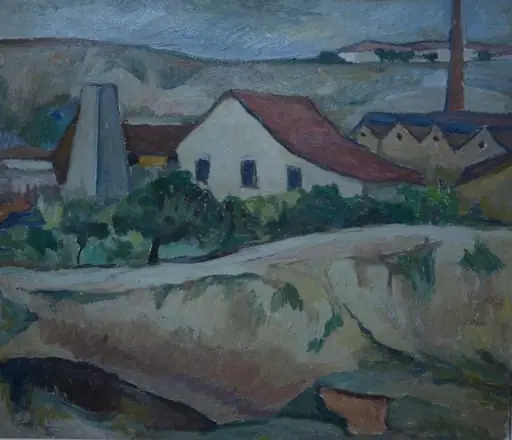
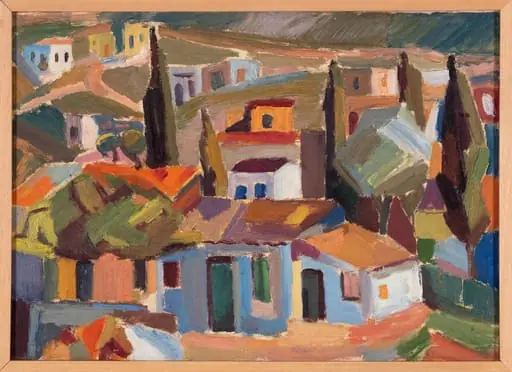
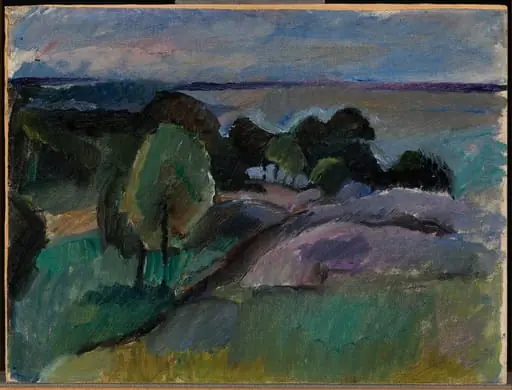
Maisema Ranskasta is an unspecified painting by Alvar Cawén. It is held in the collection of the Finnish National Gallery. This work depicts a modest rural village nestled in a gently undulating landscape.
About this work
Overview
The paint is applied with visible, uneven strokes, creating a tactile surface that prioritizes immediacy over refinement.
This work depicts a modest rural village nestled in a gently undulating landscape. The composition emphasizes closeness between structures, with roofs in muted browns and grays forming a tight cluster. The background fades into soft blues and greens, suggesting distance without sharp detail. The paint is applied with visible, uneven strokes, creating a tactile surface that prioritizes immediacy over refinement.
Subject & Meaning
The scene captures a quiet, unidealized settlement, likely drawn from direct observation rather than imagination. There is no human presence, yet the arrangement of dwellings implies daily life and communal living. The lack of ornamentation and the subdued palette convey a sense of austerity, grounding the image in the ordinary rhythms of rural existence.
Technique & Style
Thick, irregular brushwork dominates the surface, characteristic of impasto application. Paint is layered with little blending, preserving the physicality of each stroke. This approach rejects smooth finish in favor of texture and movement, suggesting the artist worked quickly, responding to light and form in real time rather than composing with precision.
History & Provenance
The painting’s title, Maisema Ranskasta, indicates a Finnish origin, possibly referencing a specific locale. Its informal quality and lack of documented exhibition history suggest it was not intended for public display, but rather as a personal study or sketch. No known collector or institutional record precedes its current attribution.
Context
Created during a period when Nordic artists increasingly turned to everyday landscapes, this work aligns with a broader shift away from romanticized rural imagery. Its raw technique reflects a growing interest in authenticity and direct perception, paralleling developments in European plein air practices of the late 19th and early 20th centuries.
Legacy
Though not widely reproduced or studied, the painting exemplifies a quiet strain of Nordic modernism that valued emotional resonance over technical polish. Its emphasis on texture and spontaneity anticipates later expressive approaches in regional art, offering a modest but distinct voice within the broader movement toward painterly realism.
Artist & collection