Artwork
Toamna
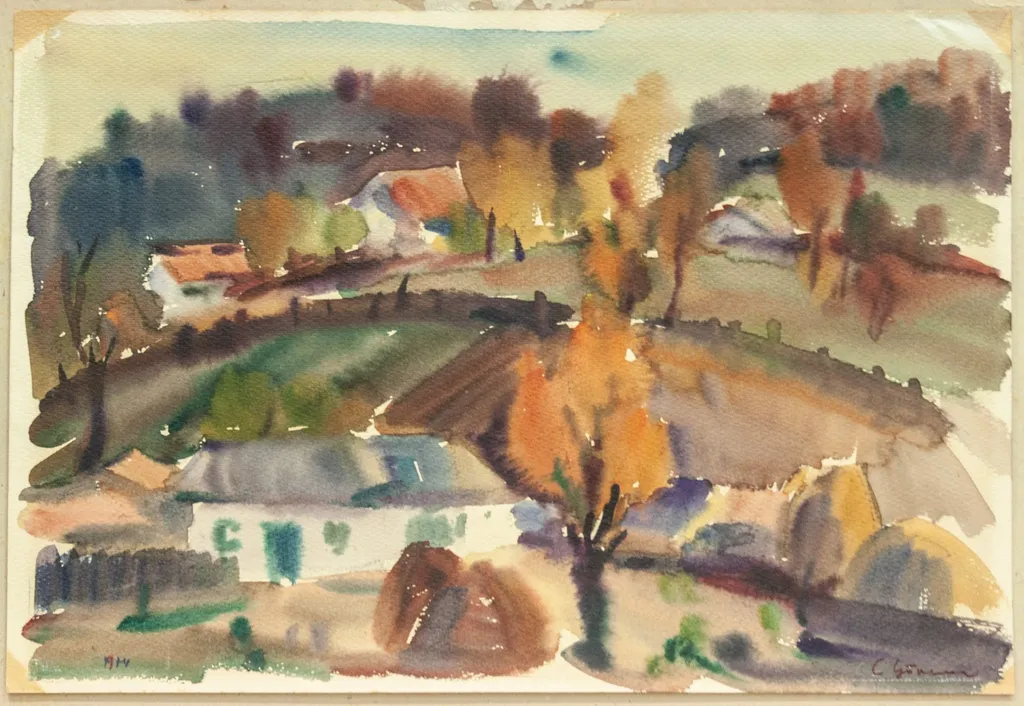
Toamna is an unspecified painting by Constantin Găvenea. It dates from 1950 and is held in the collection of the Gavrila Simion Eco-Museum Research Institute Tulcea.
About this work
Overview
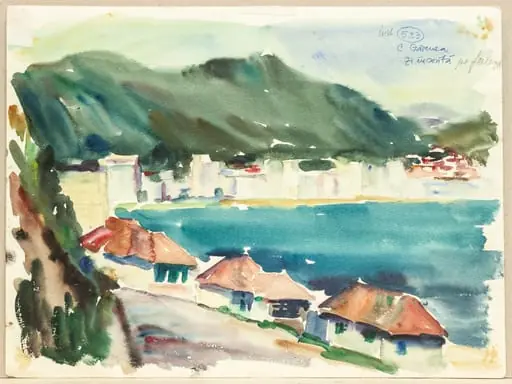
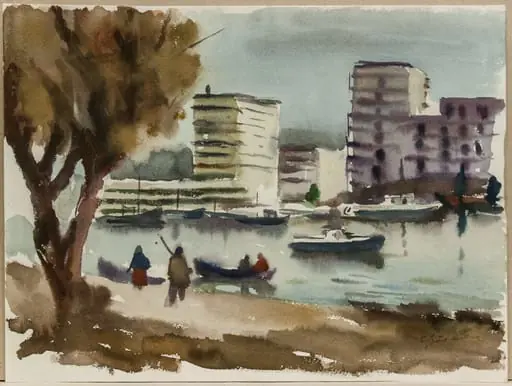
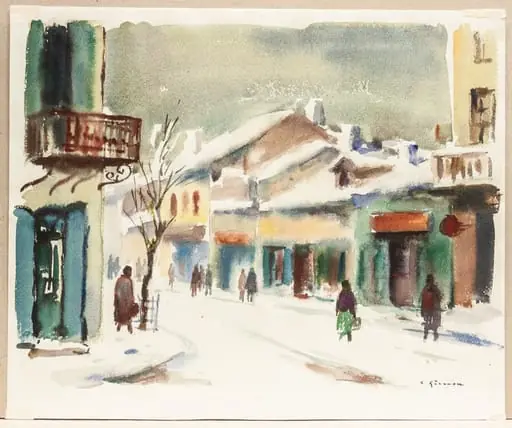
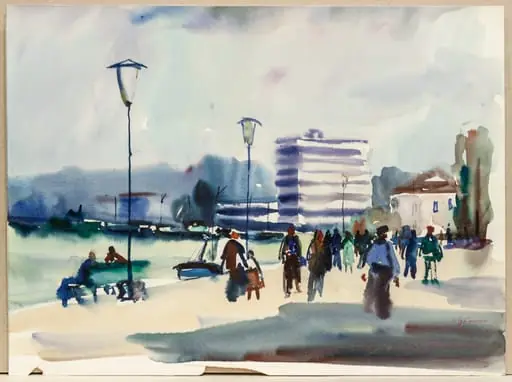
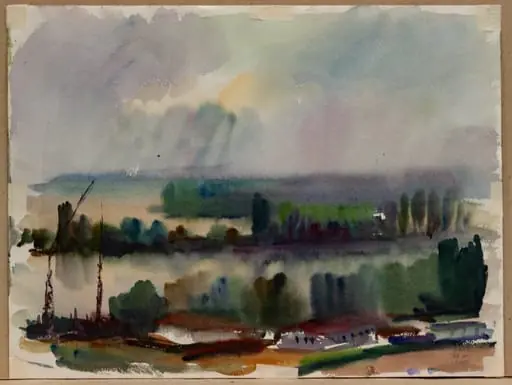
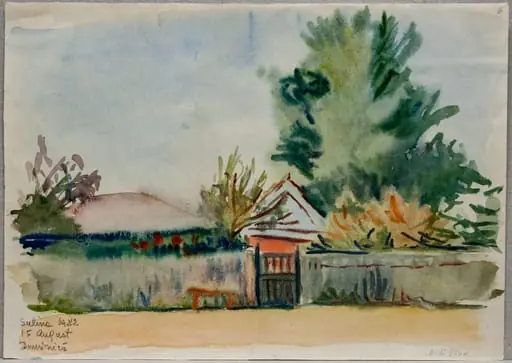
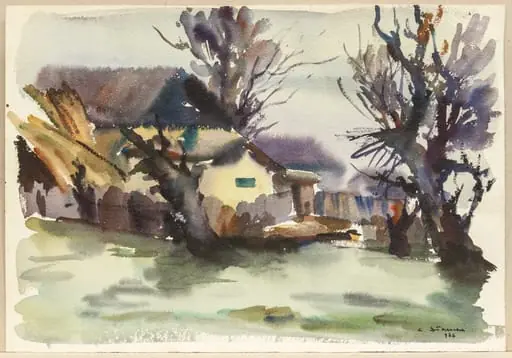
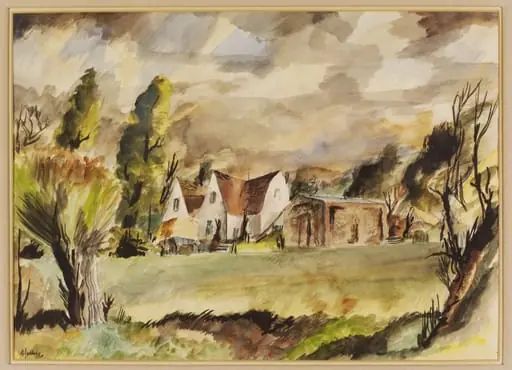
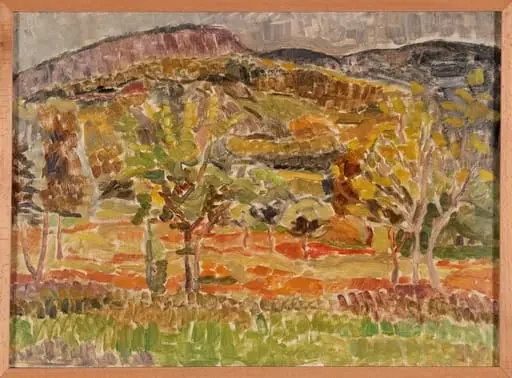
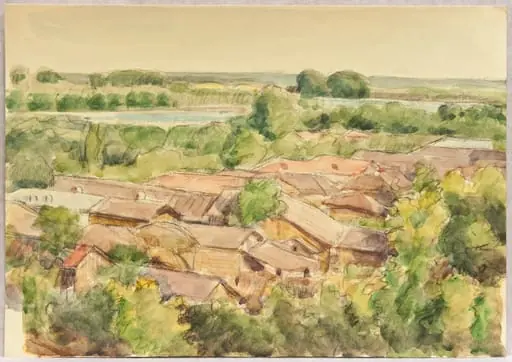
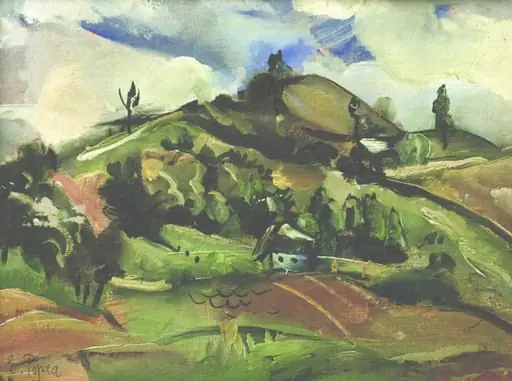
Created around 1950 by Romanian painter Constantin Găvenea, “Toamna” is a modestly sized image in the collection of the Museum of Ethnography. The work presents a tranquil hillside village rendered in a loose, watercolor‑like manner, with muted earth tones and a pale sky that together suggest the quiet transition of the season.
Subject & Meaning
The composition depicts a small settlement perched on a slope, its simple houses and surrounding trees rendered without human figures. The absence of people emphasizes stillness, while the warm browns and greens evoke the muted palette of autumn, inviting contemplation of the landscape’s seasonal change.
Technique & Style
Găvenea employed a watercolor technique, allowing pigments to bleed and merge, which creates a soft, dreamlike atmosphere. Brushwork is rapid and uneven, producing a sketchy, unfinished quality that reinforces the sense of immediacy and the fleeting nature of the scene.
History & Provenance
The piece entered the Museum of Ethnography’s holdings sometime after its creation, becoming part of the institution’s effort to document Romanian visual culture of the mid‑twentieth century. Its acquisition reflects the museum’s broader collection strategy focused on regional artistic expression.
Artist & collection
Museum
Gavrila Simion Eco-Museum Research Institute Tulcea
Continue through works from the same source collection.