Artwork
Peisaj la Niculițel
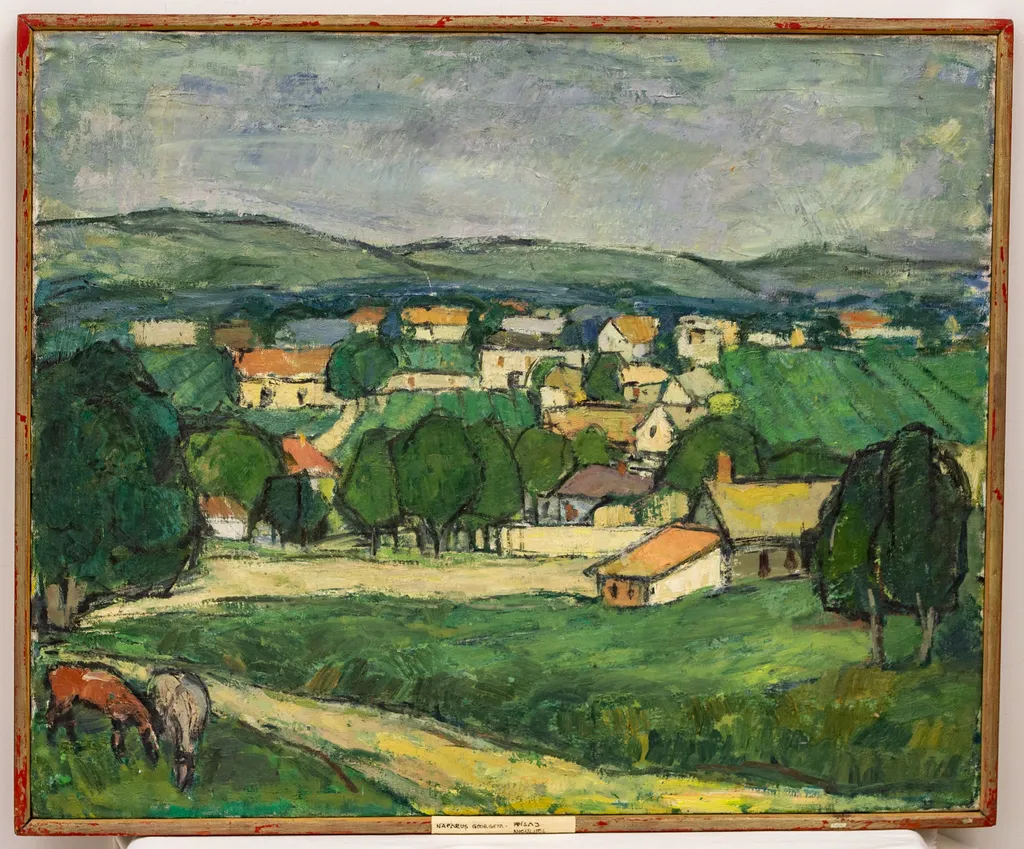
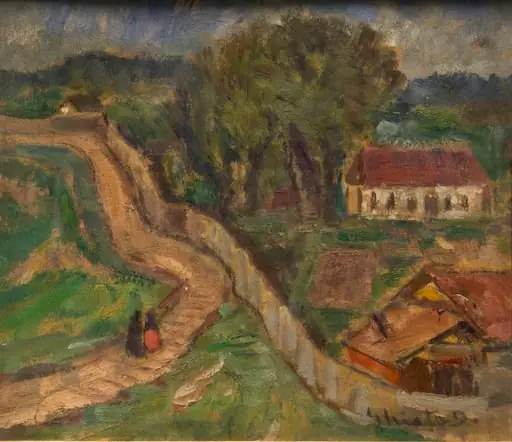
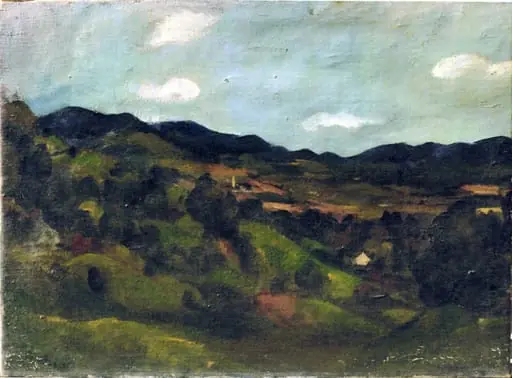
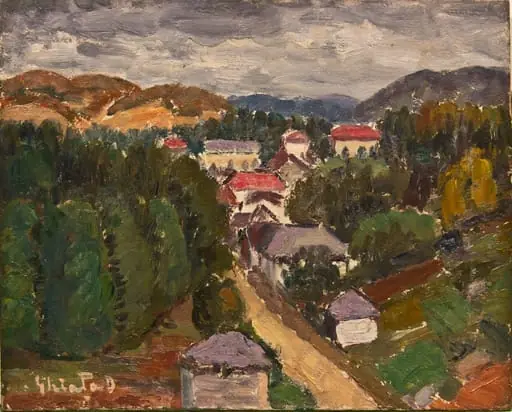
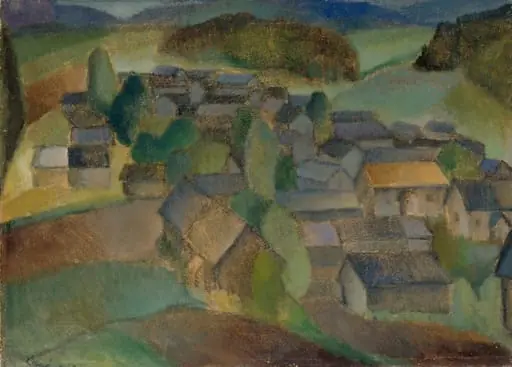
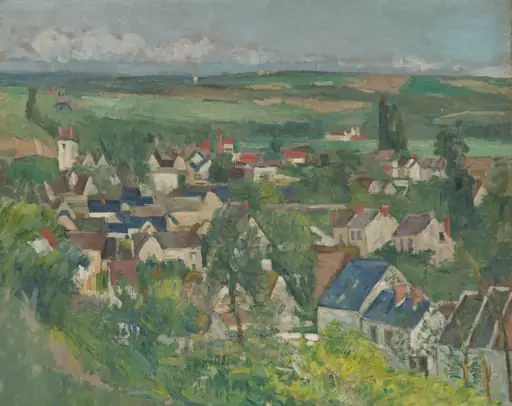
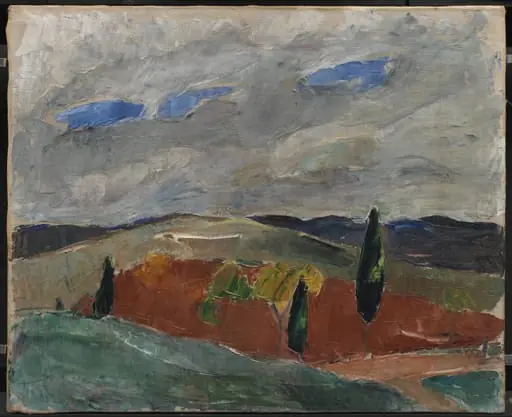
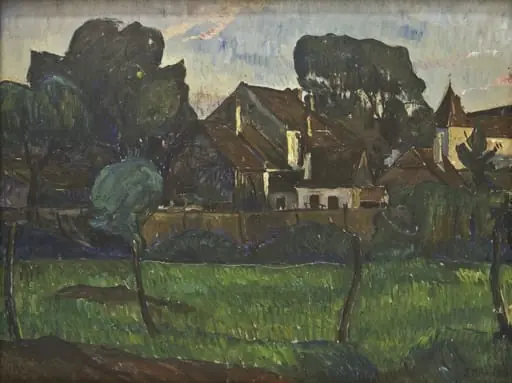
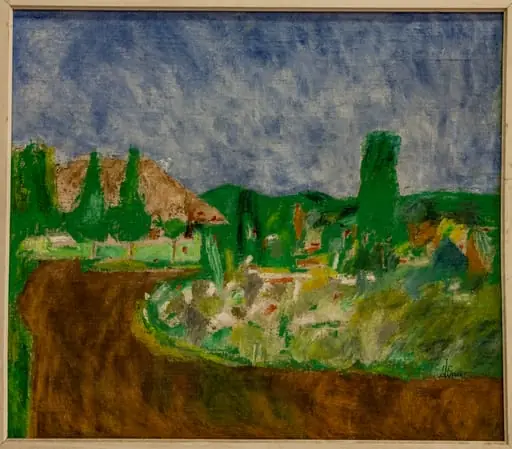
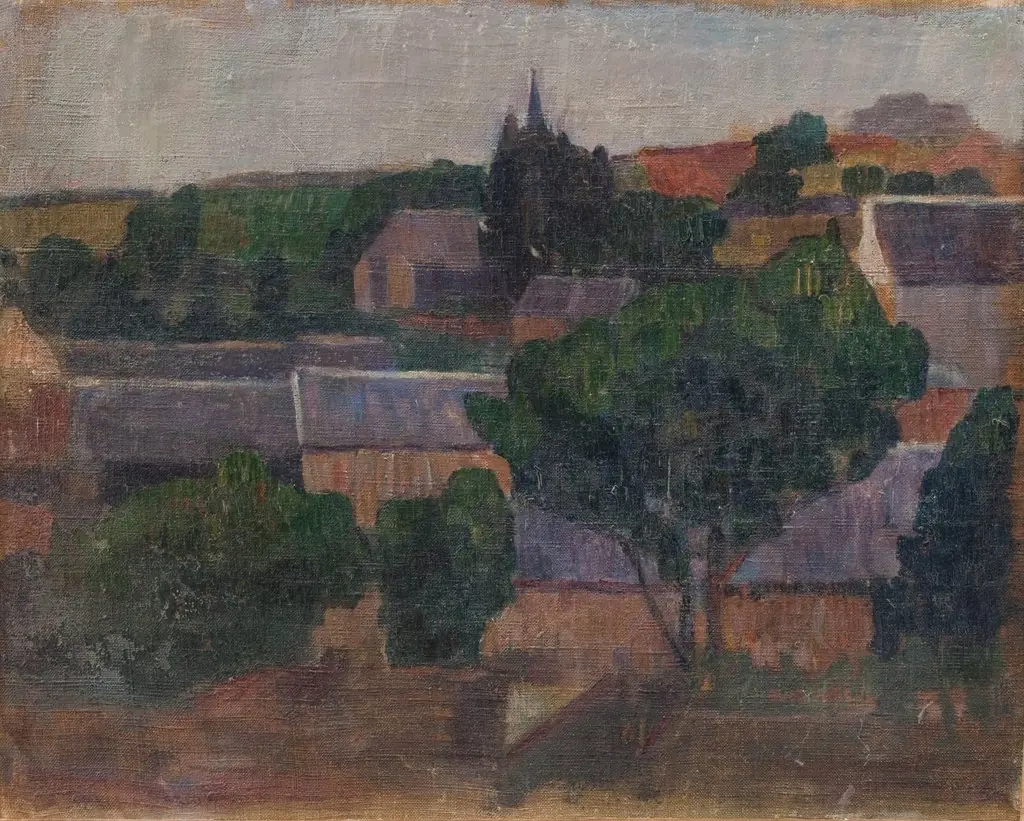
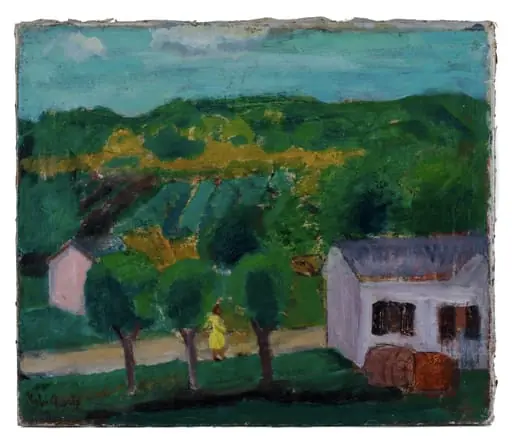
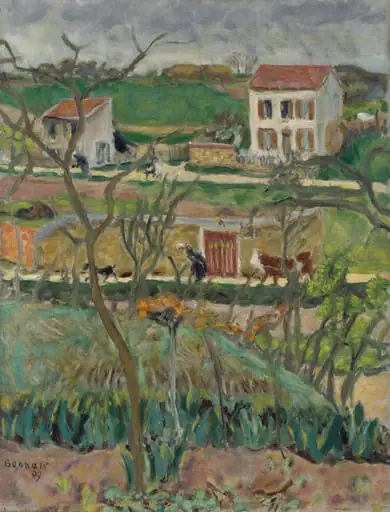
Peisaj la Niculițel is an unspecified painting by Năpăruș Geta. It is held in the collection of the Gavrila Simion Eco-Museum Research Institute Tulcea. This landscape depicts a quiet rural village in the Niculițel region, rendered with a tactile, expressive brushwork.
About this work
Overview
The sky, softly rendered in pale tones, complements the earthy palette of greens and browns, suggesting a calm, unidealized moment in nature.
This landscape depicts a quiet rural village in the Niculițel region, rendered with a tactile, expressive brushwork. The scene unfolds across gentle hills and a narrow dirt path, framed by trees and modest buildings with red and gray roofs. Two cows graze in the foreground, anchoring the composition in everyday life. The sky, softly rendered in pale tones, complements the earthy palette of greens and browns, suggesting a calm, unidealized moment in nature.
Subject & Meaning
The painting presents an unembellished view of rural life, emphasizing harmony between human habitation and the natural environment. The absence of human figures directs focus to the land itself—its textures, rhythms, and quiet routines. The grazing cows and winding road imply continuity and labor, while the simple architecture reflects local vernacular building traditions, grounding the image in regional authenticity rather than romanticized nostalgia.
Technique & Style
Thickly applied paint creates a textured surface, particularly on the hills and tree canopies, using impasto to suggest volume and light. Brushstrokes are loose and energetic, especially in the sky and distant foliage, conveying movement and atmosphere. Colors remain subdued yet luminous, avoiding high saturation to preserve a sense of natural tonality. The technique prioritizes sensory immediacy over precise detail, inviting the viewer to feel the landscape as much as see it.
History & Provenance
The work originates from the artist’s engagement with Romanian rural scenes during the late 19th or early 20th century, a period when regional landscapes gained renewed artistic attention. It was likely painted on-site, as suggested by its direct observation and spontaneous handling. Its title references Niculițel, a known village in the region, reinforcing its connection to a specific place and local visual culture.
Context
This painting emerged during a broader European movement that valued rural life as a counterpoint to industrialization. In Romania, artists turned to the countryside to explore national identity through authentic settings and vernacular architecture. The work aligns with regionalist tendencies in Eastern European art, where landscape became a vehicle for cultural memory and quiet resistance to urban modernity.
Legacy
The painting’s emphasis on material texture and observational honesty influenced later Romanian painters interested in landscape as a medium of emotional and cultural expression. Its use of impasto and muted color became a reference point for artists seeking to convey the physicality of the land without idealization. Though not widely exhibited, it remains a quiet example of regional realism in early modern Romanian art.
Artist & collection
Artist
Geta Năpăruș painted quiet Romanian landscapes in the mid-20th century. Her “Peisaj la Niculițel” captures gentle hills around that village on the Danube, where late afternoon light turns plowed fields silver. The scene…
Museum
Gavrila Simion Eco-Museum Research Institute Tulcea
Continue through works from the same source collection.