Artwork
L'Optique (The Optical Viewer)
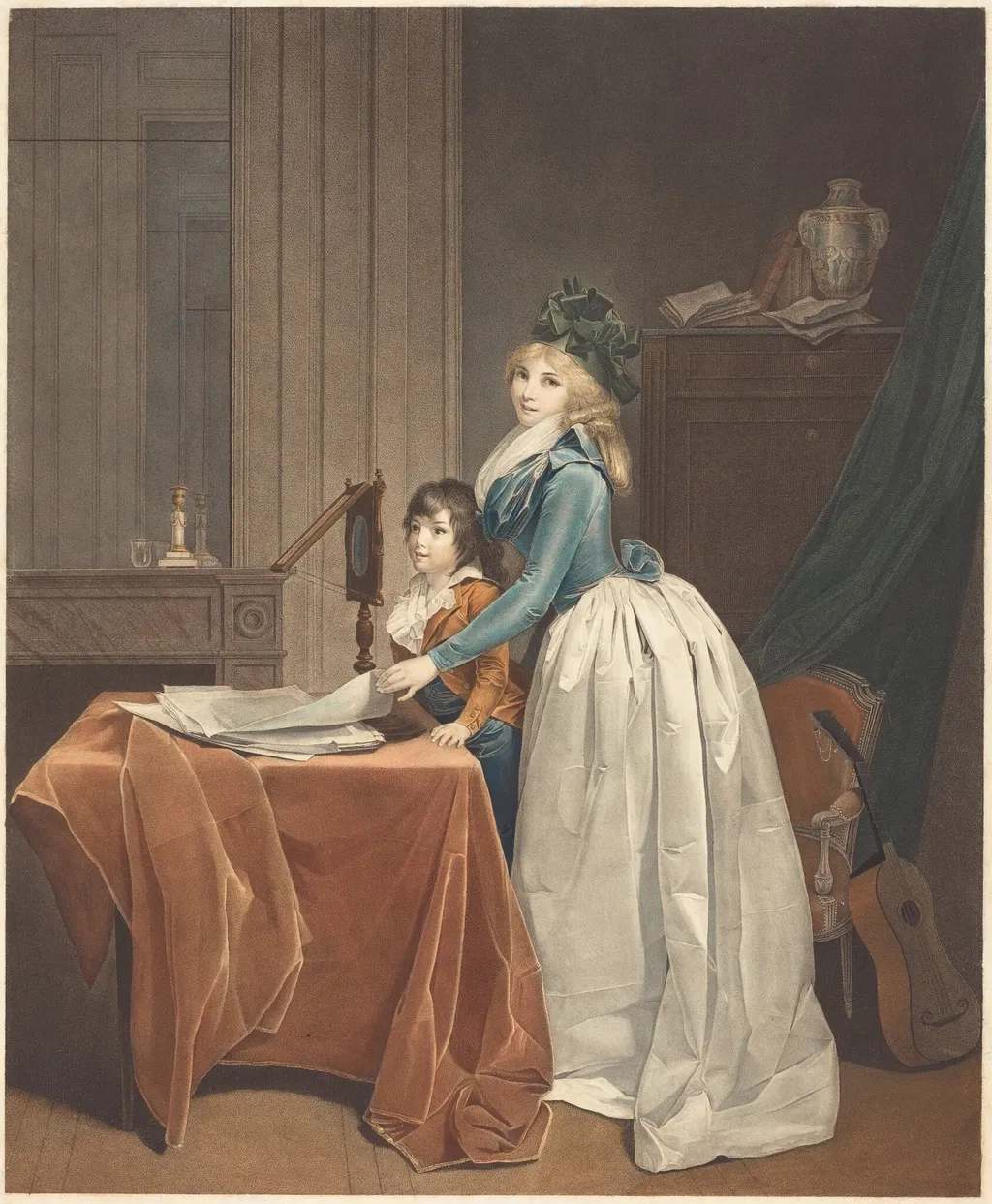
L'Optique (The Optical Viewer) is an ink print by the Romanticist artist Frédéric Cazenave. It dates from 1793 and is held in the collection of the National Gallery of Art.
About this work
Overview
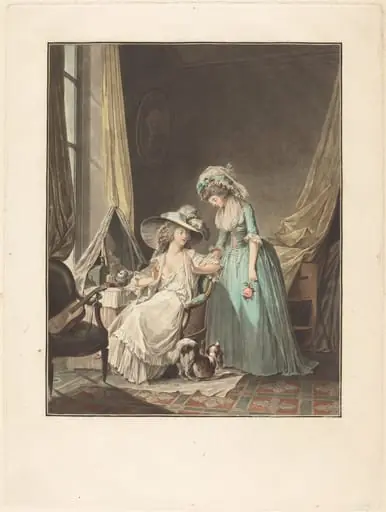
It depicts a quiet domestic moment centered on the use of a magnifying device, reflecting the era’s engagement with optical tools for reading and observation.
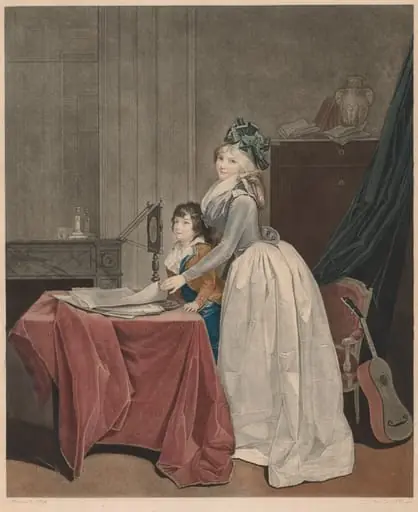
L'Optique, created around 1793 by Frédéric Cazenave, is a printed image combining etching with wash techniques and hand-applied color. Inked à la poupée in black, brown, and green, the work features subtle tonal gradations and delicate coloring that enhance its intimate atmosphere. It depicts a quiet domestic moment centered on the use of a magnifying device, reflecting the era’s engagement with optical tools for reading and observation.
Subject & Meaning
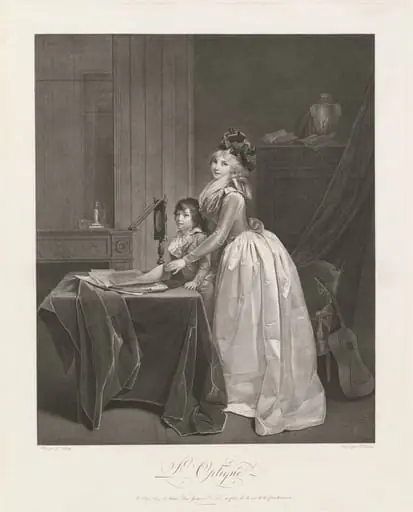
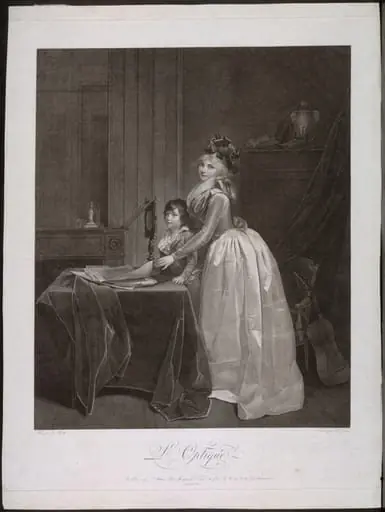
The scene portrays a woman in a white dress and blue sash guiding a young boy, dressed in brown, as he examines a small document through a magnifying lens. Their focused interaction suggests a pedagogical moment, emphasizing the role of visual aids in literacy and learning. The setting—cluttered with books, a vase, and a guitar—hints at a cultivated home environment where intellectual curiosity was nurtured through everyday objects.
Technique & Style
Cazenave employed etching with wash effects and à la poupée inking to achieve nuanced shading and layered tones. Hand coloring in soft hues of green, brown, and black adds warmth and detail without overwhelming the composition. The delicate line work and restrained palette reflect a preference for subtlety over dramatic contrast, aligning with the quiet, observational tone of the subject matter.
History & Provenance
The print emerged during the late 18th century, a period of growing interest in scientific instruments and domestic education. While little is documented about its early ownership, its production aligns with the rise of illustrated prints meant for middle-class households. It likely circulated as part of a broader cultural fascination with optics and the mechanics of vision.
Context
In the 1790s, magnifying lenses were common tools for reading fine print, especially among those with aging eyes or in settings where small-type texts—such as religious or scholarly works—were prevalent. This image captures a moment of practical technology integrated into daily life, before widespread access to printed materials with larger typefaces. The inclusion of musical and literary objects underscores the era’s ideal of the cultivated home.
Legacy
L'Optique endures as a quiet record of pre-industrial visual culture, illustrating how optical devices bridged the gap between science and domestic routine. Though not widely known today, it contributes to the historical understanding of how ordinary people engaged with emerging technologies. Its preservation offers insight into the material and social dimensions of reading practices in the late Enlightenment.
Artist & collection